NSIPA CEO Felicitates with Nigerians at Christmas

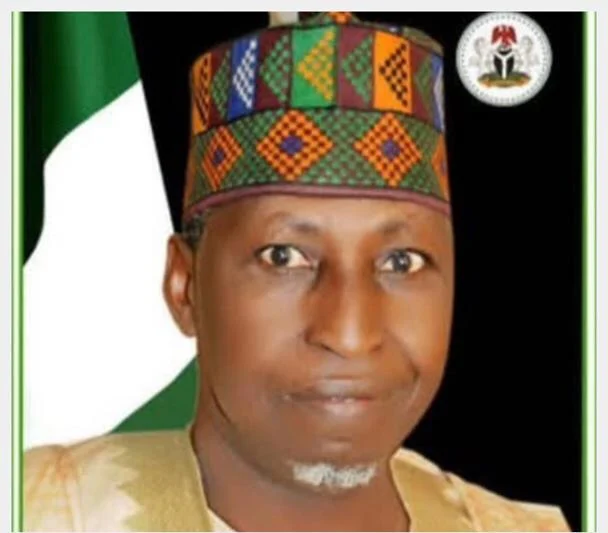
Professor Badamasi Lawal, Chief Executive Officer of the National Social Investment Programme Agency (NSIPA), has assured Nigerians of the commitment of his agency to uplift vulnerable and impoverished households across the country. In a Christmas goodwill message, the NSIPA National Coordinator urged all Nigerians to embrace the spirit of the season by having each others’ back. “I warmly greet all Nigerians, especially our prospective beneficiaries of the impactful programs under the National Social Investment Programme Agency (NSIPA). This season is a time for reflection and gratitude as we celebrate the values of peace, unity, love, and sacrifice that bind us together as a nation,” Prof Lawal said. Signed by NSIPA Head of Information and Public Relations, Mr. Atari Hope Monday, the National Coordinator “Let us view this festive period as an opportunity to strengthen our bonds of unity, foster camaraderie, and inspire compassion for one another.” Referencing the commitment of President Bola Ahmed Tinubu “to uplift vulnerable and impoverished households across the country,” Professor Lawal concluded his message with a call to action, encouraging everyone to remain steadfast in their collective efforts to build a better and more prosperous nation. “Together, we can create a brighter future for all,” he affirmed. Wishing everyone a Merry Christmas and a Happy New Year, he emphasized the importance of community and support during this special time. The National Social Investment Programmes Agency (NSIPA) is a federal government agency that coordinates, implements, and supervises the country’s National Social Investment Programmes (NSIP). 

Nigeria inflate rate surges higher, hits 34.60%

The most realistic sign that the Federal Government’s economic policies are not yielding the desired result emerged again today as figures released by the National Bureau of Statistics (NBS) show a relentless rise in the rate of inflation from 33.88% in October to 34.60% in November. The Central Bank of Nigeria’s (CBN) in furtherance of efforts to curtail the rise in inflation took the following measures during 298th Monetary Policy Committee (MPC) meeting on November 25–26, 2024. Despite these measures which the current management of the CBN had embarked upon since assuming office, the rate of inflation continues to soar, thereby confirming the contrary opinion of analyst who think the apex bank is not only prescribing the wrong medication but has missed the diagnosis. Further, the NBS figure indicates that on a year-on-year basis, the Headline inflation rate was 6.40% points higher than the rate recorded in November 2023 (28.20%). This shows that the Headline inflation rate (year-on-year basis) increased in November 2024 compared to the same month in the preceding year (i.e., November 2023). ALSO READ: Sanusi Speaks on Sealing of Kano Palace by Security Operatives It is noteworthy to observe however, that on a month-on-month basis, the “Headline inflation rate in November 2024 was 2.638%, which was 0.002% points lower than the rate recorded in October 2024 (2.640%). This means that in November 2024, the rate of increase in the average price level is slightly lower than the rate of increase in the average price level in October 2024,” it was stated in the report. Food inflation after easing at the peak of the harvest period between July and September has spiked, rising, year on year from 39.16% in November 2023 to 39.93% at the end of November 2024. Month on month, the rate rose gently from 2.94% at the end of October to 2.98% in November.2.98 39.93 The NBS stated in the report that, “Every month, 10,534 informants spread across the country provide price data for the computation of the CPI. The market items currently comprise 740 goods and services regularly priced.”

Dele Farotimi Versus Baba Aare Afe Babalola: A Case of an Unfair Apportioning of The Institutional Wage of Sin

“Nigeria’s reform crisis is not about ideas, but about trust. Without it, even sound policies become liabilities.”

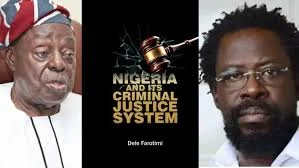
“I have never been a fan of Dele Farotimi and his tactics of seeking to take on the mantle of Gani Fawehinmi as the fighter for social justice and the little man without putting in the work. Unlike the late icon Gani Fawehinmi who put in the work, paid the huge price personally and professionally with deep scars to show for his effort, Dele Farotimi has sought to use social media notoriety, crude and unguarded defaming, scandalizing of other people’s reputation as the launchpad for his undeserved and unmerited social activist status.“ The titanic legal confrontation between Dele Farotimi and highly respected Chief Are Afe Babalola has totally taken up the oxygen in the Nigerian social media, judicial and political space. It has dominated the news and taken on a life of its own with partisan combatants on both sides. It has pitted the preeminent Doyen of the Nigerian legal aristocracy against a legal upstart who is a master of social media fueled social activism and pseudo-defender of the poor and oppressed. I am not pretending to be a neutral objective analyst in the conflict. I have never been a fan of Dele Farotimi and his tactics of seeking to take on the mantle of Gani Fawehinmi as the fighter for social justice and the little man without putting in the work. Unlike the late icon Gani Fawehinmi who put in the work, paid the huge price personally and professionally with deep scars to show for his effort, Dele Farotimi has sought to use social media notoriety, crude and unguarded defaming, scandalizing of other people’s reputation as the launchpad for his undeserved and unmerited social activist status. I find that morally and professionally reprehensible. He is not the only one in this new cottage industry of reputation washing. I find the entire short cut celebritization of virtue as an obscenity. Baba Are Afe Babalola is undoubtedly at the very pinnacle of the Nigerian legal industry, a reputation he has built diligently and meticulously over six decades. Yes, there are rumors out there in the public domain about how he might have parlay his contact with the Nigerian political class to build his legal empire. If leveraging political capital is a crime, the Nigeria jail-house and in fact jailhouses around the globe will the filled to overcapacity. In order for anyone to criminalize alleged political influence like Dele Farotimi did in his book, on public TV and social media, they had better have irrefutable evidence. That judgement will hopefully be rendered in the Nigerian court of law. It would appear that Dele Farotimi recklessly and maliciously defamed Baba Afe Babalola’s name to advance his unearned and underserved social activist street cred. Dele Farotimi has a long record of recklessly throwing bombs at other people’s reputation wrecking them to build up his own. Even more impressive and legacy affirming than Chief Afe Babalola’s out of this world remarkable legal career, are what he has done at the later stage of his life with his resources, when most of his contemporaries have either kicked the bucket or are too infirm to do much. While the Nigerian money class would rather invest their resources in plush real estates in the Riveira amd Monte Carlo and in shell companies in Panama, Baba Afe Babalola has instead chosen late in his life when he could be resting in the luxury of retirement, to invest a huge chunk of his resources in legacy humanitarian projects like the Afe Babalola University with its world class physical and academic infrastructure among other community development ventures and donations to international institutions. That, in my view, is a life worthy of celebration and emulation. It is not how one begins life that matters, it is how one ends it. Baba Afe Babalola embodies that as he races to the finish line of a remarkable life. Baba has left a legacy that people will be talking about for centuries after we all have gone. His legal exploit will be a mere byline in that legacy. So Baba Afe Babalola would remain a historical figure whose humanitarian footprint will stand the test of time no matter the outcome of this last legal kungfu fight. He should be commended for his courage in taking on the fight when he could have walked away and let the howling dog have its day. ALSP READ: Kidnapping of ASUU Chairman’s wife: Lecturer Arrested The legal tussle between him and Dele Farotimi is however an entirely different story. On its legal merit, based on what is out there in the public domain it would appear that Chief Afe Babalola has a solid case against Dele Farotimi. It would appear that Dele Farotimi recklessly and maliciously defamed Baba Afe Babalola’s name to advance his unearned and underserved social activist street cred. Dele Farotimi has a long record of recklessly throwing bombs at other people’s reputation wrecking them to build up his own. Many including President Tinubu have been on the receiving end of his reckless scorched earth, bomb throwing reputation damage tactic. Perhaps his being held accountable this time will send a cautionary warning to him and his ilk. Nigerian Social media has for too long become a waste land for long earned reputation with many of its victims having no place to seek restitution. While this case will not put and end to the celebritization of social media activisms and notoriety monetization cottage industry, the Dele Farotimi versus Are Babalola case might send a cautionary note that there are limits. The unfortunate part of the whole saga for Baba Afe Babalola is that it has metastasized beyond its legal argument to the status of an attention-grabbing, controversy-spinning social media cause célèbre. On top of that, it has gotten enmeshed in the messy world of Nigerian class warfare. It has been mischievously turned into a David versus Goliath affair, and partisan politics. The partisan dimension is indeed the most curious part because neither Baba Afe Babalola nor Dele

Tinubu to Unveil N47 Trillion 2025 Budget Next Week

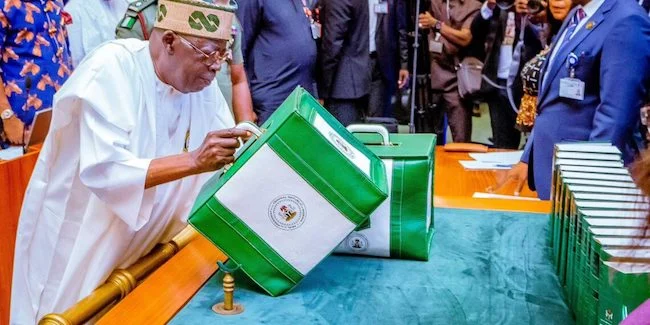
In further of yearly ritual, President Bola Tinubu is set to present the 2025 budget to the National Assembly on December 17, 2024.  This announcement was made by Senate President Godswill Akpabio during a plenary session on Thursday. The 2025 budget, totaling N47.9 trillion, is expected to be the largest in Nigeria’s history.  The presentation will take place at the House of Representatives Chamber.  ALSO READ: How Nigerian Lawmakers Padded 2024 Budget With Over N53billion Vague Projects Lawmakers recently reviewed and submitted the government’s medium-term expenditure framework (MTEF), which underpins the budget figures.  Key assumptions in the plan include a $75 oil price per barrel, a daily oil production target of 2.06 million barrels, and an exchange rate of N1,400 to $1.  The document also projects a GDP growth rate of 6.4%. The Senate Committee on Finance is tasked with reviewing the MTEF/FSP and providing a report within one week. Budget making in Nigeria of recent has been characterized by a lot of subterfuge and shenanigan employed by politicians to steal public fund. Experts observe that, through what the legislators referred as budget padding, vague project items are infused into the budget to enable both legislators and the executive to commit the heist of public fund.

Defamation Saga: Legal Practitioners Disciplinary Committee asked to Debar Dele Farotimi

In an extreme measure to exterminate the enemy with no trace that it ever existed, Chief Afe Babalola has submitted a petition to the Legal Practitioners Disciplinary Committee seeking the removal of Dele Farotimi from the roll of Nigerian legal practitioners. This is in addition to the deluge of suits filed against Barr Dele Farotimi by associates of Chief Afe Babalola in support of the substantive case of criminal defamation filed by the senior lawyer and elder stateman. For instance, associates of Chief Babalola already obtained injunctions from the Federal Capital Territory High Court in Abuja and Oyo State High Court barring Farotimi from further publishing, selling, circulating, advertising, or distributing the hard or soft copies of his book. In the 90-page petition, Chief Babalola alleged that Farotimi violated various provisions of the rules of professional conduct by lawyers. Dated December 6, 2024, the title of the petition is: “Petition against Tomilola Titus Farotimi (also known as Dele Farotimi esq), a Nigerian lawyer called to the Nigerian bar with his name on the roll of legal practitioners kept by the Supreme Court for violation of the extant Rules of Professional Conduct for Legal Practitioners Rules 1, 15(1), 15(2b), 15(3a), 15(3g), 15(3i), 15(3j), 26(1), 27(1), 30, 31(1), (2) and (4) of the Rules of Professional Conduct 2023 by bringing the entire judiciary in Nigeria into disrepute with his unfounded allegations of corruption against eminent justices of the supreme court of Nigeria, judges of high court of Lagos state, Aare Afe Babalola san, Olu Deramola, SAN, Ola Faro esq, and the entire chambers of Afe Babalola & co in his book titled ‘Nigeria and its criminal justice system.” The petition contains a litany of accusations against Farotimi and was signed by Ola Faro, a partner at the firm, and who was also referenced in the book titled, “Nigeria and its Criminal Justice System.” Some of the accusations against Mr. Farotimi, as detailed in the petition include the following: “He joined his clients in committing misconduct and breach of law with reference to judicial officers by having unlawful access to a judicial officer. He gave service to his client which he knows is capable of causing a breach of law and disrespect and corrupting a judicial officer. He knowingly made a false statement of law and facts with respect to a case already decided by the Supreme Court. “He assisted his clients in a conduct that he knows to be illegal and fraudulent. Knowingly engaged in illegal conduct in the cause of his practice as a legal practitioner. Treated his fellow lawyers without respect, fairness, consideration and dignity, allowing ill feelings between opposing clients to influence his conduct and demeanour by distorting the facts of a case in the cause of his practice as a legal practitioner. “Failed to observe good faith and fairness in dealing with other lawyers in respect to a case already decided by the Supreme Court. Conducted himself in a manner that obstructed, delayed and adversely affected the administration of justice by taking steps to frustrate a decision of the Supreme Court for his personal benefit and the benefit of his client who lost at the Supreme Court. “Treated the court, particularly the Supreme Court without respect, dignity and honour by using uncouth, unprofessional, undignified and offensive language against the Supreme Court and the justices of the Supreme Court. Made defamatory statements against judicial officers rather than making a complaint to appropriate authorities. Mr. Faro also alleged in the petition that Mr. Farotimi “Indicated that he discussed a pending case with a judge trying the case in the absence of an opposing lawyer. The contravention of these rules by the Respondent (Farotimi) prompted this petition to protect the dignity of the legal profession, the dignity of the court as the temple of justice and to uphold the standards of the legal profession.” These actions follow the publication of the book titled, Nigeria and Its Criminal Justice System, which Chief Afe Babalola alleged contained sections that defamed him, following which he sued Farotimi. Subsequently, Farotimi was arrested and arraigned before the Federal High Court in Ekiti State as well as an Ekiti State Magistrates’ Court, Ado-Ekiti.

The real persons living ‘fake good life’

Ugo Onuoha is a Nigerian journalist and columnist who writes FINGERPRINTS, a commentary on governance, power and social justice in Nigeria.

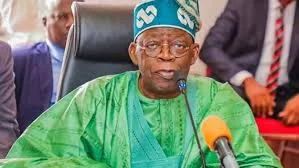
WE will do the unusual in our discourse today. We will copiously quote Nigeria’s president, Alhaji Bola Ahmed Tinubu, in his address to a university convocation about two weeks ago. But first the summary of what he said. He claimed in his usual unconscionable, insensitive, provocative and uncaring manner that the ‘good life’ Nigerians had enjoyed before he happened to the presidency was fake, unreal, undeserved, and contrived. He said that that life was bogus, founded on falsehood, and erected on nothing really. He said we lived the life of, to use a local parlance, 419ers. Four one nine (419) is a clause in Nigeria’s criminal code that deals with obtaining by false pretext. In other words, in the president’s full contemplation, Nigerians were all 419ners  or were made to appear so until he came and removed the so-called petrol subsidy on May 29, 2023. What a man. What callousness. What a president of a people going through severe privations visited on them by himself. Tinubu said, as widely reported in the media during the 34th and 35th combined convocation ceremonies of the Federal University of Technology, Akure (FUTA) in Ondo state: “As you are all aware, we took the baton of authority at a time our economy was nose-diving as a result of heavy debts from fuel and Dollar subsidies. The subsidies were meant to support the poor and make life better for all Nigerians. We are all aware of the fact that the poor and average Nigerians were the sufferers of what was supposed to give them succour and improved standard of living. Unfortunately, the good life we (other Nigerians really) thought we (they) were living was a fake one that was capable of leading to a total collapse unless drastic efforts were urgently taken. The need to salvage the future of our children, and bring the country back from the brink of collapse necessitated the strategic (thoughtless) decisions to remove the fuel subsidy and also unify the exchange rate”. ‘Unify the exchange rate’ was an euphemism for what has turned out to be the current and sustained devaluation of the Naira. But as we write the Naira is gaining in value due largely to the recently issued Euro bond (yet another debt) which was made attractive by high coupon rates offered to ‘hot money’ and volatile foreign portfolio investors (FPIs); the new mechanism introduced by the central bank for FX traders (usually banks); and, the influx of dollars from diaspora Nigerians who are home for the Christmas and New Year celebrations. READ ALSO: Farotimi Brought to Court in Handcuffs, Granted Bail For a start here’s the immediate fallout of the regime’s claim about securing the future of Nigerian children. Recently there was a report that a consultant in one of Nigeria’s foremost teaching hospitals had raised an alarm that many children in our country were presenting with kwashiorkor. In 2024? Damn it! This is not only a national embarrassment but a grave national disaster. There has been no time since the Nigeria -Biafra civil war that kwashiorkor had posed a clear and present danger to the country than today. And this is all down to Tinubu’s economic ‘rescue mission’ and Renewed Hope mantra. For our casual information kwashiorkor is a disease that affects children who don’t have access to enough protein in their meals. Its early symptoms include but are not limited to fatigue, irritability, lethargy, growth retardation, loss of muscle mass, swelling and severely eroded immunity which makes room for other opportunistic diseases to strike. I saw this image live as a child in the defunct Republic of Biafra in the late 1960s. The legs of a kwashiorkor victim look like tiny sticks and s/he presents a protruded stomach which is filled with rotten gas. There are exceptions but generally kwashiorkor leads to poor brain development and low IQ, that’s, if the child survives. The frightening dimension is that the findings claim that the outbreak of kwashiorkor is across all the zones of the country. It has to be said, no matter how offensive our current rulers may consider it, that the prevailing outbreak of kwashiorkor in this country is a direct result of the pervasive hunger situation which now borders on starvation. And this is down to the grossly misguided economic policies of the All Progressives Congress (APC), and Tinubu. If Nigerians lose their children to death through kwashiorkor or stunted growth in body and IQ, then the claim by the extant regime that it is fighting to secure the future of the country becomes questionable. Whose future? And for whom? It has to be stated that kwashiorkor is not an infectious disease, and so it can be arrested and reversed within weeks with diets that are rich in protein and sundry wholesome foods. Even before the kwashiorkor story broke UNICEF had revealed that “around 11 million children in Nigeria, or one in every three children under five years of age”, were “experiencing severe child food poverty, making them up to 50% more likely to experience wasting, a life – threatening form of malnutrition”. (Apparently UNICEF restrained itself from using the word kwashiorkor). But how can the prevailing food insecurity situation and the attendant kwashiorkor be reversed with a majority of Nigerian families struggling for access to basic foods. Just before Nigeria’s affliction, Maj Gen. Muhammadu Buhari, left the presidency in 2023, the National Bureau of Statistics (NBS) had reported that about 133 million Nigerians were suffering from multidimensional poverty. By the level of today’s suffering where two-thirds of families in Nigeria can hardly afford one decent meal a day, the Buhari era could as well be classified as being among the good old days. Certainly, the figure of the dimensionally poor in Nigeria could be in excess of 150 million people today. PLEASE READ: Nigerian Airforce Strike in Katsina Community Causes Collateral Damage In Tinubu’s reckoning the ‘fake good life’ that many Nigerians lived before he happened on the country and yanked off

Tax Reform Bills Scale Second Reading at the Senate

The Senate has moved forward with the four tax reform bills presented by President Bola Tinubu, sending them to a second reading on Thursday.  After a lengthy debate, the bills were referred to the Finance Committee for further review, with a deadline of six weeks for a report. Among the key proposals are the Nigeria Tax Bill 2024, aimed at restructuring the country’s tax framework, and the Tax Administration Bill, which seeks to resolve disputes and create a clearer legal structure for taxes.  Additionally, the Nigeria Revenue Service Establishment Bill intends to replace the Federal Inland Revenue Service Act, while the Joint Revenue Board Establishment Bill would establish a tax tribunal and ombudsman. READ ALSO: PRESIDENT TINUBU AND THE YALE MELTDOWN Several lawmakers, including Senators Sani Musa and Seriake Dickson, expressed support for the bills, emphasizing the benefits to small businesses and the potential to reduce taxes.  In contrast, Senator Ali Ndume raised concerns about the timing of the reforms and issues related to derivation and VAT. The bills were further explained to lawmakers by President Tinubu’s economic team during the plenary session.  Despite some opposition, the Senate voted in favor of advancing the bills to the next stage.

Nigeria, Brazil sign pact to Further Collaboration in Agricultural Transformation

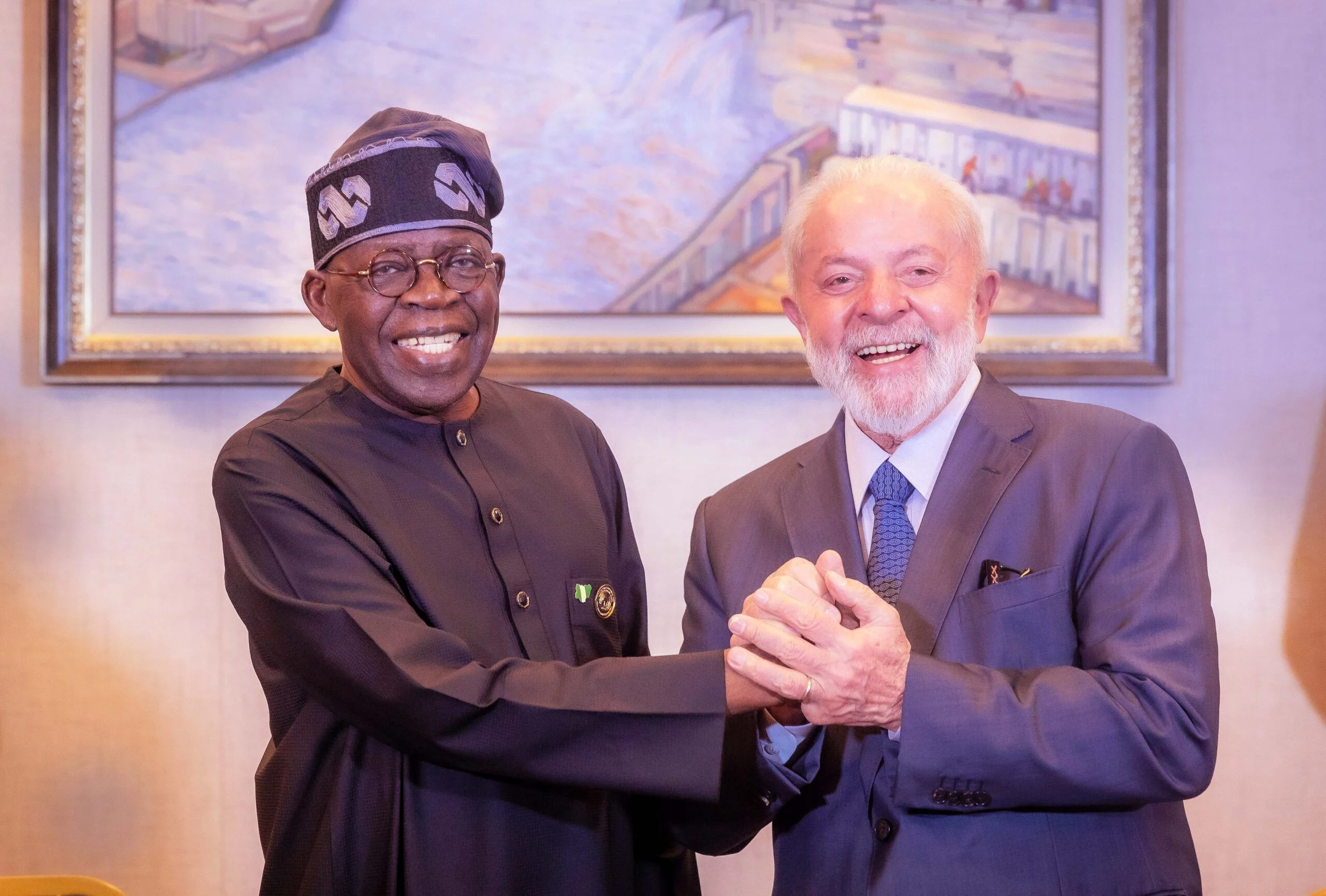
Nigeria deepens its economic ties with Brazil as she signs an MoU with the South American nation’s Fundação Getulio Vargas (FGV). The new pact is aimed at stimulating private sector growth within Nigeria’s agricultural industry.  The agreement, covers several key areas including fertilizer production, hybrid seed development, and agricultural finance. The agreement was signed in Rio de Janeiro, Brazil, on the sidelines of the G20 Leaders’ Summit. READ ALSO: MINIMUM WAGE: NO GOING BACK ON DEADLINES, SAYS NLC The MOU was signed by Mr. Temitope Fashedemi, Permanent Secretary of the Nigerian Ministry of Agriculture and Food Security (FMAFS), and Professor Carlos Ivan Simonsen Leal, President of FGV.  This partnership marks a new phase in the ongoing collaboration between Nigeria and Brazil, which has already been in motion through the Green Imperative Project (GIP).  This project, valued at $1.2 billion, is aimed at modernizing Nigerian agriculture with the help of Brazilian expertise in tropical farming. The Green Imperative Project, which was first initiated in 2018, represents a significant international cooperation effort.  Over the course of the project’s ten-year duration, it will focus on transferring advanced agricultural technologies and best practices from Brazil to Nigeria.  The aim is to make Nigerian agriculture more efficient, sustainable, and capable of supporting the country’s growing population. The project is designed to support agribusinesses across Nigeria’s 774 local government areas, providing them with both the financial and technical resources needed to thrive.  With an eye on sustainable economic growth, the initiative will focus on fostering businesses that can contribute to Nigeria’s food security and economic development. Moreover, the MOU aims to attract private-sector investments totaling $4.3 billion, directed toward vital sectors like fertilizer manufacturing, seed innovation, and agricultural finance.  By attracting such investment, the project hopes to create lasting improvements in Nigeria’s agricultural landscape. The signing ceremony, attended by Nigerian government officials and FGV leaders, signals the beginning of a strong partnership that is expected to bring meaningful change to Nigeria’s agricultural economy.

COAS: Tinubu Seeks Senate Approval for Oluyede

President Bola Tinubu has formally requested the Senate’s approval for Lieutenant General Olufemi Oluyede as the next Chief of Army Staff (COAS).  This move aligns with the constitutional and legal requirements, according to a statement from presidential spokesperson Bayo Onanuga.  PLEASE READ: NIGERIA’S RISING INSECURITY: IMPLICATIONS FOR THE NIGERIAN ECONOMY Oluyede, who has served as the Acting COAS since October 30, following the illness of General Taoreed Lagbaja, is now being put forward for confirmation as the substantive head of the military.  After Lagbaja’s passing on November 5, Tinubu expressed confidence in Oluyede’s leadership capabilities, citing his extensive military experience and professionalism. The Senate’s confirmation is a necessary step under Section 218(2) of the 1999 Constitution and Section 18(1) of the Armed Forces Act.  Tinubu’s letter, which was submitted this Friday, reflects his belief that Oluyede will be a strong leader in safeguarding the nation’s security.

Labour Party Denies Allegations of Partnership with Tinubu Ahead of 2027 Elections

The Labour Party has dismissed allegations of collusion with President Bola Ahmed Tinubu and the All Progressives Congress (APC) ahead of the 2027 general elections, labeling the claims as baseless and defamatory.   In a statement released by its National Publicity Secretary, Obiora Ifoh, the party expressed concern over a circulating video in which lawyer Deji Adeyanju made claims of a supposed partnership between the Labour Party and the APC.  The party described the accusations as unfounded and harmful to its reputation.   According to the Labour Party, the allegations contradict its role as the leading opposition in Nigeria, with its National Chairman, Barrister Julius Abure, consistently criticizing the current administration.  The party emphasized its ongoing efforts to challenge systemic failures and advocate for electoral reforms.   Recent initiatives spearheaded by the Labour Party include the establishment of an Electoral Reform Committee to promote credible elections and a Political Education Committee aimed at fostering political awareness among Nigerians.  Additionally, the party has launched an e-membership registration drive to enhance participatory democracy, with thousands of Nigerians already joining.   The party challenged Adeyanju to substantiate his claims with evidence or withdraw his statements and issue a public apology.  It described the comments as a “criminal defamation” and a deliberate attempt to damage the party’s reputation.   The Labour Party reaffirmed its commitment to holding the government accountable and denied any collaboration with President Tinubu or the APC, urging its supporters to disregard the rumors.   READ ALSO: NIGERIAN AIRFORCE STRIKE IN KATSINA CAUSES COLLATERAL DAMAGE