NLC Committee Storms Headquarters, Demands Abure’s Resignation

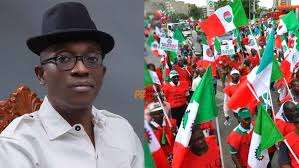
Members of the Nigeria Labour Congress national transition committee, on Tuesday, stormed the headquarters of the Labour Party in Abuja, demanding the immediate resignation of the National Chairman, Julius Abure. The Acting Chairman of the transition committee, Aduwaheed Omar, led members of the labour union to the secretariat, chanting solidarity songs and calling for the resignation of Abure on grounds that his tenure as the chairman of the party had expired. Our correspondent at the scene of the protest noted, that when the officials arrived at the Party’s headquarters, the gates were immediately shut by security officials. However, in an attempt to force their way into the premises, the police fired teargas to dispatch the protesters. Protesters were later heard shouting endlessly at the security men to “open the gate”.

Minimum Wage: Presidency Sends Message To Organised Labour, Nigerians

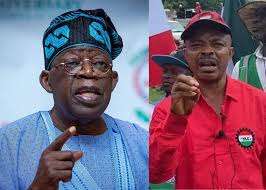
The Presidency has pleaded with Nigerians not to mount unnecessary pressure on President Bola Tinubu over the new minimum wage demand. The government assured that Tinubu would transmit the proposed bill to the National Assembly once it is ready. Speaking to Punch, the Special Adviser to the President on Information and Strategy, Bayo Onanuga wondered what the rush for the transmission of the bill was all about. Onanuga’s position is coming barely 24 hours after the Organised Labour asked the President to consult with them before transmitting the bill to the National Assembly. The Union had complained that the National Executive Committee which will accommodate about 300 Labour leaders, is being stalled by Tinubu’s delay to transmit the wage bill. The President, during his Democracy Day broadcast, disclosed that a consensus had been reached between the Federal Government and Labour on the new wage, a development which the Organised Labour debunked. However, Onanuga, while admitting that he had no idea when the bill would be submitted, called for patience. “People should be patient,” he stated. His appeal comes one week after he reiterated that the ₦250,000 wage being demanded by the workers’ union is unsustainable, warning that the Federal Government cannot channel all its resources to meet such demand.

Strike: No Work, No Pay – OPS Threatens NLC, TUC

Multiple Unions, Including Banks, Medical Staff, ASUP Join NLC Nationwide Strike

The ongoing dispute over the new minimum wage and electricity tariff hike in Nigeria is reaching a critical juncture as the Nigeria Labour Congress (NLC) and the Trade Union Congress (TUC) approach the end of their five-day strike relaxation period. The organized private sector, represented by the Nigeria Employers Consultative Association (NECA), has issued a stern warning to its workforce about the potential enforcement of the ‘No Work No Pay’ rule if the strike action resumes. The Director General of NECA, Adewale Smatt-Oyerinde, highlighted this position while speaking at the International Labour Conference (ILC) in Geneva, Switzerland. He emphasized that employers are legally backed by the Trade Dispute Act, Section 43, which allows for the withholding of pay for days not worked during strikes. “The employers in the Trade Dispute Act Section 43 have the right not to pay for work not done. It is part of our law,” Smatt-Oyerinde stated. This announcement comes amidst heightened tensions as the labour unions have provided the Federal Government with a five-day ultimatum to meet their demands, which include an acceptable new wage for workers and a retraction of the new electricity tariffs. However, the government’s offer of a ₦62,000 minimum wage has not satisfied union leaders, prompting threats of renewed strike action. Smatt-Oyerinde questioned the practicality of paying employees during a strike, especially when no production activities are taking place. “Where would the employer get the money to pay when work is not done? It is a rule of justice. Where do I get the money to pay from?” he queried. Moreover, the NECA director general pointed out that both international and local industrial laws regulate the right to strike. He mentioned that the issue of strike rights is currently being contested at the International Labour Organisation (ILO) level and has been referred to the International Court of Justice (ICJ) for further interpretation. “The context of ultimatum, context of strikes, these rules were guided by law, were guided by framework, in the ILO, it is the convention. In Nigeria, it is the Trade Dispute Act. We will wait for ICJ to come back.” He said all parties must work within the legal framework, adding that a subsisting order exists at the National Industrial Court (NIC). “We saw the letter by the attorney general of the federation, and our view is this, if you don’t align with it, you will go back to the court where he gets the order to contest it, but the moment I don’t context it, then I have gone way beyond the legal framework,” he said. He said all parties must work within the legal framework to have an equilibrium society devoid of anarchy. According to him, the International Labour Convention 87 gives the right to organise, “but workers felt it includes the right to strike and that is what we are demanding interpretation from the ICJ. “Our position is that we cannot be party to rubbish those institutions created to regulate the industrial process, we have the NIC and the Industrial Arbitration Panel (AIP), we must follow those institutions before escalating issues.” The NECA boss said the employers aligned with the Federal Government on N62,000 because that is what is feasible for the members of the OPS. “After going back and forth, the employers painfully came to N62,000. I say painfully, judging by the current state of employers in the country, business closing shops, business relocating. Two objectives inform our decision, can we afford to pay, jobs and create jobs and three, it is a deeper economic reason for us. “Even in the ILO, the importance is to make sure that the developing economy is not left behind. This is done through transiting those in the informal to formal sector.” Oyerinde said anything above N62,000 would be detrimental to the Small and Medium Entrepreneurs (SMEs) that form the bulk of the informal economy. He said though both the governors’ forum and organised l

N62,000 Minimum Wage: Beware of the rage of the people-Benson Upah

If the gathering storm is to be taken as a reliable pointer, then Nigeria may be headed for another major labour crisis as organized labour has not only rejected N62,000 minimum wage offered by government but cautioned that “some state governors, were behind the mischief.” Speaking at a live television programme this Monday morning, Nigeria Labour Congress (NLC) Head of Information and Public Affairs, Mr. Benson Upah disclosed that about five state governors were bent on “throwing spanners to the works”. Even as he declined mentioning the names of these governors, the NLC spokesman cautioned the mischief makers to be aware that “the rage of labour is more manageable than the rage of the people.” Mr. Upah said that contrary to the impression being given to the Nigerian public about the lack of capacity, government revenue has now shot up as the amount being shared by the three tiers of government has moved from N700billion to N1.3trillion. He therefore assured that “Labour is not being difficult but talking about something which is practical and reasonable.” Pressed to state what shall be the next action of organized labour, Mr. Upah, who was guest at the Morning Show on Arise TV said, “appropriate organs of labour shall meet and take a decision.” He went further to state, “Our troops, our resources, our reaction time, our good intentions are intact. Appropriate organs of the unions will reconvene and take the right action.”  Organised labour, comprising of the Nigeria Labour Congress and the Trade Union Congress (TUC) have been engaged in protracted negotiations over a new minimum wage, or at best a living wage. The big elephant at the room during these meetings had been the disproportionate pay politicians and other public office holders approve for themselves as compared to the very poor take home pay of the average worker. The current agitation for a higher pay had been triggered by ongoing hash economic reforms embarked upon by the Bola Ahmad Tinubu Presidency. First was the withdrawal of controversial subsidy on petrol. This was followed by the liberaisation of the foreign exchange market and the 240% upward review of electricity tariff. The combined effect of these changes had led to sudden rise in prices of foodstuff and essential services like the cost of transportation and medicaments. Following its rejection of the N62,000 offered by the federal and subnational governments, organized labour has scheduled a National Executive Council (NEC) meeting for tomorrow, Tuesday to deliberate on the next line of action.

Labour may resume strike Tuesday after rejecting N62,000, insists on N250,00

The Organised Labour has said it will not accept any N62,000 or N100,000 “starvation wage” as the minimum wage for Nigerian workers. It insisted on N250,000, being its latest demand at the last meeting of the Tripartite Committee on Minimum Wage on Friday, as the living wage for an average Nigerian worker. This was made known on Monday by Chris Onyeka, Assistant General Secretary of the Nigeria Labour Congress, NLC, while fielding questions on Channels Television’s The Morning Brief show. Onyeka said the one-week grace period given to the Federal Government last Tuesday, June 4, 2024, would expire by the midnight of Tuesday, June 11, 2024. According to him, should the Federal Government and National Assembly fail to act on the demands of workers by tomorrow (Tuesday), the organs of the NLC and the Trade Union Congress, TUC, would meet to decide on the resumption of the nationwide industrial action relaxed last week. “Our position is very clear. We have never considered accepting N62,000 or any other wage that we know is below what we know is able to take Nigerian workers home. We will not negotiate a starvation wage. “We have never contemplated N100,000 let alone N62,000. We are still at N250,000, that is where we are, and that is what we considered enough concession to the government and the other social partners in this particular situation. We are not just driven by frivolities but the realities of the market place; realities of things we buy every day, bag of rice, yam, garri, and all of that. “The Federal Government and the National Assembly have the call now. It is not our call. Our demand is there for them (the government) to look at and send an Executive Bill to the National Assembly, and for the National Assembly to look at what we have demanded, the various fact of the law, and then come up with a National Minimum Act that meets our demands.” He continued: “If that does not meet our demand, we have given the Federal Government a one-week notice to look at the issues and that one week expires tomorrow (Tuesday). If after tomorrow, we have not seen any tangible response from the government, the organs of the Organised Labour will meet to decide on what next. “It was clear what we said. We said we are relaxing a nationwide indefinite strike. It’s like putting a pause on it. “So, if you put a pause on something and the organs that govern us as trade unions decide that we should remove that pause, it means that we go back to what was in existence before.”

NLC expresses disappointment over Fed Govt’s silence on electricity hike reversal

The Nigeria Labour Congress has described the federal government’s silence on the April 3 electricity tariff hike as disappointing. NLC disclosed this in its communique on Tuesday after its National Executive Council meeting where it suspended its indefinite strike for one week. The development comes after the federal government in a meeting with organized labour on Monday agreed to pay minimum wage higher than N60,000. However, the government has yet to say anything about the second part of labour’s demand, which is electricity tariff reversal. NLC expressed disappointment over the government’s silence and lack of concrete action regarding the reversal of the electricity tariff hike and the abolition of the apartheid classification of electricity consumers into Bands. “The NEC reaffirms that these issues are critical to alleviating the financial burden on Nigerian workers and the general populace. The electricity tariff hike and discriminatory Band classification remain unacceptable and must be addressed alongside the wage increase,” it stated. Recall that on April 3, the NERC approved tariff increment of over N200 per kwh for customers getting 20-24 hours power supply. The hike generated reactions among Nigerians. In reaction, the government earlier announced a minor reduction of N18, bringing it down to N208.80kwh for band A customers. However, unsatisfied with the reduction, the NLC, the Trade Union Congress and other organizations called for the complete reversal of the electricity tariff hike. It was part of the demand presented to the federal government, alongside the issue of minimum wage.

Full text media briefing on Joint HYBRID NEC Meeting of NLC/TUC

Good afternoon distinguished Comrades. Arising from the join NEC Meeting of NLC /TUC a few minutes ago ,it was resolved as follows 1. Agreement was reached to allow for engagement with Government for negotiation beyond 60k as against Government initial frozen position of 60k 2. That the time-line of 2months initially tendered by Government has been shortened to one week by Organized Labour to allow for speedy conclusion on the new minimum wage. 3. That both NECs in session unanimously agreed to *Relax* the strike action to pave way for continuous negotiation which is a new lexicon in the Labour Movement . 3. Failure on the part of Government to conclude with Labour within one week shall prompt the Organised Labour to resume the strike without further notice . 4. The strike is relaxed till you hear from the Organised Labour. *Work resumes tomorrow.* Comrade Ken Bassey State Secretary, TUC CRS

Minimum wage: ‘We are still on strike’ – NLC insists

Contrary to the nebulous claim about an “agreement to pay a new minimum wage above N60,000,” that is making the rounds on the social network and sections of the traditional media, the Nigeria Labour Congress, NLC, has insisted that it is still on strike. NLC said its organs will meet to decide on the outcome of the meeting with the federal government. Posting on X on Tuesday, NLC wrote: “Until we hear from Our Organs at our meeting scheduled for today, 4th June, we are still on strike.” On Monday, the federal government and the organised labour reached an agreement that might end the ongoing strike. The organized labour embarked on an indefinite strike on Monday to push for an improved pay package for workers. The strike led to a meeting between the Secretary to the Government of the Federation, SGF, Senator George Akume, and labour leaders in Abuja. At the end of the meeting, it was agreed that “Further to the negotiation by the Tripartite Committee on National Minimum Wage (NMW) and subsequent withdrawal of Labour from negotiation, the Leadership of the National Assembly intervened on 2nd June, 2024. The Organised Labour declared a nationwide strike on Monday, 3rd June, 2024, to drive home its demands. “The Federal Government, in the National interest, convened a meeting with Labour held in the office of the Secretary to the Government of the Federation, on Monday 3rd June, with a view to ending the strike action. “The President, Commander-in-Chief of the Armed Forces, Federal Republic of Nigeria is committed to a National Minimum Wage that is higher than N60,000.”

Indefinite Strike: NASS Makes last Ditch Effort to Avert Strike

In a bid to forestall the impending nationwide indefinite strike by labour unions, the leadership of the National Assembly is by now meeting with organized labour in Abuja to avert the strike The meeting, attended by key government officials including the Secretary to the Government of the Federation (SGF), Senator George Akume, Minister of National Planning Atiku Bagudu, Minister of Labour, and the Head of Civil Service, aims to address the deadlock between the Federal Government and labour unions over the issue of a new national minimum wage and the recent hike in electricity tariffs. Notable figures present at the meeting include President of the Senate, Godswill Akpabio; Deputy Senate President, Barau Jibrin; Senate leader, Opeyemi Bamidele, among others. A statement jointly signed by the spokespersons of the Senate and the House of Representatives, Senator Yemi Adaramodu and Rep. Akin Rotimi, Jr., highlighted the urgency of the situation, acknowledging the announcement by organized labour, including the Nigeria Labour Congress (NLC) and Trade Union Congress (TUC), to commence an indefinite strike action from Monday, June 3, 2024. The National Assembly leadership, represented by President of the Senate, H.E. Senator Godswill Akpabio, and Speaker of the House of Representatives, Rt. Hon. Abbas Tajudeen, PhD, is taking proactive steps to mediate and avert the impending industrial action, recognizing the potential severe repercussions on the populace and economy.

Why we rejected N48,000 minimum wage, Organized Labour

The Organised Labour has said it rejected the proposed N48,000 minimum wage because the Federal Government did not reveal how it arrived at the amount. Mr Etim Okon, the Vice President of the Trade Union Congress (TUC) said this while confirming that labour will attendn the negotiation meeting of Tripartite Committee on the Minimum Wage slated for Tuesday. According to Okon, the government’s failure to provide any substantiated data to support its offer exacerbates the situation, adding that lack of transparency and good faith undermines the credibility of the negotiation process. “The proposal falls significantly short of meeting our needs and aspirations. “The Federal Government has apologised and the next meeting is scheduled for Tuesday and we are going to appear and present our demand.  “We will still be presenting the N615,000. It is what we presented before we walked out, though our submission was not rejected by the government. “We only rejected the N48,000 that government presented because they did not show us how they arrived at that amount. “That is taking cognizance of transportation, housing, food, utilities, health, education among others which are basic needs of the people. “So government should come out clearly with what they are offering with the indices and variables and also how they arrived at that. This is all what we are saying,” Okon said. Recall that the Nigeria Labour Congress (NLC) and the TUC had walked out on the negotiation meeting after the Federal Government proposed N48,000 as new minimum wage for workers in the country.