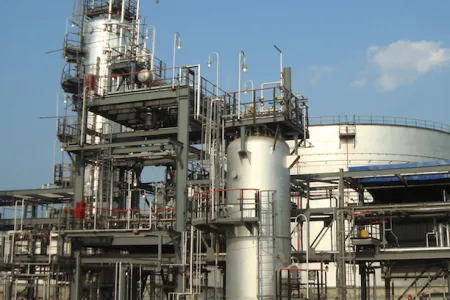
Revive idle wells to meet revenue shortfall, expert urges FG

Industry expert, Dr Victor Ekpenyong has urged the Federal Government to revive idle oil wells to boost oil production in order to meet revenue shortfalls. Ekpenyong, who is the Chief Executive of Kenyon International West Africa Limited, said this during an interactive session with journalists in Yenagoa, Bayelsa State. Kenyon International is a Well Control Services firm. Ekpenyong noted that vandalism and oil theft have hampered the country’s oil production and kept the nation from harnessing its full production capacity. He explained that oil production was being limited by breach of pipelines that evacuate crude from oilfields to export terminals. He noted that with the rebound of the Forcados Export Terminal which has been out of service, there will be an increase of export capacity by at least 350,000 barrels per day (bpd) when scheduled repairs on the export trunkline is completed in the next one week. Ekpenyong commended the Nigerian National Petroleum Company Limited (NNPCL) for ongoing repairs on major oil export pipelines, noting that upon conclusion of repair schedules, export capacity would rise significantly. He said that there was the need to revive idle assets to boost oil production to meet the Organisation of Petroleum Exporting Countries (OPEC) quota of 1.8 million bpd quota for Nigeria. Ekpenyong noted that there was existing production capacity to meet the shortfall in production from a little over one million bpd current output. “Reports available from NNPCL have it that repairs on Trans Forcados Export Trunkline is almost concluded and the Forcados Export Terminal will be up again and it has capacity to handle up to 400,000 bpd of oil export. “The sections of the Trans Niger Delta Pipeline (TNP), which feed the Bonny Crude Export Terminal, are also scheduled to be ready as well, so we need to revamp the idle wells to produce enough to meet our OPEC quota and earn more revenue,” Ekpenyong said. He noted that the country is yet to produce more and leverage the supply cuts occasioned by the Russian-Ukrainian crisis which has pushed up international crude oil prices. He noted that proposed divestment by the government from oil assets in non producing oil reserves would provide opportunities for investors to enter into partnerships with the government to increase oil production. “The efforts being made by the government to increase local refining is very massive. I learnt that the rehabilitation work at the Port Harcourt refinery has gone far for the President to promise that the plant will be back in December. “There is also ongoing work in Warri Refinery and these will increase local production of refined petroleum products and reduce imports and subsequent pressure on the naira at the foreign exchange market,” Ekpenyong said. He said that NNPCL remained the dominant importer of refined petroleum products saying the $3 billion facility being put in place by the government would enable more private sector players to augment the supply deficit.
NLC’s planned shutdown of the country illegal, FG insists

The Federal Government has told the Nigeria Labour Congress, NLC, that its plan to shut down the country on Wednesday, August 2, under the guise of industrial action is illegal. The NLC had threatened to embark on nationwide protest from August 2 following the failure to reach an agreement with the government on the recent increase in the pump price of petrol. The Federal Government had instituted a case at the National Industrial Court, Abuja, seeking to stop the NLC from embarking on the strike action. The court had also made an order stopping the NLC from going ahead with the strike pending the hearing and determination of the suit. But despite the court order, labour unions have insisted on the mass protest. The Solicitor-General of the Federation and Permanent Secretary in the Ministry of Justice, Mrs Beatrice Jedy-Agba, in a letter to the NLC, through their lawyer, Mr Femi Falana, SAN, said parties before the court are supposed to maintain the status quo, to respect the pendency of the matter. In the letter with reference number MJ/CIV/ABJ/316/23 and dated July 31, 2023, the solicitor-general said, “Parties are expected to maintain the status quo even in the absence of a restraining order. However, there was no threat of contempt of court in the clarification provided by this Ministry. Undoubtedly, drawing the attention of NLC and the public to the pendency of the order cannot be equated with threats. “The issue of peaceful protests and police permit are also not in contention, however, you may wish to be guided by the contents of the Communique issued by the National Executive Council of NLC at the end of its meeting of 27th July 2023. The decision or projected cause of action by NLC is directed principally in furtherance of issues connected with a hike in fuel price and consequential matters of palliatives and workers’ welfare. We assert that it is grossly inappropriate to lead the public protest in respect of issues relating to or connected with the fuel price increases, which are currently before the court! “From the Communique, it is apparent that the current move by NLC goes beyond peaceful protest by issuing a seven-day ultimatum for government to meet the demands and also embark on a nationwide action to compel the government to reverse alleged anti-worker policies. “Furthermore, uncontroverted media reports have established that NLC is not planning a peaceful protest but intends to ground the government by endangering public peace, instilling fear in the masses, and precipitating a further crisis. To buttress the above, the Assistant General Secretary of NLC, stated thus: ‘Nigerians should be prepared. That’s what we are saying. Being prepared means you have to stock food in your house and be economical with your movement at this particular point in time so as to avoid being stranded…’ “ “In the same vein, the Nigeria Union of Petroleum & Natural Gas Workers and National Union of Electricity Employees confirmed that they were working towards grounding the supply of fuel and the national electricity grid. The Ag. General Secretary of NUEE stated thus: ‘The NUEE is an affiliate of the NLC and I’ve told you that we will join the strike action. The issue is that if there’s a deadlock between labour and the government; that means that the mass protest is still going on, and definitely electricity workers, as an affiliate of the NLC, will partake in the mass protest. So, all workers in the power sector will join the mass protest on Wednesday, August 2, 2023. It is binding on every staff member to join the strike action. So, if it results in a blackout, the only option is for the government to listen to us if it wants power to return.” “We reiterate that the interim order clearly restrained NLC from embarking on industrial action of any nature. It is common knowledge that a strike is only a form of industrial action. NLC has expressed the intention to embark on a nationwide action to force the government (employer) to agree to its demands. Furthermore, the participation of workers in the protest will result in restriction, or imitation on, or a delay in the performance of work. The foregoing, inclusive of the purported peaceful protest (in view of its intended aims or purposes), undoubtedly amounts to industrial action. “It is incumbent on your law firm to sensitize the labour unions that peaceful protests are no justification for disrupting or shutting down essential services, which is tantamount to a strike action.”
lPMAN supports FG on mitigating effects of fuel subsidy removal

The Independent Petroleum Marketers Association of Nigeria (IPMAN) says it is ready to support the Federal Government in mitigating the impact of subsidy removal on Nigerians. Alhaji Debo Ahmed, a former Vice Chairman, IPMAN Western zone, gave the assurance on Tuesday in Lagos. Ahmed also expressed IPMAN’s willingness to collaborate with the government in developing alternative sources of energy to alleviate the effects of subsidy removal. “We expect FG to call critical downstream stakeholders to fathom a design of alternative sources of energy and how this can go around the country within the shortest possible time. “IPMAN is ready to synergise with the government in this respect because of our spread and ability to deliver whenever called upon by the government,” he said. He highlighted the importance of exploring Compressed Natural Gas (CNG) and Liquefied Petroleum Gas (LPG) as competitive and viable options. Ahmed emphasised that IPMAN’s extensive network of filling stations could facilitate the installation of CNG and LPG facilities across the country. He called on the government to swiftly address this urgent matter by providing financial support and establishing CNG vehicle conversion centers. “It is an urgent issue that bothers on economic expediency, the government should not delay. “With this huge money realised government should be able to provide busses that use CNG and normal fossil oil but fare reduction to the barest minimum in order not to kill huge investments in the fossil oil business. “The National Gas Expansion Programme Committee should be call back to continue their good work of bringing sellers and suppliers of CNG equipment together and also the quality assurance,” Ahmed said. He suggested reviving the refineries under close government supervision and urged the National Gas Expansion Programme Committee to continue its commendable work. Mr Joe Nwakwue, an oil and gas consultant and former Chairman, SPE Nigerian Council, said that the implementation of subsidy removal requires careful planning. Nwakwue said this would ensure the timely rollout of palliatives and judicious use of the saved funds, thereby benefiting all Nigerians. He said that the subsidy savings remained the best solution, noting that its real implementation would reduce borrowing by the government. “In essence, we were hitherto funding subsidies from borrowings, the elimination should reduce the fiscal pressure to borrow;” he said. Mr Tunji Oyebanji, the Chief Executive Officer of 11 Plc said that it was obvious, that the savings was made possible because the government through NNPCL was no longer bearing the cost. According to him, the government should be wary of slipping back into the subsidy regime because prices are still rising. “It should ensure judicious use of the saved funds and the timely rollout of palliatives,” Oyebanji said. Recall that President Tinubu on Monday during a nationwide broadcast, said that for over two months, the government had saved over a trillion Naira from subsidy. Tinubu said that the money would be used more directly and more beneficially for all families. According to him, for several years, he has consistently maintained the position that the fuel subsidy has to go.
N11.34trn Budget Deficit: FG goes after N553bn unremitted shipping taxes

The Federal Government says it intends to recoup over N553 billion in unremitted taxes from international petroleum shipping companies operating in Nigeria. The Director, International Tax, Federal Inland Revenue Service (FIRS), Mr Abdullahi Aliyu said that recouping the sum which accrued between the years 2010 to 2019 would help address the nation’s budget deficits. Aliyu noted that with the nation’s overall budget deficit of N11.34 trillion, the N553 billion unremitted taxes represents 5.03 percent and was a viable alternative to addressing the Nigeria’s economic woes instead of borrowing. Aliyu said this while speaking at a virtual summit organised by the Nigerian Chamber of Shipping (NCS) on Wednesday with the theme; “Sensitising the Nigerian Maritime Industry on the New Tax Policy and Objectives” The FIRS draws its legal backing from Section 14(1) of the Companies Income Tax Act (CITA), titled “Companies engaged in shipping or air transport”. It states that: “Where a company other than a Nigerian company carries on the business of transport by sea or air, and any ship or aircraft owned or chartered by it calls at any port or airport in Nigeria, its profit or loss to be deemed to be derived from Nigeria shall be the full profits or loss arising from the carriage of passengers, mails, livestock or goods shipped or loaded into an aircraft in Nigeria”, At the summit, the International Association of Independent Tanker Owners (INTERTANKO), the International Chamber of Shipping (ICS), indigenous ship-owners, tax experts, among others called for more clarity and time for operators to understand the Nigerian tax regime. The global bodies also claimed that their members were not aware of the tax provisions and public notice given by FIRS, and expressed fears on Nigeria’s insistence on recouping taxes on previous transactions between 2010 and 2019. Aliyu, however, noted that shipping companies involved in dry cargo activities in Nigeria and foreign airlines had been complying with the same tax laws that most operators in the oil sector had neglected. “The onus is on global businesses to understand the local laws and taxation in the countries where they transact business, and this specific laws have been in place in the nation for decades. “Nigerian taxes are more favourable to non-residents compared to indigenous companies, thereby creating an unfair business environment for local operators,” he said. In his paper presentation, the Assistant Director, Tax, FIRS, Mr Oluwole Oni pointed out that the agency had advertised the planned taxation exercise in December 2021 to prevent disruptions in the essential global shipping business. “Non-resident vessels earn freight income for the transportation services provided in transporting the petroleum products (crude oil and gas products) from Nigeria to the agreed location, outside of Nigeria. “Irrespective of the commercial arrangement adopted by the non-resident vessels to lift crude oil from Nigeria, the freight income attributable to Nigeria, is taxable in line with provisions of the Companies Income Tax Act (CITA),” he said. Oni said that the FIRS had written officially to operators who owe taxes for the period between 2010 and 2019, adding that the companies are expected to send in their responses within 30 days. “Those who received the letters are expected to send in their responses which isn’t only about payment. The response could be an acknowledgement of receipt, a demand for clarification, payment, etc. “The first step to compliance is registration with FIRS and most operators are yet to register,” Oni said. On her part, the Senior Advisor for Shipping Policy at the ICS, Georgia Spencer-Rowland stated that the communication on the tax regime was not properly carried out as most members of the ICS are oblivious of the tax framework. Noting that the members of ICS comprise over 80 per cent of the world’s merchant ships and 40 national ship-owners associations, she encouraged the FIRS to clearly communicate in an official document the period allotted as grace period for the tax implementation. “Do these taxes affect inbound or outbound ships? Are the taxes payable on freight, income or profits? Will ICS members as stakeholders be allowed to participate in the Presidential Technical Committee ahead of the implementation of these taxes?” Georgia asked. Meanwhile, the Legal Counsel to INTERTANKO, Ms Selena Challacombe, remarked that the figures and volumes quoted by FIRS for taxation was not the actual figures in the transactions carried out by INTERTANKO members. Challacombe equally hinted that there could be challenges in recouping taxes with the figures for 2010 to 2019 as ship charterers are unlikely to provide the vital information seen as germane to their businesses. She said the situation should not be termed tax evasion when the alleged violators had not profited from the negligence of taxes they never knew existed. She added that Australia had a similar law enacted since 1936 and members of INTERTANKO factored in the taxes when undertaking contracts for Australia. In his welcome remarks, the President of NCS, Mr Aminu Umar stressed the need for collaboration among stakeholders and government agencies for a smooth implementation of the taxation.Umar noted that the chamber was willing to partner with the government in its bid to collect revenue for national sustainability, but added that there must be collective input to rightly shape the shipping sector and encourage investments.He also described the Presidential Technical Committee for the implementation of taxation as an ideal avenue for collaborations between local and global shipping operators as well as government agencies to advance the nation’s maritime sector.Other dignitaries who attended the summit were; President of the Ship Owners Association of Nigeria (SOAN), Dr Mkgeorge Onyung; Vice President of NCS, Ify Akerele; President, Nigerian Ship-owners Association (NISA), Mr Sola Adewumi; among others.