More Attacks Imminent Unless Nigerian Government Negotiates With Bandits – Sheikh Gumi

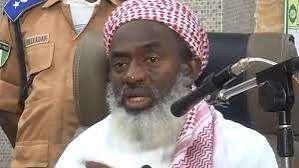
Kaduna based Islamic cleric, Sheikh Ahmad Gumi, has re-emphasized the need for the Nigerian government to dialogue with bandits in order to stop incessant attacks on innocent citizens. The cleric stated that there is no military solution to end the insecurity problems Nigeria is currently facing. Speaking during an interview session with AriseNews TV on Friday morning, the Islamic scholar insisted that persistent military attacks on the terrorists were responsible for their latest lack of sympathy on Nigerians they abducted. He admonished the Nigerian government should emulate how the United States’ government negotiated with the Taliban terrorists by also having a dialogue with the bandits to prevent the insurgence in the country. “This thing (banditry) is turning into something else. We are turning them into monsters, more monsters as what they are. They are ignorant, they don’t have direction, they don’t have leadership, they don’t have empathy now because of the way we treat them too, we don’t care when we burn them,” he said “When we burn their children and women, in fact this very recent incident is just a tip of an iceberg; what has been happening in the bush, until we change our tactics and allow people who know, these politicians, I am tired of them. “I was a military man myself, but I don’t think there is a military solution, in fact I think it is humiliating military to think that the military should take care of civilian insurgency, what we need is a very good detective work, very good policing, very good social programme. We should leave our military off these issues. Our military knows fire for fire and these people do not have the fire power, they hide behind the civilians and do whatever they do. So don’t let us humiliate and disgrace our military. This is not their job, this is the job of politicians. This is the job of the police, this is the job of intelligence. “In fact I believe no ransom should be paid, I believe that but engage, engage these people. Give them hope. But not only in these children’s cases, be holistic. I heard when one military man said it is turning into a war, I am so sad to see that they are now realising that it is turning into a war. It has been war since, it has been ethnic war, it’s been class war, it is not just more than criminality. We have to accept that. “If we can see Israel and Hamas exchanging prisoners, I don’t see why we can’t negotiate. If Americans can negotiate with the Taliban, I don’t see why we can’t. They (foreign governments) can’t impose on us their own ideas when behind the door, they also negotiate with these terrorists.”
FCTA Demolishes 11,705 Shanty Colonies, Generates N2.5bn Revenue

The Department of Development Control, Federal Capital Territory Administration (FCTA) has demolished 11,705 shanty colonies across the city, Abuja, from January to October, according to an official. The department also generated N2.5 billion and created 13,873 direct and indirect jobs within the period. Mr Mukhtar Galadima, Director, Development Control, Abuja Metropolitan Management Council, FCTA, disclosed this during a media briefing on the activities of the department in Abuja on Sunday. Galadima explained that the shanties and illegal developments were demolished in conjunction with the Ministerial Enforcement Task Force Team. He identified the affected areas as Kabusa, Kasuwan dare, Galadimawa junction, Mabushi scavenger colony and Gudu District along Oladipo Diya way. He equally said that the department also removed obstructing structures on waterways at Lugbe, Jahi and Lokogoma. This, according to him, has curtailed the flooding being experienced within the city in recent years. He also said that the encroachment on rights of way and security black spots were equally dismantled in collaboration with security agencies in the FCT. The director also disclosed that a total of 1,764 building plan applications were received within the period, out of which 1,422 were granted approvals, including backlogs of previous years. On revenue generation, Galadima said that the N2.5 billion was generated from building plan approval and land use contraventions from January to October. He said that amount represents 68.5 per cent of the N3.7 billion target for the year, adding that of the N2.5 billion, N1.7 billion was generated from building plan approval alone. The director also explained that the 13,873 direct and indirect jobs were created at different stages of construction at various sites as approved by the department. Another achievement according to Galadima included the inauguration of One-Stop Vetting Team to treat backlog of files and fast -track of building plan approval for Plots within areas serviced with infrastructure. He added that the department also established Regional Offices to decentralise monitoring and enforcement activities in the Area Councils and Satellite Towns. “We equally inaugurated a Committee on the Prevention of Building Collapse in the FCT to proffer modalities and institutional framework to avert building collapse in the territory. “The department also inaugurated a Post-Development Audit which commenced at Dawaki as a pilot scheme. “The staff of the department equally carried out routine monitoring of physical development activities within the territory where contravening developments are served either with stop work, quit notice or demolition notice,” he said. On staff welfare, Galadima said that the department has institutionalised end of year activities where it appraises itself, enhances staff bonding as well as presents awards to deserving staff to boost morale. “There is also a monthly medical fitness check for all staff and monthly sporting activities to boost physical fitness of staff,” he added. He identified increasing cases of land grabbing and harassment of the department staff by security agencies as some of the challenges recorded within the period under review. “There is also the problem of non-resettlement of indigenous communities which created pockets of expanding slums throughout the city. “Another challenge is the inadequate and obsolete utility vehicles for monitoring and heavy-duty equipment for enforcement to cover the ever-growing territory. “Others are inadequate office accommodation, slow adoption information and communication technology, and non-0utilisation of land after removal of squatter settlements. “There is also the challenge of slow pace of infrastructural development especially in the satellite towns and abandoned buildings serving as criminal hideouts among others,” he said.
Reps Throw Out N5bn Presidential Yacht From Supplementary Budget

*Increase Students’ Loan To N10bn The House of Representatives has yanked off the budgetary allocation of N5.09 billion for purchase of a presidential yacht in the N2.176trn supplementary budget submitted to the lawmakers. The House, instead, moved the proposed sum to students’ loan thereby increasing allocation for students’ loan to 10bn as against 5. 5bn earlier provided in the supplementary budget. The action of the lawmakers followed the public outcry that trailed the provision made a presidential yacht amidst the hardship Nigerians are facing following the removal of fuel subsidy and other policies by the current administration. Chairman of the House Committee on Appropriations, Abubakar Bichi Abubakar (APC, Kano) made this known while addressing newsmen after the passage of the N2.176 trillion supplementary budget. He said the need became necessary following low budgetary allocation for students. He said the committee also increased budgetary allocation of the Ministry of Defence from 476bn to 546bn following security concerns. Bichi also disclosed that the minimum wage for workers was considered and approved for onward transmission to the executive while promising proper legislative oversight to ensure 100 percent implementation. In the supplementary budget sent to the National Assembly by the president, the federal government allocated N5.09 billion to purchase a presidential yacht. The proposed sum was under the capital expenditure of the Nigerian Navy’s budget. According to the breakdown, the Navy will require N62.8 billion for its operations, with recurrent expenditure and capital expenditure gulping N20.4 billion and N42.3 billion, respectively. But Bichi said the five billion naira for the presidential yacht has been yanked off from the budget. On the presidential yacht, Bichi said, “Actually, as far as we are concerned, we don’t have that anymore. We have increased the student loan. Initially, the student loan was N5bn in the budget but we have increased it to N5bn so that our students can access that facility in order for them to go to school. We don’t have the yacht anymore in budget.
Naira Freefall: FG To Receive $10bn Forex Inflow – Finance Minister

The fortunes of the naira may soon be reversed with the Finance Minister, Wale Edun assuring that about $10 billion naira is expected to flow into the economy in a matter of week Edun made this known during a panel session at the ongoing Nigeria Economic Summit Group (NESG) question and answer session concerning stabilizing the foreign exchange market and enshrining liquidity in the market. Since the unification of the foreign exchange market in June, the naira’s value has slumped by over 100 per cent on the parallel market. The current CBN management has introduced a slew of measures to provide liquidity but the chasm between the rate on the I&E window and parallel market continues to widen. The minister said, “in addition, from the supply of foreign exchange through NNPC, increased production, reduced expenditure, from transactions such as forward sales, from our discussions with sovereign wealth funds, that are ready to invest and provide advanced alongside that investment, there is a line of sight of $10 billion worth of foreign exchange in the relatively near future in weeks rather months.” The Minister further said President Tinubu has signed two executive orders geared towards ensuring liquidity in the forex market. He said, “Mr. President announced that he had taken measures to ease illiquidity in the forex market which we know is very problematic at this time.” “The market is illiquid; it’s not functioning properly because there is no supply and there are various reasons for that. The solution that the President has put on the table is that he has signed an executive order that effectively allows under forbearance all the cash that is in the domestic economy to legally come into the formal money supply” “Along with that, there is another executive order that allows domestic issuance of foreign currency instruments so that they will have the incentive to provide that foreign exchange from whatever source.”
Tinubu Withdraws Nomination Of FERMA Chairman, Kashim Imam

President Bola Tinubu has issued a directive for the withdrawal of Imam Kashim Imam’s nomination as the Chairman of the Federal Roads Maintenance Agency (FERMA) Board of Directors. This decision was communicated through a statement by Ajuri Ngelale, the President’s Special Adviser on Media and Publicity, on Thursday in Abuja. The withdrawal of this nomination takes immediate effect, as indicated by Ngelale. It’s important to note that this withdrawal will not impact other appointments to the FERMA Board and Executive Management team. Engr. Imam Ibrahim Kashim Imam, and 25-year-old first-class Mechanical Engineering graduate from Brighton University. Born on the 27th of December, 1998, Engr. Imam had shown promise from a young age. He had pursued his undergraduate studies in Mechanical Engineering at Brighton University, where he graduated with first-class honours. His academic prowess continued as he pursued an MSc with honours at the same University. He completed his National Youth Service Corps (NYSC) in August 2022. Prior to his appointment, he served as a special assistant to Dave Umahi, the minister of works. His Father, Kashim Ibrahim-Imam, is a Nigerian Politician. He ran for Borno state governor as the People’s Democratic Party (PDP) candidate in 2003 and 2007, losing to Ali Modu Sheriff from the All Nigeria Peoples Party (ANPP) both times. No reason was given for the withdrawal.
Former Nigerian Minister Of Interior Dies

Senator Alh. Dr. Bello Maitama Yusuf, a prominent figure in Nigerian politics and business, and a former minister for internal affairs and commerce, has passed away at the age of 78. Senator Yusuf, who represented the Jigawa South West constituency as a Senator of the Federal Republic of Nigeria, had a long and distinguished political career. He was first elected in April 1999 and subsequently re-elected in April 2003, earning the trust and support of his constituents over the years. During his tenure as a minister, Senator Yusuf made significant contributions to the nation. As the minister for internal affairs in 1979 and the minister for commerce in 1982, he played a crucial role in safeguarding Nigeria’s economic interests. Notably, his efforts as the minister for commerce helped curb the influx of imported goods into Nigeria, which was greatly impacting the country’s foreign reserves. In his home state of Jigawa, Senator Yusuf was recognized and honoured with the title of “Sardaunan Dutse” in acknowledgment of his outstanding service and contributions to the state. Furthermore, he was a recipient of the prestigious national honour, the Grand Commander of the Niger (GCON), reflecting the high regard in which he was held by the nation.
Diphtheria: Increase routine vaccination, WHO urges FG

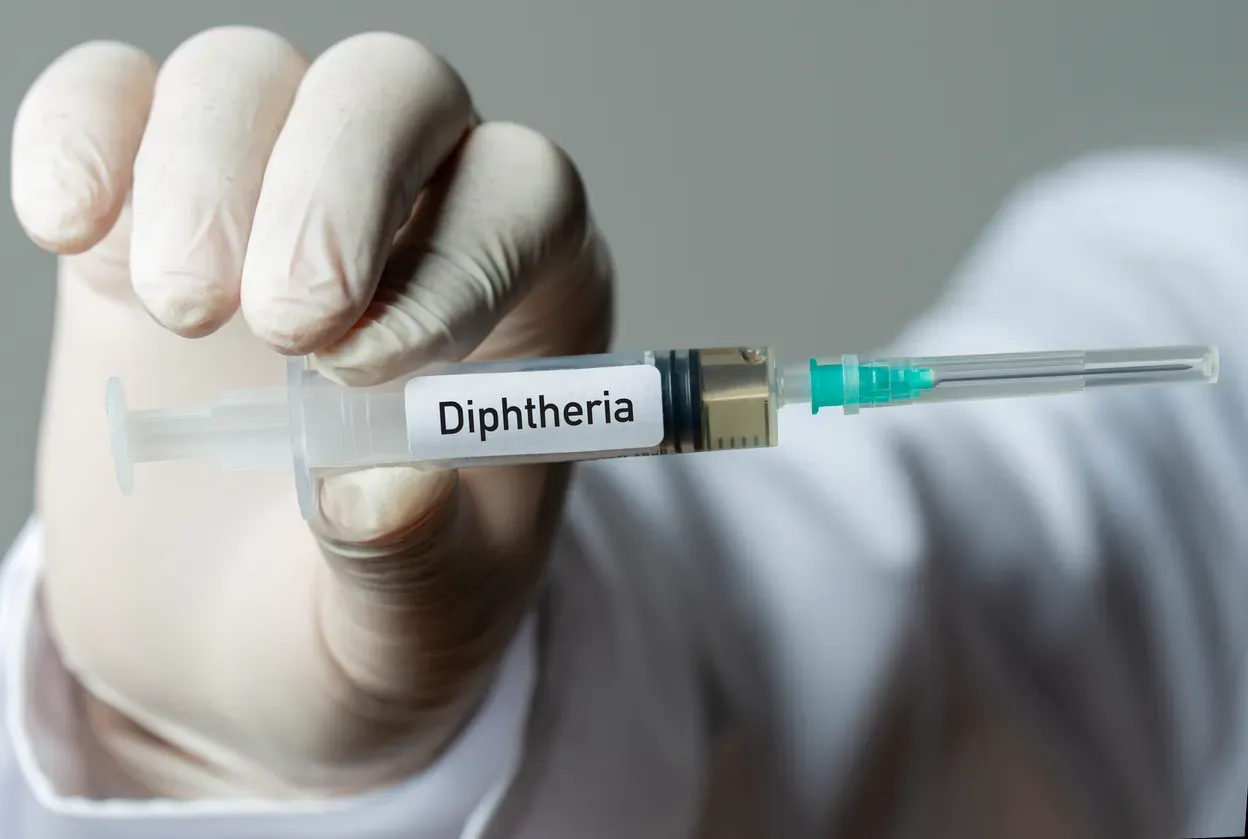
The World Health Organisation (WHO) has called on the Federal Government to increase routine vaccination to nip outbreaks in the bud. Dr Tedros Ghebreyesus, WHO Director-General made the call during an online media conference. Diphtheria to be an acute and highly contagious bacterial disease-causing inflammation of the mucous membranes, formation of a false membrane in the throat which hinders breathing and swallowing. It is potentially fatal heart and nerve damage by a bacterial toxin in the blood. It is now rare in developed countries owing to immunisation. Tedros said that Nigeria was experiencing a severe outbreak of diphtheria According to him, so far, more than 9000 suspected cases have been reported across 17 states, with 307 deaths. “This is the second wave of diphtheria this year,” he said. According to him, diphtheria is a highly contagious but vaccine-preventable disease, caused by a bacterium which can be fatal in five to 10 per cent of cases, with a higher mortality rate in young children. He said that WHO was supporting the government to improve vaccination, surveillance, case management and risk communication. “We are also working with partners to increase access to vaccines and antitoxin. “This outbreak and others highlight the need to increase routine vaccination to stop these outbreaks before they start,” WHO boss said. On COVID-19, he said that the organisation had continued to see concerning trends for COVID-19 ahead of the winter season in the northern hemisphere. Tedros said that the deaths were increasing in some parts of the Middle East and Asia, saying: “ICU admissions are increasing in Europe and hospitalisations are increasing in several regions.” He, however, regretted that “data is limited.” According to him, only 43 countries less than a quarter of WHO member states are reporting deaths to WHO, and only 20 provide information on hospitalisations. “Globally, there is not one variant that is dominant. “The variant of interest EG.5 is on the rise, while the XBB sub variants are declining. “The BA.2.86 variant has been detected in small numbers in 11 countries. “WHO is monitoring this variant closely to assess its transmissibility and potential impact,” he said. Tedros said that one of WHO’s biggest concerns was the low level of at-risk people who had received a dose of COVID-19 vaccine recently. He said that the organisation’s message was not to wait to get an additional dose if it was recommended for the person. Tedros said that WHO published an annex to the global strategic preparedness and response plan for COVID-19, “which further supports countries in five critical areas.” He said the areas were collaborative surveillance, community protection, safe and scalable care, access to countermeasures and coordination.
World Bank partners FG, targets 148m digital national IDs for Nigerians

A new partnership between the federal government and the World Bank will see about 148 million working age Nigerians getting digital National Identity Cards by the middle of 2024. Speaking at a dinner organized by the Ministry of Communications in partnership with the World Bank, World Bank Country Director for Nigeria, Shubham Chaudhuri, reaffirmed the organization’s commitment to eradicating poverty, improving lives and creating job opportunities for the country’s youth. He said the multilateral financial institution is collaborating with the federal government to ensure the successful rollout and registration of digital national IDs for all Nigerians. Chaudhuri said, “Our main mission here in Nigeria is to eliminate poverty, make lives better, and create jobs for all Nigerian youth. One of the areas that we think has the greatest potential is the area of using digital technologies to transform. Now to do that it begins with having this digital national ID. “So one of the main partnerships we have is working with NIMC to ensure the rollout of the registration so that all 213/220 million Nigerians have a digital national ID, beginning of course with all people of working age and I think the target for that is at least 148 million people by the middle of next year. “The second is helping Nigeria lead the broadband infrastructure for broadband connectivity because without broadband connectivity, digital technologies will lead to a digital divide. So their support has been for good kinds of policies and regulations that will help invite private investment into this space and then fibre At the dinner which was organized in his honour, Minister for Communications and Digital Economy, Dr. Bosun Tijani, announced that the Federal Government has secured a $500 million loan aimed at boosting innovation and entrepreneurship within Nigeria’s digital sector. “Part of my responsibilities is working with BoI to ensure that we domicile that funding locally in Nigeria, work with firms who manage and invest in businesses to ensure that those businesses that will benefit are true, real Nigerian businesses,” the minister said.
Port Harcourt refinery to resume operations by December -FG

*We’re committed to ending fuel importation, says Minister The Federal Government has reiterated its commitment to ending petroleum product importation soon, as efforts are being redoubled to restore the nation’s local refining capacity. According to a statement on hits X handle, Chief Corporate Communications Officer NNPC Ltd. Garba Deen Muhammad, said the Minister of State for Petroleum Resources (Oil), Senator Heineken Lokpobiri, made this known during an inspection tour of the rehabilitation work progress at the Port Harcourt Refining Company (PHRC) Ltd. plant, in Port Harcourt on Friday. The Minister, who was in the company of his counterpart, the Minister of State for Petroleum (Gas), Hon. Ekperikpe Ekpo; Permanent Secretary, Federal Ministry of Petroleum Resources, Ambassador Gabriel T. Aduda, and the Group CEO, NNPC Ltd., Mr. Mele Kyari, said considering the level of progress recorded in the PHRC rehabilitation project, the plant will come back on stream by December this year. “Our objective in coming here today is to ensure that in the next few years, Nigeria stops fuel importation. From what we have seen here today, Port Harcourt Refinery will come on board by the end of the year, Warri will come on stream by the end of the first quarter of next year, and Kaduna will also come on board towards the end of next year. If you add that to the Dangote Refinery, we will be able to stop fuel importation, and Nigerians will enjoy the full benefits of deregulation,” the Minister assured. The Minister also said he was satisfied with the ongoing rehabilitation work at the Port Harcourt refinery, noting that once all the refineries are back on stream, Nigerians will enjoy a better supply of petroleum products, and foreign exchange will be domesticated, leading to an improved economy. Earlier in his remarks, the Group CEO, NNPC Ltd., Mr. Mele Kyari, said bringing back the refineries to their optimal levels is a national aspiration, and the Company remains focused on delivering that. “We are aware of our nation’s challenges in terms of fuel supply. But we are not here to give excuses. We are focused on delivering this rehabilitation project, our two other refineries, and all other investments towards revamping the nation’s refining capacity. We are hopeful that in 2024, this country will be a net exporter of petroleum products,” Kyari stated. Also speaking, the Minister of State for Petroleum (Gas), Hon. Ekperikpe Ekpo said: “We are here to go into the field. Yesterday was the era of subsidies. Today, we don’t have subsidies. Today, people are in a desperate situation to heave a sigh of relief; and see how to live. You all know that petrol is very vital to our economy. All hands must be on deck to ensure that the refineries are working,” he stated. During the visit, the two Ministers also participated in the Refineries’ Rehabilitation Steering Committee meeting and held a meeting with the refinery’s Engineering, Procurement & Construction (EPC) Contractors.
Subsidy Removal: Extend palliatives to all industries, NACCIMA appeals to FG

The Nigerian Association of Chambers of Commerce Industry, Mines and Agriculture (NACCIMA) has appealed to the Federal Government to extend palliatives to all productive industries to cushion the effects of the removal of fuel subsidy. Its National President, Otunba Dele Oye, made the appeal at the 3rd Quarterly Council meeting of the association in Abuja. The Federal Government had announced N5 billion palliative for each state of the federation, including the Federal Capital Territory to ameliorate the rise cost of living arising from the removal of the petrol subsidy. Oye said that the removal of petrol subsidy was not only affecting consumers but also the productive industries. According to him, the removal of the petrol subsidy and the floating of the Naira currency have in one way or the other affected industries. “These affected both consumers and industries because every new policy has its own casualties. “So, in the long term, it is good for the country, but in the short term, you have to consider people who are wrongly affected so that the prices do not cause unusual inflation. “It is important that the government ensures that the palliatives also go to the industries,’’ Oye said. He added that it would take time for businesses to adjust to the new policy of Naira floating. “The short term is always a bit difficult for a lot of people, because it takes time to adjust for businesses to get to know the new policy and also to work with it.” NACCIMA boss said that providing loans at a single digit rate could provide certain cushioning effects to industries affected in the short term. “This is because it is from us we generate the money from the tax to sustain the economy. “So, government must focus and find a way to make sure that the palliative goes to every sector,’’ he said. In his remarks, Dr Al-Mujtaba Abubakar, President, Abuja Chamber of Commerce and Industry (ACCI) said that the business community also needed incentives to cushion the effects of the fuel subsidy removal and the depreciation of the Naira. Abubakar, who was represented by the Director-General of ACCI, Victoria Akai, also emphasised the need for stable power supply and harmonisation of tax to enable businesses thrive. According to him, the business community is in dire need of incentives that will cushion the effect of the fuel subsidy removal and the depreciation of the Naira. He urged NACCIMA president to liaise with relevant government agencies to press home the association’s demands such as stable power supply and harmonisation of tax among others. “I will like to commend the determination of the NACCIMA President to further deepen the relationship of NACCIMA and policymakers which I believe will go a long way to bring the much-needed relief to the business community,’’ Abubakar said.