lPMAN supports FG on mitigating effects of fuel subsidy removal

The Independent Petroleum Marketers Association of Nigeria (IPMAN) says it is ready to support the Federal Government in mitigating the impact of subsidy removal on Nigerians. Alhaji Debo Ahmed, a former Vice Chairman, IPMAN Western zone, gave the assurance on Tuesday in Lagos. Ahmed also expressed IPMAN’s willingness to collaborate with the government in developing alternative sources of energy to alleviate the effects of subsidy removal. “We expect FG to call critical downstream stakeholders to fathom a design of alternative sources of energy and how this can go around the country within the shortest possible time. “IPMAN is ready to synergise with the government in this respect because of our spread and ability to deliver whenever called upon by the government,” he said. He highlighted the importance of exploring Compressed Natural Gas (CNG) and Liquefied Petroleum Gas (LPG) as competitive and viable options. Ahmed emphasised that IPMAN’s extensive network of filling stations could facilitate the installation of CNG and LPG facilities across the country. He called on the government to swiftly address this urgent matter by providing financial support and establishing CNG vehicle conversion centers. “It is an urgent issue that bothers on economic expediency, the government should not delay. “With this huge money realised government should be able to provide busses that use CNG and normal fossil oil but fare reduction to the barest minimum in order not to kill huge investments in the fossil oil business. “The National Gas Expansion Programme Committee should be call back to continue their good work of bringing sellers and suppliers of CNG equipment together and also the quality assurance,” Ahmed said. He suggested reviving the refineries under close government supervision and urged the National Gas Expansion Programme Committee to continue its commendable work. Mr Joe Nwakwue, an oil and gas consultant and former Chairman, SPE Nigerian Council, said that the implementation of subsidy removal requires careful planning. Nwakwue said this would ensure the timely rollout of palliatives and judicious use of the saved funds, thereby benefiting all Nigerians. He said that the subsidy savings remained the best solution, noting that its real implementation would reduce borrowing by the government. “In essence, we were hitherto funding subsidies from borrowings, the elimination should reduce the fiscal pressure to borrow;” he said. Mr Tunji Oyebanji, the Chief Executive Officer of 11 Plc said that it was obvious, that the savings was made possible because the government through NNPCL was no longer bearing the cost. According to him, the government should be wary of slipping back into the subsidy regime because prices are still rising. “It should ensure judicious use of the saved funds and the timely rollout of palliatives,” Oyebanji said. Recall that President Tinubu on Monday during a nationwide broadcast, said that for over two months, the government had saved over a trillion Naira from subsidy. Tinubu said that the money would be used more directly and more beneficially for all families. According to him, for several years, he has consistently maintained the position that the fuel subsidy has to go.
Subsidy: Rice millers commend Tinubu’s plans for farmers

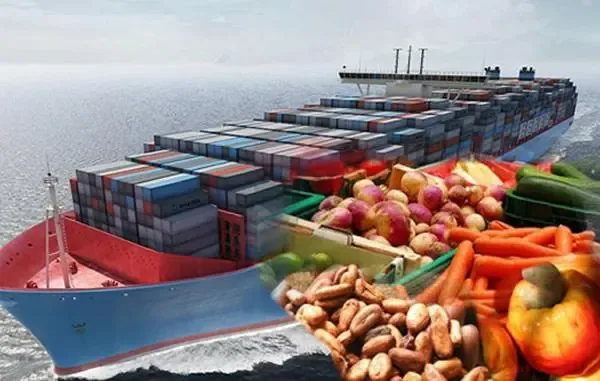
The Abakaliki Rice Millers Association in Ebonyi has hailed the Federal Government’s plans to boost farm produce in an effort to cushion the effect of the removal of fuel subsidy. President Bola Tinubu, on Monday in a nationwide broadcast, assured Nigerians of adequate food sufficiency and security. According to Tinubu, the government will ensure staple foods are available and affordable. “To this end, I have ordered the release of 200,000 metric tonnes of grains from strategic reserves to households across the 36 states and FCT to moderate prices. “We are also providing 225,000 metric tonnes of fertiliser, seedlings and other inputs to farmers who are committed to our food security agenda,” Tinubu added. Reacting to the development on Tuesday, Mr Linus Nkwuda, Chairman of the millers association said that President Tinubu’s plans to boost agriculture was a welcome development. Nkwuda, however, decried the way inputs and seedlings meant for farmers had been diverted in the past. He appealed to the federal government to distribute such items directly to the farmers. “The items; fertilizer and seedlings as listed by the President during the broadcast, are very important to all farmers. We are happy. “We need those items to succeed. Loans are also important. We commend the President and urge him not to involve political farmers during implementation,” he said. Mr Kenneth Chigozie, Secretary of Rice Farmers Association of Nigeria (RIFAN), Abakaliki branch, also urged the president to work directly with the farmers at the hinterland in the efforts to ensure food security. Chigozie noted that working directly with farmers would ensure transparency in the distribution of farm inputs meant for its members. Chigozie, however, expressed worry about how the farmers had suffered since the removal of fuel subsidy, adding that members were faced with challenges associated with the high cost of production. He described the cost of inputs, such as seedlings, herbicides, pesticides and fertiliser as well as hiring of labourers, as worrisome. “We are happy, President Tinubu is remembering us, the farmers. His promises to us during the nationwide broadcast are a welcome development. “Our prayer is that, let those items and monies attached come to us directly,” Chigozie added.
Give Tinubu benefit of doubt, Uwaleke appeals to Nigerians

Professor of Finance and the Capital Market at the Nasarawa State University, Uche Uwaleke, has called on Nigerians to give President Bola Ahmed Tinubu the benefit of the doubt. The President had in a nationwide broadcast on Monday in Abuja, reeled out a number of measures meant to cushion the effects of the removal of fuel subsidy. In his inauguration speech, the President said fuel subsidy was gone forever. According to him, his administration would rather channel the savings from the subsidy removal into other critical sectors of the economy. In his broadcast, the President said his administration has proposed the sum of N75 billion to fund enterprises at 9% interest per annum; N125 billion to energize MSME; release 200,000 Metric Tonnes of grains; 225,000 metric tonnes of fertilizer, seedlings, and other inputs to farmers; and N50 billion each to cultivate 150,000 hectares of rice and maize. Also, the federal government will also make available N50 billion each to cultivate 100,000 hectares of wheat and cassava, N100 billion to acquire 3000 units of 20-seater CNG-fuelled buses and review the minimum wage. Uwaleke said: “The President’s address to the nation is quite soothing. “He spoke in clear terms and I think Nigerians should allow him the benefit of the doubt.” The first Professor of the Capital Market in Nigeria was however concerned that President Tinubu failed to tell Nigerians how the executive will also make sacrifices. “But it was short on how the three arms of government will share in the pains of the governed, especially with respect to affecting a significant cut in the cost of running government,” he asked.
Nigeria’s currency circulation hits N2.60trn in June

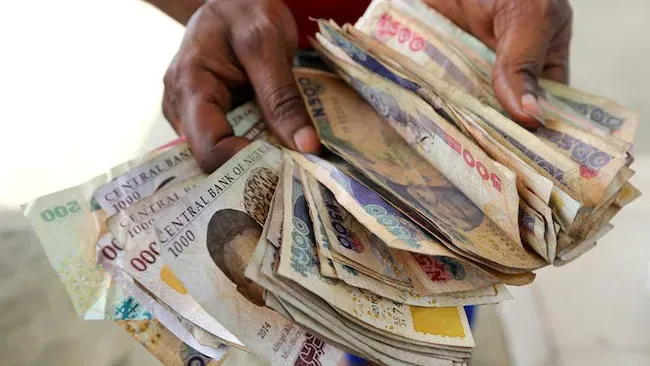
Nigeria’s currency in circulation climbed to N2.60 trillion in June 2023. Currency in circulation is the amount of cash in paper notes or coins issued by the CBN to conduct transactions. According to the latest data from the Central Bank of Nigeria (CBN), the figure rose by 88 percent from N1.39 trillion in January to N2.60 trillion in June 2023. The amount of currency in circulation in Nigeria fluctuated in the first half of 2023. In January, it stood at N1.39 trillion and fell to N982,097 billion in February. However, currency circulation rose to N1.68 trillion in March. In April, May, and June, it increased to N2.48 trillion, N2.53 trillion, and N2.60 trillion, respectively. In October 2022, the CBN announced that it would be redesigning three of the existing banknotes: the N200, N500, and N1000 notes. The new notes were due to be circulated on December 15, 2022, while the old notes would remain legal tender until January 31, 2023. The apex bank said it decided to redesign the banknotes because of concerns about the management of currency in circulation, particularly those outside the banking system. The CBN said currency management has faced several challenges in recent years, including counterfeiting, the use of cash for illegal activities, and the hoarding of banknotes by members of the public. Crude oil prices may rise on demand increase Experts say the prices of crude may likely increase in days to come as demand outpaces supply following a cut by the Organization of Petroleum Exporting Countries (OPEC), particularly that of major producer Saudi Arabia. The International Energy Agency (IEA) and the Organization of the Petroleum Exporting Countries (OPEC) earlier projected oil demand to outpace supply this year, leading to overall inventory draws to the tune of 400,000 to 500,000 barrels per day (bpd), mostly accounted for by the second half of the year (2023). Reacting to the development, experts at JP Morgan believe that the disparity between demand and supply will lead to increased oil prices. “It appears that the voluntary cuts announced by eight OPEC countries in April plus the additional 1 million bpd of unilateral Saudi cuts that just started in July are having the desired effect, with sour barrels becoming scarcer.” JP Morgan also stated that a rise in driving and flying activities this summer has put a strain on supplies as refineries are struggling to cope, meanwhile, there was also a drop in Russian crude supplies in July 2023. When demand outweighs supply, prices will rise, and analysts expect that the recent rise in crude oil will extend even further. Earlier this month, Secretary General of the International Energy Forum (IEF), Joseph McMonigle, told CNBC that crude oil demand bounced back to pre-Covid levels quickly, but supply is having a tougher time catching up. “So, for the second half of this year, we are going to have serious problems with supply keeping up, and as a result, you are going to see prices respond to that.” If crude oil prices rise on the global market, it means two things for the Nigerian market: Increased oil revenues are needed as Nigeria plans to roll out intervention schemes to cushion the effect of the fuel subsidy removal on the country’s citizens. In a prior announcement, the government has made it known that among other plans; it is focused on mass transportation, and alternative energy sources like compressed natural gas as well as reducing the impact of transportation costs as intervention schemes. An increase in the cost of fuel will be unavoidable because the country has no refining capacity as citizens await the end of the current rehabilitation of the Port Harcourt, Warri and Kaduna refineries. So, as more fuel imports come into the country, facilitated by private companies, fuel pump prices could increase. This also means that Nigerians need to increase their earnings, to survive a possible fuel pump price hike in the future.
Fuel Subsidy: Senate urges NLC to shelve planned strike

The Nigerian Senate has appealed to the Nigeria Labour Congress (NLC) to shelve its impending strike on fuel subsidy removal and continue negotiation with the Federal Government. Senate resolution followed the consideration and adoption of a motion at plenary on Monday. The motion titled: ”Urgent Need to Avert the Intending Strike of the Nigeria Labour Congress”, was sponsored by Sen. Kawu Suleiman (NNPP-Kano). Suleiman in his lead debate said the NLC has given the Federal Government a seven-day ultimatum to reverse what the union termed as “anti-poor policies” or face an indefinite nationwide strike from August 2nd. He said the NLC had directed all its affiliates and state councils to immediately begin mobilisation of workers and other Nigerians, including civil society allies for a long-lasting strike and mass protests. Suleiman said the labour, in a statement signed by its National President, Joe Ajaero, alleged that the Federal Government had failed to meet up with the demands it presented to it following subsidy removal on petrol. Not meeting the demand as stated in the statement could cause an astronomical rise in price of the commodity. He expressed worry that the strike would cripple the country as commercial transport operators would withdraw their services, while markets, schools and healthcare facilities would be forced to shut down. According to him, the action could heat up the polity when it occurred, saying that gains from the strike were far below the costs to either of the parties in conflict. The senator said the strike threat by the NLC, if not averted, could plunge Nigeria into deeper economic woes, dislocate businesses, hunger, and frustration. Suleiman said more hardship would lead to unquantifiable financial losses and reduce Nigeria’s Gross Domestic Product (GDP). He said the NLC proposed strike was a bad reputation for Nigerian economy and the educational system, saying that it portrayed the country in a bad light to the external world According to him, it discourages foreigners from coming to do business or study in Nigeria. The senator said that the society always bears the brunt of strikes, adding that an idle mind was the devil’s workshop. He said there was a tendency for an increase in crime rate, social vices like armed robbery, oil bunkering, prostitution, cyber scams, among others, if the strike was allowed to hold. Following support of senators on the motion, Senate accordingly resolved to mandate its leadership to interface between the NLC and the Federal Government to avert the intending strike.
How financing can boost low-income countries’ resilience to shocks – Experts

Experts have said that multilateral financing can boost the resilience of low-income countries to global financial shocks. They noted that with low-income countries first from the Covid-19 pandemic and now the disruption of global supply chain due to the Russian-Ukraine war, increased financing would help abate the impact on poor and vulnerable nations. According to Karmen Naidoo and Nelson Sobrinho, in a research, economic gains from $272 billion in pandemic support for 94 countries were strongest in the poorest and more vulnerable recipients of IMF concessional financing “Low-income countries face multiple economic challenges—including rapid inflation, food insecurity, costly borrowing, and mounting debt—heightened by shocks from the pandemic and Russia’s war in Ukraine.” The Fund had earlier this year, revised downwards its growth projections for low-income countries, where per capita income growth is falling further behind the rates needed to catch up with advanced economies. The Bretton Woods Institute stated that the situation threatens to reverse a decades-long trend of steadily converging living standards. Naidoo said:”To boost economic growth and put them back on a path to income convergence with advanced economies, we estimate that low-income countries need an additional $440 billion of financing through 2026 from all available sources. As part of this, IMF concessional financing offered at low or zero interest rates will play a key role in helping these countries cushion the impact on growth from ongoing shocks and future crises. “The benefits of such financing were visible during the pandemic, when IMF-funded economies, on average, saw stronger, faster recoveries than unfunded counterparts, based on readings across three indexes tracking economic activity,” Sobrinho said.