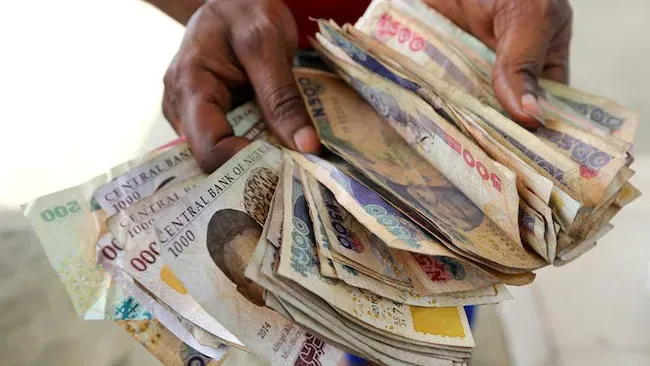
Diversify Export Earnings, Increase FDIs To Address Fx Liquidity Challenge -Uwaleke

MPC Postponement, Blessing In Disguise – Uwaleke

Professor of Finance and Capital Market, Uche Uwaleke, has said that except the Federal Government diversify its export base and increased foreign direct investments (FDIs), the liquidity challenge in the forex market would persist. Uwaleke, who gave the advice Monday in Abuja, added that the country’s weak economic indices would make it difficult for the government to implement the naira float.  In a bid to address the widening exchange rate gap, the federal government resorted to a managed float of the naira on the I&E Window. However, this policy has failed to halt the fall of the naira.  The exchange rate for a dollar to naira at the official window is N751.1 as of Monday, 11 September 2023, according to the data published by CBN. While at the parallel market, the naira exchanged for N925 to a dollar in Lagos. Experts have said that with a larger part of Nigeria’s revenue still coming from oil, it would not be easy for the government to address supply side constraints in the FX due to the country’s inability to meet it’s OPEC quota. “The only sustainable solution to deal with the liquidity challenge in the forex market is to have multiple streams of forex comprising export proceeds and foreign investments. “Nigeria’s economy is not ready for a complete float of the naira due to weak economic fundamentals. “Regrettably, over 90% of forex inflows still come from crude oil sales. A diversified export base is required to check volatility in a forex market where the exchange rate is determined by market forces. This is still lacking in Nigeria. “On the demand side, I support the idea of curbing dangerous currency speculation by making the trading in forex outside the Banks and BDCs illegal. By doing so, the CBN can be in a position to monitor activities in the forex market,” he said. 

Naira Devaluation: Dangote, 8 others take N113.63bn hit

Naira Devaluation: Dangote, 8 others take N113.63bn hit

Dangote Cement led eight other companies on the NGX in foreign exchange losses recording a significant foreign exchange loss of N113.63 billion, representing a 179.47 per cent year-on-year increase, the highest in the past five years as a result of the devaluation of the Naira. The Naira went from N465/$ at the end of May 2023 to N756/$ in June 2023, resulting in a net exchange loss of N116.1 billion on third-party loans and payables within the Nigerian entities. While some companies experienced significant declines in some performance indicators, others performed relatively better. A review of the financial performance of Berger Paints, Beta Glass, BUA Cement, CAP, Dangote Cement, MEYER, Notore, and WAPC, reveals that among these companies, Dangote Cement, Notore, and BUA Cement, reported a combined foreign exchange losses of -N129.811 billion, while Beta Glass, CAP, and WAPCO reported an aggregate foreign exchange gain of N3.49 billion. However, when considering the cumulative impact of foreign exchange fluctuations, it led to an overall reduction of 8.19 per cent in their total pre-tax profit, which amounted to N372.573 billion in the first half of 2023 Dangote Cement led in foreign exchange losses recording a significant foreign exchange loss of N113.63 billion, representing a 179.47 per cent year-on-year increase, the highest in the past five years. According to the first half of 2023 financial notes, the net exchange loss on foreign-denominated transactions was primarily attributed to the sharp devaluation of the Nigerian Naira in June 2023. These losses had a direct effect on the decline in pre-tax profit, which decreased from N264.89 billion to N239.86 billion during the reviewed period. Notore also reported a substantial foreign exchange loss of N14.05 billion in the first half of 2023. Coupled with low revenue and a significant increase in finance costs, this contributed to a pre-tax loss of N38 billion, representing a 1,558 per cent decline. The company managed to generate revenue of N7.92 billion, a substantial decline of 68.97 per cent for the first half of 2023. BUA Cement reported a foreign exchange loss of N2.137 billion in the first half 2023, marking a significant year-on-year increase of about 103 per cent. Coupled with elevated interest expenses, this dampened pre-tax profit, resulting in only a marginal increase of 2.75 per cent to N76.425 billion when compared to the first half of 2022. WAPCO – Lafarge led the foreign exchange gainers, recording a N2.237 billion gain in foreign exchange. This contributed to a growth of 18 per cent in pre-tax profit. However, despite this positive performance, the company experienced a year-on-year decline of 5.16 per cent in profit after tax, primarily due to high-income tax expenses.

Nigeria still being fleeced 400,000 barrels of crude oil daily – Ribadu

Nigeria still being fleeced 400,000 barrels of crude oil daily – Ribadu

The National Security Adviser (NSA), Malam Nuhu Ribadu, has disclosed that Nigeria is still losing 400,000 barrels of crude oil daily to local and international thieves despite efforts to end the menace. Ribadu confirmed this when he led a presidential delegation to inspect oil and gas facilities at Owaza in Abia and Odogwa in Etche Local Government Area of Rivers at the weekend. He said the activities of oil thieves and pipeline vandals had impacted negatively on the nation’s economy and were partly responsible for the rising cost of living in the country. “It’s unfortunate that few individuals would steal our common resources, and in the process cause unbelievable loss to both the nation, communities and the people. “Nigeria has the capacity to produce 2 million barrels of crude daily, but we are currently producing less than 1.6 million barrels due to theft and vandalism of pipelines. “So, we are talking about 400,000 barrels of crude oil going to waste with few criminals and economic saboteurs not even getting much out of it,” he said. Ribadu said the operators of artisanal refineries collect a small quantity of crude oil when they broke the pipelines while larger volumes of oil were spilled on the environment. “The value of 400,000 barrels of oil today is about 4 million dollars, and every day, we lose this amount because of this irresponsible behaviour. “If you multiply 4 million dollars by 365 days (one year), you will see that it is a lot of money running into billions of dollars. “Currently, the country is in desperate need of money as the Naira is continuously losing its value because we earn less money. “If we earn more money, it will not only help strengthen our currency but reflect in everything, including cost of living in the country,” he added. The NSA said that the President Bola Tinubu administration was concerned about the development and was already taking actionable steps to address the matter. He said huge investments made by the government in building infrastructures for the common good of all were being destroyed by few individuals, and in the process, destroying the environment. Ribadu called for a united front to tackle oil theft and end decades of attacks on the nation’s oil and gas infrastructures. “We are working hard with the security forces and those employed by the Nigerian National Petroleum Company (NNPC) Limited to secure our facilities and end this madness called oil theft,” he said. On the presidential delegation with the NSA were the Minister of Defence, Baduru Abubakar, and Chief of Defence Staff (CDS), Gen. Christopher Musa. Others included the Chief of Air Staff (CAS), Air Marshal Hassan Abubakar; Minister of State for Defence, Bello Matawalle, and Minister of State (Oil), Petroleum Resources, Heineken Lokpobiri. The Minister of State (Gas), Petroleum Resources, Ekperipe Ekpo, and senior management officials of the NNPCL as well as other top security personnel were part of the team. 

Tinubu happy with $3bn NNPCL/Afreximbank’s naira rescue deal

HEDA writes NNPCL, seeks clarity on $3bn naira stabilisation loan 

President Bola Tinubu has expressed happiness with the $3 billion in crude-for-cash funding secured from the African Export-Import Bank (Afreximbank) by the Nigerian National Petroleum Corporation (NNPC) Limited, saying it will give a breather to the foreign exchange market.  The NNPC Limited and Afreximbank recently signed a commitment letter and Term sheet for the facility which is expected to support the federal government in its ongoing fiscal and monetary policy reforms to stabilise the forex market. Sources at the villa said the President was happy that the deal has been able to crash the dollar and allow the Naira to gain some value.  The nation has battled foreign exchange liquidity leading to the steep fall of the Naira since the unification of the foreign exchange windows by the Central Bank of Nigeria in June. The crash in the value affected the economy, triggering price hikes in the country and impacting access to imported raw materials by real industry operators. The effect is exemplified in the July inflation which peaked at 24.08 per cent. The source said the President and his team of economic advisers are hopeful that the deal will help the government breathe fresh air into the sluggard economy, make inflation recede and crash the dollar which has risen to an unprecedented N950 to the $ in the parallel market.  The $3 billion loan according to the oil giant is expected to support immediate disbursement that will enable the NNPC Ltd to support the Federal Government in its ongoing fiscal and monetary policy reforms aimed at stabilising the exchange rate market. The Presidency source added that the “quick and proactive steps taken by the NNPC Limited show that this government has the capacity to turn around Nigeria’s economy positively in a short time. What the government needs right now is for forthright thinking appointees of the president to come up with novel ideas like this to better the economy”. “Nigerians, he said, are impatient with government and as such Tinubu’s government doesn’t need laybacks or people with nothing to offer in the saddles of key leadership positions in government. People are impatient for the government to perform, and as such there are no rooms for trial-and-error ministers and heads of agencies” the source further stated. The deal comes about 17 months after the NNPCL secured a $5bn funding commitment from the African Export-Import Bank (Afreximbank) to finance major investments in Nigeria’s upstream sector. The loan secured by the NNPCL is the fourth transaction involving the oil company and AFREXIM Bank over the last three years. It goes further to consolidate the mutual relationship between the two entities.  Both Nigeria and NNPCL are shareholders in Afreximbank, with the sole purpose of enhancing investments and growing prosperity in Africa. The agreement for the loan which was sealed on Wednesday in Cairo, saw the Group Chief Executive Officer of NNPC Ltd, Mele Kyari signing for the National Oil Company while George Elimbi, Executive Vice President Afreximbank signed for the bank.

World Bank puts Nigeria’s GDP at $477.4bn in 2022

World Bank approves $1bn to improve World Bank puts Nigeria’s GDP at $477.4bn in 2022security for Lake Chad Region

A new report by the World Bank Group showed that Nigeria’s recorded an estimated Gross Domestic Product of $477.4 billion in 2022. The report showed that the country ranks 18th position on the continental ranking of countries by GDP per capita for 2022. The 2022 ranking showed that Nigeria notched one point up from the 19th position it ranked in the previous year when the GDP stood at $440.8 billion. According to the World Bank’s latest data, Nigeria recorded a 5.7 per cent increase in its GDP per capita, which rose to $2,184 in 2022, from the $2,066 reported in the preceding year. In terms of nominal GDP, the country’s economic performance demonstrated remarkable resilience, registering an 8.3% nominal year-over-year expansion in 2022, in spite of the whirlwinds across the global and regional economy. Broadly analyzed, the World Bank’s report showed that the African economy slowed to 3.8% in 2022, dipping the continent’s nominal GDP to an estimated $2.75 trillion. In addition, the report Indicated that the Sub-Saharan region recorded a slow growth rate of 3.6%, in contrast to 4.1% recorded in 2021, with a projected growth rate of 3.1% in 2023, due to what the bank attributed to sluggish global economic growth, high inflationary pressure, and tough financial conditions exacerbated by the high debt profiles of the countries in the continent. A further analysis of the report in terms of GDP per capita, which is a more accurate measure of productivity in an economy, the continent’s economy recorded an average of $2,705 in 2022, indicating a 6.6% increase compared to $2,538 recorded in the previous year. The report further covered the top 10 countries in Africa based on GDP per capita in 2022 with Seychelles topping the ranking table with an impressive GDP per capita standing at $15,875, followed by Mauritius, which recorded a 12.7% upswing in its GDP per capita, which climbed to $10,216; and Gabon which came third with 2.1% increase in its GDP per capita to $8,820 in 2022. Others are in order of ranking, Botswana which came fourth, boasting an average GDP per capita of $7,738; Equatorial Guinea with a GDP per capita of $7,053 in 2022, representing a 6% decline compared to $7,507 in 2021; the 6th position in ranking was South Africa at $6,776 GDP per capita; Libya at number 7th with $6,716 GDP per capita; Namibia ranked 8th with $4,911 GDP per capita; Egypt followed with $4,295; and Algeria came 10th with $4,274 GDP per capita in 2022.

Oil marketers mull N750/litre fuel price amid forex crisis

Oil marketers mull N750/litre fuel price amid forex crisis

*Stop importation of products In the wake of a deepening forex crisis, oil marketers have signaled a potential surge in the cost of Premium Motor Spirit (PMS), commonly known as petrol, projecting prices between N680/litre and N720/litre in the near future. The escalation hinges on the prevailing exchange rate, which oscillates between N910 and N950 for a US dollar in the parallel market. Market insiders have also disclosed that the scarcity of foreign exchange has prompted prospective PMS importers to shelve their plans temporarily. This revelation emerges shortly after the local currency surpassed the N900/dollar benchmark, with the naira trading at over 945/dollar in the parallel market on Friday. The forex dilemma has significantly impacted the availability of foreign exchange through the Central Bank of Nigeria’s (CBN) Importers and Exporters official window, which offers a more favorable exchange rate of approximately $740/litre. However, the window remains insufficiently liquid to accommodate the $25 million to $30 million required for PMS imports by dealers. As a result, the shortage has forced dealers who were initially eager to import petrol to suspend their plans. Leaders of notable organizations such as the Major Oil Marketers Association of Nigeria, Independent Petroleum Marketers Association of Nigeria, and Petroleum Products Retail Outlets Owners Association of Nigeria have underscored the need for Federal Government intervention to address the mounting crisis. Chief Chinedu Ukadike, the National Public Relations Officer of the Independent Petroleum Marketers Association of Nigeria, highlighted that petrol prices now closely follow forex fluctuations, thus foreshadowing an impending price hike. Ukadike pointed out that the demand and supply of forex significantly impact petrol costs, and this situation extends beyond petroleum products, affecting other import-dependent industries as well. He indicated that with the dollar’s upward trajectory to N910 to N940, and potentially nearing N1,000, consumers should anticipate a PMS prices of about N750/litre. Ukadike emphasized that since many importers, including oil marketers, rely on the parallel market for dollar sourcing, the price increase is a direct result of dollar strength. While the Nigerian National Petroleum Company Limited remains the primary petrol importer in the country, independent importer Emadeb recently entered the market. However, Ukadike noted that the depreciation of the naira creates challenges for importers when trying to recover funds from sales conducted in the local currency. He projected that once NNPC adjusts its petrol prices, other marketers are likely to follow suit. The nation’s growing forex predicament continues to cast uncertainty on fuel prices and availability.

CBN resumes OMO on system liquidity

FG’s Fiscal Deficit To Further Decline In Q3, Q4 -MPC

The Central Bank of Nigeria (CBN) is set to suck in some liquidity from the system as it last week resumed the Open Market Operation (OMO). The immediate result was system liquidity slumping 51.8 percent week-on-week (W/w) to N33.8 billion. Analysts at Afrinvest attest that the reduction was a result of the auctions conducted by the central bank at the OMO window and Treasury Bills (T-Bills) front. “Nonetheless, OPR and Overnight (OVN) rates closed the week lower at 2.0 percent and 2.8 percent respectively from 5.8 percent and 6.8 percent”, said analysts at Afrinvest. At the bond market, the bearish sentiment in the domestic bonds market extended last week, as average yield across tenors rose 21 basis points (bps) w/w to 13.3 per cent. The most selloffs were seen on short-term bonds as the average yield increased 51bps w/w. Similarly, the average yield on the mid-and long-term bonds advanced 21bps and 13bps w/w, respectively. The domestic equities market sustained weekly gains, with the All Share Index (ASI) going up 0.2 per cent w/w to close at 65,325.37 points. Consequently, market capitalisation increased N92.7 billion to N35.6 trillion, while Year-To-Date (YTD) return grew to 27.5 per cent (previously 27.2 per cent). Activity level faltered as average volume and value traded declined by 32.4 per cent and 15.3 per cent w/w to 348.2 million units and N5.0billion respectively. Brent crude oil saw an uptick of 0.8 per cent w/w, to reach $86.88/bbl. This momentum was despite renewed economic concerns in China and a large inventory buildup in the US. Meanwhile, Nigeria’s foreign reserves plunged 0.2 per cent w/w, reaching $33.9 billion as of August 10th, 2023… On the global scene, last week was marked by the absence of substantial positive catalysts, the MSCI World Index experienced a 0.8 per cent w/w decline. In the US, the S&P 500 and NASDAQ indices fell 0.4 per cent and 2.0 per cent w/w respectively. Analysts at Afrinvest said the drop was influenced by pressure on bank shares, triggered by Moody’s decision to downgrade the credit ratings of 10 small- to mid-sized banks.

Naira drops to new low of N923-950 per dollar

Supreme Court Affirms Old, New Naira Notes As Legal Tender 

The naira extended its slump in black-market trading as the nation’s dollar shortage deepened two months after the central bank moved to a more flexible exchange rate to encourage inflows. The naira weakened to N923 per dollar, compared with N917 on Wednesday.   Traders in Lagos said it worsened to an all-time low of N950 to one dollar at the parallel market on Thursday afternoon as against the N897 it traded at the previous day. At the official window, data showed that the naira closed at N782.38 per $1. The disparity is now N167.62/$1 one of the widest since the unification of the naira on June 14th, 2023. Banks have been unable to come up with the dollars to meet demand, and buyers are increasingly turning to the black market, widening the gap between the official exchange rate and the price on the street. On Tuesday, the naira plunged to a record low of N900/$1 on the parallel market on Tuesday, August 8, 2023, as demand for foreign currency outstripped supply with traders quoting the exchange rate as high as N900/$1 for “inflows” and N895/$1 for cash trades. The peer-to-peer market, where crypto-currency traders exchange forex, also saw the exchange rate soar above N900/$1. Meanwhile, in the official Investor and Exporter Window, the exchange rate closed at N774.78/$1 while the NAFEX rate was N776. The official market also faces supply constraints, with daily turnover averaging $80 million since July. Forex traders who attributed the depreciation of the naira to a scarcity of supply, said that there were more buyers than sellers in the market and that the situation was unlikely to improve anytime soon. When asked about the source of the increased demand, traders mentioned a diverse set of buyers, including importers, foreign travelers, and speculators. There are concerns among some traders that the state of depreciation is unlikely to improve as demand continues to rise unchecked. Forex analysts explained that there was a huge backlog of unmet forex demand in the official market, estimated at $8-10 billion. Some of this demand also spills over to the parallel market, as buyers struggle to find enough supply to meet their needs in the official market. The exchange rate between the naira and dollar has weakened by 16 per cent since the reunification of the exchange rate windows. This compares to a depreciation of 2.5 per cent between January 1 and June 14th. The exchange rate weakened by 22.9 per cent in the whole of 2022. The naira has been under pressure in the parallel market for several weeks, as the supply of forex from official sources remains inadequate. On July 1st, the beginning of the second half of the year, the exchange rate in the parallel market was around N772/$1. However, a surge in demand from various segments of the economy, such as importers, foreign travelers and speculators, has triggered exchange rate volatility.

I’m sad GSK is leaving Nigeria after 51 years- Peter Obi

Obi conveys grief over soldiers' tragic demise in helicopter crash

The Labour Party Presidential Candidate in the 2023 election, Mr Peter Obi, has decried the exit of Pharmaceutical giant, GlaxoSmithKline (GSK), from Nigeria after 51 years of operations. Obi, who is also aformer Governor of Anambra State, made this known in his official tweets handle on Saturday morning in Lagos. On Thursday, GlaxoSmithKline (GSK), a British pharmaceutical and biotechnology company, said in the coming months, it plans to exit Nigeria after 51 years of operations. Its Spokesperson, Omongiade Ehighebolo, said in a statement that the challenge in accessing currency was affecting its ability to maintain a consistent supply of medicines and vaccines in the market. GSK has a manufacturing facility in Agbara, on over 25 hectares of land. The company had directly employed no fewer than 400 highly technical workers including pharmacists, microbiologists, biochemists, chemists, dentists, and doctors just to mention, and also employed over 1000 other staff. Obi said the company that indirectly provided jobs and business opportunities for thousands of Nigerians across the nation, regretted that it was now leaving all these behind, and pushing more people back into unemployment. The LP standard bearer said that their reason for leaving portends a gloomy future for the country’s investment climate. He said: “Today, I was saddened to hear that GlaxoSmithKline (GSK), is exiting Nigeria after 51 years of operations. “Their reason for leaving Nigeria is even more disheartening, that they are no longer perceiving any future growth of the country, which will be anchored on productivity.” He said it was painful that the country was at the point in the nation’s journey where multinationals were leaving the country and the local ones were closing down. Obi added that this was the consequence of poor management of the economy, hence, millions were losing their jobs and the poverty index was worsening. He said these multinationals leaving the country, not only create jobs but create immeasurable training that contributed immensely to human capital development. The LP standard bearer recalled his consistent position that “in turning the nation around, it must move the economy from consumption to production. According to him, part of this includes encouraging and supporting local and foreign investments, like GSK, in the country. Obi finally stressed the importance of creating an environment that creates and sustains multinationals to invest in the country was key to the dream of greatness. He said in the new Nigeria that they seek to create, the emphasis on production would encourage investors to stay and expand on its shores.

SEC, FMMSD seek to raise capital for non-oil sector

SEC, FMMSD seek to raise capital for non-oil sector

The Securities and Exchange Commission (SEC) and the Capital Market Community are to partner with the Federal Ministry of Mines and Steel Development and other stakeholders to promote the use of alternative means of raising capital such as Non-Interest products, tokenization of assets, as well as adopting technologies such as FinTech. This among others was contained in a communiqué issued at the end of a two-day workshop on financing the Nigerian solid minerals sector through the capital market and the critical role of the commodities exchanges. The workshop also emphasised the need for the FMMSD and Federal Ministry of Education to re-prioritize the focus on STEM education at basic, secondary and tertiary institutions.  According to the communiqué, “There is a need for the Capital Market Community to ensure that the market infrastructure that supports the bringing to market of mining ventures is in place, while also protecting investors.  “All stakeholders should be involved in promoting sustainable practices and ESG standards within the mining industry while the FMMSD is to ensure the availability of geoscience data, given that it is essential alongside relevant market data in enabling intermediaries and commodities exchanges to structure products for the mining industry.  The participants also agreed that the FMMSD should collaborate with SEC and other stakeholders to develop capacity in the industry and address the issue of interference in mining activities by the State Government, which is identified as a major challenge faced by mining companies, the FMMSD is to take concrete steps to resolve the conflict in State and Federal laws as well as overlapping oversight. Earlier in a keynote address, the Executive Commissioner Operations of the SEC, Mr. Dayo Obisan said the solid minerals sector possesses immense transformative potential for sustainable economic growth in Nigeria and holds immense potential to contribute significantly to national economic diversification and sustainable development goals.  “With over 44 minerals discovered across the Federation, the mining industry can play a vital role in diversifying our economy away from crude oil dependency. The FMMSD has embarked on various initiatives to increase the sector’s contribution to Nigeria’s GDP from 0.5% to approximately 3% by 2025. To address the financing challenges faced by the mining industry, the SEC Commissioner said stakeholders must recognize the crucial role of the capital market in providing much-needed funding for large-scale mining projects as the capital market offers a wide array of financial instruments and products, attracting long-term investments and diversified sources of funding.  He said by tapping into this market, mining companies can strengthen their financial position and promote transparency, accountability, and good corporate governance practices to attract both domestic and foreign investors, stimulating investment inflows and fostering growth in the sector. He stated that to address these challenges, some practical solutions may include, but not limited to; attracting strategic investors who have established mining operations can bring expertise, technology, resources, and access to international markets. Such partnerships can be in the form of equity capital or debt financing, allowing miners to benefit from immediate cash injections and technology support.