Road Blocked As Kaduna Residents Protest Bandits Attack

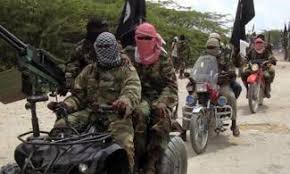
Residents of Goningora in Chikun Local Government Area of Kaduna State have blocked the Abuja-Kaduna highway following the attack on the community by bandits. Following the attack on the night of Wednesday, February 28th, 2024, several members of the community were said to have been kidnapped and several injured. Channels Television reports that angry residents took to the streets on Thursday morning, blocking the busy Abuja-Kaduna highway. The development has caused heavy traffic on the road, with many motorists stranded. Two people, including a member of the Civilian Joint Task Force, were reportedly killed in the attack. The latest attack on the Goningora community comes barely a week after soldiers killed a notorious bandit, Kingpin, Boderi Isyaku and some of his fighters in the same Chikun local government. A military armoured vehicle was said to have been set ablaze by the bandits when soldiers attempted to repel them.

Tinubu promises Restructuring Nigeria

Tinubu's Intervention Can't Solve Ondo Crisis - PDP

President Bola Ahmed Tinubu has reiterated his determination to restructure Nigeria but emphasised that the proper foundations must be laid in order for the goals to align properly.  Tinubu assured that with the structures put in place by his administration, the country will soon be better off, and Nigerians will be out of the current economic hardship. The President stated this at a meeting with the National Leader of Afenifere, Pa Reuben Fasoranti, at his country home in Akure, Ondo State capital, on Wednesday. The meeting with the leaders of the mainstream Yoruba group was held behind closed doors. In a statement by the National Publicity Secretary of the organisation, Jare Ajayi, and disclosed to newsmen, the core issues on how to move the country forward were the focus of the meeting. According to Ajayi, the President said, “I prayed for it, I danced for it, I campaigned for it, and I got it. I know the enormous amount of responsibility, so don’t pity me, Baba, just sit down and relax.” “He (Tinubu) assured Nigerians that the struggle he undertook and that he is trying to build the structures that will not be reversed. “He said that the structure he is trying to put in place in Nigeria economically, socially, and politically would be such that it would bring Nigeria back to where it was supposed to be. “We should eat the food we grow. Doing so would prevent us from depending on foods from foreign sources. A nation that fully depends on food from outside cannot get it,” Ajayi added. Fasoranti, who commended Tinubu for keeping his word to return to his residence after emerging as President, stated, “Your performance so far has shown that you understand the full gravity of your mandate, which is to show the Nigerian people that a good government is possible. “We seek, therefore, a true Federal Republic that would reflect fiscal federalism. If the derivation principle is good for oil, why is it not good for value-added tax, for example?”

Telecoms Begin Blocking Of Sims Not Linked To NIN

The Nigerian Communications Commission (NCC) has emphasized its directive for telecom operators to disconnect phone subscribers not linked to their National Identification Numbers (NIN) by February 28, 2024.  Speaking at the 45th Kaduna International Trade Fair, NCC’s Executive Vice Chairman, Dr Aminu Maida, stressed the importance of linking NIN to SIM for national security reasons.  Maida said: “To this end, the National Communication Commission has directed all telecommunication operators to bar phone lines of subscribers whose lines are not linked to their NINs on or before February 28, 2024,” he added. This, the executive vice chairman said, was apt as the theme resonated with the principles and objectives of the commission in promoting local content development in the telecom industry. Maida also said the NCC was committed to protecting consumers’ rights while ensuring their satisfaction and noting that the commission has created a universally acceptable environment to access “affordable and equitable service and supports the nation’s economic growth.” “As a regulator of the telecommunications sector in the country, the Commission carries out its functions to ensure service availability, affordability, and sustainability for all categories of consumers, who are leveraging on ICT/Telecoms to drive personal and business activities,” he said.

Oronsanye Report: Nigerians Won’t Lose Their Jobs – FG

The Minister of Information, Mohammed Idris, has said that the implementation of the 12-year-old Steve Oronsaye report will not lead to the retrenchment of workers. He stated that the essence of the implementation was not to retrench workers but to maximise the agencies’ effectiveness and efficiency and reduce costs. Idris disclosed this during his remarks at the Ministerial Press Briefing on Wednesday in Abuja. The Federal Executive on Monday approved the implementation of the recommendations of the Oronsaye panel on the restructuring and rationalisation of the Federal Government’s agencies and commissions. The government said the implementation of the policy would involve the merging, subsuming, and scrapping of agencies with similar functions. Sharing more details on the development, the Information Minister said, “There are some aspects of the report that have been reviewed, but those aspects that have to do with merging, scrapping, and subsuming have already been undertaken. “Now, the whole idea is that the government wants to reduce costs and improve service delivery. “That does not necessarily mean that government is out to retrench workers and throw people into the labour market. That is not the original intention of the government. “The intention is that efficiency has to be brought in, because, some of these agencies are actually having an overlap in their operations. We are doing this for people to have the benefit of democracy.”

Presidency Reveals Why Tinubu Sons Were Included In FG Delegation To Qatar

The presidency has defended President Bola Tinubu‘s decision to include his sons among the delegation going with him to Qatar. President Tinubu’s sons, Seyi and Yinka, were among the delegation members to travel with the President on a state visit to Doha, Qatar. The Nigerian leader will visit the Arabian country for a business and investment meeting scheduled for March 2 and 3, 2024, but will be accompanied by 38 others, including his sons. Following the development, the President came under fire for including his sons in the delegation to Qatar for a state visit. Reacting in a post via his official X handle on Tuesday, the Senior Special Assistant to the President on Digital/New Media, O’tega Ogra, said the President’s decision was not a new thing and not uncommon. Ogra said that some world leaders take their children on state visits to educate them about world affairs and different cultures, and to maintain a semblance of family life, despite the demands of public office. The presidential aide, therefore, asked Nigerians to stop majoring in minor things and focus on relevant issues. He wrote: “It is not uncommon for children of world leaders to accompany their parents on foreign trips. In fact, it is the norm. Canadian PM Trudeau is known to travel with his family on official trips abroad. Same with UK PMs – even if somewhat muted. “From the public image and diplomacy angle, bringing family members can soften a leader’s public image and aid in diplomatic relations by showcasing a relatable, family-oriented side. “For some leaders, taking their children on such trips is a way of educating them about world affairs and different cultures. “Others do it to maintain some semblance of family life, despite the demands of public office, and for security considerations. “The Obamas, Clintons, Bushs, Trumps and others went on tons of foreign trips whilst in office with their families. “We really need to stop majoring in minors in the name of castigating everything.”

Former Education Minister dies

  Former Nigerian minister of education, Professor Fabian Osuji is dead. He died on Wednesday morning, according to a family member who confirmed the news. He had returned from a vacation in the United States on Saturday and had been treated for undisclosed medical issues. Osuji was born on January 20, 1942, and attended Holy Ghost College in Owerri, Government College in Umuahia, the University of Nigeria in Nsukka, Enugu State, and the University of Ibadan, Oyo State. He conducted his post-doctoral research at the Imperial College of Science and Technology in London. He became a Lecturer, Senior Lecturer and Associate Professor in the Department of Zoology, University of Ibadan in 1973, a post he held till 1981. He was also a Visiting Scientific Fellow at the International Atomic Energy Agency and the Food and Agriculture Organization. He became a Dean of the College of Science, Dean of the College of Postgraduate Studies, Deputy Vice-Chancellor and member of the Governing Council of Imo State University. He was appointed Professor of Applied Biology, at St. John’s University, New York (CUNY) USA (1997-1999). He was also a Visiting Professor at several universities in Nigeria and worldwide. Known as a scholars’ scholar, he published 35 papers and books to his credit. He celebrated his 80th birthday in 2022 when family and friends gathered to extol the virtue of a man highly regarded as a sound educationist. The former educationist died aged 81.

Why Oronsaye Report Won’t Reduce Governance Cost — Falana

A Senior Lawyer and Human Rights Activist, Femi Falana, SAN has stated why the Oronsaye reported adopted for implementation by the Tinubu led federal government will not reduce the cost of governance.  Falana, described the 12-year old Steve Oronsaye Report as outdated.  In a statement on Tuesday, the Senior lawyer, said the report won’t “substantially reduce the enormous costs of governance in the country as it does not reflect the current situation in the public service,” contrary to the belief in official circles.  The Federal Executive Council (FEC) chaired by President Bola Tinubu had on Monday approved the full implementation of the Oronsaye report. According to the Special Adviser to the President on Policy Coordination, Hadiza Bala Usman, the move was in line with the need to reduce cost of governance and streamline efficiency across the governance value chain. Falana said, “No doubt, the implementation of some of the recommendations of the Panel will take appreciable time as the merger of certain bodies require constitutional amendments or repeal of a number of statutes. “The 800-page report of the Steve Oronsaye Panel recommended the reduction of statutory agencies from 263 to 161, scrapping 38 agencies, merging 52, and reverting 14 to departments in different ministries, “Since the Goodluck Jonathan administration produced a White Paper on the Steve Oronsaye Report in 2014, the Federal Government has created more ministries, departments and agencies. “Whereas the Report recommended the reduction of 263 agencies to 151, the number of ministries, departments and agencies has increased to 1316. Even the current administration has increased the number of ministries and created new agencies. To that extent, the Steve Oronsaye Report is completely outdated. “However, in implementing the Oronsaye Report the Federal Government should ensure that the crisis of insecurity is not compounded through the retrenchment of hundreds of thousands of workers. “Instead of downsizing the public service the Federal Government should ensure that the two houses of the National Assembly are merged while the number of Ministers, Special Advisers, Senior Special Assistants and Special Assistants is significantly reduced.”

New Health Insurance for FCT Residents

In a move aimed at enhancing healthcare accessibility and reducing financial barriers, the Federal Government has introduced the Federal Capital Territory (FCT) Health Insurance Scheme (FHIS) to residents across the FCT’s six area councils. The scheme, designed to prioritize the healthcare needs of marginalized groups, offers subsidized enrollment and free registration for the poor and vulnerable. Dr. Mohammed Danfulani, Director of the FCT Health Insurance Scheme, announced the commencement of enrollment during a sensitization drive held in Gwagwalada for Abaji, Kuje, Kwali, and Gwagwalada area councils. Residents can enroll in the scheme for an annual fee of N13,500, with provisions in place for those unable to afford the cost. “The Federal Government’s commitment ensures that every individual, irrespective of financial status, gains access to essential healthcare services through the FHIS,” stated Dr. Danfulani, highlighting the nationwide implementation of similar initiatives. Addressing concerns regarding service delivery, Pharmacist Adedeji Fatai, Head of the Monitoring and Evaluation Unit at FHIS, assured the public of stringent quality control measures to uphold standards across healthcare facilities. Community leaders, including Estu Sule Dobi, the District Head of Dobi in Gwagwalada area council, praised the scheme’s introduction and advocated for comprehensive awareness campaigns to reach remote communities. Grace Johnson, a beneficiary of the scheme, commended the FCT leadership for the efficient enrollment process, signaling widespread acceptance among residents. Additionally, as part of its support measures, the Federal Health Insurance Scheme distributed delivery kits to expectant mothers in the FCT, underscoring its commitment to maternal and child healthcare. The launch of the FCT Health Insurance Scheme represents a significant stride towards achieving universal healthcare coverage and improving health outcomes for FCT residents. With its emphasis on inclusivity and quality assurance, the scheme is poised to address healthcare disparities and promote well-being across the region.

Senate Advocates Introduction of Food Stamp Program to Combat Food Insecurity

In response to the growing incidence of food insecurity in Nigeria, the Senate has proposed the implementation of a food stamp program akin to what obtains in the United States. The resolution, put forth during Tuesday’s plenary session, emphasizes the need for immediate action to mitigate the impact of various factors contributing to the crisis, including conflicts, climate change, inflation, and currency devaluation. Senator Ali Ndume (APC, Borno South) spearheaded the motion titled, “Introduction of food stamps in Nigeria as an interim measure to address imminent food insecurity in the country,” with co-sponsorship from Senator Saliu Mustapha (APC, Kwara Central). Ndume underscored the urgency of the situation, citing projections from the October 2023 Cadre Harmonisé Analysis indicating that approximately 26.5 million Nigerians could face severe food insecurity in 2024. Highlighting the multifaceted nature of the issue, Ndume pointed to ongoing conflicts, adverse effects of climate change, skyrocketing inflation rates, and the devaluation of the national currency as key drivers of food insecurity. In response to these challenges, the Senate advocated for the adoption of a food stamp program modeled after the successful initiative in the United States. Senator Sani Musa (APC, Niger East) echoed Ndume’s sentiments, drawing parallels between the proposed Nigerian food stamp program and its American counterpart. He emphasized the potential of such a program to provide crucial assistance to vulnerable segments of society. To operationalize this initiative, the Senate directed the Federal Ministry of Agriculture to collaborate with development partners and relevant stakeholders, notably the Lagos Food Bank Initiative. The latter organization gained recognition for its Temporary Food Assistance Programme (TEFAP) in previous years, offering valuable insights and expertise in the implementation of food assistance programs. The Senate’s proactive stance on addressing food insecurity through the introduction of a food stamp program reflects a concerted effort to safeguard the well-being of the populace. By leveraging partnerships and drawing inspiration from successful models, Nigeria aims to bolster its resilience against the challenges posed by food insecurity.

Hunger Protests: NLC, FG Trade Tackles

The Nigeria Labour Congress (NLC) has reacted to the presidency’s claim over the ongoing protests. The organized labour said the nationwide protest is not about minimum wage but hunger and economic hardship. Contrary to the Presidency’s claim that the protest revolves around the minimum wage review, NLC’s National President, Joe Ajaero, emphasized that the union is addressing broader issues. Speaking on TVC, presidential spokesperson, Ajuri Ngelale described the demonstrations by the NLC as needless. Ajaero accused the Federal Government of neglecting the union’s demands since the removal of fuel subsidy, resulting in an increased cost of living.  Expressing concerns about the minimum wage, he stated, “What will be the minimum wage that will remove hunger?” Highlighting the impact of deregulation, Ajaero pointed out that the rising expenses, especially in transportation, have worsened the already dire situation. The NLC proposed various solutions, including the introduction of CNG buses, but lamented the lack of implementation. Notable figures such as Oyo State governor, Seyi Makinde, NLC president Joe Ajaero, Omoyele Sowore, Deji Adeyanju, and Lawyer Femi Falana actively participated in the protest in Abuja.  The demonstrations have unfolded across all states in Nigeria, signaling a widespread concern for the economic well-being of the citizens.