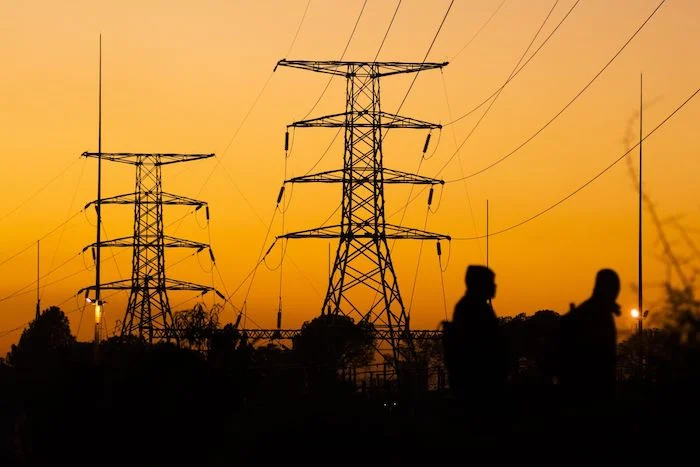
Rural Electrification Agency gets new Chief Executive Officer

President Bola Ahmed Tinubu has appointed Abba Abubakar Aliyu as the substantive Managing Director of the Rural Electrification Agency (REA). According to a statement by Bayo Onanuga, Special Adviser to the President, Information  & Strategy “the appointment, effective from January 23, 2025, is for an initial term of four years. Aliyu has been acting as the agency’s managing director since March 2024 until his appointment. He has over 20 years of experience in energy and organisational development in the private and public sectors. He has played key leadership roles in the on-grid and off-grid power sectors, as well as the water resources and transportation sectors of Nigeria’s economy. READ ALSO: Addressing challenge of frequent grid collapse in Nigeria Previously, he was head of the Project Management Unit at the Nigeria Electrification Project; General Manager of Corporate Services, Projects, and Research, and Deputy General Manager at Nigeria Bulk Electricity Trading PLC (NBET). President Tinubu anticipates that Aliyu will leverage his extensive expertise to further the REA’s mission of providing rural communities with reliable electric power and contributing to the administration’s Renewed Hope Agenda on sustainable energy and power.

TCN Denies National Grid Collapse, Clarifies Saturday Power Outage

The Transmission Company of Nigeria (TCN) has denied reports of a national grid collapse on Saturday, calling the claims inaccurate. TCN’s General Manager of Public Affairs, Mrs Ndidi Mbah, made the clarification in a statement issued in Abuja on Saturday. Mbah explained that earlier on Saturday, at approximately 1:41 p.m., the Osogbo-Ihovour line tripped, followed by the tripping of the Benin-Omotosho line. She noted that these incidents only affected bulk power supply to the Lagos area. She further clarified that just before the tripping, total generation on the grid was 4,335.63 Megawatts (MW), and after the trippings, generation dropped to 2,573.23 MW, which indicated the grid did not experience a collapse. “The transmission line tripping affected Egbin, Olorunsogo, Omotosho, Geregu, and Paras,” She added that all had been restored except for the Benin-Omotosho 330kV line, which was still being worked on. Mbah emphasised that TCN was working hard to build a more robust transmission grid in spite of ongoing challenges. Related News: She also urged caution against the spread of misinformation, stressing the importance of disseminating accurate and verifiable facts. Accustomed to power outages due to national grid collapses and other faults, many Nigerians were quick to tally the counts yesterday, announcing that the national grid had collapsed for the 13th time in thirteen months, whereby, yesterday’s rumoured collapse would have been the first in 2025.

Addressing challenge of frequent grid collapse in Nigeria

By Constance Athekame ) The recurrent rate of frequent collapse of the country’s national grid is a pressing issue that needs to be addressed urgently for Nigerians to enjoy  a stable and reliable power supply, A stable power supply is crucial for social economic development to thrive. In 2024 alone, the national electricity grid collapsed more than eight times, throwing the nation into frequent darkness. Millions of homes and businesses continue to suffer regular power outages due to the frequent grid collapse,   resulting in huge losses. Small and Medium-sized Enterprises (SMEs), which form the backbone of the country’s economy, suffer even more because many of them do not have the capital to invest in alternative power sources, leaving them at the mercy of the erratic national grid. Experts and stakeholders in the power sector attribute the repeated grid collapse to factors like ageing facilities, lack of maintenance and requisite investment, as well as alleged sabotage by vandals. They listed other factors to include obsolete equipment, inadequate gas supply, improper coordination of plants and gas pipelines, lack of operating/spinning reserve and voltage support scheme. They called for Supervisory Control and Data Acquisition, (SCADA) system to help sustain stability in power supply.   The SCADA system is used for controlling, monitoring, and analysing industrial devices. The experts have warned that the incessant national grid collapse may persist if urgent steps were not taken to address the several challenges bedeviling the power sector. READ ALSO: The Minister of Power, Mr Adebayo Adelabu, said  that there was a need to have power grids in different regions or states. According to Adelabu,  having multiple power grids in each region and state would ensure stability. He said that the decentralisation of the power sector would help the plan to build grids in each region. “This has been made possible by the Electricity Act (EA) signed by President Bola Tinubu in 2023, which  has decentralised power. “It has enabled all the state governments and the local government councils to be able to participate in the generation, transmission, and distribution of electricity. “We all rely on a single national grid today; if there is a disturbance of the national grid, it affects all 36 states. It should not be like that. “The EA will enable us to start moving gradually towards having regional groups and possibly having state grids, and each of these grids will be removed and shielded from each other,” he said. Adelabu said that the Federal Government was  overhauling the national grid to reduce the frequent disturbances and improve power supply across the country. According to him, the grid is over 50 years old, with weak, obsolete components, which includes the lines, sub-stations with old transformers He said that most of the tower installed a long time ago were falling due to effect of weather and climate changes. “This  grid requires a huge revenue for maintenance. “But what we have now, we will continue to manage it and prevent frequent disturbances until we are able to completely overhaul this infrastructure, ‘’ he said. Adelabu said that the Federal Government was not quiet about revamping the entire grid structure as various programmes were being   put in place to ensure that old infrastructure were replaced. He listed the programmes to include Presidential Power Initiative (PPI) known as the Siemens project which is currently ongoing. “There is also the Transmission Company of Nigeria (TCN)’s expansion programme supported by the World Bank and African Development Bank (AfDB) . ”So, what we have now, we will continue to manage and prevent frequent disturbances until we are able to overhaul these infrastructure a 100 per cent, ‘’ he said. Some experts  said that the only way to reduce the incessant grid collapse was for the Federal Government and stakeholders to invest more in the sector. Mr Isreal Abraham, the President, Chartered Institute of Power Engineers (CIPEN), said that power infrastructure needed a lot of maintenance, adding that it was very costly to take care of equipment. Abraham said that the grid collapsed often because there was no constant maintenance both from the generation, distribution and transmission companies. “ The transmission company is doing its best,  but more needs to be done and this should be done massively. “A lot of things need to be put in place, and lot of funds are required  to upgrade power facilities to the level where we can be sure that things are in the right place. “For instance, the last collapse was as a result of shattered equipment that helps to manage the grid. “If that equipment was maintained or replaced, it would not have gotten burnt easily, and the possibility of it breaking down would have been averted, ” he said. Abraham also said that discipline was essential in managing the grid by ensuring that the right things are done. According to him, the regulator, especially the system operators, are expected  to direct the grid managers  to do the right thing. He said that anyone that failed to comply with such directives should be sanctioned. “This goes for both the generation, transmission and distribution companies. “All of them are supposed to comply with the instruction of the grid operator. So grid discipline is one of the major things that has to be done, ”he said. Mr Denis Ukwuez, the Executive Director, CIPEN, said that the major cause of non-performance in the power sector was lack of adequate financing. Ukwuez said that there were projects in the power sector that had been there for more than 20 years and had not been completed. ”We have projects in transmission which have been there for more than 20 years and not completed. ”Some of these power plants are taking over 30 years to be completed because of funding,”he said. A power expert, Prof. Stephen Ogaji, emphasised the need for the system operator to complete and inaugurate the SCADA project to effectively supervise the national grid. Ogaji also urged the system operator to implement the Generation Dispatch Tool (GDT) and enforce

Don’t Expect Stable Power After Vandalizing Electricity Grid, TCN Tells Nigerians

Tragedy As Transformer Explosion Kills Many In Plateau

The Transmission Company of Nigeria (TCN) has issued a stern warning to Nigerians, stating that the persistent vandalism of its installations has put the stability of the national electricity grid in jeopardy. In a statement posted on its official social media account, the TCN expressed deep concern over the alarming rate at which its facilities are being vandalized across the country.  The company firmly stated that Nigerians should brace themselves for an unstable electricity grid if this destructive trend continues. The TCN did not mince words when it criticized the general public for allowing vandals to run rampant, emphasizing that the consequences of this negligence would directly impact grid stability and expansion. TCN said: “The rate of vandalism of TCN’s installations nationwide is becoming alarming. We cannot eat our cake and still have it. We cannot continue to vandalize power infrastructure or look the other way when such activities are ongoing and expect grid stability and expansion.” This warning comes in the wake of concerning reports revealing the extent of the damage caused by vandals. Between January 2022 and September 2023, a total of 108 power transmission towers were destroyed. Additionally, in May, nine TCN transmission towers were vandalized in Ogun State. These incidents have occurred in various regions, including Benin, Abuja, Lagos, Enugu, and Kano. Notably, some of these attacks have been attributed to the Boko Haram terrorist group, further highlighting that the issue extends beyond mere theft and accidents, constituting a deliberate act of sabotage against the nation’s power infrastructure.