Senate Session Disrupted by Seating Spat in Renovated Chamber

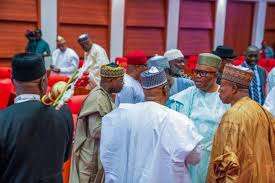
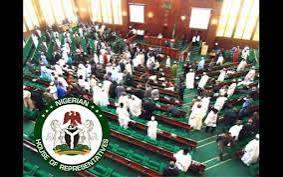
The much-anticipated return to the revamped Hallowed Chamber for the Senate’s plenary session was overshadowed by a bitter dispute over seating arrangements, resulting in a chaotic interruption of proceedings. Anticipation ran high as Senators gathered in the newly refurbished Hallowed Chamber for their first plenary session post-renovation. However, the mood soured quickly when Senate President Godswill Akpabio began acknowledging Senators who celebrated birthdays during the recess. Senator Sahabi Alhaji Ya’u of APC Zamfara North wasted no time in expressing his discontent with his allocated seat, confronting Senate Leader Senator Micheal Opeyemi Bamidele of APC Ekiti Central. What began as a private grievance escalated rapidly into a public confrontation, inciting reactions from fellow Senators and plunging the chamber into disarray. Senator Ya’u vehemently argued that his seat, positioned at the far right of the chamber, failed to reflect his seniority as a former Deputy Minority Whip during the 9th National Assembly. Senator Danjuma Goje of APC Gombe Central echoed similar sentiments, lamenting the perceived disregard for hierarchy in the seating arrangement. In an attempt to restore order, Senate President Akpabio intervened, urging Senator Bamidele and the aggrieved Senators to address the issue with the presiding officer. Following this intervention, Akpabio proceeded with his welcome address, albeit after a delay caused by the altercation. Subsequently, Senator Bamidele called for an emergency executive session, presumably to diffuse tensions and salvage the disrupted proceedings. As Senators work to resolve internal conflicts, the nation’s legislative agenda hangs in the balance, awaiting their undivided attention.

Indigenous Firm Completes Renovation of National Assembly Chambers

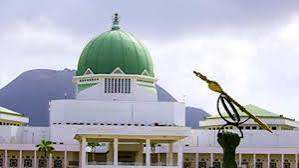
After a 40-day recess, the Senate is set to resume plenary sessions on Tuesday, inside the renovated chambers of the National Assembly officially handed over by Visible Construction, a subsidiary of Laralek Ultimate Group of Companies. Marking the successful completion of a project that began in September 2022, relocating both the Senate and the House of Representatives to temporary chambers. The indigenous construction firm, engaged for the first time in such a project at the National Assembly, has impressed staff with the state-of-the-art facilities now available for legislative proceedings. Visible Construction, a subsidiary of the Laralek Ultimate Group of Companies, delivered the chambers just in time for use. Since the commencement of renovation works in September 2022, both the Senate and the House of Representatives had been operating from temporary chambers. The 9th National Assembly concluded its session sine die from these temporary quarters. However, with the inauguration of the 10th National Assembly on Tuesday, June 13, 2023, at the temporary chambers, Visible Construction was urged to accelerate the renovation process. Now, after ten months, the indigenous construction firm has successfully delivered the reconfigured chambers to both houses of the National Assembly. The chambers, originally constructed by Arab Contractors, a foreign firm, in 1997/1998 under the late General Sani Abacha-led military government, have undergone significant upgrades. Visible Construction’s involvement in the renovation marks a milestone as the first indigenous firm to engaged in such construction and renovation work at the National Assembly. Staff members of the National Assembly expressed their satisfaction with the completed work, highlighting the modernized facilities and equipment now available. An anonymous staff member noted the improved environment for plenary proceedings, stating that senators and members of the House of Representatives now have conducive chambers for their legislative activities.

Anambra Labour Party Lawmakers Forfeit 6-Month Salaries

At least eight Labour Party lawmakers in the Anambra house of assembly have willingly given up their six months salaries to help alleviate economic challenges faced by citizens. The lawmakers said they took the decision at an emergency meeting of the party which held on Thursday. “We, the Labour Party House of Assembly members, wish to lend our voice to the cry of our Leader, His Excellency, Mr. Peter Obi, on the sorry state of the nation, after our emergency caucus meeting,” the statement reads. “We urge His Excellency, President Ahmed Bola Tinubu, to stop work on all other sectors on the economy including infrastructure, for the next six months, and declare a state of emergency on security and hunger in the nation. “Similarly, we urge all other governors of the 36 states, including Prof. Charles Chukwuma Soludo of Anambra state, to suspend all infrastructural development for the next six months and also declare a state of emergency on security and hunger. “For this reason, we, the Labour Party house of assembly members have resolved to relinquish our basis salary for six months as part of our contribution to alleviate the sufferings of the masses. “We must commend our leader, Mr. Peter Obi, for his selfless efforts to ensure the stability and growth of our nation. It really shows that he is committed to making this nation a better place for all of us.” The lawmakers include Nkechi Ogbuefi, Henry Mbachu, Jude Ifeanyi Umennajiego, Fred Ezenwa, Justice Azuka, Paul Obu and Patrick Okafor.

Parliamentary Staff Association Advocates passage of Harmonised Retirement Age Bill

In response to the ongoing legislative discourse surrounding the retirement age for staff of the National Assembly Service, the Parliamentary Staff Association of Nigeria (PASAN), National Assembly Chapter, has issued a statement urging the Senate to consider and pass the Harmonised Retirement Age for Staff of National Assembly Service in Nigeria Bill, 2024. The association highlights the history of the issue, citing the extension of the retirement age to 65 years or 40 years of service by the 8th National Assembly, which was subsequently reversed due to inconsistencies with existing legislation. Following consultations and the introduction of various bills, the current iteration, introduced by the 10th House of Representatives, has gained significant support within the legislative body. Emphasizing the importance of this legislation, the association underscores the need to address the shortage of qualified staff within the Legislative Arm of Government, which has been exacerbated by instability in career progression and adherence to Public Service Rules. They argue that increasing the retirement age will help fill this vacuum and maximize the knowledge and experience of existing staff, while also building the capacity of younger staff members. Furthermore, the association draws parallels with similar legislation in other sectors, such as the Harmonised Retirement Age for Teachers in Nigeria Act, 2022, and the Retirement Age of Staff of Polytechnics and Colleges of Education (Harmonisation) Act, 2012, to highlight the necessity of aligning retirement policies with international best practices. Also, the Parliamentary Staff Association of Nigeria urges the Senate to pass the Harmonised Retirement Age for Staff of National Assembly Service in Nigeria Bill into law, emphasizing its significance in stabilizing and developing capacity within the National Assembly Service, sustaining democracy, and upholding the doctrine of separation of powers.

Deputy Speaker Reveals When New Nigerian Constitution Will Be Ready

Benjamin Kalu, Deputy Speaker of the House of Representatives and Chairman of the House Committee on Constitution Review, announced on Monday that Nigeria’s new constitution is expected to be ready for presidential assent within the next 24 months. During the formal inauguration of the House Committee on the review of the 1999 constitution, Kalu emphasized the importance of allowing the President ample time to study proposed alterations before signing them into law, particularly amidst the busy schedule of an election year. Kalu highlighted the crucial need for constitutional reform in light of the 21st-century realities, stating, “Our constitution, the foundation of our democracy, stands as a testament to our collective aspirations for a just, equitable, and prosperous society.” He revealed that the House has received various bill proposals, including those for the establishment of state police, state access to mines, increased participation of women in politics, clear tax specifications for each tier of government, and the provision for the office of the Mayor of the Federal Capital Territory Abuja. Moreover, Kalu mentioned the reintroduction of several bill proposals that didn’t receive presidential assent in the previous constitution alterations.  These include powers of the National Assembly and State Assemblies to summon the President and State governors, as well as requirements for the government to focus on ensuring the rights to food and food security. Highlighting the dynamic nature of the constitution review process, Kalu expressed the House’s openness to more proposals aimed at enhancing the Constitution and strengthening the nation’s democracy. He also noted the anticipation of executive-sponsored bill proposals reflecting issues on the renewed hope agenda of the President.  Kalu acknowledged past constitutional amendments, such as financial independence of State Houses of Assembly and State Judiciary, redesignating “Prisons” as “Correctional Services,” and transferring certain matters to the concurrent legislative list.

House of Representatives Advances Bill on State Police to Second Reading

In a decisive move aimed at bolstering Nigeria’s internal security, the House of Representatives has taken a significant step by passing for second reading, the State Police Reform bill. Spearheaded by the deputy speaker and backed by 14 other members, the proposed legislation seeks to amend the 1999 constitution to pave the way for the establishment of state police formation. During Tuesday’s plenary session, members of the House engaged in a robust debate on the merits of the bill. Expressing concern over the nation’s current security landscape, Kalu, standing in for Speaker Abbas Tajudeen, emphasized the paramount importance of prioritizing the safety of Nigerian citizens over political considerations. Babajimi Benson underscored the pressing need for a decentralized approach to law enforcement. With Nigeria’s population exceeding 200 million and a police force of fewer than 400,000 officers, Benson argued that the creation of state police forces is imperative to effectively tackle internal security challenges. Despite facing contention since the Seventh National Assembly, the advancement of the bill marks a notable breakthrough in the legislative process. Notably, governors from the Peoples Democratic Party (PDP) have reiterated their support for state policing, citing it as crucial for addressing the nation’s deteriorating security situation and averting a scenario akin to Venezuela’s. Furthermore, various regional socio-political organizations, including Afenifere, Ohanaeze Ndigbo, the Middle Belt Forum, and the Northern Elders’ Forum, have thrown their weight behind the implementation of state police forces. They view it as a pragmatic solution to the escalating security challenges confronting Nigeria. The bill’s referral to the House Committee on Constitution Review signifies a pivotal phase in its journey through the legislative process. As Nigeria grapples with persistent security threats, the advancement of the bill underscores a growing consensus on the imperative of decentralized law enforcement to safeguard the nation and its citizens.

Tension at NASS over planned tenure elongation…Clerk, over 200 staff due for retirement in Nov plan 5yrs extension

Tension is brewing in the National Assembly, following plans by the Senate to grant concurrence to a controversial bill on extension of retirement age for civil servants in nation’s Parliament and across the 36 State Houses of Assembly. Staff who are apprehensive said attempts by the Senate to pass a Bill for an act to extend the retirement age of the staff of the National Assembly Service from 60 to 65 years of age and from 35 to 40 years of service is counterproductive. According to documents cited by our correspondent, the current clerk to the National Assembly, Sani Tambawal Magaji, joined the National Assembly Service in April 1990 (34 years) and was born in 1965. If the Bill scales through, he will remain in office until he’s 65 and 40 years in service. The Senate had on Wednesday listed the controversial Bill, which had passed third reading in the House of Representative for concurrence after it passed first reading in the Senate some weeks ago. Several attempts had been made by the two Chambers of the apex legislature to extend the retirement age of the members of staff of the National Assembly since 2017. Successive management of the National Assembly bureaucracy since 2017 made attempts to allegedly buy over the leadership and members of the Senate and the House of Representatives to make a law extending the tenure of service as against the condition prescribed by the Public Service Rules which provides for retirement age of persons in the public service of the federation at the attainment of 60 years of age or 35 years of service, whichever comes first. While the management vigorously pursued its goal, the staff of the National Assembly under the aegis of the Parliamentary Staff Association of Nigeria (PASAN) under the chairmanship of Bature Musa rejected the Bill in its entirety. It would rather admonish the management of the National Assembly to ensure the full implementation of the welfare and allowance packages as contained in the service’s Conditions of Service. The rejection of the Bill was attributed to what the workers’ Union termed an “attempt by Clerk to the National Assembly and the management team to perpetuate themselves in office for another 5 years after they are due for retirement from service. The Union in a unanimous decision rejected the Bill, saying that it was against the position of Council of Establishment of the Federation which pegged the retirement age at either 60 years of age or 35 years of service – whichever comes first. The Union also argued that the controversial Bill if passed, will bring stagnation on the career progression of her members, thus would serve only the interest of the management staff, especially those who are due for retirement from service. Again, the Union also averred that the passage of the Bill contravenes the Constitution of the Federal Republic of Nigeria and runs contrary to the Federal Government policy on youth development and empowerment. The Union advanced its argument by illustrating that perpetuating persons who have served the nation for 35 years or attained 60 years of age will not make room for employment of Nigerian youths some of whom graduated for more that 10 years without gainful employment. Consequently, the Union, in a letter, addressed to the President of the Senate and the Rt. Honorable Speaker of the House of Representatives denounced the Bill and threatened industrial action should the legislators go ahead to pass the Bill. It said the Union’s position led the two Chambers to discontinue action on the Bill, which was respectively sponsored by Sunday Akon in the House and Senator Stella Odua in the Senate during 9th Assembly. However, determined to see it through, the management in allegedly reached a deal with the National Assembly Service Commission and smuggled the tenure extension into the Conditions of Service in use in the National Assembly Service, but the Union protested and forced the Commission to expunge it from the revised edition of the Conditions of Service currently in use. The revision led to the retirement of the then Clerk to National Assembly, Ataba Sani Omolori, and 150 staff of the service. However, further attempts were made in the House of Representatives under the speakership of Femi Gbajabiamila, but was rejected by the House thus, the Bill did not see the light of the day under the then Clerk to the National Assembly, Amos Olatunde Ojo. Presently, the management led by the current clerk to the National Assembly, Magaji Sani Tambawal, is again pushing for it. The Bill has passed in the House of Representatives and presently before the Senate for concurrence. The Senate, after taking the first reading of the Bill some weeks ago, reversed itself and listed it for concurrence on Wednesday 14, February, 2024. However, a group of staff of the apex lawmaking body in the land has rejected the attempt by the Senate to concur to the decision of the House of Representatives, citing same reasons adduced by the Union in 2019. The staff queried the move, asking what has changed in 2024 that is motivating the present Assembly to buy into the Bill to the extent that it is in a hurry to get it passed. The workers said the leadership of the Workers Union in the National Assembly Service may have been compromised. The group of staff alleged that the management of the National Assembly, led by Tambawal, got the Sunday Sabiyyi-led Executive of the Union, hence the deafening silence in the Union They accused the chairman of buying into the attempt to stagnate majority of staff and blocking the viable youth population who would be employed into the service upon the retirement of over 200 staff who are due to retire between 2024 and 2026, because of selfish interest as he stands to benefit from the extension if passed and assented to. They wondered why the leadership that led the struggle against the Bill during Omolori and Ojo respectively will now

A Nation Poised for Greatness

The widely circulated video bemoaning the massive devaluation of the Nigerian Naira and our interpretation of what it portends for the future of our country, is a clear illustration of how our preconceived and implicit biases can dramatically influence our perception of the same reality. Yes, the author of the video, which sounded like an AI generated audio, was absolutely on target in his diagnosis of the pathology of incompetent, inept and corrupt leadership that has led to the decimation of our currency valuation. In fact, there is no daylight between you and me in our analysis of the current Hobbesian state of existence that our people are being forced to live through. No sane person can deny the reality of the current parlous existence of our people. It is all too glaring for everyone to see. Where there is a huge gulf between us is our future orientation. You, on one hand, see no hope of a bright future for Nigeria. I, on the other hand, see a nation that emerges out of this current mess into a future full of a promise of economic renaissance and rebirth. Even in the midst of the darkest cloud hovering Nigeria, I see shadows and glimmers of bright spots. I see incredible creative energy in the culture economy (Nigerian music and Nollywood) _killing_ it globally. I see a booming tech-economy and an emerging and thriving fintech. I see an economy that is rapidly becoming a cashless economy. From the local bukateria to the hawkers on the street, you can now almost transact business without cash. I also see an explosion of a construction economy. In my neighborhood here in Ibadan and across all the major cities in the country, there is an incredible redevelopment boom, old buildings being demolished, and in their place glistering massive edifice. It is also a reality that the Igbos are buying up the whole place from Lagos; to Ibadan, to Akure, and to my hometown Ilesha. Whether that is good or bad depends on one’s perspective. That is not the subject of this post. You can see some of the most amazing architectural masterpieces going up all over the place and a property valuation going through the roof. By the way, not all the construction are by politicians or corrupt civil servants. You will be surprised that the mechanic who fixes your car or the carpenter who calls your dad is a landlord. Rather than paying exorbitant rents, a lot of people, some misguided people, might look down on as low class, have actually managed to put up their shelter. It might not be Hollywood style edifice, but our resilient no-quitting people are beating the odds of home ownership. Of course, on the flip side, one cannot overlook the mind-numbing and sociologically dangerous gulf emerging between the haves and the have-nots. There is unnecessary suffering and inhumane poverty ravaging the land due to the insane greed of a kleptocratic ruling class and civil servants. That is the danger that lies ahead for our country. The Nigerian rich class may be unwittingly piling up the dynamite that might be used to blow up their wealth. We must address the wealth inequality and the emerging segregation of Nigeria into a de factor caste system based on wealth. So back to my point, while many of us, especially those of us in the diaspora, are focussed on the problems, I see dynamic people both Nigerian and especially non-Nigerians, who are capitalizing on the tremendous opportunities presented by a growing and consuming population of over 220 million people. I see a Nigerian population, though bended by the whiplash of an economic tsunami, yet a people not broken. A resilient people who are eternal optimists, fun-loving, and future prospect-oriented. When you tell a Nigerian he is marooned in an impenetrable jungle, he takes out a matchete and starts cutting a path. That is the Nigerian spirit that will get us out of the current economic quagmire if we don’t give to the debilitating noise of despondency and hopelessness. That is what gives me hope and not some blind sense of patriotism or unhinged optimism. It is our can-do spirit, which has made the Nigerian immigrant population in the U.S. and all over the world, one of the most dynamic and successful immigrant groups in the entire world. Yet, and sadly, when it comes to our country, the same diaspora Nigerians who have become pace-setters all over the world seem to be paralyzed by a pathology of pessimism and negativity. That is what’s so puzzling about the Nigerian diaspora. Let me reiterate that I am as convinced that, as it is predictable that the sun will emerge in its amber glory from the east tomorrow morning, bursting through the dark night, Nigeria too will emerge out of this darkest of nights into a glorious morn. This is not wishful thinking but evidence based prognostication. The reason, I have been sounding the alarm bell is to alert my people in the Diaspora not to be caught up in the web of pessimism and negativity and in the process lose out of the innovator’s dividend. Yes, the Nigeria economy is high risk, but it is also a high reward. The Nigerian stock market, for instance, emerged as one of the best performers globally last year. That is news you will not see posted on social media. All you will see are the stories of kidnapping, banditry, and mayhem all over the country. Those too are the reality of many Nigeria, but that is not the whole truth. That is the nature of the unregulated wild Wild West world of the new social media. Let me restate it now that it would be a catastrophic missed opportunity for those of us in the diaspora not to engage with the Nigerian economy now. Delay will be massively costly for those waiting until Nigeria becomes a mythical Eldorado. I am not talking theory. I am on the

Tinubu Departs Nigeria For France On Private Visit

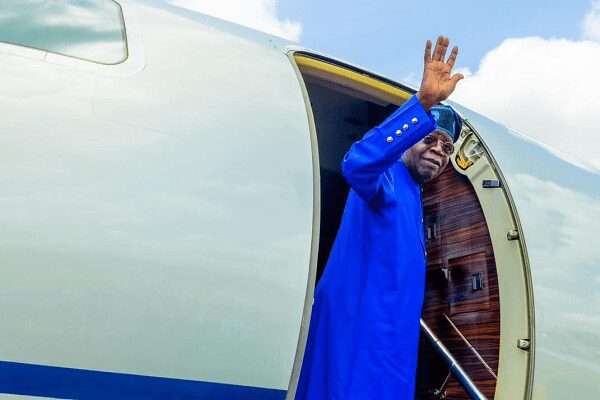
President Bola Tinubu, on Wednesday, departed Abuja for Paris, France, for a private visit. His Special Adviser on Media and Publicity, Ajuri Ngelale, had revealed this in a statement on Wednesday but did not disclose the reasons for the visit. According to the statement, Tinubu is expected to return to the country in the first week of February 2024. This visit is Tinubu’s third to the country since he assumed office eight months ago. On June 20, 2023, three weeks after assuming office, Tinubu opened his foreign schedule in the city he last visited as President-elect, Paris, the French capital. In September 2023, the President spent nine days with world leaders in New York, USA, at the 78th United Nations General Assembly, which began on September 19, his first UNGA as President. Afterward, he proceeded to Paris, France, where he remained for five days, arriving in Abuja on September 29 ahead of Nigeria’s 63rd Independence Day anniversary on October 1.

Ondo Gov Picks Former National Assembly Clerk As Deputy

A former Deputy Clerk of the National Assembly, Olayide Owolabi Adelami, has been nominated as the new Deputy Governor of Ondo State. Adelami’s nomination came shortly after Governor Lucky Aiyedatiwa announced the dissolution of members of the State Executive Council in the cabinet, who worked under the late governor, Rotimi Akeredolu. An alumnus of Imade College, Adelami obtained his Bachelor of Science in Business Administration from the University of Lagos before proceeding to get his MBA from Ogun State University. He was a deputy clerk at the National Assembly before retiring in April 2018. Chief Press Secretary to Aiyedatiwa, Ebenezer Adeniyan, confirmed the nomination of Adelami in a statement on Wednesday. Adelami’s nomination is believed to have laid to rest agitations for the appointment of a new deputy governor for the state following the emergence of Aiyedatiwa. Aiyedatiwa became the substantive governor of the state after the demise of Akeredolu, who passed on after battling protracted prostrate cancer.