NASS Seeks Take-Off Grants for Otukpo, Other New Teaching Hospitals

Otukpo and other newly established federal teaching hospitals awaiting take-off grants in Nigeria

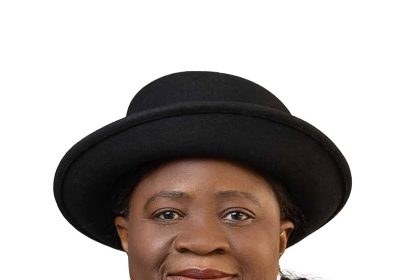
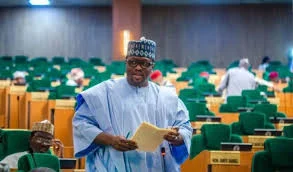
The Joint Committee on Health of Nigeria’s National Assembly has appealed to the Joint Committee on Appropriations to make financial provisions for take-off grants to support newly established federal hospitals across the country. Chairman of the committee, Ipalibo Banigo, made the appeal on Wednesday while presenting the harmonised report of the joint Senate and House Committees on Health on the 2026 budget proposals of ministries, departments and agencies (MDAs). Banigo said the proposed take-off grants were critical to ensuring the effective and efficient operation of the new health facilities, noting that they would provide essential start-up funding to address immediate operational needs. The newly established hospitals include the Federal University Teaching Hospital, Lafia and the Federal University Teaching Hospital, Akure. Others are the Federal University of Health Sciences Teaching Hospital, Otukpo and the Federal University of Health Sciences Teaching Hospital, Ila-Orangun. Banigo stated that the Federal Government is targeting an investment of six per cent of the total national budget allocation to the health sector, net of liabilities, as part of efforts to strengthen healthcare systems nationwide. “The aim is to revitalise our hospitals with medication and better resources, and to care for all Nigerians by procuring essential drugs for distribution to the public, ensuring quality healthcare facilities nationwide,” she said. She disclosed that the 2026 budget proposal for the Federal Ministry of Health and Social Welfare includes N1.17 trillion for personnel costs, N57.03 billion for overheads, and N924.25 billion for capital expenditure, bringing the total allocation to N2.14 trillion. The committee, she added, observed during its review of the 2025 budget performance and the 2026 budget defence that many hospitals were yet to receive 100 per cent of their 2024 appropriations. “Although all of the 2024 appropriation had been uploaded, about 60 per cent of payments are still outstanding, and in some cases as much as 30 per cent of the appropriations remain unpaid,” Banigo said. Responding, the Deputy Chairman of the Joint Committee on Appropriations, Mohammed Monguno, assured lawmakers that the committee would look into the funding concerns raised by the health committee.

Altered After Parliament: Nigeria’s Tax Laws and the Crisis of Executive Power

Portrait of Dahiru Ali, journalist and analyst covering Nigerian governance, politics, and economic reform.”

Allegations that Nigeria’s newly enacted tax laws were altered after parliamentary approval have sparked a heated debate over executive overreach, legislative authority, and the integrity of the country’s governance. With discrepancies between certified and gazetted versions of key tax laws, analysts warn that the controversy could have far-reaching legal, economic, and political consequences.

Forgeries, taxations and the reign of Rehoboam

Ugo Onuoha is a Nigerian journalist and columnist who writes FINGERPRINTS, a commentary on governance, power and social justice in Nigeria.

By UGO ONUOHA “A profligate regime should not expect Nigerians to willingly submit to a new tax regime that looks like an exercise in extortion. The administration gets its priorities wrong. At a time that virtually all federal highways have collapsed and become deathtraps, this government prioritises the construction of a N15 trillion coastal highway from Lagos to Calabar.” A little over three months into the presidency of Alhaji Bola Ahmed Tinubu, on September 5, 2023, I wrote an opinion piece titled “100 days of Rehoboam” in this space and elsewhere. Rehoboam was a king of the divided kingdom of ancient Israel. He was the son of King Solomon and the grandson of King David, both of whom were also past rulers of a united Israel. Rehoboam caused Israel to be divided through policies that inflicted pains on his people. He was reckless. He was proud. He was unfeeling. He took counsel from his scatter head fellow young men. He told the Israelites that the privations they suffered under his father should be regarded as a child’s play. And that while his predecessors chastised them with a whip, he would chastise them with a scorpion. And he verily proceeded to do so. Rehoboam and Tinubu share similarities and dissimilarities. Rehoboam was a monarch. Tinubu is not a king in spite of his pretending to be one. Rehoboam was born into royalty. Tinubu was not. Indeed Tinubu’s birth and early years are still subjects of conjectures and controversies. Rehoboam was a young man when he ascended the throne of his fathers, and so could be excused on account of youthful exuberance. Tinubu was an old man when he was installed as president of Nigeria though his true age is only known to himself and himself alone. There’s no verifiable evidence of when he was born and where. Unlike Rehoboam, Tinubu takes no counsel from anyone. He said this much himself when, without consultations and without a Cabinet, he unilaterally removed the so-called petrol subsidy. Tinubu at 100 days in office] has been like that proverbial bird that perched on a tree branch—the branch has remained unsettled and the bird can’t stop dancing to unheard sounds. Since his inauguration on May 29, 2023, exacerbated hopelessness has been the lot of Nigerians. Tinubu himself can only pretend to have peace of mind…” On September 5, 2023, I wrote this about Tinubu and Rehoboam. “[Tinubu at 100 days in office] has been like that proverbial bird that perched on a tree branch – the tree branch has remained unsettled and the bird can’t stop dancing to unheard sounds. Since his inauguration [as president] on May 29 [2023], exacerbated hopelessness has been the lot of Nigerians and Tinubu himself can only pretend to have had peace of mind. If he has had the presence and prescience of mind, he would not have been enmeshed in serial fumbling from one policy somersault to another from the removal of the so-called petrol subsidy, [devaluation of the Naira], student loan and [the] proposed payment of N8,000 per month for six months to a specified number of poor Nigerian families, and planning to lead the Economic Community of West African States [ECOWAS] to war on Niger Republic [when the military in that country seized political power]”… In Igbo Tinubu is a classical case of ‘akwu rere ere n’ikwo puru epu’ which transliteration in English language will roughly read: rotten palm fruits being pounded inside a decayed mortar. The finished product is better left to the imagination…” When Rehoboam became the king, the older advisers in the palace pleaded with him “to heed the cry of the people and lighten the heavy load of labour and taxes that Solomon had laid on them, but the younger elements who had grown up with the new king counselled otherwise. He took the counsel of his mates. The consequences of the actions of the new and rash King Rehoboam are well documented in the chronicles of the kings of Israel in the Holy Bible book of 1Kings. In Tinubu’s rash and irrational decisions [on] the first day and [subsequent] weeks of his reign, he appears to have borrowed a leaf from the wicked and unthinking  King Rehoboam”. One of the undoings of Rehoboam was that he insensitively raised taxes on his people and so lost more than half of his kingdom. The northern part of Israel split away, taking its own path separate from the southern kingdom of Judah. But Nigeria is not a monarchy and bears no resemblance to the old kingdom of Israel. Does that mean that Nigeria splitting is unthinkable? With the new tax laws set to come into effect in a matter of days, Tinubu who rules like a monarch may yet be treading the path of King Rehoboam. Rehoboam raised taxes on his people at a time they were already complaining of privations and pains, Tinubu is poised to also raise taxes on Nigerians at a time the people are groaning under the weight of a multiplicity of harsh economic policies of the regime. And he appears not to be bothered. He is irritated by wise counsel that he steps on the brakes and allows Nigerians to breathe. Instead, he empowers the relevant agency of government to execute a secret contract with a so-called tax consultant in France which may lead to handing over Nigeria’s tax data to a foreign company. Tax data is a national security issue that should not be traded as a favour to a friend. Tinubu and the president of France, Emmanuel Macron, are known to be buddies. The frequent ‘working visits’ of our president since he assumed office a little over two years ago had been to Paris, France, unlike his predecessor, Muhammadu Buhari, who made London his tourism and medical destination, and the former archbishop of Canterbury his bosom friend. And a go-to man. A profligate regime should not expect Nigerians to willingly submit to a new tax regime that looks

Senate Raises Alarm Over Insecurity, Probes Kebbi Troop Pullout

By Caroline Ameh | Abuja The Nigerian Senate on Tuesday expressed deep concern over the worsening insecurity in parts of Kwara, Kebbi, and Niger States, resolving to probe the alleged withdrawal of military personnel from a Kebbi school hours before a major abduction. The resolution followed the adoption of a motion of urgent national importance sponsored by Deputy Majority Leader, Senator Lola Ashiru, who described the escalating attacks on schools, worship centres, and rural communities as a national emergency requiring immediate federal action. Senators Decry Widening Attacks Lawmakers lamented the November 18 attack on Christ Apostolic Church (CAC), Eruku, in Ekiti Local Government Area of Kwara State, where gunmen killed two worshippers and abducted 38 others, all later rescued in coordinated security operations. They noted that the attack led to the temporary closure of schools in five local government areas across Kwara, as well as parts of Niger and Kebbi States, affecting 47 Federal Unity Colleges nationwide. The Senate also condemned the growing pattern of school kidnappings, including recent abductions in Niger and Kebbi States, warning that educational and religious institutions had become increasingly vulnerable to banditry and terrorism. Controversy Over Troop Withdrawal Lawmakers were particularly alarmed by credible reports that military personnel were withdrawn from Government Girls’ Secondary School, Maga, Kebbi State, just hours before the abduction of 24 female students.They demanded a transparent investigation into the decision and those responsible. Contributing to the debate, Senator Enyinnaya Abaribe (Abia South) urged his colleagues to confront insecurity “head-on and without reference to the past.” He insisted that the Senate must uncover who authorised the withdrawal of troops from the school before the attack. Abaribe’s position was strongly supported by Senate President Godswill Akpabio, Senator Seriake Dickson, and other lawmakers, who called for urgent and coordinated security action. Intelligence Points to Internal Sabotage The motion also cited intelligence reports indicating that internal collaborators continue to aid criminal networks with logistics, information, and escape routes. Senators warned that terrorists were exploiting forest corridors such as the Kwara–Kogi axis, Kebbi–Zamfara stretch, and Niger’s Shiroro–Rafi–Munya belt to carry out attacks and evade arrest. They further raised concern over the deplorable state of the Idofian–Omu-Aran–Eruku–Egbe–Kabba highway, which they said provides bandits with ambush points, easy escape routes, and concealment within thick forests. Tinubu Commended for Swift Response Earlier, Senate Majority Leader Opeyemi Bamidele cautioned against rising public speculation over the release of kidnap victims, urging a review of the performance of Senate security committees.He reaffirmed that the Tinubu administration does not and will not support ransom payments to abductors. The Senate commended President Bola Ahmed Tinubu for what it described as his “swift and personal intervention,” including cancelling planned foreign trips to coordinate national security efforts. It also lauded security agencies for the rescue of 38 abductees in Kwara and 51 students in Niger State. Key Resolutions The Senate resolved to:

Tinubu to Unveil N47 Trillion 2025 Budget Next Week

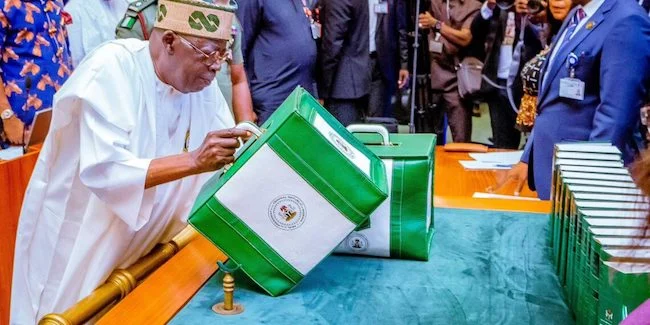
In further of yearly ritual, President Bola Tinubu is set to present the 2025 budget to the National Assembly on December 17, 2024.  This announcement was made by Senate President Godswill Akpabio during a plenary session on Thursday. The 2025 budget, totaling N47.9 trillion, is expected to be the largest in Nigeria’s history.  The presentation will take place at the House of Representatives Chamber.  ALSO READ: How Nigerian Lawmakers Padded 2024 Budget With Over N53billion Vague Projects Lawmakers recently reviewed and submitted the government’s medium-term expenditure framework (MTEF), which underpins the budget figures.  Key assumptions in the plan include a $75 oil price per barrel, a daily oil production target of 2.06 million barrels, and an exchange rate of N1,400 to $1.  The document also projects a GDP growth rate of 6.4%. The Senate Committee on Finance is tasked with reviewing the MTEF/FSP and providing a report within one week. Budget making in Nigeria of recent has been characterized by a lot of subterfuge and shenanigan employed by politicians to steal public fund. Experts observe that, through what the legislators referred as budget padding, vague project items are infused into the budget to enable both legislators and the executive to commit the heist of public fund.

Protesters Storm Villa, NASS Over Reinstatement Of Sanusi As Kano Emir

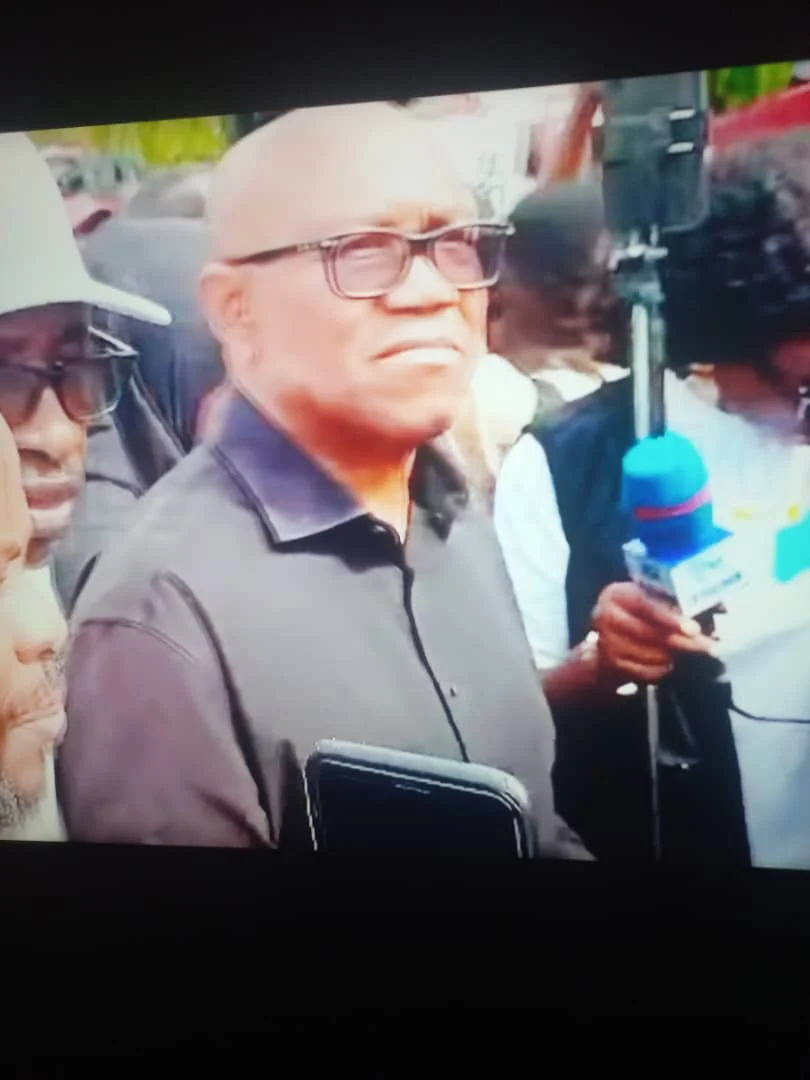
Protesters marched to the Presidential Villa and the National Assembly in Abuja on Friday, demanding President Bola Tinubu’s intervention in the Kano Emirate conflict. The protesters, marching peacefully, carried banners highlighting their concerns about the escalating situation in Kano. They called on President Tinubu to use his authority to resolve the crisis and ensure the restoration of peace and stability in the State. The State Assembly passed a bill titled, ‘The Kano State Emirates Councils (Repeal) Bill, 2024’, which dissolved the establishment of the additional emirates. This made way for the reinstatement of Muhammadu Sanusi II on Thursday by Governor Yusuf, four years after he was dethroned by a former governor of the state, Abdullahi Ganduje. The protesters, under the banner of the Concerned Patriots of Nigeria, accused Governor Yusuf of escalating his abuse of office by dissolving the traditional council. The coordinator, Abdullahi Muhammed Saleh said, “A lot had been going wrong in the state but the Concerned Patriots of Nigeria had thought it best to allow Kano state to sort out its thorny issues. However, Thursday’s brash actions of Governor Abba Kabir Yusuf of Kano State, who sacked five emirs to reappoint Alhaji Muhammadu Sanusi as the 14th Emir of Kano has awoken us to the urgency of raising the alarm about the destructive excesses of the state governor. “Since being sworn into office, Governor Abba Yusuf has a string of loutish acts that run like a hardened criminal’s rap sheet. All in the name of rubbishing his predecessor, he started with a demolition spree that has served to impoverish the people whose lives he took an oath to improve. Thus he proved himself to be anti-people. “The Governor then attempted to destroy the structures of political parties in the state. The impish fanaticism with which he pursued this illicit mission saw him intruding into the structure of other political parties, including hiring some charlatans who purportedly suspended the national chairman of the All Progressive Congress (APC), Dr Abdullahi Ganduje, who is interestingly his predecessor. Thus he proved himself to be anti-democratic. “This latest stunt of sacking five emirs to install his acolyte was achieved by manipulating the Kano State House of Assembly, which he had successfully turned into a rubber stamp for endorsing his illegal acts. He has eroded the autonomy guaranteed by the separation of powers as enshrined in the Constitution of the Federal Republic of Nigeria (as amended). “It is inconceivable that any right-thinking person will descend low to the point of manipulating the traditional institution for political gimmicks. The humiliation meted out to the five emirs was most unbecoming and we have cause to believe that Abba Yusuf has set the stage for using the traditional institution as ancient and as esteemed as that of Kano for a political seesaw will continue since his successor will revert to the five emirates. The Kano governor has thus proven himself to be the anti-traditional institution leader.” The protesters criticized Governor Yusuf’s actions as unreasonable and detrimental to a civilized society, urging him to stop undermining Kano’s peace. They condemned the NNPP-dominated Kano State House of Assembly for being a rubber stamp for the governor’s actions, warning that their desperation could destabilize the city and the country. They appealed to President Tinubu to urgently intervene in the Kano Emirate crisis to prevent further deterioration and ensure peace is restored.