Labour may resume strike Tuesday after rejecting N62,000, insists on N250,00

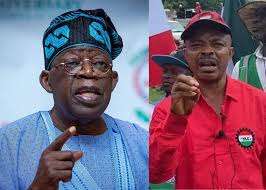
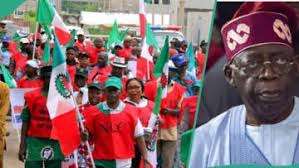
The Organised Labour has said it will not accept any N62,000 or N100,000 “starvation wage” as the minimum wage for Nigerian workers. It insisted on N250,000, being its latest demand at the last meeting of the Tripartite Committee on Minimum Wage on Friday, as the living wage for an average Nigerian worker. This was made known on Monday by Chris Onyeka, Assistant General Secretary of the Nigeria Labour Congress, NLC, while fielding questions on Channels Television’s The Morning Brief show. Onyeka said the one-week grace period given to the Federal Government last Tuesday, June 4, 2024, would expire by the midnight of Tuesday, June 11, 2024. According to him, should the Federal Government and National Assembly fail to act on the demands of workers by tomorrow (Tuesday), the organs of the NLC and the Trade Union Congress, TUC, would meet to decide on the resumption of the nationwide industrial action relaxed last week. “Our position is very clear. We have never considered accepting N62,000 or any other wage that we know is below what we know is able to take Nigerian workers home. We will not negotiate a starvation wage. “We have never contemplated N100,000 let alone N62,000. We are still at N250,000, that is where we are, and that is what we considered enough concession to the government and the other social partners in this particular situation. We are not just driven by frivolities but the realities of the market place; realities of things we buy every day, bag of rice, yam, garri, and all of that. “The Federal Government and the National Assembly have the call now. It is not our call. Our demand is there for them (the government) to look at and send an Executive Bill to the National Assembly, and for the National Assembly to look at what we have demanded, the various fact of the law, and then come up with a National Minimum Act that meets our demands.” He continued: “If that does not meet our demand, we have given the Federal Government a one-week notice to look at the issues and that one week expires tomorrow (Tuesday). If after tomorrow, we have not seen any tangible response from the government, the organs of the Organised Labour will meet to decide on what next. “It was clear what we said. We said we are relaxing a nationwide indefinite strike. It’s like putting a pause on it. “So, if you put a pause on something and the organs that govern us as trade unions decide that we should remove that pause, it means that we go back to what was in existence before.”
Finance Minister, Wale Edun, Speaks After Meeting Tinubu over Minimum Wage

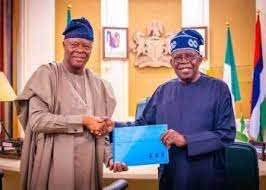
The Minister of Finance and Coordinating Minister of the Economy, Wale Edun, has said that “there is no cause for alarm” following a meeting with President Bola Tinubu at the Presidential Villa in Abuja. Edun was accompanied by the Minister of Budget and Economic Planning, Atiku Bagudu. The development comes two days after Tinubu directed the finance minister to present a proposed new minimum wage figure and analysis of associated costs to him within 48 hours. Although the agenda of Thursday’s meeting was not disclosed, it is believed to be connected to the President’s directive on Tuesday. It can be recalled that the Tripartite Committee on new minimum wage met on Wednesday. The meeting was inconclusive due to the federal government team’s failure to present a new figure, despite proposing N60,000 as the new minimum wage, which was rejected by the organized labour. It is understood that the government team is expected to present a fresh figure at today’s meeting scheduled for 2 pm.
NLC expresses disappointment over Fed Govt’s silence on electricity hike reversal

The Nigeria Labour Congress has described the federal government’s silence on the April 3 electricity tariff hike as disappointing. NLC disclosed this in its communique on Tuesday after its National Executive Council meeting where it suspended its indefinite strike for one week. The development comes after the federal government in a meeting with organized labour on Monday agreed to pay minimum wage higher than N60,000. However, the government has yet to say anything about the second part of labour’s demand, which is electricity tariff reversal. NLC expressed disappointment over the government’s silence and lack of concrete action regarding the reversal of the electricity tariff hike and the abolition of the apartheid classification of electricity consumers into Bands. “The NEC reaffirms that these issues are critical to alleviating the financial burden on Nigerian workers and the general populace. The electricity tariff hike and discriminatory Band classification remain unacceptable and must be addressed alongside the wage increase,” it stated. Recall that on April 3, the NERC approved tariff increment of over N200 per kwh for customers getting 20-24 hours power supply. The hike generated reactions among Nigerians. In reaction, the government earlier announced a minor reduction of N18, bringing it down to N208.80kwh for band A customers. However, unsatisfied with the reduction, the NLC, the Trade Union Congress and other organizations called for the complete reversal of the electricity tariff hike. It was part of the demand presented to the federal government, alongside the issue of minimum wage.
Minimum wage: ‘We are still on strike’ – NLC insists

Contrary to the nebulous claim about an “agreement to pay a new minimum wage above N60,000,” that is making the rounds on the social network and sections of the traditional media, the Nigeria Labour Congress, NLC, has insisted that it is still on strike. NLC said its organs will meet to decide on the outcome of the meeting with the federal government. Posting on X on Tuesday, NLC wrote: “Until we hear from Our Organs at our meeting scheduled for today, 4th June, we are still on strike.” On Monday, the federal government and the organised labour reached an agreement that might end the ongoing strike. The organized labour embarked on an indefinite strike on Monday to push for an improved pay package for workers. The strike led to a meeting between the Secretary to the Government of the Federation, SGF, Senator George Akume, and labour leaders in Abuja. At the end of the meeting, it was agreed that “Further to the negotiation by the Tripartite Committee on National Minimum Wage (NMW) and subsequent withdrawal of Labour from negotiation, the Leadership of the National Assembly intervened on 2nd June, 2024. The Organised Labour declared a nationwide strike on Monday, 3rd June, 2024, to drive home its demands. “The Federal Government, in the National interest, convened a meeting with Labour held in the office of the Secretary to the Government of the Federation, on Monday 3rd June, with a view to ending the strike action. “The President, Commander-in-Chief of the Armed Forces, Federal Republic of Nigeria is committed to a National Minimum Wage that is higher than N60,000.”
Nationwide Strike to Go on: Negotiations Between NASS and Labour End in Deadlock

Efforts by the leadership of the National Assembly to mediate between the federal government and Labour unions hit a roadblock as the latter insists on continuing the strike. Despite last-minute discussions, the unions remained adamant in their demand for a ₦494,000 minimum wage while negotiations persist. In a bid to resolve the ongoing impasse between the federal government and Labour unions, the leadership of the National Assembly convened a meeting aimed at finding common ground. However, despite extensive deliberations, the parties failed to reach a consensus. Labour unions, represented by their leadership, reiterated their stance that the strike action must continue until their demands are met. Central to their demands is the insistence on a ₦494,000 minimum wage, which they argue is necessary to address the pressing needs of workers across various sectors. Meanwhile, the federal government has expressed its commitment to ongoing negotiations but maintains that any decision regarding the minimum wage must be approached with careful consideration of economic realities and sustainability. The deadlock in negotiations underscores the challenges faced by both parties in finding a balance between addressing the legitimate concerns of workers and ensuring the long-term viability of government policies. As the strike enters its next phase, the impact on essential services and the economy at large is expected to escalate, further underscoring the urgency for a resolution to be reached. With negotiations at an impasse and the strike set to continue, the onus is on both the federal government and Labour unions to redouble their efforts to find a mutually acceptable solution. The welfare of workers and the stability of the economy hang in the balance as stakeholders navigate this challenging period of labor relations.
NLC Strike: FG insists on N60K Minimum Wage Offer

That the organized labour has given Monday, June 3rd as commencement date for an indefinite strike to protest the failure of government to approve a new national minimum wage agreeable to them is no longer news. What is trending is that the FG has adduced 14 reasons why it can not approve the figure proposed by labour. Here are 14 reasons the FG gave for a N60,000 minimum wage: N35,000 wage award for all treasury-paid federal workers. N100 billion for the procurement of CNG-fuelled buses and CNG conversion kits. N125 billion conditional grant and financial inclusion to MSMEs. N25,000 each to be shared to 15 million households for 3 months. N185 billion palliatives (loans to States) to cushion the effects of fuel subsidy removal. N200 billion to support the cultivation of hectares of land to boost food production. N75 billion to strengthen the manufacturing sector. N1 trillion for student loans for higher education. Release of 42,000 metric tons of grains from strategic reserves. Purchase and onward distribution of 60,000 metric tons of Rice from the rice millers association. Recent salary increase of 25-35 per cent on all consolidated salary structures for federal workers. 90% subsidy on health costs for Federal Civil Servants registered on NHIS. Light rail commissioned in Abuja to relieve transportation cost until the end of the year. Lagos State had already commenced the same initiative with their blue and red lines. In addition to the freedom of civil servants to engage in agriculture, the federal government has approved the inclusion of ICT services as an alternate source of income. The government added N3, 000 to its initial offer of N57, 000 proposed last week, taking the total figure to N60, 000 while labour lowered its demand by removing N3, 000 from the N497, 000 it proposed last week. The tripartite committee has been locked in talks over a new minimum wage since the committee was inaugurated in January this year. To fast track the negotiation process, the NLC and TUC on May Day gave the committee until the end of the month to wrap up talks on a new national minimum wage. That ultimatum expired on Friday night without an agreement. During the meeting, the government defended their offer of N60,000.00 per month.
FG Reacts As Labour Begins Indefinite Nationwide Strike

The Federal Government has appealed to Organised Labour to reconsider its decision to embark on an indefinite strike from Monday, June 3, 2024. The Nigeria Labour Congress president, Joe Ajaero yesterday announced that the industrial action which would begin by Monday midnight is in protest against the government’s refusal to raise the proposed minimum wage from N60,000. Reacting to the development, Minister of Information and National Orientation, Idris Mohammed in an interview with Punch stated that the interest of the masses should be the top priority of Organised Labour, saying strike was not the solution to the ongoing negotiation for a new minimum wage for workers. His words: “The government is pleading with Labour to reconsider its position. The FG has already made an offer of N60,000, and whatever the government does is in the interest of Nigerians. “We won’t like to do something that will throw the country into another problem. “Even as we do that, we are pleading with Labour. They are partners in this project called ‘Nigeria’ and we expect them to join hands with the FG as it strives to look for solutions that will take Nigeria to the desired prosperity. “Our message is that of an appeal and the need for Labour to see reason with the government. That was even the basis for setting up the tripartite committee that was made up of Organised Labour, the sub-nationals and the FG. This was because the government just didn’t want to make unilateral decisions. In any case, the position on the wage regime is not a one-sided thing. “We expect that they will see reason with the government. That is why we are calling on them to show understanding by not embarking on the strike because we don’t want that at this point. A strike is not the solution to our problem. We are continuing our negotiation with them. The minister and other stakeholders are still talking to them and we believe that we will find a common ground,” he stated.
Nationwide Strike Imminent as Labour Unions Decry Government Inaction

The Nigeria Labour Congress (NLC) and the Trade Union Congress (TUC) have threatened to embark on nationwide strike by Monday in response to the Federal Government’s failure to finalize a new National Minimum Wage Act and reverse the recent surge in electricity tariff to N65/kwh. During a press conference held on Friday, May 31st, 2024, the unions expressed deep concern over what they perceive as the government’s disregard for the welfare of Nigerian workers. The unions were particularly irked by the absence of governors and key ministers, except for the Minister of State for Labour and Employment, during the negotiations as a mark of the government’s lack of commitment to addressing the concerns of workers. Recalling the ultimatums issued during the May Day celebrations on May 1st, 2024, demanding the conclusion of the minimum wage negotiations by the end of the month, the unions emphasized the lack of substantial progress or commitment from the government. In addition to demanding the reversal of the recent electricity tariff hike, which saw rates skyrocket to N225/kwh, the unions reiterated their call for a return to the previous rate of N65/kwh and an end to the categorization of consumers into Bands. Despite widespread protests and public outcry, the unions criticized the government’s response as characterized by “persistent inaction” and the dissemination of propaganda rather than engaging in meaningful dialogue. Consequently, the NLC and TUC announced the initiation of an indefinite nationwide strike, set to commence on Monday, June 3rd, 2024. The unions called upon their affiliates, civil society organizations, market traders, and the general public to lend their support to the industrial action. While acknowledging the potential inconveniences that may arise from the strike, the unions affirmed their unwavering resolve to pursue their objectives until the demands regarding the minimum wage and electricity tariff hike are satisfactorily addressed by the government.
FG, Labour To Resume Talks Friday On Minimum Wage

President Bola Tinubu-led government, on Wednesday, reached out to the Organised Labour consisting the Nigeria Labour Congress (NLC) and Trade Union Congress (TUC) for the continuation of minimum wage negotiations. According to Punch, a source familiar with the matter disclosed the development in Abuja. The source noted that Labour would honour the invitation. The source said, “A letter has been addressed to Labour by the committee chairman and signed by the NSIWC chairman. The meeting is scheduled for Friday. “Of course, Labour will attend. If they present a better offer on Friday we will accept it.” Recall that the minimum wage committee, on Tuesday, adjourned indefinitely after talks between the Federal Government and Organised Labour broke down. During the meeting labour rejected the Federal Government’s ₦60,000 fresh proposal, up from the earlier ₦57,000 offer. At the meeting, labour also lowered its demand by removing ₦3,000 from the ₦497,000 it proposed last week, pegging the new proposal at ₦494,000. To fast-track the negotiation process, NLC and TUC on May Day gave the committee till the end of the month to wrap up talks on a new national minimum wage. The ultimatum will expire on Friday night.
Any Government That Refuses To Implement N35,000 Wage Increment Does Not Deserve Peace – Oshiomhole

Senator Adams Oshiomhole is urging all levels of government to enforce the Federal Government’s N35,000 grant, emphasizing that no government at the state or local level should experience peace if they fail to implement the grant. President Bola Tinubu’s administration had approved the N35,000 provisional wage to alleviate the impact of subsidy removal, applicable to all treasury-paid federal government workers for six months. Expressing his concern on Channels Television, Oshiomhole questioned why no Nigerian state government has implemented the wage increase despite federal approval, asserting that it should be applied universally across federal, state, and local levels, as well as in the private sector. According to him, “The Federal Government approved N35,000 increase on top of current wage levels. But I’m yet to understand why any Nigerian state government or governor is not implementing that agreement. “I don’t agree that the money was for only federal employees. Federal employees don’t have different markets from state employees and the struggle that was mobilised, workers in Nigeria were mobilised both public and private sectors in what we called a general strike before that money was awarded. “By extension, therefore, all state governments, local governments, federal government and private sector employers should implement it. I don’t think NLC business is to lament it. “They should fight for the implementation of their rights. Any government that refuses to implement the N35,000 is not entitled to peace. That’s my view.”