Minimum Wage: Tinubu To Meet With Organised Labour

NLC kicks off nationwide strike; says no overture from FG

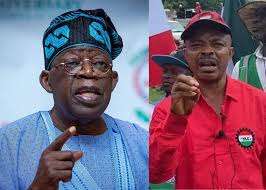
President Bola Tinubu will meet with the Organised Labour in Abuja on Thursday to further discussions on a new minimum wage for workers in Nigeria. A top labour source told Channels Television that the President invited the leadership of the Nigeria Labour Congress (NLC) and Trade Union Congress (TUC) to the meeting expected to be held at the Aso Villa in the nation’s capital city. The President is expected to make a decision on the ₦62,000 proposal of the government and private sector side; as well as the ₦250,000 demand of the Organised Labour. The Thursday meeting is coming about a month after the President said in his Democracy Day speech on June 12, 2024, that an executive bill on the new national minimum wage for workers would soon be sent to the National Assembly for passage. On June 25, the Federal Executive Council (FEC) chaired by the President stepped down from consideration and deliberation on the memo on the new minimum wage to allow for more engagement with stakeholders. Two days after, Tinubu and Vice President Kassim Shettima, at the 141st meeting of the National Economic Council (NEC), met with governors of the 36 states of the Federation and ministers to deliberate on a new minimum wage for workers. Long Walk To New Wage Talks for a new minimum wage for Nigerian workers have been on for a while. The Minimum Wage Act of 2019, which made ₦30,000 the minimum wage, expired in April 2024. The Act should be reviewed every five years to meet with contemporary economic demands of workers. President Bola Tinubu in January set up a Tripartite Committee to negotiate a new minimum wage for workers. The committee comprises the Organised Labour, representatives of federal and state governments as well as the Organised Private Sector. However, the committee members failed to reach an agreement on a new realistic minimum wage for workers, forcing labour to declare an indefinite industrial action on Monday, June 3, 2024. Businesses were paralysed as labour shut down airports, hospitals, the national grid, banks, National Assembly, and state assemblies’ complexes. The labour unions said the current minimum wage of ₦30,000 can no longer cater to the well-being of an average Nigerian worker, saying the government should offer workers something economically realistic in tandem with current inflationary pressures, attendant effects of the twin policies of petrol subsidy removal and unification of the forex windows of the current administration. Labour “relaxed” its strike on June 4, 2024 following assurances from the President that he was committed to a wage above ₦60,000. Both the Trade Union Congress (TUC) and Nigeria Labour Congress (NLC) leadership subsequently resumed talks with the representatives of the Federal Government, states, and the Organised Private Sector. On Friday, June 7, 2024, the two sides (labour and the government) still failed to reach an agreement. While labour dropped again its demand from ₦494,000 to ₦250,000, the government added ₦2,000 to its initial ₦60,000 and offered workers ₦62,000. Both sides submitted their reports to the President who is expected to make a decision and send an executive bill to the National Assembly to pass a new minimum wage bill to be signed into law by the President.

Minimum Wage struggle not dead – TUC President, Osifo

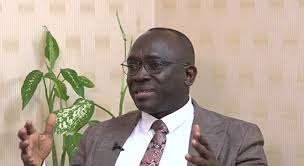
  President of the Trade Union Congress, Festus Osifo has written off criticisms that the struggle for a new national minimum wage may have waned. While reacting to the insinuations, Osifo said the Federal Government is still having conversations with all relevant stakeholders cutting across the Nigerian Governors Forum, Local Government Administrators as well as the Organised Private Sector and Labour Unions. Osifo noted that both Unions still insist on the N250,000 demand it made to the government which was part of the recommendations submitted to the President by the Presidential Tripartite Committee on New National Minimum Wage. He made reference to the existing minimum wage of N30,000 which took two years to be negotiated, assuring that the Tripartite Committee has made appreciable progress since January 2024 when negotiations started. His words, “minimum wage negotiations cannot be dead, you know when we started this conversation you asked us that in 2017 if you remember we started the minimum wage that was signed in 2019, it took about two years to see the light of day. We promised you when we started in January that we will ensure this one is fast-tracked for us not to be in the conundrum that we were as at 2019 which took two years. “So where we are today, we submitted the divergent position in June, when we did that you know clearly that Mr President came out to say that he wanted to consult across board which is the governors, local government chairmen, organised private sector and labour, so we are doing some level of reach out and conversations. “So that what will be submitted to the National Assembly will actually be a minimum wage that will cater for the poorest of the poor, so for the fact that in the media we are not shouting, we are doing some level of internal work so that this bill will be submitted in earnest soon. Of course, we still insist on the N250,000 benchmark as the ideal minimum wage”.

Labour insists N250,000 as minimum wage

The Nigeria Labour Congress (NLC) has unequivocally maintained its stance on the proposed ₦250,000 minimum wage, resisting the Federal Government’s offer of ₦62,000. The declaration was made by NLC President, Joe Ajaero, at an award ceremony in Kano, highlighting the union’s commitment to advocating for the interests of Nigerian workers. Despite several meetings aimed at resolving the wage dispute, no agreement has been reached, with both the government and the NLC holding their grounds. The impasse continues even after the expiration of the existing minimum wage in April 2024, which has heightened tensions between the parties involved. During his speech, delivered by NLC General Secretary Emmanuel Ugboaja, Ajaero voiced concerns over the current economic challenges and escalating inflation rates, which he argued have severely impacted the living standards of workers. “The economic reality and worsening inflation could no longer sustain Nigerian workers,” Ajaero stated, emphasizing the urgent need for a wage that ensures a dignified life for all labourers.

Minimum wage: Why Govs can’t take over negotiations, Labour

Just In: NLC, TUC Suspend Nationwide Strike

Organised Labour, including the Nigeria Labour Congress and the Trade Union Congress, has rejected the proposal of the Southern Governors’ Forum to decentralise minimum wage negotiations to state governments. The NLC condemned the proposal as “unfriendly and anti-worker”, noting that allowing states to determine their minimum wages would be detrimental to workers’ welfare. On Friday, The PUNCH had reported that the Southern Governors’ Forum sought for states to be allowed to negotiate the minimum wage for workers independently. At the end of a meeting held on Monday at the Ogun State Presidential Lodge in Abeokuta, the forum resolved that wages should be reflective of the cost of living. This was revealed in a communique issued from the meeting and signed by the newly-appointed Chairman of the forum, Governor Dapo Abiodun of Ogun State; and Vice-Chairman, Prof Charles Soludo of Anambra State. The meeting was attended by Governors Seyi Makinde of Oyo State; Babajide Sanwo-Olu of Lagos; Godwin Obaseki of Edo; Hope Uzodinma of Imo; Abiodun Oyebanji of Ekiti; Duoye Diri of Bayelsa; Ademola Adeleke of Osun; Umo Eno of Akwa Ibom; Siminalayi Fubara of Rivers; and Bassey Otu of Cross River. Other attendees included Governors Francis Nwifuru of Ebonyi State; Lucky Aiyedatiwa of Ondo; Peter Mbah of Enugu; Sheriff Oborevwori of Delta State; and Alex Otti of Abia State. “The forum discussed the minimum wage demanded by Labour and unanimously agreed that the minimum wage should be reflective of the cost of living, and that each state should be allowed to negotiate its minimum wage,” the communique stated. Meanwhile, the Presidency had on Monday appealed to Nigerians not to put unnecessary pressure on the President, assuring them that the Federal Government would transmit the proposed bill on the new minimum wage to the National Assembly once it was ready. The Special Adviser to the President on Information and Strategy, Bayo Onanuga, made the plea in a terse statement sent to The PUNCH on Thursday. “People should be patient,” he stated. While Organised Labour is adamant about its N250,000 minimum wage demand, the state governors said that paying even the N62,000 proposed by the Federal Government would plunge many states into debt. This was even as President Bola Tinubu demanded more time for consultation on Wednesday. Reacting to the proposal of the governors, the National Treasurer of the NLC, Akeem Ambali, in an interview with Saturday PUNCH, insisted that the governors had no power to negotiate the new minimum wage. He added that the governors were compelled by law to implement the new national minimum wage. Ambali advised the governors to stop trying to strong-arm the Federal Government and labour with their request to negotiate with labour individually, and rather focus on how they would implement the national minimum wage when it is approved. Ambali noted that it was regrettable that labour had to always resort to strike actions to get the government to yield to its demands. He asked the governors make public how much they earn, and subject it to negotiations. He said, “Traditionally, the minimum wage is a national issue; it is not a sub-national negotiation. That is the essence of the Minimum Wage Act, and the law is clear. Governors don’t have the power to negotiate the minimum wage. What they can only negotiate are other allowances, but the minimum wage is a social protection content, and it is not only applicable to Nigeria. “My advice for the governors is that they should prepare their balance sheet and look at how to implement the national minimum wage once it is approved. They should not stress themselves with the issue of negotiating with Labour on a state level. After all, we have seen what happened in Zamfara, where they refused to pay the current minimum wage (N30,000) until Labour issued an ultimatum, and they quickly started paying. Some states are still not paying the current minimum wage. We know what happened i

Raising Minimum Wage Above N62,000 Will Lead to Job Losses, NECA Warns

The Nigeria Employers Consultative Association (NECA) has warned that approving a minimum wage above N62,000 could result in significant job losses. NECA’s Director-General, Adewale-Smatt Oyerinde, voiced this concern during a press briefing on Tuesday in Abuja. His comments came during the third edition of the Nigeria Employers Summit, which focused on “Economic Renaissance: Harnessing Government Reforms and Private Sector Agility.” Oyerinde emphasized that the organized private sector cannot afford a minimum wage higher than N62,000, a figure agreed upon during tripartite committee negotiation meetings. He cautioned that exceeding this amount could lead to non-compliance and subsequent legal battles. “Setting a national minimum wage that businesses cannot sustain will inevitably result in litigation and crises,” Oyerinde stated. In response to allegations of delays in the wage review process, Oyerinde clarified that there have been no unnecessary delays and that the process is actively progressing. “There is no waiting game, and I think we must put all this into context. It is misinformation,” he said. He explained that after the tripartite committee submits its recommendations to the president, a bill will be forwarded to the National Assembly for legislation. He also mentioned that labor groups can advocate for an expedited process.

Minimum Wage: Presidency Sends Message To Organised Labour, Nigerians

The Presidency has pleaded with Nigerians not to mount unnecessary pressure on President Bola Tinubu over the new minimum wage demand. The government assured that Tinubu would transmit the proposed bill to the National Assembly once it is ready. Speaking to Punch, the Special Adviser to the President on Information and Strategy, Bayo Onanuga wondered what the rush for the transmission of the bill was all about. Onanuga’s position is coming barely 24 hours after the Organised Labour asked the President to consult with them before transmitting the bill to the National Assembly. The Union had complained that the National Executive Committee which will accommodate about 300 Labour leaders, is being stalled by Tinubu’s delay to transmit the wage bill. The President, during his Democracy Day broadcast, disclosed that a consensus had been reached between the Federal Government and Labour on the new wage, a development which the Organised Labour debunked. However, Onanuga, while admitting that he had no idea when the bill would be submitted, called for patience. “People should be patient,” he stated. His appeal comes one week after he reiterated that the ₦250,000 wage being demanded by the workers’ union is unsustainable, warning that the Federal Government cannot channel all its resources to meet such demand.

Minimum Wage : Senate Deny Plan To Seize States, LGs Funds

The Chairman of the Senate Committee on Media and Public Affairs, Yemi Adaramodu, has categorically denied recent speculations suggesting that the National Assembly’s Upper Chamber is considering a clause to seize funds from states and local councils in the forthcoming New Minimum Wage Bill proposed by the Executive. The controversy began after a report by a national daily, claimed that federal lawmakers were contemplating the inclusion of a controversial clause that would allow for the seizure of funds when the bill is introduced in the Senate. This report has since sparked widespread discussions and concerns among stakeholders. In response to these claims, Yemi Adaramodu issued a formal statement from Abuja on Saturday, dismissing the allegations as entirely unfounded. Adaramodu said, “Mr. President in his national broadcast on Democracy Day only informed Nigerians that he would soon send the New Minimum Wage Bill to us. “No one among us, not even the Senate President, knows the content of the Bill. How can we take a position on a document that we haven’t even sighted? “During my interface with some journalists, who approached me for an interview as part of activities to mark the one year anniversary of the 10th National Assembly, I did not at any point, state that the allocations belonging to States and Local Governments will be seized. “Nigeria is a federation, with sub-national governments that are autonomous. The misleading headline by The Punch Newspaper that allocations belonging to States and local councils will be seized is false and should be disregarded. “We are still awaiting the Executive Bill and once we have it, it will go through all Legislative stages and once this is done and it receives Presidential assent, it becomes law. And it is law that can specify sanction, not the National Assembly. “My interview was well reported today in the national dailies. It was not exclusive to The Punch. Other newspapers reflected adequately what I said. Why did Punch choose to misrepresent me?”

Minimum wage: I’ll approve what Nigeria can afford — Tinubu

President Bola Tinubu says he will approve a new minimum wage that the Nigerian government can afford.  He stated this on Wednesday at a dinner with the Senate President and Deputy Senate President, among other top government officials to mark Nigeria’s 25 years of unbroken Democracy in Abuja. The President, while appreciating those who stood by him over the years, promised Nigerians he won’t depart from the tenets of democratic governance.   “I have to celebrate with you my dear brother, Senate President, Deputy Senate President,” he said. According to Tinubu, Senate President Godswill Akpabio and his deputy, Jibrin Barau would soon get an Executive Bill from him on the new minimum wage. “The minimum wage is going to be what Nigerians can afford, what you can afford and what I can afford. Cut your coat according to your size, if you have size at all,” he said.

Why Political Office Holders Should Be Put On Minimum Wage – Soludo

The Governor of Anambra State, Charles Soludo, has advocated a drastic reduction in the cost of governance in Nigeria. The Governor lamented that the nation is broke but government and elected officials continue to live in denial and show off flamboyant lifestyles at the detriment of the masses. As a way to curb the developing crisis from escalating further, Soludo said political officeholders should be placed on the national minimum wage. The Anambra State Governor made the call on Wednesday while speaking at the special edition of The Platform, an event organised by The Covenant Nation to mark democracy day in Nigeria. Soludo expressed that Nigerians are hungry, broke and poor, but the ruling class continue to live extravagantly at the expense of the common people. “Let’s come clean and straight with Nigerians. Nigeria is very poor and broke but the lifestyle of government and government officials does not show it, especially with the obscene flamboyance in public display,” Soludo said. “The poor are hungry and impatient, let’s not annoy them more with our insensitivity. “In this case, I agree with reverend father Mbaka, who said elected governors should also earn minimum wage. I agree that we should be paid that so that we can feel that as well. “In Anambra, I have not received a kobo as salary since I assumed office. I have donated my salary to the state. “It is symbolic. It is not much. I think generally, the system is in denial. There must be some signalling, it is just the symbolism of this.” Soludo called for an end to wasteful spending in governance, stressing that elected officials must always remember they are in office based on public trust. “That is why I proposed reinventing the new code of conduct for public officers,” he said. “For the federal government, the actual projecting revenue comes to about N6,160 per Nigerian, per month. “For the states, except Lagos and a few states, most states have revenues amounting to less than N3,000 per resident, per month. “It is from this shares per citizen that we are expected to provide all the infrastructure, debt service, pay salaries and pensions, build schools and provide everything. “For each of our wasteful spending, let’s be conscious about the fact how many citizen share we are squandering. Once we lose this consciousness about the public trust we bear, the society dies irredeemably.”

N62,000 Minimum Wage: Beware of the rage of the people-Benson Upah

If the gathering storm is to be taken as a reliable pointer, then Nigeria may be headed for another major labour crisis as organized labour has not only rejected N62,000 minimum wage offered by government but cautioned that “some state governors, were behind the mischief.” Speaking at a live television programme this Monday morning, Nigeria Labour Congress (NLC) Head of Information and Public Affairs, Mr. Benson Upah disclosed that about five state governors were bent on “throwing spanners to the works”. Even as he declined mentioning the names of these governors, the NLC spokesman cautioned the mischief makers to be aware that “the rage of labour is more manageable than the rage of the people.” Mr. Upah said that contrary to the impression being given to the Nigerian public about the lack of capacity, government revenue has now shot up as the amount being shared by the three tiers of government has moved from N700billion to N1.3trillion. He therefore assured that “Labour is not being difficult but talking about something which is practical and reasonable.” Pressed to state what shall be the next action of organized labour, Mr. Upah, who was guest at the Morning Show on Arise TV said, “appropriate organs of labour shall meet and take a decision.” He went further to state, “Our troops, our resources, our reaction time, our good intentions are intact. Appropriate organs of the unions will reconvene and take the right action.”  Organised labour, comprising of the Nigeria Labour Congress and the Trade Union Congress (TUC) have been engaged in protracted negotiations over a new minimum wage, or at best a living wage. The big elephant at the room during these meetings had been the disproportionate pay politicians and other public office holders approve for themselves as compared to the very poor take home pay of the average worker. The current agitation for a higher pay had been triggered by ongoing hash economic reforms embarked upon by the Bola Ahmad Tinubu Presidency. First was the withdrawal of controversial subsidy on petrol. This was followed by the liberaisation of the foreign exchange market and the 240% upward review of electricity tariff. The combined effect of these changes had led to sudden rise in prices of foodstuff and essential services like the cost of transportation and medicaments. Following its rejection of the N62,000 offered by the federal and subnational governments, organized labour has scheduled a National Executive Council (NEC) meeting for tomorrow, Tuesday to deliberate on the next line of action.