Trump Threatens 25% Tariff on Countries Doing Business With Iran Amid Protests

President Donald Trump threatens 25% tariff against any country that trades with Iran

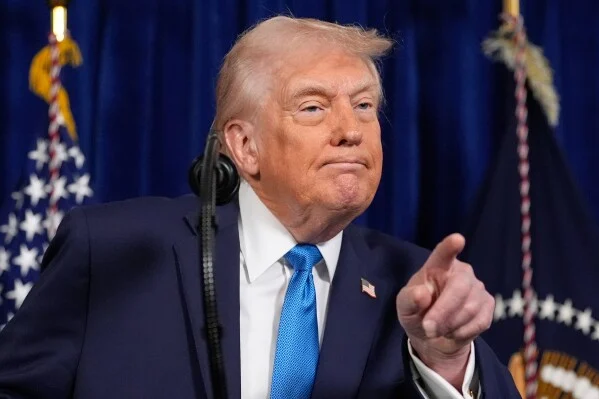
WASHINGTON — President Donald Trump said the United States would impose a 25 per cent tariff on all trade with any country that does business with Iran, escalating economic pressure on Tehran as it faces its largest anti-government protests in years. “Effective immediately, any Country doing business with the Islamic Republic of Iran will pay a Tariff of 25 per cent on any and all business being done with the United States of America,” Trump said in a post on Truth Social, adding that the order was “final and conclusive.” No official documentation outlining the policy appeared on the White House website, and the administration has not clarified the legal authority for the proposed tariffs or whether they would apply to all of Iran’s trading partners. The White House did not respond to a request for comment. Under U.S. law, tariffs are paid by American importers, meaning the cost would likely be borne initially by U.S. companies and consumers. Iran, a member of the OPEC oil-producing group, has been under extensive U.S. sanctions for years. It exports most of its oil to China, with Turkey, Iraq, the United Arab Emirates and India also among its key trading partners. China criticised Trump’s announcement, with its embassy in Washington opposing what it called “illicit unilateral sanctions and long-arm jurisdiction.” A spokesperson said China would take “all necessary measures” to safeguard its interests, adding that “tariff wars and trade wars have no winners.” Japan and South Korea, both of which reached trade agreements with the United States last year, said they were closely monitoring developments. South Korea’s trade ministry said it would consider its response once U.S. actions became clear, while Japan said it would examine the potential impact and respond appropriately. Trump’s comments come as Iran grapples with widespread unrest that has evolved from protests over economic hardship into calls for the overthrow of the country’s clerical leadership. The demonstrations represent one of the most serious challenges to Iran’s ruling establishment since the 1979 Islamic Revolution. U.S.-based rights group HRANA said it had verified the deaths of 599 people since protests began on December 28, including 510 protesters and 89 members of security forces. Iran, which fought a brief war with U.S. ally Israel last year and whose nuclear facilities were bombed by U.S. forces in June, said it is keeping communication channels open with Washington. Trump has said the U.S. may meet Iranian officials and that he has been in contact with Iran’s opposition, while also threatening military action. “Diplomacy is always the first option for the president,” White House press secretary Karoline Leavitt said on Monday, though she acknowledged that other options remain on the table. The tariff threat is consistent with Trump’s broader trade strategy in his second term, during which he has repeatedly used tariffs to pressure countries over trade practices and ties with U.S. adversaries. However, his approach faces legal uncertainty, as the U.S. Supreme Court is considering whether to strike down a wide range of existing Trump-era tariffs. According to World Bank data, Iran exported goods to 147 trading partners in 2022, underscoring the potentially wide-reaching implications of Trump’s proposal if it is formally implemented.

Iran launches 120 missiles into Israel

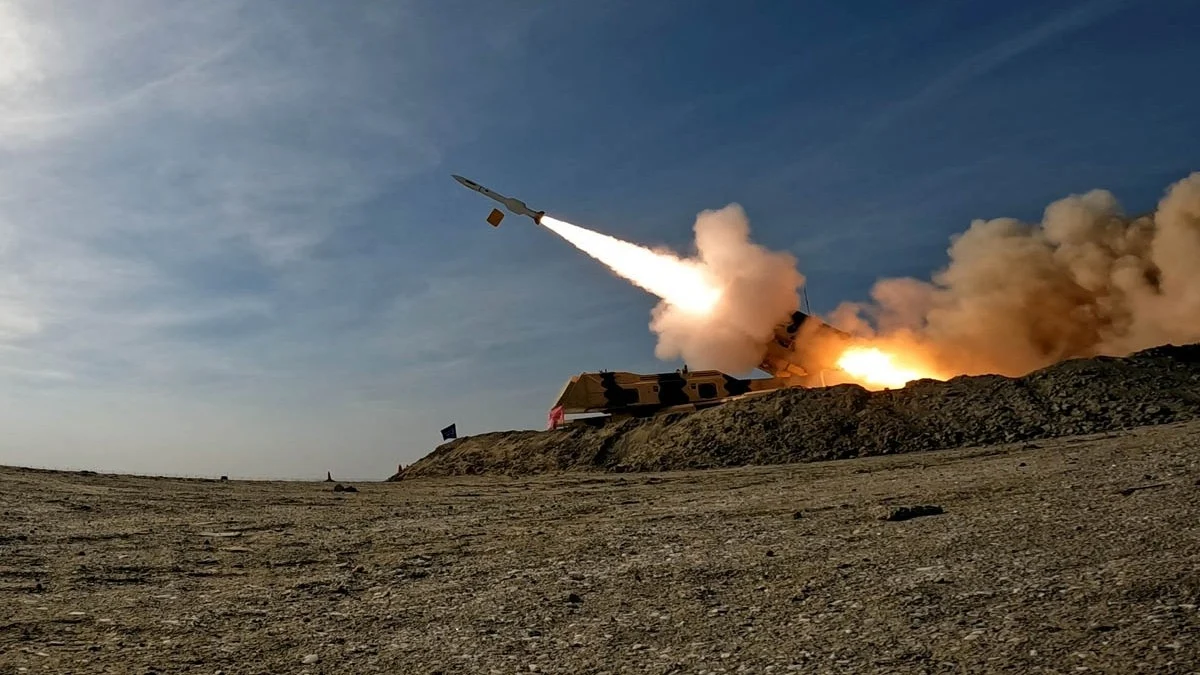
The Islamic Republic of Iran has launched a total of 120 long range missiles into Tel Aviv, Israel, with a few hitting targets while many were intercepted by Israeli anti missile system. It has been long speculated that the latest reckless onslaught of Israeli attack on multiple countries in the Middle East would lead to this escalaltion. Israel has expanded its massive war on Gaza to Labanon, Syria and Yemen.    

Iran to boost oil production by 3.4mbpd

Iran to boost oil production by 3.4mbpd

The Islamic republic expects to boost production to 3.4 MMbpd by the end of summer, according to Oil Minister Javad Owji. That would put output near Iran’s capacity limit of 3.8 MMbpd.  According to Bloomberg, Iran has already boosted production by about 50 per cent over the past two years, according to comments Owji made to the Iranian parliament’s energy committee reported by the ministry’s news service, Shana. Owji’s remarks come amid diplomatic efforts between the U.S. and Iran that have raised speculation about whether aspects of the nuclear deal abandoned by former President Donald Trump in 2018 could be revived. The two nations recently reached agreements that would see captive Americans released and some frozen Islamic republic funds freed for transfer. Further talks could set the stage for Iran to boost its already surging oil exports. The nation shipped 2.2 MMbpd of crude and condensates during the first 20 days of August, with monthly exports poised to reach the highest this year, according to TankerTrackers.com Inc., which provides data on oil cargo shipments, Bloomberg said.  At the same time, the country’s boom in oil sales, most of which are flowing to China, has complicated efforts by OPEC to support oil prices, with Iranian barrels partially countering recent output cuts agreed by Saudi Arabia and Russia. That’s weighed on oil prices, with global benchmark Brent crude trading below $85 a barrel. The revival in Iran’s output has coincided with the nation reaching a preliminary accord with regional adversary Saudi Arabia in April, as well as the latest US diplomatic talks. The Persian Gulf state that was once the second-largest producer in the Organization of Petroleum Exporting Countries saw its energy industry starved of investment under successive rounds of sanctions, while its crude exports were throttled under Trump’s policy of maximum pressure. While Iranian exports are very hard to track — with vessels turning off satellite tracking systems to mask their routes — the data TankerTrackers indicates that Iran is drawing crude out of land-based storage tanks. The country processes roughly 1.8 MMbbl of crude at domestic refineries each day.