Iran begins poll for presidential election

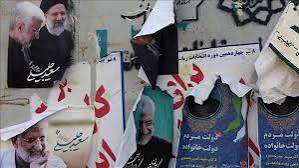
Polls in Iran opened on Friday for a presidential election following the death of ultraconservative president Ebrahim Raisi in a helicopter crash last month. Around 61 million Iranians are eligible to vote in the polls where reformist Masoud Pezeshkian, 69, hopes for a breakthrough win against a divided conservative camp. The Guardian Council, which vets candidates, allowed him to run against a field of conservatives now dominated by parliamentary speaker Mohammad Bagher Ghalibaf and former nuclear negotiator Saeed Jalili. Also left in contention is cleric Mostafa Pourmohammadi after two ultraconservatives dropped out — Tehran major Alireza Zakani and Raisi’s former vice president Amir-Hossein Ghazizadeh Hashemi. “We start the elections” for the country’s 14th presidential ballot, Interior Minister Ahmad Vahidi said in a televised address. Iran’s supreme leader Ayatollah Ali Khamenei cast his ballot shortly after the polls opened and urged Iranians to vote. “Election day is a day of joy and happiness for us Iranians,” he said in a televised speech where he also called for a high turnout. “We encourage our dear people to take the issue of voting seriously and participate,” he said. The election in sanctions-hit Iran comes at a time of high regional tensions between the Islamic Republic and its arch-foes Israel and the United States as the Gaza war rages on. Polls opened at 8:00 am (0430 GMT) in 58,640 stations across the country, mostly in schools and mosques. Polling stations will be open for 10 hours, though authorities could extend voting time as in previous elections. Early projections of the results are expected by Saturday morning and official results by Sunday. If no candidate wins 50 per cent of the vote, a second round will be held on July 5, for only the second time in Iranian electoral history after the 2005 vote went to a runoff. The candidacy of Pezeshkian, until recently a relative unknown, has revived cautious hopes for Iran’s reformist wing after years of dominance by the conservative and ultraconservative camps. Iran’s last reformist president, Mohammad Khatami, praised him as “honest, fair and caring”. Khatami, who served from 1997 to 2005, had also endorsed the moderate Hassan Rouhani, who won the presidency and sealed Iran’s nuclear deal in 2015 with Western powers before it was derailed three years later. The Iranian opposition, particularly in the diaspora, has called for a boycott of the vote. Ultimate political power in Iran is held by Khamenei, the supreme leader. Khamenei insisted this week that “the most qualified candidate” must be “the one who truly believes in the principles of the Islamic Revolution” of 1979 that overthrew the US-backed monarchy. The next president, he said, must allow Iran “to move forward without being dependent on foreign countries”.

Iran appoints interim president after Raisi’s death

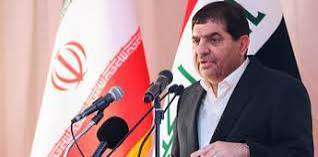
The Supreme Leader of Iran, Ayatollah Ali Khamenei, has declared Vice President Mohammad Mokhber the country’s acting president, effective immediately. Mokhber will remain the interim president until when “We will follow the path of Raisi in doing the duties entrusted without any disruptions,” he was quoted as saying by state media, according to Aljazeera. The development comes barely 24 hours after President Ebrahim Raisi, alongside his Minister of Foreign Affairs, died in a helicopter crash. Iran had earlier held an emergency meeting on Monday.

Iran Supreme Leader Declares 5-Day Mourning Over President’s Death

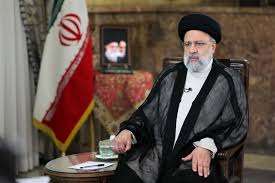
Supreme Leader of Iran, Ayatollah Khamenei has announced 5 days of national mourning following the tragic death of President Raisi death in a helicopter crash earlier today.  The announcement of President Raisi’s demise came early Monday morning, following the crash of his helicopter en route to Tabriz City after inaugurating the Qiz Qalasi Dam at the border with Azerbaijan Republic on Sunday.  Also onboard were Foreign Minister Hossein Amirabdollahian, East Azarbaijan Province’s Governor Malek Rahmati, Mehdi Mousavi (head of Mr. Raisi’s guard team), and Mohammad Ali Al-e-Hashem, the Supreme Leader’s representative in the province. Local authorities at the crash site confirmed the tragic loss. The Iranian government pledged to issue an official statement promptly as investigations continue into the incident. This calamity unfolded as one of the three helicopters in the convoy carrying President Raisi crashed on Sunday. The helicopter reportedly suffered a “hard landing” near Jolfa, a city bordering Azerbaijan, about 600km (375 miles) northwest of Tehran, the Iranian capital. The State TV said, “Some unconfirmed reports say that the helicopter carrying President Raisi has had an accident in East Azerbaijan province.” Disclosing that rescue efforts were underway, the news outlet added, “The harsh weather conditions and heavy fog have made it difficult for the rescue teams to reach the accident site.”  The 63-year-old was in Azerbaijan with the country’s president, Ilham Aliyev, earlier in the day to inaugurate a dam, the third one both countries built on the Aras River. Other officials on board included Iranian foreign minister Hossein Amirabdollahian and the governor of Iran’s East Azerbaijan province.  Chuck Schumer, the United States Senate majority leader, on Sunday evening, said the crashing of a helicopter conveying Iranian President Ebrahim Raisi was an accident.  The New York politician said preliminary findings of American intelligence indicated the incident was unplanned, and no foul play was immediately suspected.  Mr Schumer’s statement said “no evidence of foul play” in the helicopter crash. “It was very bad, foggy weather, northwest Iran where the copter crashed. So it looks like an accident, but it’s still being fully investigated.”