US–Nigeria Military Cooperation: A Strategic Wake-Up Call

Ambassador Uzo Owunne is a Nigerian diplomat and development expert whose work focuses on governance reform, diaspora engagement, and strengthening Africa’s strategic voice in global affairs.
Tinubu’s Türkiye Visit: Diplomatic Ambitions Meet Domestic Scrutiny

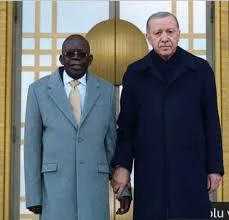
Abuja — President Bola Ahmed Tinubu returned to Abuja late Saturday night from a State Visit to the Republic of Türkiye that was officially billed as a diplomatic success but unfolded into a far more complicated political moment at home. The visit, which culminated in the signing of nine bilateral agreements with Türkiye, was intended to signal Nigeria’s renewed international engagement and strategic outreach under Tinubu’s administration. Instead, it has opened a broader conversation, one that blends diplomacy with domestic unease, policy ambition with public scepticism, and substance with symbolism. At the formal level, the trip delivered what governments typically seek from state visits. Tinubu held high-level talks with Turkish President Recep Tayyip Erdoğan, and both leaders reaffirmed their commitment to deeper cooperation in defence, energy, security, research, and trade. Officials described the agreements as instruments for investment growth, security collaboration, and long-term institutional partnerships. Yet even as handshakes were exchanged and documents signed, questions began to surface. Beyond general statements, the Nigerian government offered little detail on the specific terms of the agreements, how they will be financed, who bears what obligations, and when tangible outcomes can be expected. In a country shaped by past experiences of ambitious memoranda that never matured into real projects, the lack of clarity quickly became a source of concern. Security cooperation, in particular, attracted close scrutiny. Nigeria’s prolonged struggle with insurgency, banditry, and violent crime has made foreign defence partnerships politically sensitive. While Türkiye’s growing defence industry positions it as an attractive partner, many analysts argue that past international security arrangements have failed to deliver decisive results. Without clear safeguards, performance benchmarks, and legislative oversight, sceptics fear history could repeat itself. The economic promises attached to the visit were also met with caution. Nigeria–Türkiye trade remains modest when measured against Nigeria’s engagements with other global partners. Economists and policy watchers argue that unless the agreements contain enforceable provisions for local content, technology transfer, and job creation, their impact may be limited—especially at a time when Nigerians are under intense economic pressure. But perhaps the most politically charged dimension of the visit emerged not from policy documents, but from images. Photos and videos from official ceremonies in Türkiye circulated rapidly across social media and opposition platforms. In several of them, the President appeared subdued during extended protocol events, prompting sharp commentary and, in some quarters, unflattering interpretations. Supporters dismissed the reaction as exaggerated and partisan, arguing that long ceremonial routines often produce awkward still images. Critics, however, seized on the visuals as emblematic of broader concerns about leadership optics and preparedness. In modern politics, such moments rarely remain superficial. Analysts note that in an age of instant digital circulation, images can define narratives more powerfully than communiqués. For an administration seeking to project confidence, strength, and momentum on the global stage, the visual language of a state visit matters almost as much as its diplomatic content. In this case, the imagery shifted attention away from signed agreements and toward questions of presentation and perception. The timing of the visit further complicated its reception. As Nigerians confront inflation, currency volatility, and rising living costs, foreign travel by political leaders is increasingly judged through a domestic lens. Supporters argue that diplomacy is essential for long-term recovery and international credibility. Critics counter that such engagements must produce visible, near-term benefits to justify their political cost. By the time Tinubu’s aircraft touched down at the Presidential Wing of the Nnamdi Azikiwe International Airport, the Türkiye visit had become more than a foreign policy exercise. It had evolved into a mirror reflecting Nigeria’s anxieties about governance, communication, and results. Ultimately, the political meaning of the trip will not be determined in Ankara or Abuja’s VIP lounges, but in the months ahead. If the agreements translate into real investment, improved security capacity, and measurable economic gains, the doubts may fade. If they do not, the visit risks being remembered less for what was signed and more for the questions it raised. For President Tinubu, the Türkiye trip stands as a reminder that in contemporary politics, diplomacy is judged not only by documents and declarations, but by delivery, and by the images that linger long after the ceremonies end.hat in contemporary politics, diplomacy is judged not only by documents and declarations, but by delivery—and by the images that linger long after the ceremonies end.ical sessions that led to the finalisation of the agreements.
Trump Threatens 25% Tariff on Countries Doing Business With Iran Amid Protests

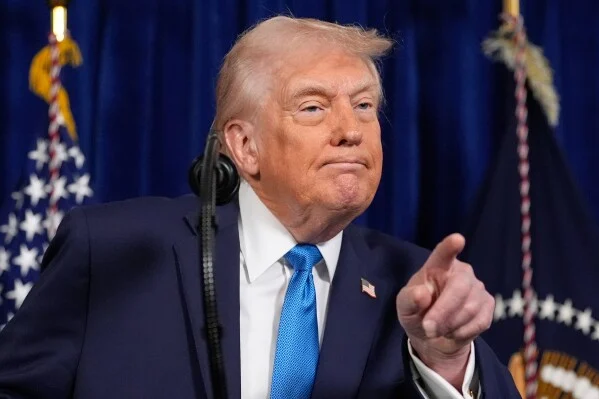
WASHINGTON — President Donald Trump said the United States would impose a 25 per cent tariff on all trade with any country that does business with Iran, escalating economic pressure on Tehran as it faces its largest anti-government protests in years. “Effective immediately, any Country doing business with the Islamic Republic of Iran will pay a Tariff of 25 per cent on any and all business being done with the United States of America,” Trump said in a post on Truth Social, adding that the order was “final and conclusive.” No official documentation outlining the policy appeared on the White House website, and the administration has not clarified the legal authority for the proposed tariffs or whether they would apply to all of Iran’s trading partners. The White House did not respond to a request for comment. Under U.S. law, tariffs are paid by American importers, meaning the cost would likely be borne initially by U.S. companies and consumers. Iran, a member of the OPEC oil-producing group, has been under extensive U.S. sanctions for years. It exports most of its oil to China, with Turkey, Iraq, the United Arab Emirates and India also among its key trading partners. China criticised Trump’s announcement, with its embassy in Washington opposing what it called “illicit unilateral sanctions and long-arm jurisdiction.” A spokesperson said China would take “all necessary measures” to safeguard its interests, adding that “tariff wars and trade wars have no winners.” Japan and South Korea, both of which reached trade agreements with the United States last year, said they were closely monitoring developments. South Korea’s trade ministry said it would consider its response once U.S. actions became clear, while Japan said it would examine the potential impact and respond appropriately. Trump’s comments come as Iran grapples with widespread unrest that has evolved from protests over economic hardship into calls for the overthrow of the country’s clerical leadership. The demonstrations represent one of the most serious challenges to Iran’s ruling establishment since the 1979 Islamic Revolution. U.S.-based rights group HRANA said it had verified the deaths of 599 people since protests began on December 28, including 510 protesters and 89 members of security forces. Iran, which fought a brief war with U.S. ally Israel last year and whose nuclear facilities were bombed by U.S. forces in June, said it is keeping communication channels open with Washington. Trump has said the U.S. may meet Iranian officials and that he has been in contact with Iran’s opposition, while also threatening military action. “Diplomacy is always the first option for the president,” White House press secretary Karoline Leavitt said on Monday, though she acknowledged that other options remain on the table. The tariff threat is consistent with Trump’s broader trade strategy in his second term, during which he has repeatedly used tariffs to pressure countries over trade practices and ties with U.S. adversaries. However, his approach faces legal uncertainty, as the U.S. Supreme Court is considering whether to strike down a wide range of existing Trump-era tariffs. According to World Bank data, Iran exported goods to 147 trading partners in 2022, underscoring the potentially wide-reaching implications of Trump’s proposal if it is formally implemented.
Cairo Meeting: We Seals $43.7bn Trade, Investment Deals —Afreximbank

Afreximbank says about 43.7 billion dollars worth of trade and investment deals were sealed at the just concluded Intra-African Trade Fair (IATF2023) held in Egypt. Kanayo Awani, Intra-African Trade Bank, Afreximbank Executive Vice-President, said this at the Post-Event Virtual News Conference held in Cairo, Egypt on Tuesday. Awani said the 43.7 billion dollars worth of trade and investment deals sealed was against the projected figure of 43 billion dollars which was set, describing the event as a success. She said the third edition of the IATF2023 attracted no fewer than 1,939 exhibitors, with 45 African countries represented. Awani said from the 45 African countries represented, 42 had pavilions, saying this was a remarkable achievement. She said that 16 non-African countries were represented at IATF2023, bringing the total number of countries to 61. “We did promise to come back and give you conclusive key indicators after doing the necessary audits. “In terms of participants of attendance both in-person/virtual, we ended up with 28,282. In terms of the number of exhibitors, I think we had announced 1,615 at the close of the trade fair but following our audit, it was 1,939. we had actually targeted 1,600.” She said that by their own estimation and standard set, the IATF2023 was a huge success because they exceeded many of their parameters. Awani said the trade fair was a platform used to connect buyers and sellers, saying we were aware that the contracts that were being negotiated had to be financed in one form or the other. “As Afreximbank, we ensured that financial institutions and non-banking financial institutions were part of the trade fair to provide the necessary financing and expand access to finance on the continent.” Awani said that the IATF2023 was a huge platform to access finance. “The IATF is not just a platform to grow intra-African trade but a platform for banks to grow access to finance.” The Afreximbank, working with the African Union and other strategic partners, inaugurated the Intra-African Trade Fair in 2018 as a key initiative to support the African Continental Free Trade Area (AfCFTA).
Military Hardware: Nigeria’s Defence Minister Visits Turkey, Seeks Bilateral Cooperation

In his drive to equip the Nigeria Armed Forces with high tech hardware and other Military equipment, the Honourable Minister of Defence, Mohammed Badaru Abubakar CON mni, has paid a bilateral visit to Turkey to further discuss and explore how best Nigeria can partner with Turkey on the production of Military hardware and equipment. Badaru, accompanied by the Chief of Air Staff, Air Mashal Hassan Abubakar visited the Turkish Aerospace Industries in the capital city, Ankara to see things for himself. He inspected various sections of the firm in charge of the manufacturing of modern military aircraft and other defence equipment. Furthermore, in the course of taking him round the facility, the CEO of the company, Engineer Temel Kotel informed the Minister that the industry was established in 1973 with the primary goal of manufacturing military aircraft, satellites, and unmanned aerial vehicles. At the conclusion of the tour, the Hon Minister commended the company for its over five decades of successful ventures in the manufacturing of military facilities. According to him, Nigeria would explore the possibility of partnering with Turkey in intelligence and information sharing for the mutual benefit of both countries in Defence cooperation.
Nigeria, Angola Strengthen Bilateral Economic Ties

Nigeria and Angola, in an effort to enhance economic growth and promote bilateral trade, have strengthened their cooperation. This was revealed during the inaugural Angola-Nigeria Business Forum held in Abuja recently. Speaking during the business forum in Abuja, the Secretary of State for International Cooperation and Angolan Communities, Domingos Lopes, who represented the Minister of External Relations, Angola, His Excellency Téte Antonio, stated that Angola will invest more in strengthening economic and commercial relationship with Nigeria in other to gain vast experience in the diversification of economic production. Angola’s Ambassador, Mr. Jose Bamoquina Zau, highlighted the determination to bring a significant number of Angolan investors to Nigeria, fostering strong partnerships in various sectors, including manufacturing, mining, oil and gas, commerce, tourism, and education. Nigeria’s Minister of Information and National Orientation, Alhaji Mohammed Idris, affirmed Nigeria’s eagerness to support Angola’s domestic and foreign aspirations, expecting reciprocity. An 8-man Angola-Nigeria Business Council was inaugurated during the event. During her vote of thanks, the president of the Angola-Nigeria Business Council, Fifi Ejindu, said the council was established to serve as a driver for economic cooperation between the two countries, with the private sector of both nations taking the lead. She said, “We will continue in the council to seek opportunities for investment and support entrepreneurship on a global level. So, the job has just begun, but I assure you that we are very committed to this cause.”
PHOTO NEWS: Badaru Receives Ukraine Defence Attaché To Nigeria In Abuja

The Honourable Minister of Defence, Mohammed Badaru Abubakar CON mni, on Thursday received in audience, the Defence Attaché of the Embassy of Ukraine in Nigeria, Andrii Vasyliev, at Ship House, Abuja.
Shettima Departs To China For 3rd Belt, Road Forum

Nigeria’s Vice President Kashim Shettima on Sunday departed the country to represent President Bola Tinubu at the 3rd Belt and Road Initiative (BRI) Forum in Beijing, China which is scheduled to hold between October 16 and 18. Mr Stanley Nkwocha, Senior Special Assistant to the President on Media and Communications, Office of the Vice President, disclosed this in a statement in Abuja on Sunday. Nkwocha said that Shettima would join world leaders from over 130 countries in Africa, Asia, Europe and Latin America to deliberate on the theme, “High-quality Belt and Road Cooperation: Together for Common Development and Prosperity.” According to him, the vice president is expected to avail Nigeria of the platform provided by the forum to woo investors for more developmental projects. Nkwocha added that the Vice President would hold bilateral meetings with other world leaders to promote Nigeria’s trade and investment relations in line with the economic development agenda of the Tinubu administration. “The 2023 edition of the BRI will mark the 10th anniversary of the Belt and Road Initiative (BRI) championed by the President of China, Xi Jinping, as an initiative for global infrastructure development strategy. “Adopted and launched by the government of the Peoples Republic of China in 2013. “The initiative seeks international action to enhance cooperation and promote infrastructure investment in nearly 70 countries across Asia, Africa and Europe through land and maritime routes.” He recalled that in 2018, former President, Muhammadu Buhari, on behalf of Nigeria, signed the Belt and Road cooperation agreement with China. “Nigeria and other partner-countries across the world are to benefit from the initiative in areas of infrastructure investments such as ports, skyscrapers, railroads, roads, bridges, airports, dams and coal-fired power stations.” Nkwocha said that the delegation of the vice president to the forum includes the Minister of Foreign Affairs, Amb. Yusuf Tuggar, Minister of Budget and Economic Planning, Atiku Bagudu and the Minister of Transportation, Sa’idu Alkali. Others are the Minister of Works, David Umahi, Minister of Industry, Trade and Investment, Dr Doris Uzoka-Anite; the Managing Director of the Nigeria Railway Corporation, Fidet Okhiria, and the Director-General, Infrastructure Concession Regulatory Commission, Michael Ohiani. In a related development, Nkwocha said in pursuance of the food security and diversification policy of the Tinubu administration, the vice president will, from China, depart for the United States of America, USA. “While in US as the special guest, Shettima will deliver a keynote address at the African Development Bank (AfDB) and World Food Prize – facilitated Norman E.Borlaug International Dialogue slated to commence on October 24th, 2023. “Also, he will join other African international leaders, Heads of State and Government who in the past have delivered keynote addresses at the Borlaug Dialogue. “They include former United Nations Secretary-General, Kofi Annan; World Food Prize Laureates; Ghana President, John Kufuor, AfDB President, Akinwunmi Adeshina and former President Olusegun Obasanjo and others.” The media aide also stated that Shettima was expected to highlight reforms being instituted in the Nigerian Agrifood sector by the Tinubu administration. “The vice president will engage several stakeholders, partners and investors in opportunities for investments in Nigeria. “Several meetings and engagements have been slated for the vice president who is expected to be back to the country after his commitments in the US.”
Islamic Group Warns Wike Over Security Deal With Israel

The Muslim Rights Concern (MURIC) has strongly cautioned the Minister of the Federal Capital Territory (FCT), Nyesom Wike, regarding his plans to partner with Israeli security experts. This warning came through a statement released by MURIC’s Executive Director, Prof Ishaq Akintola, in Abuja on Thursday. In the statement, Prof Akintola highlighted Wike’s announcement of a prospective collaboration with Israeli security experts to enhance security measures in Abuja. MURIC, however, voiced apprehensions regarding this potential partnership. “We like to warn that such collaboration with the state of Israel will exacerbate Nigeria’s security problems by escalating it from a local crisis to an international fracas engineered by MOSSAD (Israel’s secret spies) with the likelihood of Nigeria becoming the centre of rivalry for global espionage outfits like the American CIA and the Russian SVR and FSB,” the statement read. Furthermore, MURIC expressed concerns about misconceptions surrounding Israel’s religious identity, asserting that Israel predominantly recognizes and respects Judaism. The statement also referred to recent incidents in which religious tensions were reported in Israel. “We believe that Wike is now courting the Israelis because, like most Nigerian Christians, he holds the wrong notion that Israel is a Christian state whereas the reverse is the case. Several instances confirm that the only religion Israel recognises and respects is Judaism,” Prof Akintola stated. He continued, “Just yesterday, on Wednesday, September 4, Jews spit on Christian pilgrims in Jerusalem and Christians are under constant attacks in Israel.” The MURIC executive director emphasized the need for caution, citing Israel’s history of disregarding United Nations resolutions and its contentious stance on several international issues. “To cap the edifice, Israel’s arrogant posture at the United Nations as it shuns the latter’s resolutions is legendary. At least 45 UN resolutions have condemned Israel’s aggression against Palestinians,” he pointed out. In conclusion, Prof Akintola stated, “A terrorist state cannot be the ideal security partner for us in Nigeria. Wike should take the Israelis to Rivers State. Israel constitutes an existential threat to both Muslims and Christians in Nigeria.” Minister Nyesom Wike’s office has yet to respond to MURIC’s cautionary statement, leaving the fate of the proposed security partnership uncertain.
India Hands Over G20 Presidency To Brazil

India formally handed over the G20 presidency to Brazil at the closing ceremony of the annual summit of the grouping, that was held in New Delhi this weekend. India Prime Minister Narendra Modi completed the transition by handing over the ceremonial gavel of the presidency to Brazil President Luiz Inacio Lula da Silva. India has had the presidency of the G20 since Dec. 1, when it took over from Indonesia, and will continue to hold the position until Nov. 30. During the two-day summit, the bloc adopted a consensus declaration that made commitments on several issues, including food and energy security, climate change, and global debt vulnerabilities. Modi, on Sunday, also proposed a “virtual summit” of the grouping at the end of November to assess the status of the suggestions and proposals put forth by members and determine “how their progress can be accelerated”. “In that session, we can review the topics decided during this summit,” Modi said, adding that details would be shared with members.