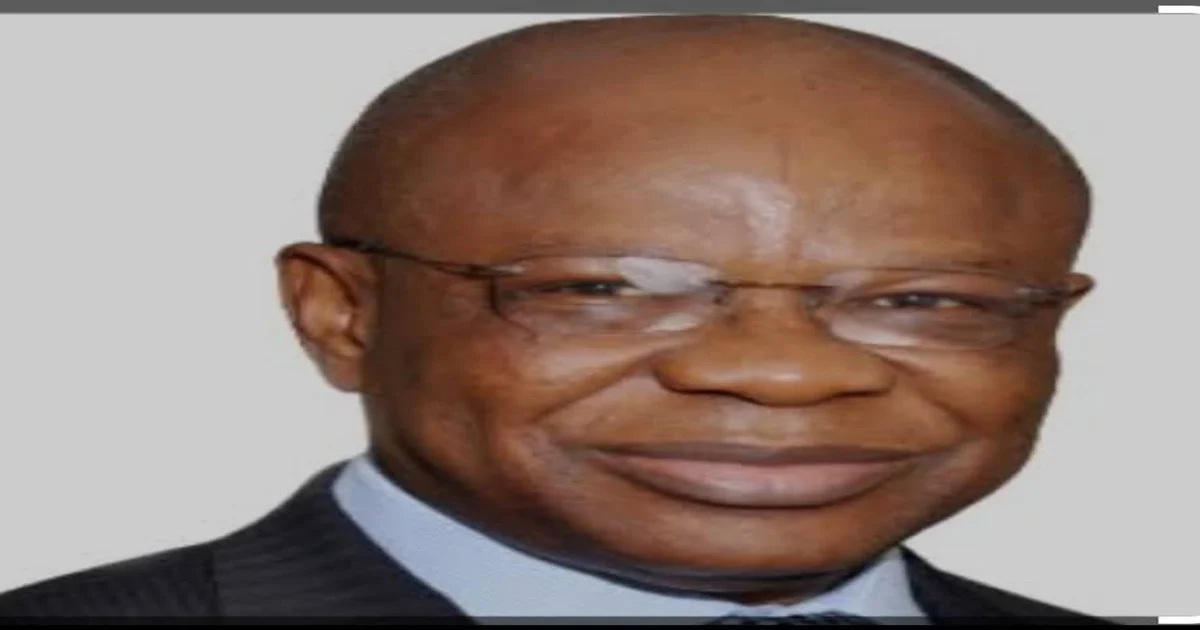
75 bouquets for  Maurice Iwu

                                                 By: Andy Ezeani In the wake of the 2007 general elections and the strident criticism of the polls by opposition parties especially, Umaru Musa Yar’Adua, who won the presidency, made a terse admission and conciliatory statement, that the polls through which he just got to office, were not perfect. That, ordinarily, was not an earth-shaking declaration, considering that no election ever claimed perfection. That statement did become a very convenient axe, however, waved furiously by all those who were ready to quote Yar’Adua. Interestingly, none of those who easily referenced Yar’Adua on this score, was willing, or fair enough, to acknowledge that the man never said that he did not win the election. Indeed, no other presidential candidate ever laid claim to being the winner of the 2027 presidential election, imperfect as it may have been. Enter Professor Maurice Iwu, then chairman of the Independent national Electoral Commission (INEC), at that critical juncture in history. Iwu never said the election he conducted was perfect. He did say something, however, which got opposition politicians raving. In the heat of the passion in those who felt worsted at the polls, Prof. Iwu declared, boldly and somewhat defiantly, that if the presidential election was conducted ten times over, in the prevailing political environment of Nigeria at that period, the Peoples Democratic Party (PDP) would still win. More hell was let loose from the corner of critics, but that was, and still remains Prof. Maurice Iwu. He holds on tenaciously to his conviction and he hardly backs down. The passion of that moment did not allow many to appropriately understand the man’s argument. It took a while before many, including those who savaged him earlier, came around to appreciate Iwu’s thesis, which became a spring board for subsequent political development. In the first decade after democracy was restored in Nigeria in 1999, as the national political system, PDP was not just the ruling party, it was a behemoth of sorts. The gap between the party as the ruling party and all other parties combined, was unassailable. PDP was dominant in every other zone of the country, but one. That was what Prof. Iwu noted and pointed out that the opposition parties, contending individually, could only generate noise, but would never win, except they pulled together. PDP would always trump them, even if elections were held donkey times. The truth was evident, but as one of the critics asked, why should Iwu say it?   Prof. Iwu was appointed Chairman of the Independent National Electoral Commission in May 2005. He had served briefly as a National Commissioner in the Commission, before being appointed Honourable Chairman. Prior to joining INEC, Iwu had gained global renown as a scientist, in the area of pharmacognosy, with many global scientific laurels to his name. He had his early education at Christ the King School, Aba and St. Pius X College, Bodo, Ogoni, River state. He proceeded, subsequently, to the University of Bradford, Bradford, United Kingdom,where he was educated to PhD level. He was, at various times, a World Health Organization (WHO) visiting scholar to the Dyson Perrins Laboratory, University of Oxford (1908), Fulbright Scholar at Ohio State University, Columbus Ohio (1983), senior Research Scholar Award winner at the U.S. National Research Council, Washington DC (1993-1995), Vice President, Research and Development, Tom’s of Maine, as well as member of the board of directors, Axxon Biopharm Inc, USA. In 1999 he won the US National Research International Prize for Ethnobiology. He had part of his rich professional career at the Division of Experimental Therapeutics of the highly regarded Walter Rees Army Institute of Research, Washington D.C, where he was a Senior Research Associate. At the University of Nigeria, Nsukka, he was a professor of Pharmacognosy Not unexpectedly, Prof. Iwu brought a remarkable spirit of innovation to INEC. He not only elevated the place of technology in the electoral process, he totally overhauled the electoral systems management, leaving an abiding imprint at the election management body. Standing to the credit of Prof. Iwu’s tenure at INEC is the Electoral Institute, which he established. TEI as it is commonly known, has become the hub of research and documentation at INEC. He not only established the Institute, he presided over the acquisition of the exquisite building in central area of Abuja which houses the institute. His foresight in acquiring the structure when INEC under him, did that, speaks for him now. Iwu also introduced the use of National Youth Service Corps members in the electoral process, using the young citizens on national service to replace ad hoc staff from the open society, an arrangement that had become quite problematic, as politicians exploited the old order to push their supporters in as ad hoc staff. Under Iwu also, electronic registration of voters was introduced. He ushered in the era of Direct Data Capture, that for the first time captured finger prints of registered voters and added images to voter’s cards. INEC under him partnered with Chams to establish a voter’s card production facility in Abuja. The idea of a permanent voter’s card matured only after he left office. In his effort to foster a better relationship with political parties as stakeholders in the electoral process, Iwu promoted a common body of political parties, what came to be known as Inter Party Advisory Committee (IPAC). On the administrative level, Prof. Iwu as Chairman of INEC fought and won a free hand for INEC to appoint its secretary, who is the head of administration of the Commission. Until Iwu’s advent, the Federal Government used to second a senior permanent Secretary to function as Secretary of INEC. He found that awkward, knowing that such a secretary can only owe his or her allegiance to those who appointed them. Perhaps, by far, one of Iwu’s most impactful accomplishments for INEC, outside the knowledge of the general public, was the establishment of what is known as INEC Fund, a financial management arrangement that enabled the Commission to exercise

House Proposes Bill to Settle Election Cases Before Swearing-In

The House of Representatives is discussing a constitutional amendment to ensure that all electoral disputes are resolved before newly elected officials take office.  This includes the President, Vice President, governors, and lawmakers.   The bill, introduced by Mansur Soro, a representative from Bauchi State, aims to modify Section 285 of the 1999 Constitution.  READ ALSO: UAE President to visit Nigeria in the year It proposes that all appeals from election tribunals be settled by appellate courts before winners are sworn in.  The Independent National Electoral Commission (INEC) would also be required to adjust election timelines to allow litigation to conclude before handover ceremonies.   According to Soro, unresolved election cases disrupt governance and waste public funds.  READ ALSO: Peter Obi and Tinubu’s APC’s morbid line He pointed out that billions of naira used for legal battles could be better spent on public services.  He also suggested that courts must prioritize election cases to meet the proposed deadlines.   The bill, introduced in October 2024, will likely be debated in early 2025. Lawmakers will examine how it could improve the electoral process and reduce governance challenges.

INEC in America’s November election (1)

“America has many contradictions in spite of its claim to exceptionalism.“ THERE will be a significant election this year in a significant country which prides itself as the greatest democracy on earth. That country, a super power, claims that the election will be consequential, and will have ramifications for its citizens, and the whole world. For about two centuries this country has held this poll on the first Saturday in November in the election year. For this year, that date falls on November 5. The election was initially slated to be a fierce battle between two old men, one in his late 70s, and the other in his early 80s. It was supposed to be a rematch, sort of, because the duo had battled each other four years ago with the older prevailing. You already know because that country is the United States of America where the then incumbent president, Donald Trump, was defeated in 2020, and his successor, Joe Biden, was defeated from seeking a second term by a disastrous presidential debate outing on June 27. Biden came under intense pressure from his party people, and had to ‘pass the torch’ in July to his vice president Kamala Harris who is younger and more energetic. America has many contradictions in spite of its claim to exceptionalism. There’s is no record that it has been governed by any other means except through the ballot box, at least not in the last 200 years. It lays claim to democracy but it fails to meet the key ingredient of rule by the majority of its citizens voting in an election. Certainly, not for the election of its president. The classical definition of democracy is government of the people by the people for the people. In many climes, it is also governance by representatives who had been elected by a majority of voters during any election. Not so in the United States. In 2016, Hillary Clinton, candidate of the Democratic Party lost the presidential election in spite of winning three million more popular votes of the electorate. His rival, Donald Trump, of the Republican Party with an inferior popular votes tally was returned as the winner. The unique but apparently an undemocratic (to many outsiders) Electoral College gave victory to Trump. The candidates and the parties in that contest knew the rule and so could not complain. “The constitution in its 12th Amendment recognised ‘electors’. And the ‘electors’ for each of the 50 states have been determined, and the number of ‘electors’ for each state may be reflective but not necessarily proportional to the population of the state. Any candidate who secures a minimum of 270 Electoral College votes wins the presidency irrespective of the outcome of the popular votes.“ The name, Electoral College, which determines who is elected as the US president is not in that country’s constitution. History has it that the founding fathers of the country inserted this mode of electing a president as a compromise between election of the president by a vote in Congress (parliament), which used to be the practice, and the election of the president by a popular vote of qualified citizens. Until the 1960s not many people were qualified to vote in elections. There was no universal suffrage. The constitution in its 12th Amendment recognised ‘electors’. And the ‘electors’ for each of the 50 states have been determined, and the number of ‘electors’ for each state may be reflective but not necessarily proportional to the population of the state. Any candidate who secures a minimum of 270 Electoral College votes wins the presidency irrespective of the outcome of the popular votes. The Electoral College has been a vexatious subject in American politics for centuries. And that explains why surveys showed that in the past 200 years more than 700 proposals had been introduced in Congress to either reform or eliminate the Electoral College. Probably, to underline its undemocratic nature, it has been recorded that there have been more proposals for constitutional amendments on changing the ‘electors’ method for determining the winner of the American presidency than on any other subject. Apart from politicians, America’s body of lawyers, the American Bar Association, has had cause to criticise the Electoral College as “archaic” and “ambiguous”, and its polling showed that 69% of lawyers favoured abolishing it in 1987. In addition, public opinion polls showed that Americans favoured abolishing it by majorities of 58% in 1967; 81% in 1968; and 75% in 1981. The conventional wisdom is that any candidate who wins a majority or plurality of the popular votes nationwide has a good chance of winning in the Electoral College, but there are no guarantees as implicated in the presidential election results of 1824, 1876, 1888, 2000 and 2016. It has been suggested that the Electoral College was contrived by the founders of the US to stem the possible agitations for separation from the Union by less populated states who may feel cheated and excluded in producing the president of the country. In effect, the Electoral College was informed by the need for the accommodation of all segments of the society. However, some scholars argued that the ‘electors’ scheme was indeed the handiwork of a segment of the elite among the founding fathers who did not want to totally relinquish the election of the president to the masses. On November 5, two candidates  Harris (Democrat), and Trump (Republican ) will lock horns for who occupies the American presidency which is generally regarded as the most powerful office in the world. Third party candidates are usually inconsequential since none has won the office ever. Harris appears to have an edge in the race at this time but election watchers reckon that in reality, the two candidates are running neck-and-neck. The proposition for the moment is that any of Harris or Trump can win the election. And this uncertainty is down to the complexities of the Electoral College. In 2016, polls and pundits put Hillary Clinton ahead by

PDP To Inspect Edo Poll Materials Today

In the usually grueling circus, the opposition Peoples Democratic Party PDP is dueling Nigeria’s Electoral Management Body (INEC) for access to election materials from the Edo State governorship election conducted on September 21. The materials are required to enable the PDP prepare for its case challenging the outcome of the election in court.  This announcement comes after PDP officials expressed frustration over delays in obtaining these materials, which are crucial for their planned legal challenge against the election results. Edo State’s Resident Electoral Commissioner, Dr. Augbum Onuoha, confirmed that the PDP could inspect the materials today, aiming to address the party’s concerns about possible tampering with the evidence.  The PDP had accused INEC of conspiring with the All Progressives Congress (APC) to obscure evidence of alleged electoral fraud that led to the victory of APC’s Senator Monday Okpebholo, who received 291,667 votes compared to PDP candidate Asue Ighodalo’s 247,274 votes. In response to the PDP’s claims, Chris Osa Nehikhare, the Edo State Commissioner for Communication and Orientation, criticized INEC for using delay tactics to obstruct the PDP’s efforts.  He voiced concerns that these actions are intended to prevent the PDP from filing a timely petition before the legal deadline.  Nehikhare also made allegations regarding an attempted cover-up involving the destruction of electoral materials, a claim the APC has firmly denied. On the ground, the PDP’s women’s wing organized a protest in Benin City, demanding the restoration of Ighodalo’s allegedly stolen mandate.  Clad in black, the demonstrators expressed their grief and anger, insisting that their votes were disregarded amid intimidation tactics allegedly used against their supporters during the election. Meanwhile, the APC dismissed the PDP’s allegations as unfounded and stated that the party’s attempts to misrepresent the situation are a sign of their inability to accept the election results.  They called on the public to disregard the claims and focus on the legal processes initiated by the PDP.

Family Speaks On Cause Of Paul Akintelure’s Death

The family of the late governorship aspirant of the ruling All Progressives Congress (APC) in Ondo state, Paul Akintelure, has opined that the death of the deceased is not ordinary. Akintelure, a medical doctor jostling for the governorship ticket of the APC, was confirmed dead in the early hours of Tuesday. The demise comes barely a week after Akintelure raised alarm, alleging that there was a serious threat to his life ahead of the APC governorship primary fixed for April 25. Though he did not provide details of the threat, he noted that he was compelled to address the matter with grave concern and a heavy heart. In an interview with Daily Trust, the deceased’s younger brother, Oladapo Akintelure, said his death was not natural. According to him, the Ondo politician had been complaining of several illnesses and was admitted to a hospital before he finally passed on. He added that Akintelure was also advised to take an urgent break from his campaign to face his health. He said, “For the past 12 or 14 days, he had been complaining of several sudden illnesses ranging from headaches to back and chest pains. “He was admitted at a time and had to take a break off campaign to attend to his health. At a time, we were worried and advised him to rest and we moved him to Lagos,” the younger brother said. However, Oladapo said he believed the sudden death of his brother was not natural, describing the sad development as unfortunate. “As a family member, I would not want to say much for now because it is still a shocking moment for us. This is not ordinary but it is unfortunate that we lost him at this critical time.”

INEC Partners Foreign Bodies to Launch Guidelines for Digital and Social Media Use in African Elections

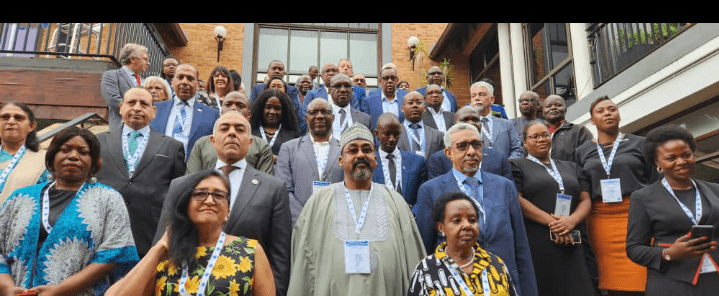
In a concerted effort to enhance electoral processes across Africa, the Independent National Electoral Commission (INEC) of Nigeria has partnered with the Association of African Election Authorities (AAEA) and the Independent Electoral Commission (IEC) of South Africa to introduce comprehensive guidelines for the effective utilization of digital and social media during elections. The unveiling of the Principles and Guidelines for the Use of Digital and Social Media in Elections in Africa occurred over a three-day period, from Tuesday, 27th February to Thursday, 29th February, 2024, in Johannesburg, South Africa. Dr. Sa’ad Umar Idris, the Director-General of INEC’s Electoral Institute, represented the Nigerian electoral body at the event, which brought together stakeholders to deliberate on strategies for leveraging social media while mitigating potential risks associated with evolving digital technologies. The genesis of these guidelines can be traced back to the inaugural Continental Conference for Election Management Bodies held in Cape Town, South Africa, in March 2020. Themed “Safeguarding Electoral Integrity in the Digital Age: Strategies for Combatting Digital Disinformation,” the conference, jointly organized by the Electoral Commission of South Africa, the African Union Commission (AUC), and the United Nations Development Programme (UNDP), laid the groundwork for extensive consultations with EMBs and electoral stakeholders across Africa to formulate a robust framework. The newly introduced principles emphasize the pivotal role of social media in bolstering the credibility of Election Management Bodies (EMBs) and fostering public trust during electoral processes. Additionally, they underscore the importance of responsible journalism and accountability among social media platform owners and users to counteract the risks of misinformation and manipulation. The collaborative endeavor between INEC, AAEA, and IEC signifies a proactive approach towards addressing the evolving challenges of electoral integrity in the digital era. By advocating for responsible digital engagement, African EMBs aim to uphold democratic principles and promote transparent electoral practices across the continent.

Sensitive Documents Carted As Gunmen Attack Kogi State Tribunal Secretary

 Unknown gunmen targeted Mr. David Umar Mike, the secretary of the Kogi State Governorship Election Tribunal, in an attack where sensitive petition documents linked to the recently held gubernatorial election were stolen. According to State Police Public Relations Officer (PPRO), SP William Aya on Wednesday, armed assailants robbed five political parties’ petition documents, which included materials from the Action Alliance (AA), Action People’s Party (APP), Peoples Redemption Party (PRP), Social Democratic Party (SDP), along with personal items belonging to Mr. Mike.  The stolen items comprised two record books and a bag. The incident unfolded near the Central Bank of Nigeria (CBN) office around 1:20 PM on Monday while Mr. Mike and colleagues were en route to the tribunal’s location at the state High Court complex in Lokoja. Mr. Mike, along with his colleagues, reported the occurrence to the State Criminal Investigation Department on December 4th, 2023.  The police revealed that armed, hooded men in SUVs blocked Mr. Mike’s vehicle, fired shots, forcibly removed them from the car, and plundered the petition documents. “That just before the CBN at about 1320hrs, one SUV vehicle which had earlier overtaken him blocked his car with two other SUVs following behind. “All of them surrounded and blocked him as he attempted to reverse. That he saw about seven hooded men all heavily armed and dressed in black attire who shot severally into the air and dragged him and his two other colleagues out of their car, ransacked the car and made away with all the petition documents.” The State Commissioner of Police, CP Onuoha Benthrand, has ordered a comprehensive investigation into the incident. Authorities have urged the public to refrain from making statements that might influence the ongoing investigation.