Housemanship Gap Locks Out 2,000 Doctors Every Year — MDCN

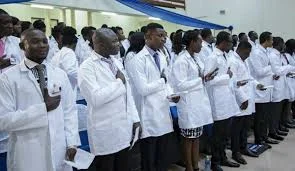
The Medical and Dental Council of Nigeria (MDCN) has disclosed that about 2,000 Nigerian-trained medical doctors are left without housemanship placement every year, citing limited capacity under the current centralized system. The revelation was made by MDCN Registrar Fatimah Kyari while defending the Council’s 2026 budget proposal before the Senate Committee on Health in Abuja. Housemanship Capacity Below Medical Graduate Output According to the Council, Nigerian medical schools produce approximately 6,000 doctors annually, but the Centralized Housemanship System can only absorb about 4,000 graduates each year. This shortfall leaves nearly one-third of new doctors unable to complete their mandatory housemanship, delaying full registration and entry into the workforce. “A total of about 6,000 medical doctors are produced annually from various medical schools, while the centralized housemanship system in operation can only take 4,000,” Kyari said. Call to Include State and Private Hospitals To close the gap, the MDCN urged the Federal Government to expand the Centralized Housemanship System to include state-owned and privately owned hospitals. Kyari said such an expansion would allow all 6,000 medical graduates to be absorbed annually, eliminating backlogs and training delays. Brain Drain Concerns Grow The Registrar warned that persistent housemanship delays were fueling Nigeria’s medical brain drain, as affected graduates increasingly seek training and employment opportunities abroad. She stressed that timely placement of medical graduates was critical to retaining healthcare professionals and strengthening the health system. MDCN Raises Funding Shortfalls Kyari also highlighted funding challenges facing the Council, revealing that no capital funds were released in the 2025 fiscal year, despite an approved ₦1.2 billion capital budget. She added that: Senate Promises Budgetary Support Responding, the Chairman of the Senate Committee on Health, Banigo Ipalibo, assured the MDCN of legislative backing, pledging that the committee would work toward improved funding for the Council in the 2026 budget. He noted that addressing housemanship bottlenecks and funding gaps was essential to improving healthcare delivery in Nigeria.
Abia Budgets N1.016 Trillion, Focus Education, Health, Roads in 2026

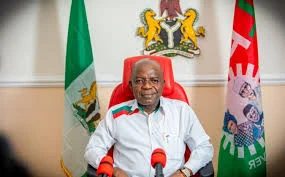
Umuahia, Abia State – Governor Alex Otti on Tuesday presented a N1.016 trillion Appropriation Bill for the 2026 fiscal year to the Abia State House of Assembly, describing it as the “Budget of Acceleration and New Possibilities.” The proposed budget represents a 13 per cent increase over the 2025 appropriation of N750.28 billion and is aimed at fast-tracking infrastructure expansion, enhancing social services, and deepening ongoing reforms across the state. Of the total outlay, N811.8 billion, or 80 per cent, is earmarked for capital projects, while recurrent expenditure accounts for N204.4 billion, representing 20 per cent of the budget. Compared with 2025, the capital vote increased by 32 per cent, and recurrent expenditure rose by 33 per cent to support daily operations and new personnel. Governor Otti highlighted allocations for key sectors, with education receiving N203.2 billion, including N150.4 billion for salaries of at least 15,000 teachers and new school infrastructure. Plans include constructing 17 model primary and secondary schools, three technical colleges, staff quarters, and over 100 ICT laboratories. Tertiary institutions will receive N52.8 billion for staff salaries and new facilities. The health sector is set to receive N149.7 billion, representing 15 per cent of the budget, for the acquisition of new equipment at Abia State University Teaching Hospital, Aba, 23 other facilities, and the renovation of seven general hospitals. Road construction and rehabilitation will take N169.3 billion, or 16.7 per cent of the budget, with priority given to the Umuahia-Ikot Ekpene, Ahiaeke-Okwuta-Bende, and Umuahia-Umueze-Agwu roads. The transport sector is allocated N11.1 billion, including N6 billion to fund 80 additional electric buses, complete transport terminals, and build bus shelters. Other allocations include over N229 billion for agriculture, entrepreneurship, youth development, sports, ICT, women’s empowerment, housing, environment, and urban renewal. Governor Otti projected the state’s internally generated revenue (IGR) to reach N223.4 billion in 2026, up from a target of about N100 billion in 2025. Recurrent expenses will be fully funded from IGR. Federal allocations are projected at N83.2 billion from FAAC, N67.1 billion from VAT, N26.5 billion from grants, and N168 billion from other federal sources, bringing total revenue to N607.2 billion. The governor indicated a budget deficit of N409 billion, or 40 per cent of the budget, which will be financed through concessionary loans strictly for capital projects. He stressed that loans would not be used to fund recurrent expenditure. Governor Otti urged the House to consider and pass the budget, emphasizing its importance in sustaining the state’s development trajectory. Responding, Speaker Emmanuel Emeruwa noted that the state had inherited a deep fiscal hole in 2023 but praised the administration for restoring stability. He said the 2026 budget reflects growing responsibilities and expanding development needs and commended the governor for prudent fiscal management. Emeruwa assured the governor that the House would thoroughly review the estimates and support initiatives that benefit the state.
Tinubu Approves Immediate Upgrade Of Key Health Infrastructure

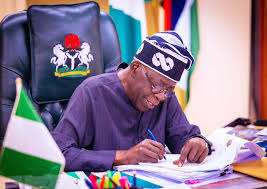
President Bola Tinubu has approved the immediate upgrade of key health infrastructure and equipment across all six geo-political zones in line with his administration’s vision of overhauling the health and social welfare sector for enhanced service delivery to all Nigerians. Upgrading health infrastructure and equipment is a top priority of President Tinubu’s Health Sector Renewal Investment Initiative. To advance this landmark effort, the Federal Ministry of Health and Social Welfare in collaboration with the Nigeria Sovereign Investment Authority (NSIA) will carry out the comprehensive upgradation of cancer-treatment infrastructure and other critical developments in six tertiary hospitals across several geopolitical zones, in addition to the full renovation and expansion of prior investments to improve broad-based access to high-quality healthcare in all six geo-political zones of the federation. The following teaching hospitals across geo-political zones have been marked for the establishment of oncology and nuclear medicine centres per facility as part of President Tinubu’s bid to ensure that world class cancer diagnosis and care is accessible across the country: (1) University of Benin Teaching Hospital (2) Ahmadu Bello University Teaching Hospital (3) University of Nigeria (Nsukka) Teaching Hospital (4) Federal Teaching Hospital, Katsina (5) University of Jos Teaching Hospital (6) Lagos University Teaching Hospital The following ten critical health care service expansion projects across the fields of radiology, clinical pathology, medical and radiation oncology, and cardiac catheterization will be carried out in ten hospitals across all geo-political zones: (1) North-West: Reference Hospital, Kaduna — (Radiology, clinical pathology, medical and radiation oncology) (2) South-East: Medical Diagnostic Centre Complex, Enugu — (Radiology, clinical pathology, medical & radiation oncology) (3) North-West: Usman Danfodiyo University Teaching Hospital, Sokoto — (Diagnostic and intervention radiology, clinical pathology, and cardiac catheterization) (4) South-West: University College Hospital, Ibadan — (Diagnostic and intervention radiology, clinical pathology, and cardiac catheterization) (5) South-South: University of Uyo Teaching Hospital — (Radiology and clinical pathology) (6) North-East: Abubakar Tafawa Balewa University Teaching Hospital, Bauchi — (Radiology and clinical pathology) (7) South-South: Federal Medical Centre, Asaba — (Radiology and clinical pathology) (8) North-Central: Harmony Advanced Diagnostic Centre Complex, Ilorin — (Radiology and clinical pathology) (9) North-Central: Jos University Teaching Hospital — (Radiology and clinical pathology) (10) North-East: Federal Medical Centre, Nguru — (Radiology and clinical pathology)