Women’s Coalition Pushes Bold Labour Reforms, Gender Parity in Governance

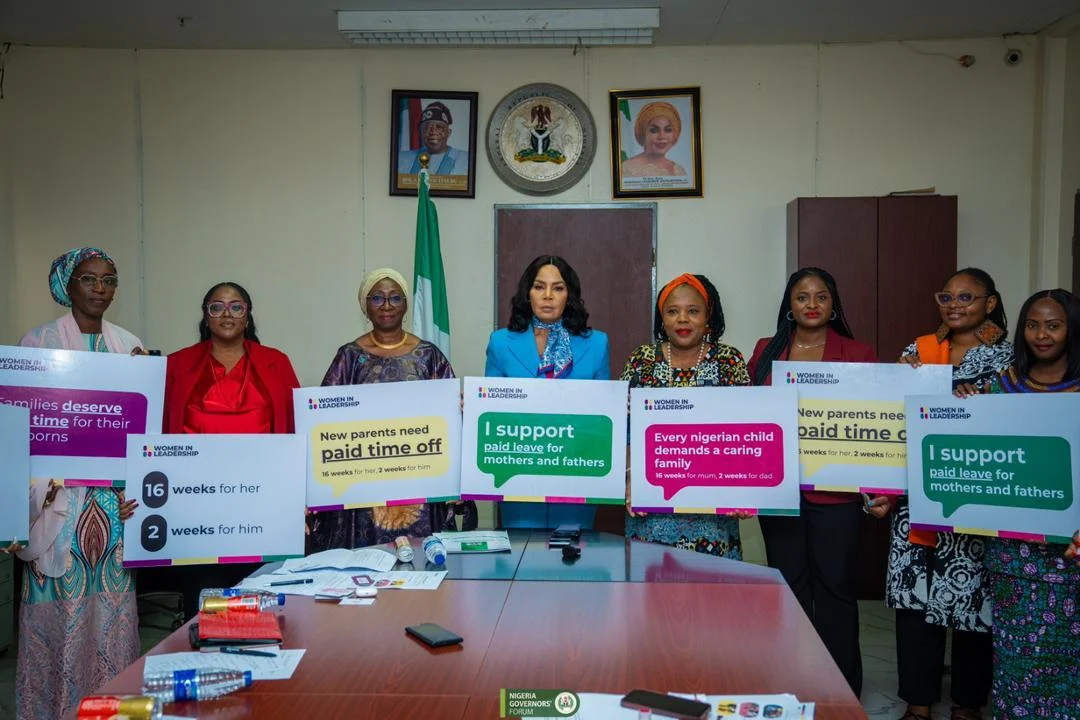
Nigeria’s top women leadership networks have renewed calls for sweeping labour reforms and stronger gender inclusion in governance. The call was made after a high-level meeting with the Minister of State for Labour and Employment, Hon. Nkeiruka Onyejeocha. Onyejeocha: Inclusive Leadership Drives National Growth Welcoming the delegation, Onyejeocha described their push as vital to building a more resilient workforce. “Gender-inclusive leadership is not just about fairness; it’s a strategic imperative,” she said. “No nation can achieve sustainable growth or global competitiveness if half its population is excluded from the rooms where key decisions are made.” Coalition Seeks 16-Week Paid Maternity Leave, 14-Day Paternity Leave The coalition urged both government and major employers to adopt a national minimum of 16 weeks fully paid maternity leave and 14 days paid paternity leave. In a signed statement, NGF Director of Media and Strategic Communications, Yunusa Tanko Abdullahi said the group warned that the existing 12-week, half-pay policy pushes many women out of the labour market. “Nigeria loses the return on its investment in girls’ education when women are forced out due to weak family-leave policies and inadequate care systems,” the group said. Responding, Onyejeocha reaffirmed the government’s commitment to reform. “Our ongoing review of labour laws will close gaps that hinder women’s participation,” she stated, adding that the Ministry is upgrading its labour inspectorate system to enforce equal pay, maternity protection, and safe workplaces. $114 Billion in Unpaid Care Work: Coalition Demands Recognition Highlighting Nigeria’s undervalued care economy, the coalition estimated that women contribute over $114 billion in unpaid care work annually, limiting their economic participation. They urged the government to introduce childcare subsidies, professionalize care services, and strengthen protection against pregnancy discrimination to unlock productivity and inclusion. NGF Targets 20 States for Six-Month Parental Leave by 2027 Hauwa Haliru, Director of Gender Affairs at the NGF, backed the coalition’s call for longer leave. “At the NGF, we are advocating six months paid maternity leave and using the Spouses’ Forum to promote six months paternity leave as well,” she said.“Nine states have already adopted the six-month policy, and our target is twenty by 2027.” Federal Push for 35 Percent Women in Leadership On governance, Onyejeocha restated the Federal Government’s goal of at least 35 percent female representation across all levels. “A leadership structure that includes 35 percent women is not only fair — it’s essential for balanced and empathetic governance,” she said. Coalition Urges Stronger Media Partnership The women leaders also appealed for robust media collaboration to amplify women’s voices through interviews, features, and policy coverage. They noted that visibility drives understanding, helping to entrench Nigeria’s commitment to gender-balanced leadership. Minister Pledges Continued Collaboration Onyejeocha closed the session with a promise of partnership. “Together, we can build workplaces, boardrooms, and institutions that reflect the true strength and potential of our nation,” she said.

Women Affairs Secretariat: Tinubu Appoints Benjamin-Laniyi As Mandate Secretary

Women Affairs Secretariat: Tinubu Appoints Benjamin-Laniyi As Mandate Secretary

President Bola Tinubu has approved the appointment of Mrs Adedayo Benjamins-Laniyi as the Mandate Secretary for the newly created Women Affairs Secretariat of the Federal Capital Territory Administration (FCTA). Mr Anthony Ogunleye, Director of Press, Office of the Minister of the FCT, Mr Nyesom Wike made the disclosure in a statement in Abuja on Monday. Ogunleye said that Benjamins-Laniyi would play a pivotal role in the FCTA’s commitment to promoting the well-being and empowerment of women and children in the Federal Capital Territory. He expressed optimism that her appointment would further strengthen the formidable administrative team led by Wike and the Minister of State, Dr Mariya Mahmoud. Ogunleye added that Benjamins-Laniyi, born in 1965 from Ogun, was appointed for her exemplary qualifications and dedication to public service. “With over 35 years of experience as a communications consultant, social entrepreneur, international mentor, and environmentalist, Mrs Benjamins-Laniyi would bring a wealth of knowledge to her new role. “She attended Queens College, Lagos, for her secondary school education and a 1989 graduate of English from the University of Ibadan. “She has made significant contributions to society as a prominent compere and renowned motivational speaker. “Her passion for social issues, particularly those affecting women and children, is evident in her remarkable work. “She has also showcased her commitment to women’s political participation by aspiring for a senatorial position in the All Progressives Congress (APC) in 2022,” he said. Ogunleye added that as the Grand Matron of “Hope Again for FCT Women in Politics”, Benjamins-Laniyi had played a vital role in encouraging and mentoring women in the political arena. According to him, her deep understanding of the political landscape and her ability to navigate complex policy challenges will undoubtedly contribute to the advancement of women’s rights and well-being in the FCT. 

World Bank Support Girls’ Learning, Empowerment In Nigeria With $700m

World Bank Support Girls’ Learning, Empowerment In Nigeria With $700m

The World Bank has approved a fresh $700 million loan for Nigeria to boost adolescent girls’ learning and empowerment. According to a statement published on its website, the lender said the new loan will serve as additional funds for an ongoing project known as the Adolescent Girls Initiative for Learning and Empowerment. The Bank noted that apart from the girls that would benefit from the financing, others included over 15 million students and beneficiaries, such as teachers, administrators, families, communities, and staff in existing and newly constructed schools. “The World Bank approved additional financing of $700m for Nigeria to scale up the Adolescent Girls Initiative for Learning and Empowerment programme whose goal is to improve secondary education opportunities among girls in targeted states. “The additional financing will scale up project activities from the current seven states to eleven additional states and increase the targeted beneficiaries to include out-of-school girls, those who are married, and those who have disabilities,” the statement read. The World Bank put Nigeria’s out of school children at over 12 million, with many of them in Northern Nigeria. It was also noted that an estimated one million children were affected by increased insecurity around schools in 2020-2021. The statement added, “In the seven AGILE programme implementing states – Borno, Ekiti, Kaduna, Kano, Katsina, Kebbi, and Plateau – the number of girls in secondary schools has increased from about 900,000 to over 1.6 million. “Under the programme, over 5,000 classrooms have been renovated and over 250,000 eligible girls have received scholarships. “The AGILE programme has supported construction and rehabilitation of WASH facilities in secondary schools and the installation of computers and solar panels which make attending school more convenient and conducive for both girls and boys. Life skills, systems strengthening, and advocacy are other key aspects of the program which address social norms impeding girls’ education.” The World Bank Nigeria Country Director, Shubham Chaudhuri, stated that, “Closing the gender gaps in economic empowerment by ensuring girls have access to education and skills is key for Nigeria’s development and economic prosperity. “Nigeria’s working population will soon be one of the youngest and largest around the world, which means that investing in adolescent girls is imperative when addressing overall economic prospects and growth.”

Increased Investment In Women Will Improve Nigeria’s GDP -UN

Increased Investment In Women Will Improve Nigeria’s GDP -UN

UN Women Regional Director for East Africa, West, and Central Africa, Maxime Houinato, has said that in order to bridge the multi-sectoral gender gaps in Nigeria and improve the standard of living for women and girls, there is need for the federal government to commit specific percent of national budgets and development funds to interventions that address gender disparity in Nigeria. Maxime Houinato is in Nigeria for an executive visit. In a press briefing on Friday at the UN House in Abuja, Houinato said that increased allocation of specific budget lines to address gender disparity in Nigeria would empower more women.    “Women are at the heart of human capital for economic development in any nation – health, education, agriculture, and business. Gender disparity and the suffering of women are having a detrimental impact on the building of that human capital which is at the centre of productivity and development,” Houinato said.   The UN Women regional director met with various stakeholders in Lagos and Abuja including the Minister of Budget and National Planning, Sen. Abubakar Atiku Bagudu. In Lagos, a $25million GBV fund was launched as part of a contribution from Nigeria’s private sector. The fund will serve to fund gender responsive interventions that will curb violence against women and girls and enhance women’s empowerment. He said, “I was rushed to Lagos by my team the moment I landed in Abuja to look at a couple of initiatives. One of them is the establishment by the private sector with the technical support of the UN Women of a $25 million GBV Fund. This is the first time in Africa that the private sector is coming together to take up such issues as GBV and to put hard currency on the table.   “When I met the minister of Budget, he really appreciated that contribution and that the government might consider a tax break for private companies that decide to put money on the table to address gender equality issues that have always been the contribution of the government to the private sector initiative. “I was also thrilled to meet with the Nigeria Exchange group that has decided to start working with UN Women to launch in 2025 the first gender bond in Nigeria with contribution from various investors into gathering resources to address the lack of opportunity that women suffer from. “Those initiatives are interesting because so far, the government has been putting resources for critical elements of gender inequality. Now we believe more and more the private sector is getting interested, the reason being that gender based violence, gender inequality that was placed in the social sector has now moved to the economic sector where we recognize that inequality is crippling the economy.” In her remarks, UN Women Representative to Nigeria and ECOWAS, Beatrice Eyong, stated that the financial implication of GBV is enormous and reiterated that if the prevalence of violence against women and girls reduces, family income and earnings will improve and so will the economy of the society at large.

Gov Yusuf swears in Kano’s first female Chief Judge, Dije Aboki

Gov Yusuf swears in Kano's first female Chief Judge, Dije Aboki

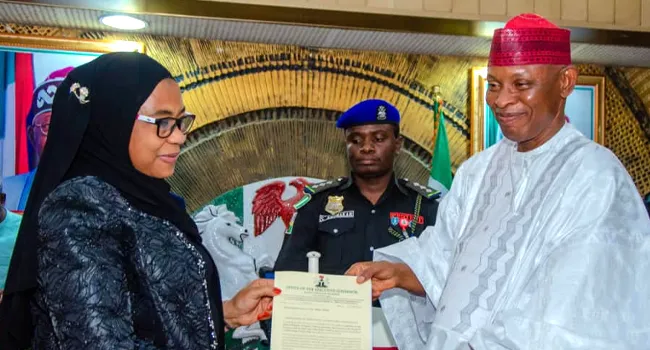
Kano State Governor, Abba Yusuf on Monday ushered in an historical moment when he swore in the first female Chief Judge of the state, Justice Dije Audu Aboki. Yusuf urged the judiciary to support his administration’s demolition and anti-graft policies to enable it to recover public assets acquired illegally by the immediate-past administration in the state. He spoke on Monday during the swearing-in ceremony for the first female Chief Judge in the state at Africa House, Government House, in Kano. The governor explained that his administration’s desire of demolishing illegal structures and recovering public properties was for the development of the state. Yusuf wondered why the Abdullahi Ganduje administration could demolish schools, hospitals, and other public places only to build shopping complexes for businesses. He described the relationship between the judiciary, legislature, and executive as not competitive, but complementary, promising to continue to maintain cordial relationships amongst the three arms of government. The governnoted that Justice Aboki has paid her dues in the temple of justice and through experience, talent and patriotism is by the grace of God elevated as the Chief Judge of the state. “While I congratulate you on this well-deserved appointment, may I also remind my Lord that this task is a daunting one which calls for total dedication and commitment for the peace, progress and stability of Kano state and Nigeria at large. “Having spent your public life within this sector, no one can lecture you on what the citizens expect from you as the Head of this very important Arm of Government,” he said. Yusuf enjoined Aboki not only to see her this elevation as a call to duty but also as a trust inv3sted in her by God to represent Him in the affairs of men. The governor said she was assuming duty when the state was operating financial autonomy of the three arms of government, including the Judiciary. He, therefore, charged Justice Aboki to take advantage of all the latitude that this autonomy provides to ensure that judiciary staff are well trained while the day-to-day running of the courts is seamless. “You can count on the support of the Executive Arm of Government and the Legislature to work with you in helping you cultivate a cordial working relationship with the staff,” he assured. Yusuf also drew the attention of the new chief judge to the challenges with the speedy dispensation of justice particularly as it involves some suspects that are arraigned for violent crimes. “It is our view that when such cases are dealt with expeditiously and those found guilty are punished, it will deter others hoping to engage in criminal acts,” said the governor. Besides, he advised her to beware of those who want to corrupt, confuse, intimidate or blackmail the judiciary to do their bidding. Yusuf however expressed optimism that the present leadership is very capable of withstanding and maintaining the sanctity of the Temple of Justice and the Legal profession in the state. Responding, Justice Aboki said she was grateful to God for the opportunity to serve and the privilege to be elevated to the position of Chief Judge of the state. She promised to serve with “integrity, honesty and justice” as well as do her best to ensure that the rule of law is adhered to at all times. “We will restore the lost glory of the judiciary in our state,” pledged the new chief judge. Justice Aboki also said she was aware of the challenges in the Judiciary and appealed for support and collaboration from the executive and legislative arms to succeed. She also solicited the support of the Justices, other judicial staff and professional bodies to meet the desire objectives of delivering justice. 

She Forum Africa announces regional chairs for newly instituted hubs

She Forum Africa announces regional chairs for newly instituted hubs

As part of ongoing internal re-organization efforts, She Forum Africa, a pan-Africa Women Development, Intergenerational Mentorship, Leadership & Lifestyle Community has instituted regional Hubs to deepen advocacy initiatives and strengthen women’s share of voice in local African communities. In a statement by Founder and Chairperson of the Forum, Ms. Inimfon Etuk, “the recent composition of Regional Hubs for East, West & South Africa and a Diaspora Hub are part of internal re-organization efforts to strengthen the bargaining power of women and create a much-needed avenue for African women in local communities to own the process of transformation towards Africa we want and deserve. The Hubs are Chaired by women leaders who have distinguished themselves as formidable agents of true development in their respective rights.” According to Etuk, Hon. Nadia Ahmed Abdalla, former Deputy Minister, Ministry of ICT, Innovation & Youth Affairs, Republic of Kenya who takes up the role as Regional Chair, East Africa Hub; Dr. Sindy Zemura-Bernard, Founder/CEO of the Southern Africa Embrace Foundation, Canada, who takes up the role as Regional Chair, South Africa Hub; and Mrs. Renee Q. Boateng, Founder, Butterflies and Pearls, Ghana, who will serve as Regional Chair, West Africa Hub. Also named is Dr. Mercy O. Umeri, Assistant Teaching Professor/MiniMPA Coordinator, Hugo Wall School, Wichita State University, Kansas, USA appointed as Chair, Diaspora Hub while Asiya Sani Suleiman, a Communications professional and “Garkuwan Mata” of Abaji has been unveiled as the Organization’s Director, Partnerships & Corporate Engagement.  She Forum Africa has as its core mission, to amplify personal development opportunities for African women through strategic mentoring and life-long learning within a home-grown, African-led initiative. In addition to advocacy on issues affecting women’s health, wellbeing and rights, her programmes are designed to assist young females, entrepreneurs and female professionals advance their careers and life goals in a traditionally male environment by providing insight into relevant skills for personal growth. “We are constantly updating our skills through various initiatives and capacity building experiences to ensure we remain a credible, tested and preferred Partner for Organizations desirous of heightened impact in their respective spheres,” Etuk added.