FG Offers Organised Labour N35,000 Pay Increase In Bid To Halt Planned Strike

FG Offers Organised Labour N35,000 Pay Increase In Bid To Halt Planned Strike

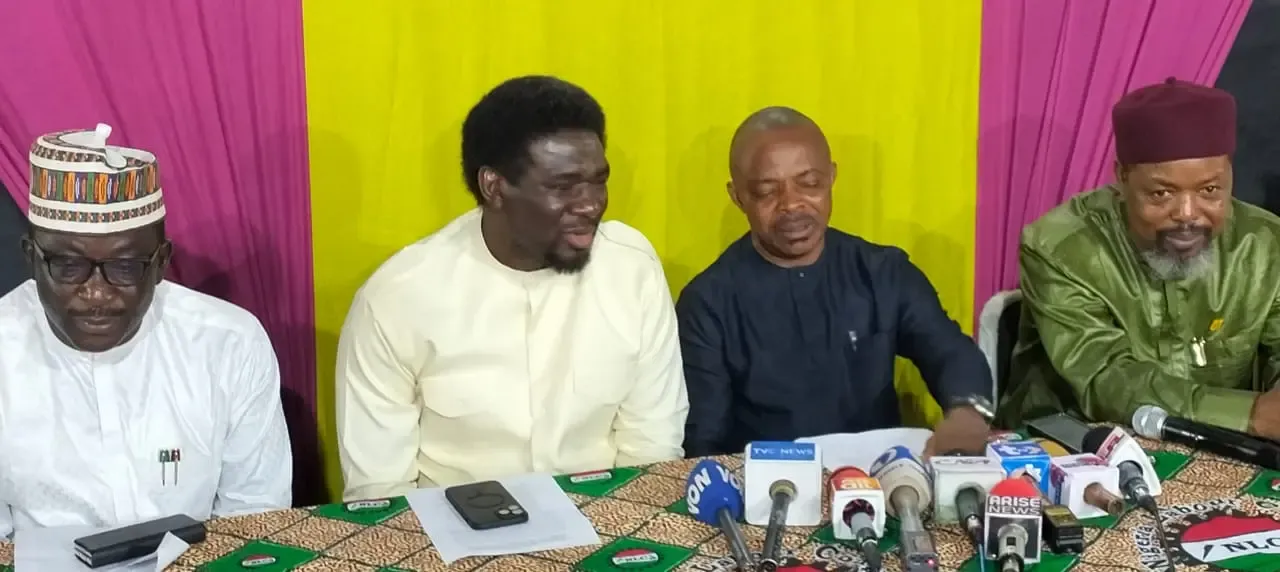
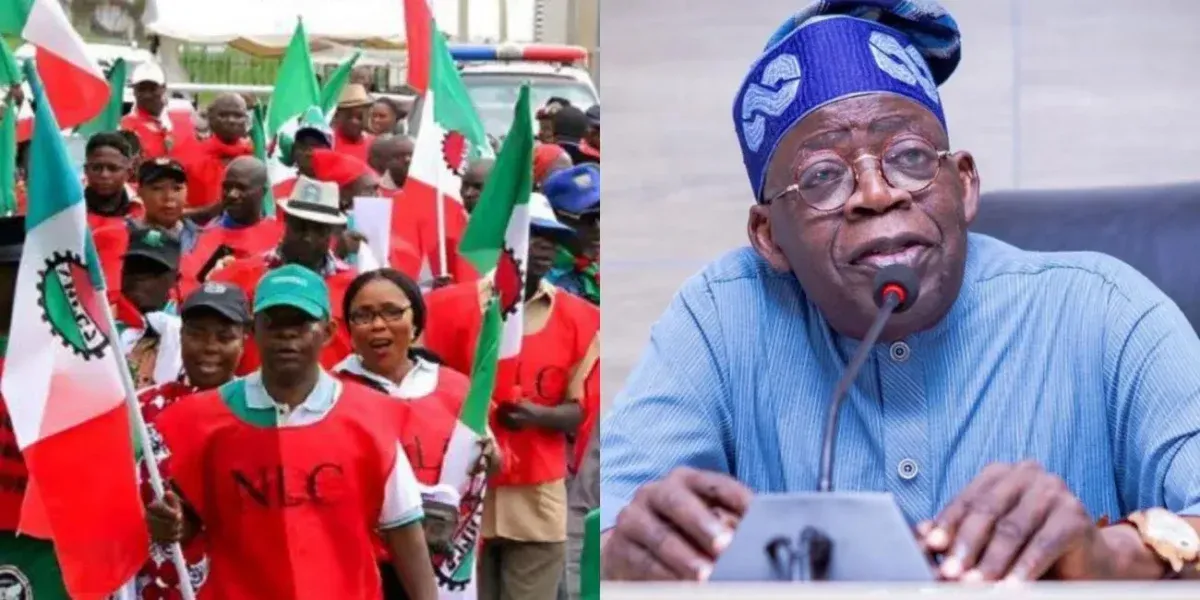
The Federal Government is optimistic that the planned indefinite strike by the Nigeria Labour Congress (NLC) and Trade Union Congress of Nigeria (TUC) can be averted, as it presents several compelling offers to address the ongoing dispute resulting from the removal of the subsidy on Premium Motor Spirit (PMS). During a lengthy meeting held in Abuja on Sunday, the government outlined several proposals aimed at resolving the impasse and mitigating the impact of the subsidy removal on Nigerian workers and citizens. The key highlight of these offers includes a substantial N35,000 pay increase for all “treasury-paid” federal employees. Other key agreements include Provisional Wage Increment: The Federal Government announced a provisional wage increment of N25,000 for all treasury-paid federal government workers for a period of six months. Compressed Natural Gas (CNG) Buses: To alleviate the transportation challenges associated with the subsidy removal, the government is committed to fast-tracking the provision of CNG buses for public transportation. Support for Micro and Small-Scale Enterprises: The Federal Government pledged to provide funding support for micro and small-scale enterprises, recognizing their importance in driving economic growth and employment. Waiver on VAT for Diesel: VAT on diesel will be waived for the next six months to help mitigate the effects of subsidy removal on businesses and individuals. Cash Transfer to Households: The government will initiate a cash transfer program, disbursing N75,000 to 15 million households at N25,000 per month over a three-month period from October to December 2023. Resolutions Reached: During the meeting, several resolutions were reached to address the ongoing dispute and ensure the welfare of Nigerian workers: Work While Negotiating: The parties emphasized that the issues in dispute can only be effectively resolved when workers are at work and not during strike actions. Higher Wage Award: Labour Unions advocated for a higher wage award, and the Federal Government pledged to present the request to President Bola Tinubu for further consideration. Sub-committee for Implementation: A sub-committee will be constituted to work out the details of implementing all items related to government interventions to cushion the effect of fuel subsidy removal. Resolution of Transport Workers’ Dispute: The matter concerning the Road Transport Employees Association of Nigeria (RTEAN) and the National Union of Road Transport Workers (NURTW) in Lagos State will be urgently addressed. Lagos State Governor, Babajide Sanwo-Olu, committed to resolving the matter. Suspension of Planned Strike: The NLC and TUC will carefully consider the offers made by the Federal Government with the intention of suspending the planned strike. This will allow for further consultations on the implementation of the agreed resolutions. Earlier, in his Independence Day speech, President Bola Tinubu had announced a N25,000 pay increment, indicating that it would apply exclusively to “low-grade” workers as a means of cushioning the effects of the fuel subsidy removal. The meeting, chaired by Chief of Staff to the President, Femi Gbajabiamila, saw the virtual participation of Governor Abdulrazak Abdulrahman of Kwara State, who also serves as Chairman of the Nigeria Governors Forum (NGF), and Governor Dapo Abiodun of Ogun State. The labour delegation, led by NLC President, Joe Ajaero, and Deputy President of TUC, Dr. Tommy Etim Okon, comprised key representatives from both unions, including NLC General Secretary Emma Ugboaja and TUC General Secretary Nuhu Toro, among others. Numerous government officials attended the meeting, including the Information Minister, Wale Edun; the Minister of Finance and Coordinating Minister of the Economy, the Minister of Labour and Employment, Simon Lalong; the Minister of State for Labour, Nkeiruka Onyejeocha; and the Minister of Budget and Economic Planning, Abubakar Atiku Bagudu. Also in attendance were the Minister of Humanitarian Affairs and Poverty Alleviation, Betta Edu; the Minister of Industry, Trade, and Investment, Doris Uzoka-Anite; the Head of Service of the Federation, Dr. Folasade Yemi-Esan; and the National Security Adviser (NSA), Mallam Nuhu Ribadu. A statement issued by the Minister of Information and National Orientation, Mohammed Idris, indicated that “NLC and TUC will consider the offers by the Federal Government with a view to suspending the planned strike to allow for further consultations on the implementation of the resolutions above.

Breakdown Of Tinubu’s 63rd Independence Day Celebration Address

Breakdown Of Tinubu's 63rd Independence Day Celebration Address

On the occasion of Nigeria’s 63rd Independence Day celebration, President Bola Ahmed Tinubu on Sunday morning addressed the nation with a message of hope, unity, and commitment to a better future. In his maiden Independence Day speech, Tinubu acknowledged the sacrifices of Nigeria’s founding fathers and emphasized the importance of democracy, reform, and economic development. He also outlined his administration’s efforts to address the challenges facing the nation, especially in the context of recent economic reforms. This article provides an overview of President Tinubu’s address, highlighting key points and policy initiatives. Unity in Diversity President Tinubu began his address by acknowledging Nigeria’s rich diversity in ethnicity, religion, culture, and tradition. He praised the nation’s unity despite its diversity, emphasizing that Nigeria’s strength lies in its ability to forge ahead as one indivisible unit. He called on all Nigerians to cherish and love their country, emphasizing that Nigeria belongs to each and every citizen. Commitment to Democracy Reflecting on Nigeria’s democratic journey, President Tinubu celebrated the country’s commitment to democracy and the rule of law. He acknowledged the recent election that led to his presidency, highlighting that Nigeria had elected its 7th consecutive civilian government. This, he stated, is evidence of Nigeria’s unwavering commitment to democratic principles. Economic Reforms and Fuel Subsidy President Tinubu acknowledged the economic challenges facing Nigeria and the necessity of bold reforms to secure the nation’s future prosperity. He explained that his administration had made the difficult decision to end the fuel subsidy, despite the hardships it had caused. He argued that these reforms were necessary to build a strong foundation for Nigeria’s future and ensure that the nation’s wealth benefits all citizens, rather than a select few. Wage Increase and Grassroots Development To alleviate the economic burden on ordinary Nigerians, Tinubu announced a provisional wage increment for low-grade workers. Over the next six months, these workers would receive an additional Twenty-Five Thousand naira per month. Additionally, Tinubu said his administration had established an Infrastructure Support Fund for states to invest in critical areas and provide relief packages against rising prices. Transportation Reforms The President outlined significant transportation reforms aimed at lowering transport costs and making the economy more robust. He said that the Federal Government had introduced cheaper and safer Compressed Natural Gas (CNG) buses, which would operate at a fraction of current fuel prices, positively affecting transport fares. This initiative would not only lower costs but also create new opportunities for transport operators and entrepreneurs. Central Bank Reforms Tinubu announced ongoing reforms in the Central Bank of Nigeria (CBN) to address past lapses and prevent future occurrences. A new leadership for the CBN had been constituted, and a special investigator was working on presenting findings regarding past issues. Monetary policy would henceforth benefit all Nigerians and not just a privileged few. Tax Reforms and Investment Funding Recognizing the importance of wise tax policy, President Tinubu inaugurated a Committee on Tax Reforms to improve tax administration and address fiscal policies hindering economic growth. Furthermore, investment funding for enterprises with great potential had been provided to boost employment and urban incomes. The government was also increasing investment in micro, small, and medium-sized enterprises. Social Safety Net To protect vulnerable households, the President announced an expansion of cash transfer programs to an additional 15 million households. This initiative aimed to provide a social safety net and alleviate the impact of rising food and commodity prices. Insecurity President Tinubu assured Nigerians of his administration’s commitment to ensuring their safety and security. He highlighted increased inter-service collaboration, intelligence sharing, and efforts to rebuild the capacities of security services. The sacrifices of the security forces in preserving national security were acknowledged and honoured. Inclusivity in Appointments The President emphasized that key appointments would be made in accordance with the Constitution and with fairness to all Nigerians. He assured that women, youth, and the physically challenged would continue to receive due consideration in these appointments. Acknowledgments and Unity President Tinubu expressed gratitude to the National Assembly and the judiciary for their roles in Nigeria’s democracy. He also commended civil society organizations and labour unions for their dedication in the struggle for a better Nigeria. In closing, he called on all Nigerians to embrace courage, compassion, and commitment as they collectively work towards a better Nigeria. See Full Address Below: ADDRESS BY HIS EXCELLENCY, PRESIDENT BOLA AHMED TINUBU, GCFR, PRESIDENT AND COMMANDER-IN-CHIEF, FEDERAL REPUBLIC OF NIGERIA IN COMMEMORATION OF THE 63RD INDEPENDENCE ANNIVERSARY OF NIGERIA ON SUNDAY, 1ST OCTOBER, 2023 Dear Compatriots, It is my unique honour to address you on this day, the 63rd anniversary of our nation’s independence, both as the President of our dear country and, simply, as a fellow Nigerian. On this solemn yet hopeful day, let us commend our founding fathers and mothers. Without them, there would be no modern Nigeria. From the fading embers of colonialism, their activism, dedication and leadership gave life to the belief in Nigeria as a sovereign and independent nation. Let us, at this very moment, affirm that as Nigerians, we are all endowed with the sacred rights and individual gifts that God has bestowed on us as a nation and as human beings. No one is greater or lesser than the other. The triumphs that Nigeria has achieved shall define us. The travails we have endured shall strengthen us. And no other nation or power on this earth shall keep us from our rightful place and destiny. This nation belongs to you, dear people. Love and cherish it as your very own. Nigeria is remarkable in its formation and essential character. We are a broad and dynamic blend of ethnic groups, religions, traditions and cultures. Yet, our bonds are intangible yet strong, invisible yet universal. We are joined by a common thirst for peace and progress, by the common dream of prosperity and harmony and by the unifying ideals of tolerance and justice. Forging a nation based on the fair application of these noble principles to a diverse population has been

Petrol Price Increased To N626.70 In August -NBS

IPMAN Blames NMDPRA For Substandard Petrol In Nigeria

The National Bureau of Statistics (NBS) has said the average retail price of a litre of Petrol increased from N189.46 in August 2022 to N626.70 in August 2023. It made the declaration in its Petrol Price Watch for August 2023 released in Abuja on Friday. It stated that the Aug. 2023 price of N626.70 represented a 230.78 per cent increase over the price of N189.46 recorded in Aug. 2022. “Comparing the average price value with the previous month of July 2023, the average retail price increased by 4.39 per cent from N600.35. “On state profiles analysis, Taraba paid the highest average retail price of N680 per litre, followed by Borno and Benue at N657.27 and N649, respectively. “Conversely, Adamawa paid the lowest average retail prices of N594.81 per litre, followed by Rivers at N596.80 and Delta at N604.63,’’ it stated. Analysis by zone showed that the North-East recorded the highest average retail price in Aug.2023 at N636.93 per litre, while the South-South recorded the lowest at N616.95 per litre. The NBS also stated in its Diesel Price Watch Report for August 2023 that the average retail price was N854.32 per litre. It explained further that the Aug. 2023 price of N854.32 per litre amounted to a 8.57 per cent increase over the N786.88 per litre paid in August 2022. “On a month-on-month basis, the price increased by 7.53 per cent from the N794.48 per litre recorded in July 2023,’’ it added. On state profiles analysis, the report said the highest average price of diesel in Aug. 2023 was recorded in Abia at N970 per litre, followed by Niger at N960.14 per litre and Abuja at N950.22 per litre. On the other hand, the lowest price was recorded in Bayelsa at N700 per litre, followed by Katsina State at N771.43 per litre and Kaduna State at N775.42 per litre. In addition, the analysis by zone showed that the North-Central had the highest price at N907.86 per litre, while the South-South recorded the lowest price at N820.02 per litre.

NLC begins 2-day strike, insists N5bn palliative not enough

NLC, TUC Strike Not In National Interest – Presidency

The Nigeria Labour Congress (NLC) has initiated a two-day warning strike to protest the Federal Government’s handling of the challenges resulting from the removal of fuel subsidies. This move follows NLC President Joe Ajaero’s announcement last Friday. In his inaugural speech on May 29, President Bola Tinubu declared the end of fuel subsidies, triggering a significant surge in fuel prices nationwide and an increase in the cost of living. The NLC accuses the Federal Government of abandoning negotiations and failing to implement resolutions from previous meetings. On August 2, the organized labour staged protests against what they deemed “anti-people policies” by President Bola Tinubu’s administration. The Nigeria Labour Congress (NLC), Trade Union Congress (TUC), and affiliated unions demonstrated in several states and the Federal Capital Territory (FCT), demanding the reversal of anti-poor policies, the release of withheld university lecturers’ and workers’ salaries, and an increase in the minimum wage from N30,000 to N200,000. Despite numerous meetings between the Presidency and the unions regarding palliatives for Nigerians affected by the petrol subsidy removal, no agreement was reached. Last month, NLC President Joe Ajaero argued that the N5 billion allocated to each state and the FCT to mitigate the impact of the subsidy removal was grossly insufficient to alleviate the suffering of the people. Ajaero explained that when calculated, the N5 billion would amount to less than N1,500 per person, raising questions about whether the funds were intended as loans or palliatives to the states or citizens. “The first increase in the pump price of petroleum products and the last one moved a lot of people from the borderline to a very high level of poverty,” he said. “Now, if you calculate it, you will discover that this will not translate to N1,500 per person and you ask: is that the impact? Is that really what we want to achieve? Let’s assume it’s a loan. What is really going to happen? Is it garbage in, garbage out? “If it is N5 billion, I think organised labour would want anybody to do the calculation and tell us how it is going to impact Nigerians on what is happening currently. If it is a loan, then it is too bad,” Ajaero argued. He highlighted the profound impact of recent fuel price increases on poverty levels, emphasizing that the proposed financial relief appeared inadequate. Organized labour has continued to call for transparency concerning the N5 billion allocated whilst questioning its effectiveness in addressing the ongoing economic challenges triggered by the subsidy removal.

NLC’s planned shutdown of the country illegal, FG insists

NLC’s planned shutdown of the country illegal, FG insists

The Federal Government has told the Nigeria Labour Congress, NLC, that its plan to shut down the country on Wednesday, August 2, under the guise of industrial action is illegal.  The NLC had threatened to embark on nationwide protest from August 2 following the failure to reach an agreement with the government on the recent increase in the pump price of petrol.  The Federal Government had instituted a case at the National Industrial Court, Abuja, seeking to stop the NLC from embarking on the strike action.  The court had also made an order stopping the NLC from going ahead with the strike pending the hearing and determination of the suit.  But despite the court order, labour unions have insisted on the mass protest.  The Solicitor-General of the Federation and Permanent Secretary in the Ministry of Justice, Mrs Beatrice Jedy-Agba, in a letter to the NLC, through their lawyer, Mr Femi Falana, SAN, said parties before the court are supposed to maintain the status quo, to respect the pendency of the matter.  In the letter with reference number MJ/CIV/ABJ/316/23 and dated July 31, 2023, the solicitor-general said, “Parties are expected to maintain the status quo even in the absence of a restraining order. However, there was no threat of contempt of court in the clarification provided by this Ministry. Undoubtedly, drawing the attention of NLC and the public to the pendency of the order cannot be equated with threats.  “The issue of peaceful protests and police permit are also not in contention, however, you may wish to be guided by the contents of the Communique issued by the National Executive Council of NLC at the end of its meeting of 27th July 2023. The decision or projected cause of action by NLC is directed principally in furtherance of issues connected with a hike in fuel price and consequential matters of palliatives and workers’ welfare. We assert that it is grossly inappropriate to lead the public protest in respect of issues relating to or connected with the fuel price increases, which are currently before the court!  “From the Communique, it is apparent that the current move by NLC goes beyond peaceful protest by issuing a seven-day ultimatum for government to meet the demands and also embark on a nationwide action to compel the government to reverse alleged anti-worker policies.  “Furthermore, uncontroverted media reports have established that NLC is not planning a peaceful protest but intends to ground the government by endangering public peace, instilling fear in the masses, and precipitating a further crisis. To buttress the above, the Assistant General Secretary of NLC, stated thus: ‘Nigerians should be prepared. That’s what we are saying. Being prepared means you have to stock food in your house and be economical with your movement at this particular point in time so as to avoid being stranded…’ “ “In the same vein, the Nigeria Union of Petroleum & Natural Gas Workers and National Union of Electricity Employees confirmed that they were working towards grounding the supply of fuel and the national electricity grid. The Ag. General Secretary of NUEE stated thus: ‘The NUEE is an affiliate of the NLC and I’ve told you that we will join the strike action. The issue is that if there’s a deadlock between labour and the government; that means that the mass protest is still going on, and definitely electricity workers, as an affiliate of the NLC, will partake in the mass protest. So, all workers in the power sector will join the mass protest on Wednesday, August 2, 2023. It is binding on every staff member to join the strike action. So, if it results in a blackout, the only option is for the government to listen to us if it wants power to return.”  “We reiterate that the interim order clearly restrained NLC from embarking on industrial action of any nature. It is common knowledge that a strike is only a form of industrial action. NLC has expressed the intention to embark on a nationwide action to force the government (employer) to agree to its demands. Furthermore, the participation of workers in the protest will result in restriction, or imitation on, or a delay in the performance of work. The foregoing, inclusive of the purported peaceful protest (in view of its intended aims or purposes), undoubtedly amounts to industrial action.  “It is incumbent on your law firm to sensitize the labour unions that peaceful protests are no justification for disrupting or shutting down essential services, which is tantamount to a strike action.”

lPMAN supports FG on mitigating effects of fuel subsidy removal

Eteo oil Spill destroyed communities’ source of water – Rights group Health of Mother Health Foundation (HOMEF), has again decried the recent oil spills that ravaged Aleto and Eteo communities in Eleme Local Government of Rivers State, saying it has crippled farming and fishing activities in the area. HOMEF said the spills also destroyed the communities’ only source of potable water. HOMEF and members of Oilwatch Nigeria that paid a visits to the two scenes recently for an on-the-spot assessment to ascertain the level of response and possible cleanup of the affected environment said it met the environment still in a sorry situation as nothing is being done to salvage or clean the pollutions caused by the spills. A statement by HOMEF on Saturday by the Media and Communication Lead, Kome Odhomor, Executive Director, Nnimmo Bassey, expressed displeasure that the oil companies are neither decommissioning their aged infrastructure nor ensuring that their facilities are in good working condition. He regretted that rather than remediating the harm caused by their activities, more investments are being made by the oil companies to expand the areas of threat. Bassey further lamented that two months after the spill occurred, the companies have yet to respond and interface with the communities in any meaningful way. “It was heartbreaking to listen to the lamentation of the community women who now have no source of potable water and cannot process their cassava, a major staple due to the pollution of their stream. The insensitivity of the polluters and regulatory agencies is appalling. These atrocious incidents are also compounding the work of HYPREP. While the agency is working to clean some areas, these polluting incidents are threatening to erase their efforts.” During the site visits, coordinator, Peoples Advancement Centre (PAC), and member Oilwatch Nigeria Celestine Akpobari, called on NOSDRA and other relevant agencies of government to do the needful and send relief materials to the starving people immediately. “It is sad and very embarrassing that a spill of this magnitude at Eteo would happen in very close proximity to human habitation and the NPDC and the government of Nigeria carry on as if nothing has happened to the people. It is worse that the spill has affected the community's only source of drinking water. It is not enough to just sneak in at night to clamp the pipe, the right thing must be done.” While receiving the team of CSOs who visited his palace, His Royal Highness Emere Emmanuel T. Akobe the Paramount ruler of Eteo community expressed shock over the attitude of the NPDC saying, “Our beautiful stream is dead, My people don’t deserve this type of treatment and after we have brought the notice of the National Assembly, there is still no response from them, and my people continue to suffer the impact of the spill.” HOMEF reiterates that Aleto and Eteo communities and the entire Niger Delta must not be treated like disposable or sacrifice zones for profit-seeking endeavors. NOSDRA should be more proactive in meeting the challenging situations of oil spills in the region, while the polluting companies should urgently halt their polluting activities, clean up their spills, and pay compensation to affected individuals and communities. The CSOs also demanded that oil companies decommission all aged pipelines and facilities in the region in line with UNEP recommendations in the assessment of the Ogoni environment.

The Independent Petroleum Marketers Association of Nigeria (IPMAN) says it is ready to support the Federal Government in mitigating the impact of subsidy removal on Nigerians. Alhaji Debo Ahmed, a former Vice Chairman, IPMAN Western zone, gave the assurance on Tuesday in Lagos. Ahmed also expressed IPMAN’s willingness to collaborate with the government in developing alternative sources of energy to alleviate the effects of subsidy removal. “We expect FG to call critical downstream stakeholders to fathom a design of alternative sources of energy and how this can go around the country within the shortest possible time. “IPMAN is ready to synergise with the government in this respect because of our spread and ability to deliver whenever called upon by the government,” he said. He highlighted the importance of exploring Compressed Natural Gas (CNG) and Liquefied Petroleum Gas (LPG) as competitive and viable options. Ahmed emphasised that IPMAN’s extensive network of filling stations could facilitate the installation of CNG and LPG facilities across the country. He called on the government to swiftly address this urgent matter by providing financial support and establishing CNG vehicle conversion centers. “It is an urgent issue that bothers on economic expediency, the government should not delay. “With this huge money realised government should be able to provide busses that use CNG and normal fossil oil but fare reduction to the barest minimum in order not to kill huge investments in the fossil oil business. “The National Gas Expansion Programme Committee should be call back to continue their good work of bringing sellers and suppliers of CNG equipment together and also the quality assurance,” Ahmed said. He suggested reviving the refineries under close government supervision and urged the National Gas Expansion Programme Committee to continue its commendable work. Mr Joe Nwakwue, an oil and gas consultant and former Chairman, SPE Nigerian Council, said that the implementation of subsidy removal requires careful planning. Nwakwue said this would ensure the timely rollout of palliatives and judicious use of the saved funds, thereby benefiting all Nigerians. He said that the subsidy savings remained the best solution, noting that its real implementation would reduce borrowing by the government. “In essence, we were hitherto funding subsidies from borrowings, the elimination should reduce the fiscal pressure to borrow;” he said. Mr Tunji Oyebanji, the Chief Executive Officer of 11 Plc said that it was obvious, that the savings was made possible because the government through NNPCL was no longer bearing the cost. According to him, the government should be wary of slipping back into the subsidy regime because prices are still rising. “It should ensure judicious use of the saved funds and the timely rollout of palliatives,” Oyebanji said. Recall that President Tinubu on Monday during a nationwide broadcast, said that for over two months, the government had saved over a trillion Naira from subsidy. Tinubu said that the money would be used more directly and more beneficially for all families. According to him, for several years, he has consistently maintained the position that the fuel subsidy has to go.

Subsidy: Court reaffirms order restraining NLC, TUC from embarking on strike

Subsidy: Court reaffirms order restraining NLC, TUC from embarking on strike

The National Industrial Court on Monday declared that the order restraining the Nigeria Labour Congress (NLC) and Trade Union Congress (TUC) from embarking on their planned industrial action subsists. Justice Olufunke Anuwe stated that the order as granted on June 5 subsists pending the hearing and determination of the motion on notice. The court in addition, ordered that parties maintain the status quo and adjourned the matter until July 20, for a hearing. Earlier, when the case was called, the Federal Government’s counsel, Mr Ochum Emmanuel informed the court that the matter was slated for Monday for the claimant to take its motion on notice for an interlocutory injunction to restrain the defendants from embarking on strike. He added that he was ready to proceed with his application as the defendants had been served. Mr Marshall Abubakar, the defendants’ counsel on his part however replied that they had filed an application praying the court to set aside its order granted on June 5, restraining his clients from embarking on strike. Abubakar further submitted that the claimant was served the application on June 8, only for them to turn around and serve on them a counter-affidavit on Monday in court. He added that the claimant filed the counter-affidavit on June 16 and instructed the bailiff not to serve them until on Monday in court. The court enquired if defence was properly before the court, Abubakar responded that he was not certain, but that he will find out and do the needful. He also prayed for a short adjournment in order to look at the counter-affidavit and respond. Emmanuel in response opposed Abubakar’s application for adjournment and urged the court to allow him take his motion on notice which was slated for hearing. The counsel also reiterated that the federal government will never a file process and instruct any bailiff not to serve the other party. He argued that it was probably due to the fact that he filed the processes late on June 16 that made the bailiff to serve defence counsel in court on Monday. Emmanuel in his submission equally averred that the defendants were not properly before the court as they had not filed their memorandum of appearance, but only came to urge the court to vacate the order it granted on June 5. He stated that the defendants being not properly before the court cannot seek for an adjournment. In addition, he submitted that if the court should deem it fit to grant Abubakar’s application for an adjournment, the court should equally declare that the order restraining the defendants from embarking on strike granted on June 5 subsist. In his reply, Abubakar submitted that Emmanuel’s application was not necessary as the court had earlier stated that parties should maintain status quo pending the hearing and determination of the substantive suit. He also informed the court that parties were meeting later on Monday to try and resolve the issue. The court in its ruling granted the application for adjournment, directed the defendants to enter their memorandum of appearance and instructed parties to maintain status quo. From facts, he defendants had planned to embark on nationwide strike on June 7 to protest the fuel subsidy removal that brought about the new pump price for the Premium Motor Spirit. The federal government had therefore instituted the suit to stop the defendants, stating that the proposed strike may gravely affect the larger society and the well-being of the nation at large. The claimant in addition stated that the strike is capable of disrupting economic activities, that will affect especially the health and the educational sector.

Subsidy: Marketers lament delay in payments

PETROL NOZZLE

Natural Oil and Gas Suppliers Association of Nigeria (NOGASA) has disclosed that its members now spend as much as N25 million to purchase a 45,000 litres truck of Premium Motor Spirit popularly referred to as petrol. Before the subsidy was withdrawn, a fuel tanker was purchased for N7 million.  According to NOGASA, the situation has made it impossible for its members to cough out the differentials. National President of NOGASA, Mr. Bennett Korie, who revealed this Wednesday in Abuja, insisted that there is need to also consider the problems associated with the removal. “We are 100 percent in support of subsidy removal, but you know that everybody is talking about subsidy removal but they don’t talk about the problem behind the subsidy removal. It is good to remove subsidies but there are things that people don’t know, for instance, some of the marketers don’t have the money to pay differentials.  “This is because in less than an hour that Mr. President announced the removal of the subsidy, the price changed and that affected a lot of marketers. We are talking about millions of naira. Before the removal, a tanker of fuel was selling for about seven million, but in less than an hour, it went up to 25 million naira, where is the money?” he lamented. Korie said that Nigeria’s high interest rate of 30 percent was making it difficult for marketers to make profits. According to him, where would marketers get money from to continue the distribution of petroleum products across the country. He urged the federal government to pay marketers their outstanding of the Petroleum Equalization Fund (PEF) to boost their Capita and enable them stay in business. “Subsidy was removed without considering some of these problems. At the same time, before now, we have this PEF.  But they are not paying the marketers. There is no money, where do we get the money? “Therefore, I want to use this opportunity to appeal to the government to please pay marketers their PEF, so that they will continue in business, if it is not paid, we would not get fuel to sell,” he said.