NGF Backs Direct Federation Account Oil Revenue Reforms

The Nigeria Governors’ Forum has thrown its weight behind Executive Order 9 signed by President Bola Ahmed Tinubu, describing direct remittance of oil and gas revenues into the Federation Account as essential for fiscal transparency, predictability, and constitutional alignment across federal, state, and local governments.
Senate Moves to Increase FG Revenue Share, Cites Security Burden

The Senate has moved to amend the 1999 Constitution to increase the Federal Government’s share of national revenue, arguing that the current allocation formula can no longer sustain rising security and infrastructure demands.
Tinubu’s Tax Reset and the Rising Cost of Living: Who Really Pays in 2026?

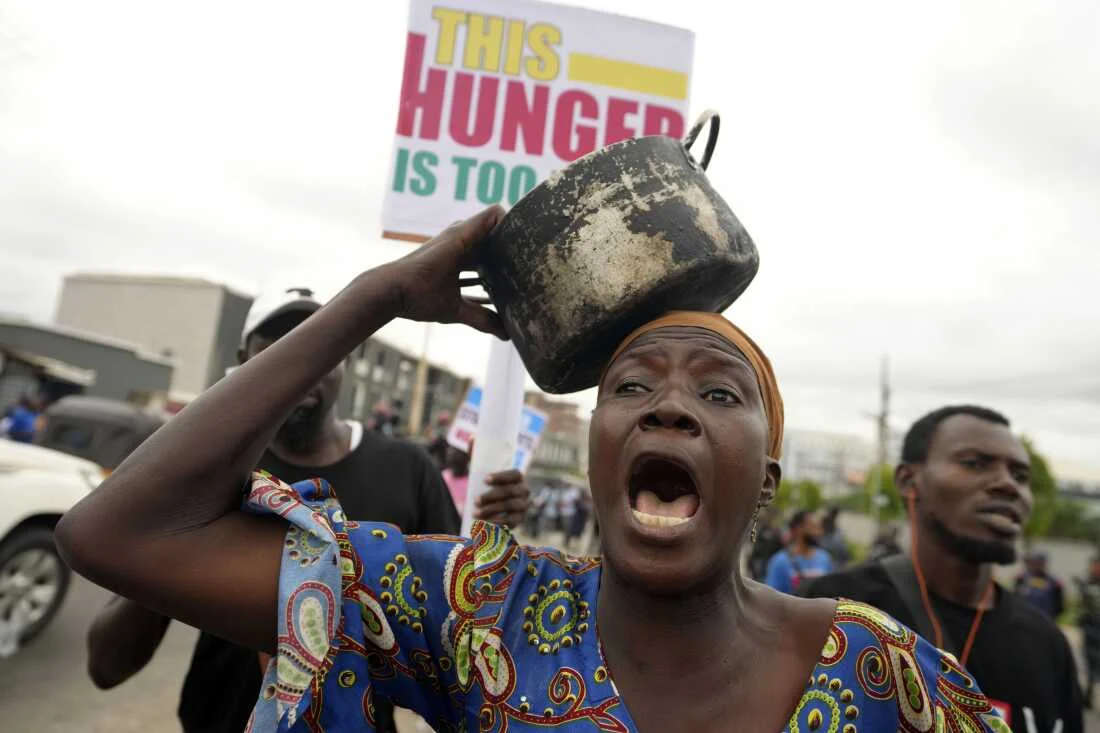
By the start of 2026, the Nigerian economy had crossed a critical psychological threshold. For millions of households, survival, not prosperity, had become the central economic concern. Food prices climbed relentlessly, transportation costs ballooned, electricity tariffs rose, and the naira’s weakness continued to hollow out purchasing power. Wages, meanwhile, remained stubbornly stagnant. In one word: Nigeria’s cost-of-living crisis swirl. This is the economic terrain into which President Bola Tinubu’s administration has launched Nigeria’s most aggressive fiscal overhaul in decades. Framed as reform, sold as necessity, and defended as inevitability, the new tax regime arrives not as a technocratic adjustment but as an additional burden on a population already stretched to its limits. The question confronting Nigerians in 2026 is no longer whether reform is needed, but who bears the cost, and who decides how much pain is acceptable. Reform in the Middle of Hardship The removal of fuel subsidies unleashed a cascade of price increases that reverberated through every sector of the economy. Transport fares surged, food inflation accelerated, and informal businesses, already operating on thin margins, struggled to survive. Electricity tariff hikes followed, further eroding household incomes and raising production costs. Currency policy adjustments compounded the crisis, making imports more expensive and local substitutes scarcer. Rather than pause to stabilize living conditions, the government pressed ahead with sweeping tax reforms. For many Nigerians, the timing alone felt punitive: a state demanding more at the precise moment its citizens had less to give. A New Tax Regime, Old Trust Deficit The overhaul rests on four major laws that replace Nigeria’s chaotic tax framework with a centralized, digitally monitored system. On paper, the logic is compelling: fewer taxes, better enforcement, broader compliance. In reality, centralization without trust risks becoming coercion by another name. Progressive tax bands and exemptions for low-income earners are cited as evidence of fairness. Yet the lived experience tells a different story. Middle-income Nigerians comprising, civil servants, professionals, and small traders, are watching their take-home pay shrink as inflation bites and long-standing reliefs disappear. What remains is a widening gap between what the state demands and what it delivers. “Widening the Net” or Tightening the Noose? Officials insist the reforms are about widening the tax net rather than increasing the burden. But a net cast over a struggling economy does not magically become lighter because it is broader. When energy costs soar, food prices spike, and wages lag inflation, taxation, no matter how elegantly designed, feels punitive. The promise that higher revenue will eventually translate into better schools, hospitals, and infrastructure rings hollow in a country where decades of oil wealth failed to produce durable public value. Nigerians have heard this argument before. Each time, they were asked to be patient. Each time, patience yielded diminishing returns. VAT and Regional Fault Lines: Old Battles, New Weapons No element of Tinubu’s tax reset better exposes Nigeria’s unresolved national question than the proposed restructuring of the Value Added Tax (VAT) sharing formula. Presented by the government as a neutral, efficiency-driven move toward derivation, the reform has instead resurrected the ghosts of Nigeria’s most bitter fiscal conflicts, conflicts never resolved, only postponed. By tilting VAT allocation more decisively toward where consumption and economic activity are recorded, the reform overwhelmingly favours Lagos and a handful of commercially dominant states in the South-West. Lagos’s outsized contribution to VAT revenue is frequently cited to justify this shift. The logic is straightforward: where revenue is generated, revenue should remain. But Nigeria’s history warns that straightforward logic often produces dangerous outcomes. In the First Republic, a strong derivation principle allowed regions to retain up to 50 percent of revenues from cocoa, groundnuts, and palm produce. That system collapsed not because derivation was inefficient, but because widening regional disparities turned it into a political weapon. The fiscal tensions it generated contributed to the instability that ended civilian rule. After the civil war, military governments centralized revenue sharing not out of ideological preference, but because national survival required redistribution. Oil revenues were pooled to hold a fractured country together, not to reward efficiency. The VAT debate now retraces that path, without the trauma that once forced compromise. Many Northern states, heavily dependent on VAT allocations to fund basic services, see the reform not as fiscal federalism but as fiscal punishment. Their argument is blunt: productivity cannot be rewarded fairly in a country where productivity itself has been shaped by decades of uneven federal investment, insecurity, and policy bias. When ports, rail lines, industrial clusters, and financial infrastructure are concentrated in one region, derivation ceases to be neutral, it becomes structural exclusion. The echoes of the Niger Delta struggle are unmistakable. For decades, oil-producing communities watched wealth flow to Abuja while bearing the environmental and social costs of extraction. Today, roles appear reversed: commercially dominant states demand to keep what they generate, while poorer regions warn that redistribution, the glue of the federation, is being quietly dismantled. The federal government’s response, that states should simply “grow their economies,” rings hollow in regions battling insurgency, banditry, collapsing education systems, and mass poverty. Growth is not summoned by rhetoric; it is enabled by security, infrastructure, and human capital, public goods that require funding in the first place. History is unambiguous: Nigeria’s most destabilizing crises often begin as revenue disputes disguised as technical reforms. When groups feel fiscally cornered, resistance follows, political, legal, and sometimes worse. Wether anyone agrees or not, a VAT regime that sharpens inequality without robust equalization mechanisms is not reform, it is deferred instability. The question therefore becomes, wether Nigeria is prepared for another combustive civil disorder? The Lagos Model Goes National The reforms unmistakably bear the imprint of the Lagos model that is notorious for its centralized authority, digital surveillance, and uncompromising enforcement. In Lagos, this model thrived on a dense commercial base and a large formal sector. Nationally, it risks flattening Nigeria’s economic diversity into a one-size-fits-all template. Equally corrosive is the perception, fair or not, that fiscal power is increasingly concentrated within a narrow
LG Autonomy Must Become Nigeria’s 1964 Civil Rights Fight

President Bola Ahmed Tinubu’s administration will be remembered—for good or ill—for its bold systemic reforms: the removal of fuel subsidy and the floating of the Naira. But perhaps the most consequential, destiny-shaping, and legacy-defining reform is the pursuit of local government autonomy. Sadly, its importance is largely unappreciated. We live in survival mode. Nigerians worry about what to eat today, not about distant reforms whose benefits may not be seen tomorrow. Fuel subsidy removal and naira floating shook people at the existential level; hence they dominate the headlines. But local government autonomy—though quieter—has the potential to change Nigeria’s governance forever. The Bold Supreme Court Route Unlike subsidy removal, which Tinubu casually announced in his inaugural speech, he knew local government autonomy could not pass through the legislature. As a former governor, he understood the enormous grip governors hold over senators and representatives. Any such bill would have been dead on arrival. He therefore chose the unconventional but brilliant route—through the Supreme Court. That singular move reveals how monumental the reform is. Governors Will Not Give Up Without a Fight Across Nigeria today, governors are doing everything possible to frustrate implementation. They will not give up their honeypot fiefdoms without a titanic fight. Local government allocations are their oxygen, their war chest, their piggy bank.Osun State shows us how consequential this struggle is: the government and opposition are locked in a fight-to-the-finish over who controls local government funds. Neither side can afford to lose. Only the suffering masses lose.Governors in Nigeria are among the most powerful people on the continent. They are political Santa Clauses, distributing patronage to the loyal and punishment to dissenters. Even powerful cultural organizations such as Afenifere and Ohaneze tread carefully—they too want their share of the goodies. Nobody dares to fall into the bad books of a governor.This is why only a handful of so-called “crazies” and “knuckleheads” dare to take them on. But truth be told, the battle for local government autonomy is not a fringe struggle—it is our collective struggle. Nigeria’s Civil Rights Moment Just as Black Americans in 1964 rose to demand their civil rights against systemic denial, Nigerians must rise to demand true local government autonomy. This is our civil rights moment.Why? Because local government is the only tier of government closest to the people. It is where the school roofs collapse, where rural roads decay, where health centers go without medicine, and where farmers are either empowered or abandoned. Without local government autonomy, development remains centralized in the hands of governors who dictate winners and losers. Community Efforts Are Not Enough In Ijesaland, we have set up a Local Government Monitoring Committee. It is a commendable step, but let us be honest: such committees are like trying to stop a raging elephant with needles. They lack constitutional power to enforce accountability. Governors and their parties control who contests local elections, and unsurprisingly, they always win in landslides. Community monitoring is better than nothing, but it cannot uproot entrenched abuse. Freedom Is Never Given Freely Let us be clear: governors will never willingly surrender control of local government allocations. Asking them to do so is like asking a pig to abandon its muddy pond. It will not happen voluntarily.To wrestle power away requires nothing less than a civil rights–style movement. Freedom is never handed down. It must be fought for, demanded, and seized.If Nigerians are serious about grassroots development, accountability, and true democracy, then we must treat local government autonomy as our 1964. Afenifere, COYN, and other activist communities can help mobilize, but the power must come from ordinary Nigerians who refuse to be shut out of their own governance. Conclusion Tinubu may have taken the boldest step by going through the Supreme Court. But without citizen action, governors will suffocate the reform. This fight is not about Tinubu, APC, or PDP—it is about the people versus the political elite.Local government autonomy is not just another policy tweak—it is the foundation of genuine democracy and development in Nigeria.The governors will not give it up. The people must rise up and take it. This must become Nigeria’s 1964. Adewale Alonge, PhD, Founder & President, Africa Diaspora Partnership for Empowerment and Development. www.adped.org
Restructuring: Don admonishes attitudinal change
Prof. Kamal Bello, Dean, Faculty of Social Sciences, National Open University of Nigeria (NOUN) has urged Nigerians to look beyond restructuring and channel their efforts towards behavioural and attitudinal change. Bello spoke as a Lead Discussant, at the first Dialogue Series of the Faculty of Social Sciences, NOUN, at the weekend in Abuja. The programme had the topic “Nigeria: To be Restructured or Not to be Restructured”. The don said that for Nigeria to be great, everyone must contribute to its success. He described restructuring as a cumbersome process that needed to be conceptualised in the Nigerian context as to what needed to be restructured. “The word restructuring is not new. Nigeria must understand the concentration of the country’s resources before true restructuring can take place. “People look at the contemporary things in restructuring; people are seeking true federalism. “Nigeria must know the concentration of her resources before it can be restructured. Most of Nigeria’s problems are how to share the cake, but not how to bake it. “What should be on every Nigerian’s mind should be the question of how to bridge the gap between the rich and the less endowed and not the question of creation of more states or local government. “It is our mindset that needs to be restructured, not the structure itself. Nigeria’s problem starts on an individual level. We should shun discrimination,” he said. Bello added that at this critical time, the question shouldn’t be about whether to restructure or not to restructure but to shun nepotism, corruption, and ethnicity. “We need to look at Nigeria as a nation that everyone must contribute to its success. The teachers and the lecturers should be role models,” he said. The dean thanked the university management for making the dialogue possible. He also thanked the Standing Committee on Seminar, Conference, and Public Lecture under the chairmanship of Dr Adeola Adams for ensuring that the dialogue was a success. Speaking, Prof. Hussaini Tukur of the Nasarawa State University, Keffi, said the legal framework should be taken into cognisance before the question of why restructuring and for whom. “The legal issues surrounding restructuring should be considered. “When you understand the purpose and the legal entity of restructuring you will realise the issues involved as there are several guidelines to restructuring,” Tukur said. In his remarks, the NOUN Vice-Chancellor, Prof. Olufemi Peters, noted that the dialogue was novel and innovative. He said that the topic was apt due to the recurring nature of the debate. Represented by the Deputy Vice-Chancellor Administration, Prof. Isaac Butswat, the VC said that the Faculty organised the dialogue to make an input. He said it was also to decide on which way Nigeria as a country should go on the issue of restructuring. The VC, however, expressed optimism in the crop of discussants drawn from various higher institutions of learning across the six geopolitical zones of the nation. He urged the participants to pay attention to the discussants for a better and more useful understanding of the dialogue.
Restructuring Nigeria Makes for Great Rhetoric: Getting it Done is harder than Separating a Conjoined Twin.

“With his local government autonomy, the deregulation of the power to generate and distribute electricity, and now the tax reform bill, President Tinubu is strategically attempting to restructure the country through the back door approach.“ The katakata that has accompanied the tax reform bill is laying to bare once again how intractably difficult it is to govern and transform a country as structurally complicated as Nigeria. The most difficult bill to pass even in the best of circumstances including in countries with a coherent national identity is the tax bill. At the core of any country’s sovereignty is the ability to impose and collect taxes. On it hinges the ability of any government to carry out their core governance responsibilities. One can therefore only imagine how close to impossible it would be to reform the tax collection law in a country like ours with no national consensus, and where the constituent parts treat the country like meat from a stranded bleached whale to be plundered. Hence, the presidency should have anticipated the stiff resistance it is now facing from the different power centers each with conflicting agenda. READ ALSO: Nigerians Vow ‘Days of Rage’ Over Economic Hardships It is a known fact that the north has a higher dependency ratio on federal revenue, hence a tax reform bill that shifts the locus of collection and distribution proportionately to the source will disadvantage them. There are also a few states in the southwest with the same higher dependency ratio, whose internally generated revenue is nothing to write home about and whose productive economies do not generate enough VAT to meet their budgetary obligations. In those instance it would be suicidal for the governors to support a tax reform bill that disadvantages them. With his local government autonomy, the deregulation of the power to generate and distribute electricity, and now the tax reform bill, President Tinubu is strategically attempting to restructure the country through the back door approach. He has chosen that approach knowing full well that a full scale restructuring bill would be dead on arrival in a Senate and a House of Representatives where the north has clear numerical advantage. The north and some southern governors are sending a clear message to the President that they are not ready for restructuring, which might lead to the diminution of their power to tax and control local government allocation as they choose. Nigerians have been shouting restructuring, restructuring and now as President Tinubu begins to unpack what restructuring looks like some governors are beginning to develop cold feet knowing that their own power might be eroded. Barring a miracle, the tax bill might have suffered a fatal blow. Some of the senators and members of the house of representatives that are opposed to the bills know who butters their bread and who can also put sand in their gaari, the governors. They would dare not go against their wishes. PLEASE READ: Nigeria’s Public Debt Rises By N12.6Trn in Three Months Nigerians are learning in real time how intractable it is to reform a dysfunctional country like Nigeria which remains 64 years after independence, a mere geographical expression like Chief Awolowo described it. Nigeria is like an arranged marriage between two partners each of which hates and distrusts one another, seeks to take advantage of one another, and yet are too afraid to disengage and dissolve their dysfunctional union because they figure out that like trying to separate a conjoined Siamese twins, the cost of disengagement might be too high to pay including the possibility of death on the surgical table. That is the intractable conundrum that our country has found itself. President Tinubu is putting everything at stake including his second term aspiration with his bold reform agenda. Only time will tell if it was a risk worth taking. Adewale Alonge, PhD, is Founder & President, Africa Diaspora Partnership for Empowerment and Development. www.adped.org