NOGOF 2023: NIMASA calls for review of freight terms

The Director-General of the Nigerian Maritime Administration and Safety Agency, NIMASA, Dr. Bashir Jamoh, has urged stakeholders to consider a change of trade terms in the Oil and Gas sector from the Free on Board (FOB) to the Cost, Insurance and Freight (CIF) model. Speaking at the 2023 Nigerian Oil and Gas Opportunity Fair (NOGOF) in Yenagoa, Bayelsa State, the NIMASA DG, said policies of the current administration at the Agency are tailored to complement efforts of the Nigerian Content Development and Monitoring Board (NCDMB) to grow the Nigerian economy through the Oil and Gas sector. In a statement, Assistant Director, Public Relations, NIMASA, Osagie Edward, Jamoh, who was represented by the Agency’s Director of Cabotage Services, Mrs. Rita Uruakpa, said the efforts of the NCDMB at helping in the development of the indigenous maritime sector had not gone unnoticed. He said: “We appreciate the efforts of the Nigerian Content Development and Monitoring Board at growing the indigenous maritime sector, such as the proposed Brass Shipyard. We at NIMASA will continue to strive for the development of our maritime sector by pursuing policies that will ensure the indigenous capacity is grown, which in turn will impact on our fleet expansion to position them to be able to participate in the affreightment of the products”. Speaking on opportunities for indigenous businesses in maritime, he had this to say, ‘I want to reiterate that we must also create a suitable and sustainable business and investment environment that will afford indigenous operators’ opportunities to participate in the oil & gas industry with a view to accelerating Nigeria’s income for the Oil Industry which in turn will impact our GDP”. On his part, Executive Secretary of NCDMB Mr. Simbi Wabote, charged firms operating in the sector to prepare themselves adequately, restating that the oil and gas industry is highly technical and does not compromise safety and standards. In his words, “If someone gives you projects he intends to execute in the next two years; Nigerian companies, having listened to the opportunities, should go back and continue to build their capacities in readiness to actively participate.” He also challenged relevant agencies to address the worrisome security challenges, particularly oil theft in the Niger Delta, as this would enable the production of hydrocarbons at reasonable costs and profitability.
Market realities driving up petrol price – Kyari

*Says prices will normalize within two weeks The Group Chief Executive Officer of the Nigerian National Petroleum Company Limited, Mele Kyari, has said that the sudden hike in pump price of petrol in filling stations across the country is a reflection of the realities of the market. Despite having supplies, the filling station still went ahead to hike the price of their products. Speaking on a television program monitored by NIGERIAN ANCHOR on Thursday, Kyari said that the situation applies to all commodities and that it portrays the reality of the market. “It could have been the other way round; prices could have collapsed downwards and those holding the old stock would have to sell at lower prices to arrive at market condition. “It is not something serious or strange, this is a stock management issue and it is very typical, no one can do anything different about this. “The prices we are seeing today at our stations are the current price of the commodity. This means that prices in the market can go down at any time and of course, the market will adjust itself,” Kyari said. The GCEO however assured that the fuel hike currently being experienced will normalize in the next 2-3 weeks because competition among major players in the oil sector would force down the price of petrol. He added that the subsidy removal would allow new entrants into the market, a move he said, would aid competition and phase out monopoly. “The beauty of this (subsidy removal) is that there will be new entrants (into the market) because oil marketing companies’ reluctance to come into the market all along is the very fact of the subsidy regime that is in place. “And that subsidy regime doesn’t have a guarantee of repayment back to the those who provide the product at subsidise price and now that the market is being regulated, oil marketing companies can actually import product or even if it is produced locally, they can buy and take it into the market and sell it at its retail price. “Therefore, you will see competition, even with NNPC. And by the way, by law, NNPC cannot do more than 30 percent of the market going forward. As soon as the market stabilises, oil marketing companies will be able to come in,” he explained.
Subsidy Removal: NLC rejects new fuel pump price template

The Nigeria Labour Congress (NLC) has urged the Federal Government to immediately instruct the Nigerian Petroleum Company Ltd (NNPCL) to withdraw the just released pricing template to allow free flow of discussions by all parties. Mr Joe Ajaero, the NLC President, made the call in a statement signed by him and made available to newsmen on Wednesday in Abuja. Ajaero said that the new pricing template is vexatious, an ambush and may scuttle its ongoing dialogue with the federal government. According to Ajaero, government cannot in one breathe be talking about deregulation and at the same time fixing the prices of petroleum products. “We are worried that the Government through the NNPC despite the ongoing meeting of stakeholders in the Oil and Gas sector to manage the unilateral. “But unfortunate announcement by the President to withdraw subsidy on petroleum products, went ahead this morning to announce a new regime of prices under a new pricing template. “This is an ambush and runs against the spirit and principles of Social Dialogue which remains the best platform available for the resolution of all the issues arising out of the petroleum Down-stream sector. “This negates the spirit of allowing the operation of the free market unless the government has, as usual, usurped, captured or become market forces. “It is therefore unacceptable and we seriously condemn it. Good faith negotiation is key to reaching agreement,” he said. He added that what the government has done is like holding a gun to the head of Nigerian people and bring undue pressure on the leaders, thus undermine the dialogue. The NLC president said that Nigerians would not accept any manipulation of any kind from any of the parties, especially from the representatives of the government. “Our commitment to this process is buoyed on the fact that all the parties would be committed to ensuring that it is carried out within the ambits of liberty without undue pressure. “The release of that Template may not allow us to continue if nothing is done to withdraw it so that the dialogue can continue unhindered. It is clear that Government is actually trying to scuttle the process. “As it stands, the federal government has become fixated on their chosen course of action. Would this help this dialogue? It clearly will not. “There must be flexibility to allow concessions and reasonable accommodation that will produce the best result for Nigerian people. This is what we all seek at this time,” he said.
Nigerians groan as Presidency, NNPCL hike fuel pump price to N555PL

Details of the Tuesday meeting between President Bola Tinubu and the Group Chief Executive Officer of the Nigeria National Petroleum Company limited (NNPCL), Malam Mele Kyari, has emerged as the company has rolled out template for new pump price per litre nationwide. Malam Kyari had on Tuesday had a closed door meeting with President Tinubu, following the controversy generated by inaugural speech comment on removal of fuel subsidy. Template for hike in fuel pump price per litre as categorized according to geopolitical zone effective, 31 May, 2023. Under the new prices depending on geopolitical zone, a price per litre will not cost less than N488 but will cost at most N555. The NNPCL has also directed dealers to reflect the new pump price in the respective geopolitical zones effective today, 31 May, 2023, in line with the released price templated. “Please implement meter change as approved effective today 31st May 2023. Wayne is to attend to all locations as relates to their area of coverage in our network”, the directive stated. A statement by Garba Muhammad, Chief Corporate Communications Officer NNPC Limited said as it strives to provide quality service which the company was known for, prices would continue to fluctuate to reflect market dynamics. “The NNPC Ltd. wishes to inform our esteemed customers that we have adjusted our pump price of PMS across our retail outlets, in line with the current market realities. “We assure you that NNPC Ltd. is committed to ensuring ceaseless supply of products. “The Company sincerely regrets any inconvenience this development might have caused,” Muhammad said. He appreciated the continued patronage, support and understanding of its customers through this time of change and growth. The sudden increase in pump price per litre contradicted President Tinubu’s explanations of his inuagural speech comment on immediate removal of fuel Subsidy. He had on Tuesday said that the removal would take effect end of June, 2023, in attempt to allay fears and tempers heightened by acute shortage of fuel and hike in prices by dealers following his inaugural speech comment of fuel Subsidy removal. Nationwide, following his inaugural speech, queues have returned to the fueling stations. While dealers who are open for operations have hike their pump price up to between N600-N700 per litre, just as most filling stations closed shop. Commuters nationwide have been stranded as transporters have hiked the fares resulting to chaotic situation just two days on assumption of office by President Tinubu. Reports indicate that motorists who had queued up overnight for fuel now refused to buy at the newly reflected high pump price per litre.
Hoarding/Profiteering: Gov Diri warns marketers as fuel price hits N600

Governor Douye Diri of Bayelsa has warned oil marketers in the state against hoarding and profiteering on Premium Motor Spirit (PMS), commonly known as petrol. The warning is sequel to the sudden hike by fuel marketers of PMS to N600 per litre, following President Bola Tinubu’s pronouncement in his inaugural address that fuel subsidy was gone. Diri, in a statement issued by his Chief Press Secretary, Mr Daniel Alabrah on Wednesday, warned that his administration would take stern measures against any filling station that flouted the directive. He said the state government had received reports that some filling stations in the state capital had hiked the pump price of petrol above the usual price of between N193 and N250 per litre to N500 per litre and above. “Marketers in the state are said to have reacted to the pronouncement of President Bola Tinubu during his inauguration on Monday that the Federal Government subsidy on petrol is gone. “The Presidency, however, issued a clarification statement on Tuesday that the removal of the subsidy was yet to take effect,” the statement read in part. The governor said it was wicked for oil marketers to swiftly seek to profiteer at the detriment of the people following a mere pronouncement that had not taken effect. Diri noted that the pump price of petrol is a significant determinant of the cost of goods and services in the country. The governor assured that his administration would not allow the people of Bayelsa to suffer undue hardship from the profiteering activities of some greedy businessmen. Diri said he had directed the state Ministry of Mineral Resources and the petroleum task force in the state to shut any filling station hoarding the product or caught selling above the usual pump price. He said: “I have directed the relevant Ministry and the state’s task force on petroleum to ensure that all filling stations sell petrol within the usual price range. “I have equally directed that any filling station that flouts this directive or fails to revert to the usual price be shut down. We will take further stern measures against any station that defaults. “This directive takes immediate effect,” Diri said.
Subsidy: Kyari meets Tinubu, says fuel queues won’t last

The Nigerian National Petroleum Company Limited (NNPC Ltd) has assured Nigerians that fuel queues in filling stations, following the affirmation of the removal of subsidy, will soon vanished. Malam Mele Kyari, the Group Chief Executive Officer (GCEO), briefed State House correspondents after meeting President Bola Tinubu on Tuesday at the Presidential Villa, Abuja. Tinubu, had in his inaugural speech on Monday, commended the past administration for phasing out the petrol subsidy regime, which had increasingly favoured the rich more than the poor. Kyari said that the Petroleum Industry Act (PIA) stipulated that the price of petroleum should be determined by market forces. “I know all us must have seen the fuel queues in filling stations across the country. “It is very understandable that whenever announcements to changes to prices of petroleum happen, both buyers and marketers will like assurance of what exactly this means and typically, consumers will rush to the filling stations to fill their tanks and that is why you are seeing these queues. “And also for marketers, they will like to see exactly what this means in terms of how are we going to sell the products if subsidy on PMS is removed? “And the combination of the two is what you are seeing -the obvious dislocation on distribution and we believe that this will go away very quickly. “And as you may be aware, PIB which was accented in 2021 and became an Act, made it clear that the price of petroleum must be priced at the market,” Kyari stated. He said, however, that the government also decided to provide for subsidy in the 2022 Appropriation Act and also for half year in 2023. According to him, while the PIA is clear that petroleum should be priced, but it did not say that government cannot put its money in any way it wants. “Therefore, we, as a commercial company established by the PIA, we are doing it strictly as business; delivering value as supply of last resort by virtue of the law but at a cost to the federation. “And that cost includes the cost of subsidy; this subsidy cost should have been money that will be given to the NNPC, may be on monthly or daily basis. “However, since the provision of the N6 trillion in 2022 and N3.7 trillion in 2023, we have not received no payment whatsoever from the federation; that means they are unable to pay and we continue and continue to support the subsidy from the cash flow of the NNPC.” He also explained further:“That is when we net off our physical obligations of taxes and royalties, there is still a balance we are funding from our cash flow and that has become very difficult, and it affects our other operations. “We are not able to keep some of this cash to invest in our core businesses and the end result is that it can be a huge challenge for the company. “And we have highlighted this severally to government; that they must compensate NNPC; they must pay NNPC for the money we have spent on subsidy.’’ The NNPC Ltd boss said that by virtue of the law and the Appropriation Act 2023, funding was no longer available while the country could no longer fund the subsidy and no longer able to pay NNPC. “Therefore, we are pleased to note the president’s commitment to the removal of subsidy because they cannot afford it anymore.
Subsidy Removal: We’ll tackle supply disruptions – NMDPRA

*Urges Nigerians not to panic The Nigerian Midstream and Downstream Petroleum Regulatory Authority (NMDPRA) has said it is working with NNPC Limited and other stakeholders to guarantee a smooth transition following the removal of fuel subsidy. President Bola Tinubu, in his inaugural speech on Monday, said the fuel subsidy regime had ended with the commencement of his administration. NMDPRA made this known on Tuesday in a statement signed by Mr Kimchi Apollo, General Manager, Corporate Communications, NMDPRA, to address concerns regarding the removal of fuel subsidy. Apollo said the authority was working to avoid disruptions in the supply of Premium Motor Spirit (PMS), also known as petrol, as well as ensure that consumers were not short-changed in any form. He assured that there was an ample supply of PMS to meet demand and that the authority had taken necessary steps to ensure that distribution channels remained uninterrupted and fuel readily available at all filling stations nationwide. He urged Nigerians not to panic over the removal of subsidy as the authority had ensured availability of petrol nationwide. “Contrary to speculations and concerns, the announcement is in line with the Petroleum Industry Act (PIA 2021), which provides for total deregulation of the petroleum downstream sector to drive investment and growth. “We, therefore, call on Nigerians to remain calm and resist the urge to stockpile as it poses a significant safety hazard. “The NMDPRA reassures all Nigerians that the removal of subsidy on PMS is a step towards building a more sustainable and prosperous future for our nation. “We will continue to monitor activities and implement necessary measures to enhance transparency and accountability in the petroleum downstream sector,” he said.
Dangote refinery will address supply shortages, price hikes – IPMAN

*Calls for revival of all moribund refineries in Nigeria The new Dangote refinery will address issues of fuel shortages and price hikes in the country, the Independent Petroleum Marketers Association of Nigeria (IPMAN) has said. Chairman of IPMAN, Enugu Community depot in charge of Anambra, Ebonyi and Enugu states, said in an interview that the 18.5 billion dollar Dangote refinery, with 650, 000 barrel production capacity which was inaugurated by President Muhammadu Buhari on Monday, will go a long way in repositioning the country’s economy.. Anyaso however envisaged an initial increase in fuel pump price, but said it would decrease in the long run. “They will buy locally, refine and sell locally and we will no longer need forex to import products but rather, it will sell refined products and earn us forex. “It is a welcome development,” he said. The IPMAN chairman urged the Federal Government to revive its four refineries and optimise their production to support what Dangote would produce, to ensure full sufficiency of the products. He thanked the President Muhammadu Buhari administration for signing the Petroleum Industry Act (PIA) which encouraged private sector investment in the oil and gas industry. Anyaso cautioned against monopoly, saying it would leave Nigerians worse off if left at the mercy of one supplier. “We need more players to come in because the market is there, so there should be competition; the Federal Government should ensure a monopoly is not created. “The PIA which this administration graciously signed encourages private sector involvement, people who have the capacity should be encouraged to follow the Dangote example,” he added. Anyaso called for revitalisation and operationalisation of all moribund depots, including that of Enugu for easy distribution of petroleum products. He said this would reduce the challenges of sourcing products and drive down prices.
Dangote Refinery is Nigeria’s economy game changer- Buhari

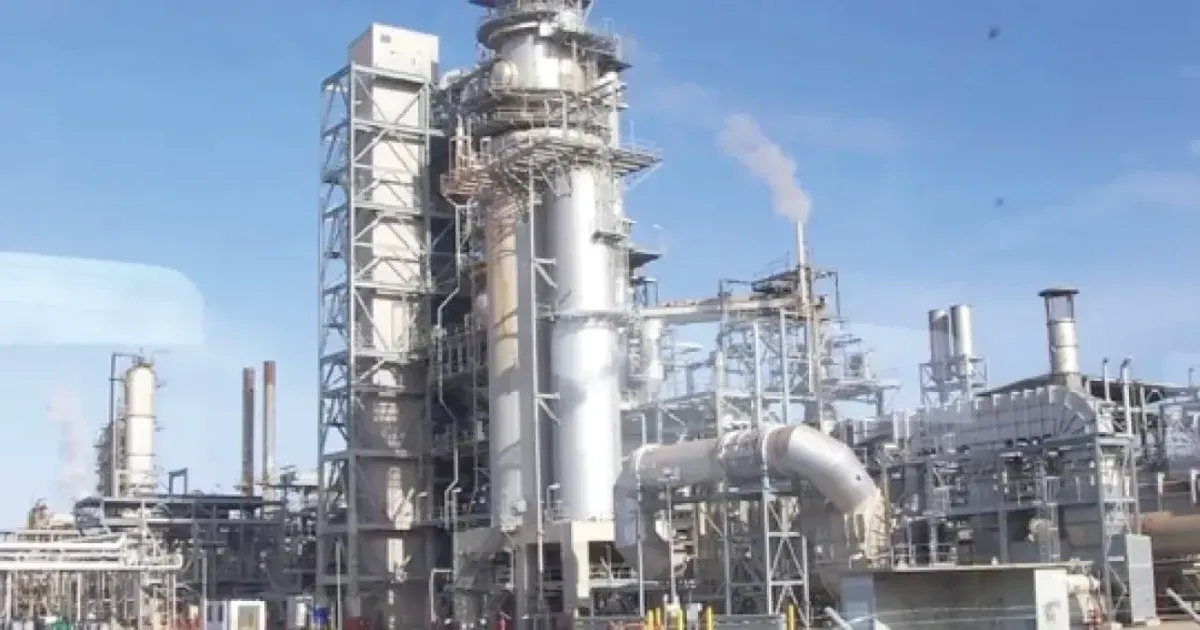
*First Refined Petroleum Products to Hit Market End of July The new Dangote Refinery will mark a turning pointin Nigeria’s economic fortunes, President Muhammadu Buhari said Monday when inaugurating the Dangote Petroleum Refinery in Ibeju-Lekki, Lagos, the largest petrochemical company in the world. The company is expected to make Nigeria self-sufficient in refined petroleum products and have a surplus for export. Speaking at the inauguration ceremony, the president described the feat as a significant milestone for Nigeria’s economy and a game changer for the downstream petroleum products market in Africa. The event was attended by Heads of State of Ghana, Togo, Niger and Senegal and a representative of the President of Chad. Buhari said: “This mega industry we are commissioning today is a clear example of what can be achieved when entrepreneurs are encouraged and supported and when an enabling environment is created for investments and for businesses to thrive. ‘‘I am confident that my successor, His Excellency Asiwaju Bola Ahmed Tinubu will sustain the improvement in our economic and business environment and strengthen the framework of our public-private partnership policies to accelerate the pace of our economic growth and development. ‘‘I am happy to leave our economy in very competent hands.’’ The president, who commended Alhaji Aliko Dangote’s leadership in executing the 650,000 barrels per day refinery, urged other entrepreneurs to emulate his example in driving economic growth and realizing Nigeria’s economic potential. He stressed the need for African countries to come together, integrate their economies, eliminate trade barriers, and rally their populations to achieve Agenda 2063, for the continent’s prosperity. ‘‘I urge and encourage our other great entrepreneurs to emulate this iconic Nigerian industrialist and join the Government in accelerating our growth in order to realize our country’s globally recognized economic potential. ‘‘When I travel around Africa and meet and engage my brother Heads of State (and I am delighted some of their Excellences are here) I often sense a quiet expectation that our country is blessed with resources and human capacity to lead Africa’s rise to economic prosperity and the attainment of Agenda 2063 – ‘The Africa we all want.’ ‘‘But to achieve the goals of Agenda 2063, Africa must come together – we must integrate our economies, eliminate barriers to trade and energize our youthful population to scale up our production capacity. ‘‘We must create necessary conditions for our private sector to grow and partner with the public sector to accelerate economic growth across the continent. ‘‘We must not allow outside powers to use some of our leaders to destabilize our economic and political trajectory,’’ he said. Buhari acknowledged the visionary investments made by the Dangote Group in transforming Nigeria’s economy through involvement in critical industries such as cement and fertilizer. He noted that investment in these sectors had played a crucial role in shifting Nigeria from heavy import dependence to becoming a net exporter. The president acknowledged that Nigeria’s economy has faced significant challenges over the years, including deficits in economic infrastructure and insurgency. He added that the country also faced external crises such as the global financial crisis, collapse of oil prices, massive disruptions caused by COVID-19 pandemic, and the Russia-Ukraine war. ‘‘The consequence of these challenges constitute a severe strain on our economy, limiting Government’s ability to provide basic infrastructure without resorting to huge borrowings. ‘‘Our Government, therefore, took the decision to focus attention on creating an enabling environment for the private sector to thrive and fill the enormous gap in investments not only in infrastructure but also in all critical sectors. ‘‘We recognize that without the active participation of the private sector and a strong commitment to public private partnership, our economy would continue to remain severely challenged and our economic growth impeded. ‘‘Government therefore, will and should continue to provide an enabling environment and encourage innovative public private partnerships in all sectors of our economy,’’ he said. Buhari emphasized the administration’s commitment to this approach, citing Executive Order 007 of 2019 which facilitated the rehabilitation and construction of many roads by private sector investors using a Tax-credit scheme. ‘‘It is my hope that the succeeding Administration will continue to apply such innovative schemes in partnership with the private sector to accelerate the provision of critical infrastructure, in particular roads, power, and gas pipelines,’’ he said. In his remark, Dangote said that the refinery fulfills the group’s corporate vision of promoting self-sufficiency and global competitiveness. ”We have built a Refinery with a capacity to process 650,000 barrels per day (plus 900,000 tonnes of polypropylene) in a single train – which is the largest in the world. We have selected the best plants and equipment and the latest technologies from across the world. ”Our products slate is designed to meet the highest quality standards and high-value products including Premium Motor Spirit (PMS), Automotive Gas Oil (Diesel), Aviation Turbine Kerosine (ATK); all of Euro V Standards that will enable us not only meet our Country’s demand but also to become a key player in the African and global market. ”Our coastal location and offshore loading and offloading (SPM) facilities with a capacity to receive all our crude oil supplies and evacuate up to 75% of our liquid products give us direct access to the rest of Africa and the global market for exports. “In addition, 80 percent of our production can be discharged through trucks nationwide.” He disclosed that the huge investment of over $18.5 billion in the industry was prompted by the company’s desire to support and contribute to transforming Nigeria’s economy and reposition the country as a respected emerging economy in the world. According to him, apart from ensuring consistent supply of high-quality fuels for the transportation sector, the refinery will provide essential raw materials to a wide range of manufacturing sectors, including plastics, pharmaceuticals, food and beverages, packaging, construction, and more. He further stated that the refinery’s operation and related businesses would generate a substantial number of job opportunities. He stated that the downstream supply and distribution of its products would
Petrol price drops slightly to N254 per litre in April 2023 – NBS

The average retail price of a litre of petrol witnessed a drop from N264.29 in March to N254.06 in April 2023, the National Bureau of Statistics (NBS) has said. This is according to the NBS Petrol Price Watch released in Abuja on Friday. It stated that the April 2023 price of N254.06 represented a 3. 87 percent decrease over the price of N264.29 recorded in March 2023. However, the average retail price of a litre of petrol increased on a year-on-year basis from N172.61 recorded in April 2022 to N254.06 in April 2023. It stated that the April 2023 price of N254.06 represented a 47.18 percent increase over the price of N172.61 recorded in April 2022. “On state profiles analysis, Taraba paid the highest average retail price of N320.00 per litre, followed by Imo at N310.55 and Jigawa at N305.00. “Conversely, Sokoto paid the lowest average retail price of N195.00, followed by Benue at N198.13 and Kogi with N206.11,” it stated. Analysis by zone, the NBS said, showed that the South-East recorded the highest average retail price in April 2023 at N291.15, while the North-Central recorded the lowest at N208.88. The NBS also stated in its Diesel Price Watch Report for April 2023 that the average retail price paid by consumers increased by 28.69 per cent on a year-on-year basis. It explained that the retail price moved from a lower cost of N654.46 per litre recorded in April 2022 to a higher cost of N842.25 per litre in April 2023. “On a month-on-month basis, the price increased by 0.17 per cent from N840.81 per litre recorded in March 2023 to an average of N842.25 in April 2023,” it added. On state profiles analysis, the report said the highest average price of diesel in April 2023 was recorded in Adamawa at N980.33 per litre, followed by Bauchi at N934.46, and Borno at N900.50. On the other hand, the lowest price was recorded in Bayelsa at N708.04 per litre, followed by Kebbi at N773.33 and Anambra at N773.56. In addition, the analysis by zone showed that the North-East had the highest price at N895.42 per litre, while the South-South Zone recorded the lowest price at N807.59 per litre.