FCTA inaugurates task force on safe handling of petroleum products

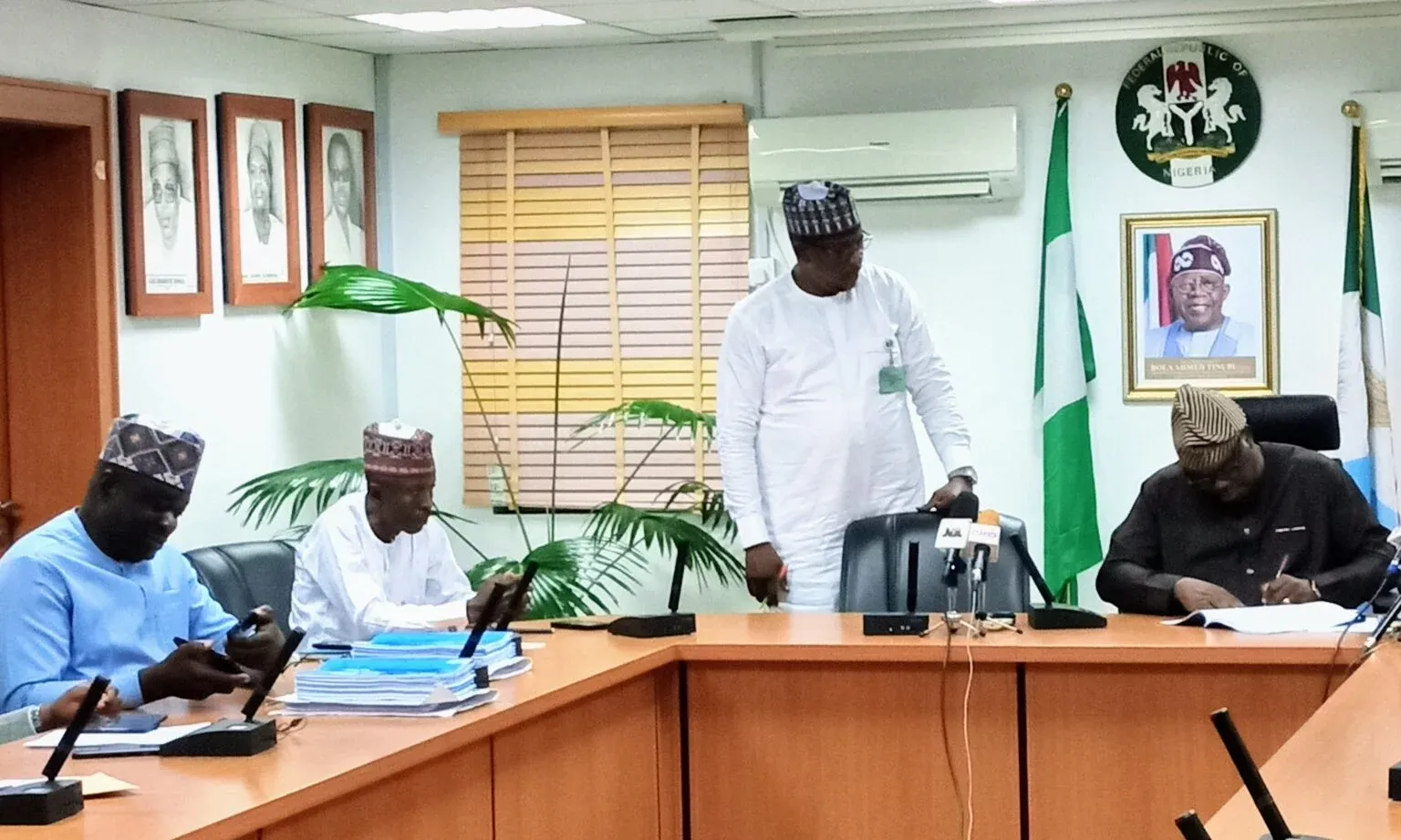
The Federal Capital Territory Administration (FCTA) has inaugurated a Ministerial Task Force on the safe handling of petroleum products in the capital city, Abuja. The Permanent Secretary, FCTA, Mr Olusade Adesola, while inaugurating the task force in Abuja on Thursday, said that the measure was to curtail incidences of fire outbreaks in the nation’s capital. Adesola said that fire outbreaks in the FCT in recent times had resulted in the loss of lives and destruction of property. He vowed to sanction any fuel-filling station within the territory that failed to observe the necessary safety measures as required by law. “In 2022 alone, no fewer than four filling stations were reported to have been gutted by fire within the FCT. “Improper handling of petroleum products, as well as non-compliance with safety measures as it concerns operational guidelines of managing filling stations have been largely responsible for several fire outbreaks,” he noted. Adesola expressed optimism that the Ministerial Task Force would work assiduously to reduce occurrences of fire outbreak by ensuring that operators of filling stations adhered strictly to safety measures. He explained that inaugurating the taskforce was a proactive step taken by the government to secure the lives and property of residents. He said that part of the terms of reference of the taskforce was to monitor and ensure compliance to safe timing of uploading and offloading of volatile substances, including petrol and cooking gas. He said that the task force was also expected to monitor and ensure that all filling stations had functional, basic and relevant equipment. Adesola also said that the task force would ensure that filling stations had trained fire safety officers. “They are also to monitor and ensure that volatile substances are not off-loaded with vehicles or customers already waiting within the premises of the filling stations. “The task force is expected to clamp down on “black market” operators and the filling stations conniving with them. “The task force will be expected to recommend the closure of filling stations violating basic fire safety rules and those found colluding with black market operators. The members of the task force were drawn from the FCT Emergency Management Agency (FEMA), Department of Development Control, FCTA Fire Service Department, and FCTA Department of Security Services. Others, he said, were drawn from the Department of State Security Services, the Nigerian Police Force, Nigeria Security and Civil Defence Corps, and the National Union of Road Transport Workers. The task force also has representatives from NNPC upstream and downstream sectors, major petroleum marketers’ associations, and independent marketers’ associations. Responding, the Chairman of the Task Force, Dr Idriss Abbas, Director-General, FEMA, thanked the FCTA for finding the members capable of handling the assignment. He assured the FCTA that the task force would work assiduously to deliver on the mandate.
Subsidy: FCTA urban mass transit buses resume soon– Official

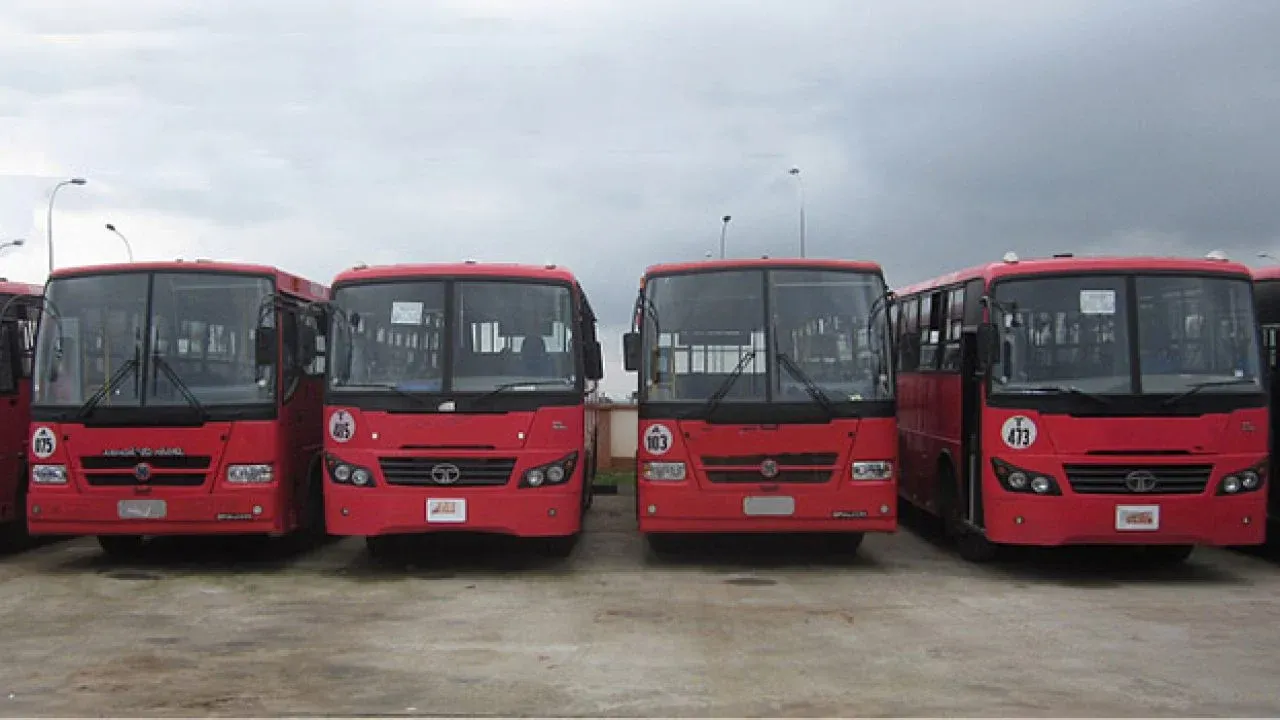
The Federal Capital Territory Administration (FCTA) has disclosed that its urban mass transit buses would resume operations soon to reduce the hike in transport fares, occasioned by fuel subsidy removal. The transport fare has skyrocketed by more than 100 per cent in the Federal Capital Territory (FCT), since the new fuel price regime took off. During his inaugural speech on May 29, President Bola Ahmed Tinubu had announced the removal of fuel subsidy, leading to the increased price of petrol from N195 to N540 per litre. Barely two months after, the price was further reviewed upward to N617 per litre, a development some FCT residents said was taking a heavy toll on them. Some civil servants particularly groaned that the increase in transport fares was forcing them to spend a larger chunk of their salary on transport. Some residents described the efforts as a “welcome development”, saying it will significantly ameliorate the hash transportation situation in the FCT. A resident of Nyanya, Mr Paul Nkom, said that he spends more than N1,000 daily on transportation from the initial N300 to Federal Secretariat and back home. “This amounted to over N5,000 a week and N20,000 a month from my meagre salary, but I am sure that fare will drastically reduce if we have the urban mass transit buses on the road,” he said. Another resident, Mr Lawal Haruna, said that she spends N1,100 on transportation from Gwarinpa to his office located at Central Area, Abuja and back home, amounting to N2,200 every day. Haruna pointed out that he spends N11,000 weekly and N44,000 monthly. “This is about 50 per cent of my salary. We are appealing to the FCTA to roll out palliatives to cushion the effect of the hike in transport fare on workers salary,” he said. He urged the FCTA to, as a matter of urgency, refurbish the urban mass transit buses and get them on the road to provide alternative and cheaper transportation within the FCT. Meanwhile, the Permanent Secretary, FCTA, Mr Olusade Adesola, said on Monday that plans are already in place to bring back the mass transit buses on the road. Adesola disclosed that the Managing Director of Abuja Urban Mass Transport Company (AUMTCO) was in Lagos over the weekend on the matter. “He was in Lagos over the weekend where he held meetings with the companies that supply our mass transit buses to fix the buses for us. “We are also working to ensure that all the buses are fixed and back on the road to support the movement of persons in and out of the city,” he said. “We have also commenced the rehabilitation of the vandalised rail tracks of the Abuja Rail Transport System to complement the urban mass transit buses to bring succour to our people. “The Federal Government has also introduced a number of measures to ameliorate the effect of the withdrawal of subsidy of petroleum products,” the permanent secretary said. Similarly, Mr Wadata Bodinga, Director, Traffic Management, Transportation Secretariat of the FCTA, recalled that the FCTA had in Nov. 2022 mandated the Abuja Investment Company Limited (AICL), to resuscitate AUMTCO for better performance. Bodinga told NAN that the goal was to ensure efficient and effective mass transportation services in the FCT. He explained that the AICL is an investment company established by the FCT Administration to manage the assets, investments, and business interests of the FCTA. He noted most of the buses were not on the road, adding that efforts were on top gear to fix them and get them on the road because of the huge potential in public transportation in the FCT. “Currently we are in a situation where taxes are the one doing the work of high-capacity buses. “This will soon change as one bus has the capacity to remove 20 taxes off the road,” the director said. The director also disclosed that the FCT Administration has concluded plans to encourage private sector investment in urban mass transportation. Bodinga said that the fuel subsidy removal was a transportation matter but with transcending effect across all other sectors. Noting the need for government intervention in the transportation sector, the director said that the move to encourage private sector investment was part of efforts to cushion the effect of the subsidy removal. The idea, according to him, is for the private sector to invest massively in urban transportation which will eventually crash transport fare in the city. “One of the steps is to provide an enabling environment for the private sector to invest, so that they can compete favourably and have greater advantages than small buses and taxes. “We are already in talks with a lot of companies who are ready to invest. Some of them are already partnering with foreign companies to bring the vehicle into the city. “The FCT Administration on its part will provide some kind of palliatives, or incentives by providing the companies with spaces to build their service centres and parking bay. “We will provide critical infrastructure that will encourage the private companies to come to the Abuja city and operate,” he said.
FCTA, concessionaires sign ‘Park and Pay’ deal in Abuja

The Federal Capital Territory administration (FCTA) and a group of concessionaires of on-street parking, have signed an agreement to restore the “park and pay” scheme in Abuja. The Permanent Secretary, FCTA, Mr Olusade Adesola, who signed on behalf of the FCTA, said that the move was to promote a culture of orderliness and organisation in vehicle parking. According to him, the initiative will decongest the city and make motoring a more pleasant experience. Adesola explained that the scheme was suspended in 2014 by an Abuja High Court, on grounds that it was not backed by a law. He also said that the earlier implementation was without the approval of the Federal Executive Council (FEC). He, however, said that the FCTA has put a regulation in place and secured FEC’s approval, to ensure a smooth implementation of the scheme, considering its benefits. The permanent secretary explained that under the scheme, parking lots would be provided for vehicle owners for a fee, while motorists that indulge in wrong packing would be fined. He added that the reintroduction of the scheme was with the active support of the six Area Councils. Adesola explained that the FCTA and the councils have agreed that all wrong and rights charges would be consolidated and shared between the Administration and the six area councils. He emphasised that implementation would not commence immediately until residents were fully sensitised and enlightened about the scheme. “So, while the agreement is being signed today, the commencement of the park and pay is not starting today. “The communication that should precede the implementation of the project is that the citizens need to know that we are signing on-street parking. “A lot of activities will follow. There will be robust stakeholders’ engagement; the operators will visit key institutions and will engage residents through electronic and print media. “This is to ensure that people are sensitised and above all, to be aware that there will be a period of free parking, just for people to know how to use the facility,” he said. Earlier, Mr Wadata, Bodinga, Director, Traffic Management, Transportation Secretariat, FCTA noted that the increasing population growth in the FCT was accompanied by congestion and traffic challenges. Bodinga said that development has led to haphazard parking, increased parking competition and traffic congestion. This, according to him, exposes the motoring public and the pedestrian to security and road hazards, adding that reintroduction of the initiative would mitigate the challenges. He said that the scheme would impact positively on economic activities of FCT residents, through improving customer experience and promoting efficient parking management systems. According to him, the scheme will enable customers to find easy parking spaces, thereby saving time and fuel, especially with removal of fuel subsidy. “The FCTA gazetted Federal Capital Territory Parking Scheme, 2019, with the accompanying guidelines, provides legal basis for the implementation of the on-street parking scheme. “This will increase the safety and security of vehicles and pedestrians, reduce traffic and pollution, and improve the aesthetic of the urban city and workplace for the motoring public. “It will also be cost effective because people can access parking spaces very easily when coming into the city and reach their destination within work hours. “It will equally improve traffic management, cleaner and safer environment with positive effect on health,” he said.
Abuja Building Collapse: FCTA sets up panel, vows to sanction culprits

The Federal Capital Territory Administration (FCTA), has set up a committee to determine the immediate and remote causes of the collapse of a three-storey building on Monday at Dape in Life Camp. Abuja. The Permanent Secretary, Mr Olusade Adesola, stated this during an assessment visit to the site. Adesola said that the Executive Secretary, Federal Capital Development Authority, Mr Shehu Ahmad, would chair the committee, to determine the immediate and remote cause of the collapse. He added that the committee, would also establish culpability, whether from officials of the administration or external persons. He noted that the operating practice of engineering was very clear, with Codes for all kinds of offences, adding that the FCTA, would invoke all the penalties and sanctions when investigation was concluded. “Until investigation is concluded, this site is permanently closed. “I want to assure the public that all factors are considered when a property is duly authorised by Development Control, but in this case, there were some variables that were not taken into consideration. “The development control directed that all work should be stopped to enable the FCTA advise appropriately, but the developer continued,” he said. Earlier, the Director, Development Control Department, FCDA, Mr Mukhtar Galadima, said that the site was Plot 965 within Dape District, allocated to one Nazia Building and Civil Engineering Company Ltd. Galadima said that the plot was allocated for a mix-use development in 2019 for a commercial and residential facilities on a three suspended floor. He added that the developer was asked to stop the project, following some observations, particularly that the topography was not reflected in the initial design. “We also noticed that the site was sloppy and swampy, and so we asked the developer to submit his design for reassessment. “In the course of the development, there was an alteration and the developer was asked to stop work on the site until the modifications are integrated in the design. “Also, the building failed our integrity test, indicating that it will collapse. Regrettably, the developer mobilised workers to site on Monday, and the building collapsed,” he said. Galadima said that the title right of the developer on the land has been revoked in line with FCTA policy whenever a building collapse. He stressed the need to prosecute all persons found culpable. On his part, the Director-General FCT Emergency Management Agency (FEMA), Alhaji Abass Idris, said that the agency received a distress call about the building collapse around 3:30 p.m. on Monday. Idris said that agency immediately mobilised stakeholders to the site for rescue operations. “In the process, nine people were rescued alive and were taken to hospital, of which six were discharged while three are still receiving treatment,” he said. Also, Emeka Ozioko, Chief Inspector, Engineering Regulation Monitoring, Council for the Regulation of Engineering in Nigeria (COREN), said that the council’s panel would also investigate the causes of the collapse. Ozioko told the News Agency of Nigeria (NAN) at the scene, that if the engineers were found wanting, they would lose their professional license and face other penalties. “The problem in this country is that nobody is punished for doing wrong. The moment a person is sent to jail to suffer for causing the lives of citizens, others will sit up. “Let us all deal with the rules and whoever has violated the rules let him suffer for it,” he said. Prof. Samson Duna, Director-General and Chief Executive Officer, Nigerian Building and Road Research Institute, also told NAN that officials of the institute have taken samples to determine the quality of the construction. Duna identified some of the factors that lead to building collapse as unprofessional practice, quackery, lack of proper assessment of soil properties, use of substandard materials, and non-adherence to professional procedure, among others. On his part, Mr Kenedy Aimiuwu, Chairman, Practice Committee of the Council of Registered Builders of Nigeria, attributed some cases of building collapse to unprofessional practices. Aimiuwu said most of the builders in construction sites were not professionals, as such, lacked the requisite knowledge of the dangers of unwholesome practices. An adjoining building, believed to be an event centre, was earlier demolished by officials of the FCTA Development Control department. The director of the department said the action was necessary to forestal the collapse of another structure. According to him, the demolished building was a “disaster waiting to happen”, due to visible cracks around it, as such “it had to be demolished before it kills people”.
We’ll demolish buildings on waterways, flood corridors – FCDA

*Marks Police Station in Trademore for demolition The Executive Secretary, Federal Capital Development Authority (FCDA), Malam Shehu Ahmed, has said the FCT Administration would demolish all structures on waterways across the nation’s capital. Ahmed made this known in a statement on Sunday in Abuja. He said some structures were preventing water from flowing freely through its natural course which was responsible for flooding recorded in some parts of the city. ”People are clamoring that we act quickly and take tough decisions to save lives. And this is what we must do. We cannot act as though we don’t see this man-made problem caused by those who violate the Abuja Master Plan.” ”Buildings in Trademore Estate had been severally marked for demolition. Warnings have been given year after year but the occupants of the estate keep risking their lives and those of others. ”By declaring Trademore a disaster zone, we have told the residents there to evacuate. The area is a low-line zone which is not safe and flooding can come at any time. They know this and have been experiencing it over the years,” he said. The Executive Secretary, who is the Chairman, Special Ministerial Task Team on Flood Mitigation, revealed that a Police station in Trademore would be demolished and other buildings. ”The Police station in Trademore would be demolished. It will go alongside other buildings. We have engaged the FCT Police command and have provided a suitable place for them to operate from and fight crime.” Ahmed pointed out that Trademore Estate did not have the FCDA-approved building plan and the continuous flooded areas can best be left as green areas and not residential. He explained that the estate was just one of the areas in focus as other areas where structures were built on floodplains would experience demolitions.