High Cost of Governance Stunts Nigeria’s Development, Experts Warn

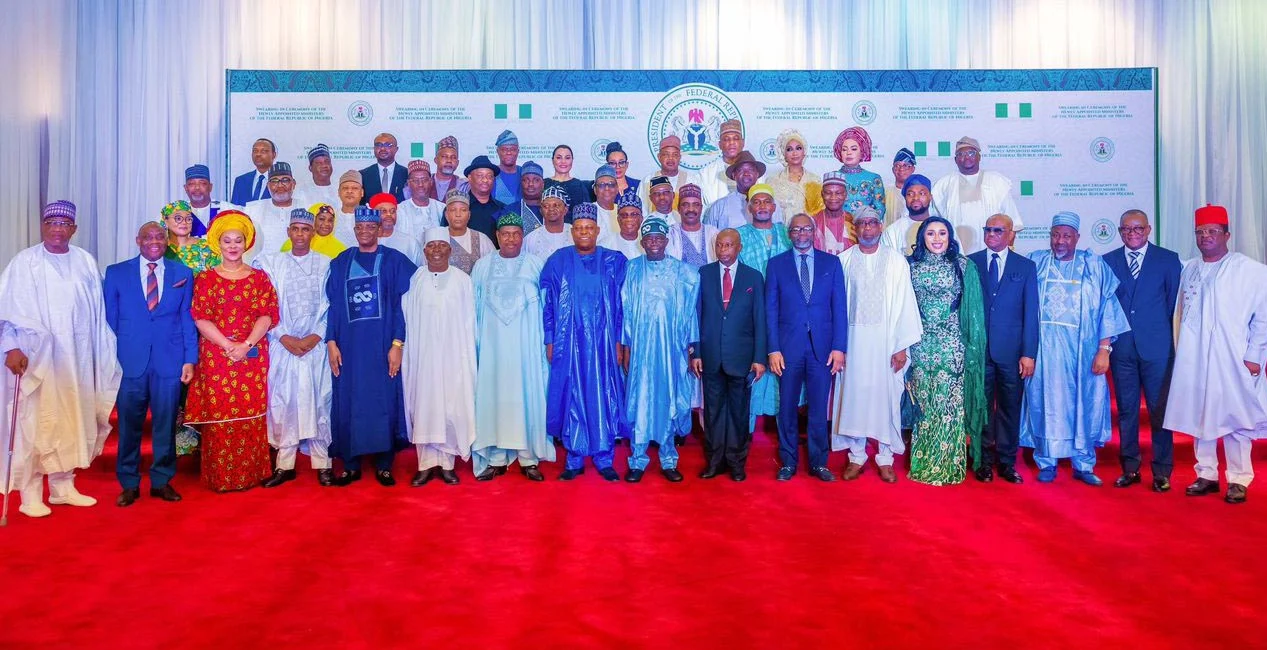
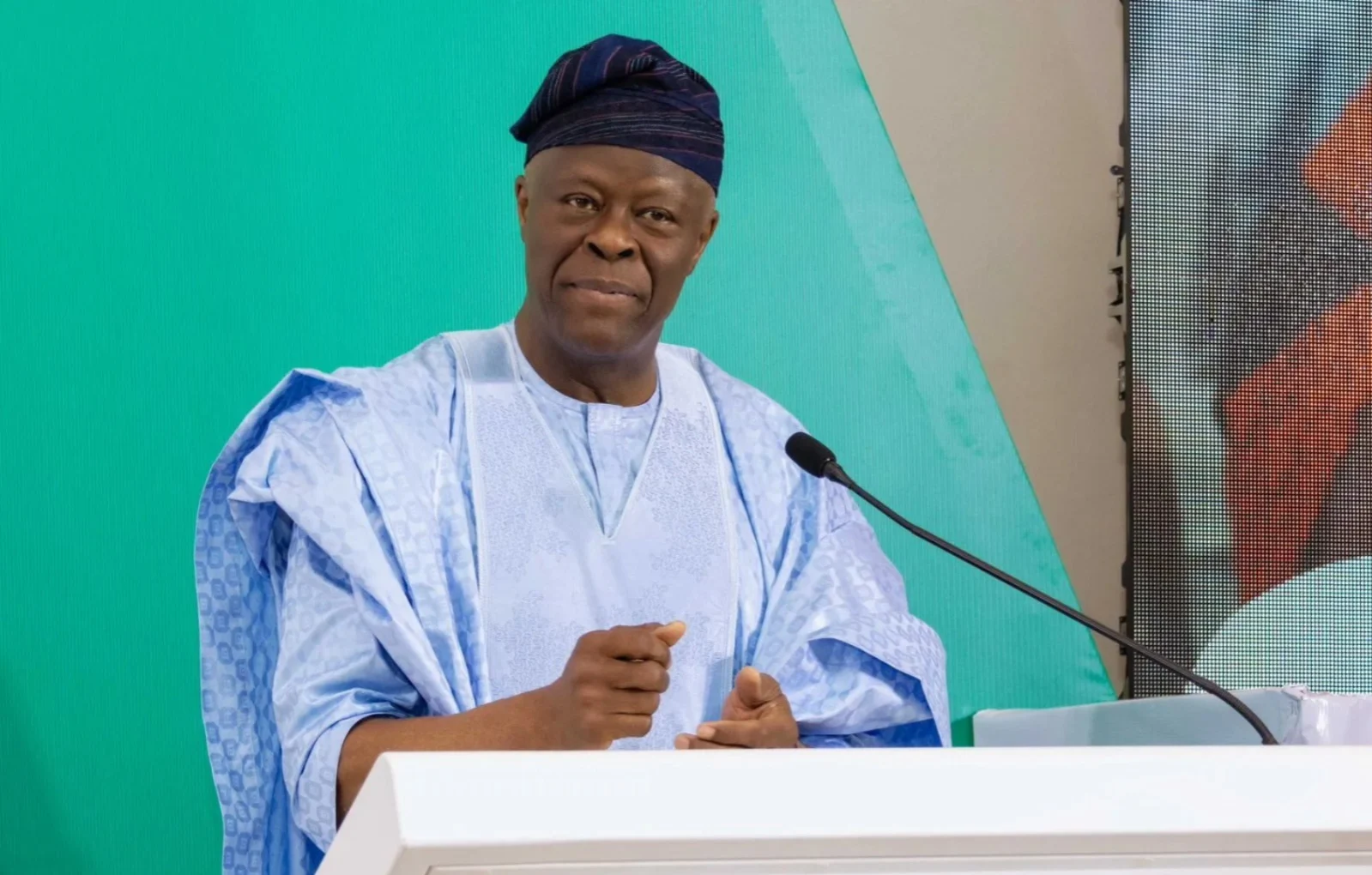
Experts at the 6th Annual Lecture of the social club, Just Friends held today at Bolingo Hotels in Abuja asserts that the escalating cost of governance is a major obstacle to Nigeria’s development. The event convened professionals and stakeholders across various sectors to discuss the implications of the high cost of governance on economic growth and social welfare. The guest speaker, Dr. Sam Amadi, a notable advocate for ethical leadership, emphasized that the financial burden of governance detracts from the effective allocation of the country’s resources. Referencing Transparency International’s 2023 Corruption Perception Index, which ranked Nigeria 14th out of 180 countries, the speaker pointed out that despite Nigeria’s wealth in natural resources, it continues to grapple with poverty and underdevelopment. “The inefficiencies and corruption in our governance systems result in significant resource wastage, hindering economic progress and diminishing the quality of public services,” the speaker stated. “What we require is transformative leadership that prioritizes accountability and professionalism over personal interests.” The discussion also highlighted the urgent need for systemic reforms to improve public sector efficiency. Participants agreed that strengthening institutions is vital for creating a favorable environment for sustainable growth. The speaker drew comparisons between Nigeria and countries like Norway and Finland, where effective governance has led to significant advancements in development and quality of life for citizens. (From left): Chairman of the Occasion, Olorogun Peter Igho; President of Just Friends Club of Nigeria(JFCN), Mr Fred Ohwahwa; Guest Lecturer, Dr Sam Amadi; Mrs. Eugenia Abu; Mr.Abdulhakeem Mustapha SAN and Managing Director, News Agency of Nigeria (NAN), Mallam Ali M Ali, during the 6th Annual JFCN Lecture in Abuja on Tuesday (5/11/24). Earlier, the President of the club, Mr. Fred Ohwahwa told the gathering that the choice of the keynote topic was informed by the Club’s concern for the deplorable condition of the Nigerian state. “From whatever angle you look at it, Nigeria is an apology to its vibrant citizens, the African continent, and the Black race. We are far behind in virtually all metrics of development. And this is in spite of abundant human and material resources the country is blessed with,” he lamented. Mr. Owahwa, a veteran journalist who was the Editor of the Guardian Newspaper, said apart from the public lectures, the club also indulges in charity works. “For us in Just Friends Club in Nigeria, apart from the Public Lecture Series, we place a lot of emphasis on reaching out to the needy in the society. We have made it a duty that every year, sometimes multiple times in a year, to reach out to them. We have visited Old Peoples Home in Kado, Orphanages in Gwarinpa, Karu, Kuje; children with disabilities in Kubwa and Anawim Home in Gwagwalada run by Catholic nuns.” A panel discussion featuring notable professionals and moderated by legendary broadcaster, Mrs. Eugenia Abu exhaustively deliberated on the subject of cost as well as governance models suitable for Nigeria and concluded that the greatest challenge to development of the Nigerian state was the failure of leadership. As the event concluded, attendees were called to action, urging them to advocate for a governance framework that emphasizes ethics and accountability, aligning with the aspirations of the Nigerian populace. The Just Friends Club’s initiative to foster such critical discussions reflects an increasing recognition of the essential role of governance in driving national development.
Kid-hostages and the trial of T-Pain’s regime

THE pictures match. Perfectly. Whenever freelance and hardened criminals released their kidnapped victims, those fortunate victims looked haggard, jaded, famished, hungry, disorganised, disoriented, and generally forlorn. Fortunate kidnap victims? Yes. The unfortunate ones do not come back alive even after family, friends and relatives had paid the usual steep ransom, or the negotiated variant. The pictures and videos of the #ENDBADGOVERNANCE protests prisoners who were arraigned in an Abuja court last week were replicas of the fares we have treated to and will still be treated to in our collective march into further darkness. The message embedded therein is that no matter who kidnapped you, you will end up being treated the same way. If the street kidnapper abducts you in your home or on the highway, you will be roughened up, starved, and tried. The torture and trial are embedded in the ransom negotiations and the constant threats to kill and throw your body to wild animals. If the security agencies of this emerging totalitarian state kidnap you, you will undergo similar experience. You will be imprisoned even before you get a day in court. You will be tortured possibly inside an underground dungeon. You will be starved. Like the victim of street kidnappers, you could be killed execution style. The street kidnapper has no mandate to preserve your life. The state kidnapper has a bounding duty of care for you. But it does not. And it is not often held to account. It has been said that if you want to measure the health or otherwise of any country, visit its prisons. Our country does not allow you to break that sweat. They bring the evidence of our diseased country to the court of law, and put it in open and public display. That was what happened in Abuja last weekend. Some Nigerians who protested against poverty, privations, hunger, and hopelessness imposed and inflicted on them by the dumb economic policy options taken by Nigeria’s president, Alhaji Bola Ahmed Tinubu’s regime, were arbitrarily arrested and herded into prisons. Many of the prisoners were minors even though the government worked hard to make us not to believe the glaring evidence before our eyes. All the prisoners looked withered and weather -beaten. But as we know, especially those of us who were in Biafra during the Nigeria -Biafra civil war (1967-1970), malnutrition has a way of ravaging and savaging younger people. If the minors who were shamelessly brought to court by agents of the state were to stay a little longer in prison, the footage the world would have seen could have competed with what was seen during the civil war. The minors of Abuja were in prison for three months and their images competed vigorously with the images of Biafran kids at the receiving end of starvation as a weapon of war for three years. This administration brought our children to court ostensibly pretending to seek justice but the world saw a demonstrably insecure regime which came to court not to prosecute but to persecute and to intimidate. The regime must have reasoned that if they made an example of their present set of hostages they could succeed in cowering the rest of Nigerians who do not agree with the direction that the country is headed. The irony which regime enforcers may not in their life be able to comprehend is that the minors and the young adults that they brought to court for persecution were the children of Tinubu. Yes, they were to the extent that in our part of the world the president is generally, even if sometimes misguidedly, regarded as the father of the nation. Since obviously Nigeria is not yet a nation, Tinubu might as well pass as the father of the country, a benighted one at that. If Tinubu is the father of the country, then Nigerian children and youths do not really need a father. A father protects, Tinubu does not. A typical father fights for his children, this one stands aloof. A father sacrifices for his children, this one gorges the children’s dinner and ravishes the grand children’s breakfast. If the minors of Abuja manifested tell-tale signs of starvation and malnutrition, could it not be because the state is focused in serving the vanities of our president and his cohorts by providing appointed jets, spectacular yacht, fancy sport utility vehicles (SUVs), vacations abroad, and luxury mansions in choice locations. If this regime were to have its way it would love for the spectacle of last week to continue. That explains why a captured judge in a cowed judiciary adjourned the sham case to January of 2025. In which jurisdiction except under an aspiring dictatorship would a citizen, and a minor for that matter, be slapped with charges of treason for protesting against bad governance, deprivation, and hunger? Where else? Without doubt, this regime has its designs for Nigeria and Nigerians, and those designs are not for the good of a majority of the people. And in this regard, Nigerians need to pay special attention to the Nigerian Police Force (NPF). This security agency does not leave Nigerians in any doubt that they are not on the side of the people. The hackneyed slogan that police is your friend is a ruse to lure citizens to sleep. This police is a friend of the regime, and the regime alone. If you are in doubt read and analyse the statement issued in the name of the inspector – general of police by the Force’s spokesman. Study what that statement said, and especially what it failed to say. The IGP said 76 persons were arraigned on charges including ‘terrorism, arson, and treasonable felony’. The statement proceeded to claim that the ‘suspects were initially presented in court, where they were formally charged, and a remand order was issued by the court’. You are invited to note that the date the suspects were presented in court was not stated, the cadre of the court was not
Tinubu Orders Release of Detained #EndBadGovernance Minors
President Bola Tinubu has directed the immediate release of minors detained in connection with the #EndBadGovernance protests. The order, which aims to reunite these young individuals with their families, was announced by the Minister of Information and National Orientation, Mohammed Idris, during a press briefing on Monday. Under the President’s instruction, Attorney-General of the Federation Lateef Fagbemi is set to lead efforts to secure the minors’ release. In apparent face-saving measure, a committee has been established to investigate the circumstances of their arrest and detention, with plans to hold accountable any law enforcement officials involved in improper actions. The directive comes in response to rising public concern, including appeals from the Arewa Consultative Forum (ACF), which recently condemned the treason trial of detained minors and called for their unconditional release. The ACF criticized the proceedings as inappropriate, especially given the youths’ participation in the peaceful protests held in August.
Still on the Guardian Newspaper Editorial Board faux pas

The Guardian Editorial Board’s recent article on President Tinubu’s excruciatingly painful economic reform policies and the call for military intervention and the response by the presidency sent shockwave through the polity. The Guardian is the icon of Nigeria print journalism. Mr. Bayo Onanuga, the spokesman for the presidency is undoubtedly one of the most respected in the journalistic business. Hence, beyond the merits of the argument for or against the journalistic propriety of the Guardian’s article in question, let me sincerely thank Mr. Bayo Onanuga for reminding us all of the lost great tradition of excellence in penmanship, the economy of word, analytical logicism, and the succinctness that once characterized the best of journalism in our country. Sadly, today that tradition has all but become a rarity. Some of the best in the business now routinely feed us long, unwieldy, incoherent, incomprehensible, emotion-laden, illogical, mumbo jumbo maze of word salad that is a torturous to go through. We are routinely fed with long articles that go on and on with Yoruba folklores, long tales, simile, metaphor, personification, hyperbole, irony, alliteration, onomatopoeia, and puns that are best left for comedic drama performances than journalism. I have often wondered whether today’s journalists including our brothers in the Tribune are compensated based on their word counts as opposed to the logic and journalistic excellence of their posts. What is mind-numbing, bewildering and frustrating is that both the Tribune and Guardian were once the flagship of excellence in journalism that many of grew up to know. Many of us develop a love for writing, from reading mesmerizingly beautiful prose in the Guardian, and the Tribune. Sadly, the same cannot be said today, of these great journalism icons for inspiring the next generation. Now to Mr. Bayo Onanuga’s rebuttal to the Guardian article. He is totally on point that the Guardian could have made the points it intended to make in the article, that is the misery and suffering being imposed on the populace by the policies of the Tinubu’s regime without leading with the call for military intervention. Even a first year student in journalism school knows that no part of an article receives more critical attention than the headline. That the headline/title is the most important part that conveys in few attention catching phrase, the intent of the article. The Guardian editorial board knew what it was doing when it chose the headline “Calls for military intervention: misery, harsh policies driving Nigerian military desperate choices”. It was nothing but a tacit acquiescence to the propaganda by a fringe population particularly in the north, who are advocating for military intervention as a way to regain what they perceive as their stolen birthright to rule the country in perpetuity no matter how incompetently and disastrously they have done so for decades. In the age of social media of X-Twitter, Instagram and the associated information overload, which has shrunk our attention span to nanoseconds, headlines have taken on much more importance than at any time. Most readers now routinely scan through news headlines without reading the body of the article. It is therefore the height of journalistic malpractice for the Guardian to lead with military take-over headline despite its tepid denunciation of military take-over. Yes, our country is going through arguably the most excruciatingly painful span of economic hardship and suffering in a generation, however, no objective analyst will pin the entire culpability for it on the less than 18 months old regime of President Tinubu. More importantly no rational thinking person, especially anyone who understands that the origin of our national disaster and dysfunction, including the apocalyptic Biafra war in which Nigerians turned deadly weapon against one another, could be traced to the military intervention in our nascent experiment with democratic governance during the first republic. Yes, our experience with democracy since 1999 has fallen woefully short of our expectations and has in fact left many of us despondent. Nonetheless, it is criminally irresponsible for any journalist, especially from an iconic flagship like the Guardian to even be remotely associated with advocating or justifying military intervention. What is so troubling is that this is not an isolated event. We have witnessed many highly respected journalists including and especially many highly influential Yoruba opinion writers, who have sought to normalize and whitewash the reprehensible, blood curling, ignominious murderous Abacha regime by equating the Tinubu presidency with that regime. We have highly placed Yoruba who have dropped the name of Hitler in the same sentence describing the Tinubu regime. We all must condemn in the strongest term this attempt by influential journalists from the Southwest to normalize evil and justify military intervention. The worse democratic government is better than the most benevolent military juntas. The antidote to a bad democratic government is not to sell our suffrage for a pot of military porridge, but to seek a change thorough the electoral process. President Tinubu was explicitly upfront with the electorate about what he would do if they gave him the presidency. He told everyone of us that he would remove the criminal fuel subsidy, and float the currency. He also alerted the citizens that his policy prescriptions would impose excruciating pain to the citizens, albeit temporarily, with a promise of a big pay-off at the end of the pain. The president went a step further doing what many political consultants would consider a kiss of death, by telling the people not to vote for him should his reform policies fail to deliver on its promise.Yet, less than two years to his presidency some irresponsible journalists are already joining the wacko crowd mostly from the north, to slyly advocate for military intervention by speaking from both sides of the mouth. That is totally unacceptable. It is journalism at its worst form. It must be roundly and unequivocally condemned by everyone.
Call for new presidential jet for VP Shettima, “Insensitive” – Peter Obi

Labour Party presidential candidate in the 2023 elections, Peter Obi, has criticized a call for a new jet for Nigeria’s Vice President, Kashim Shettima, calling it “insensitive” amidst the country’s economic struggles. The former Anambra state governor stated that Nigeria’s challenges, such as extreme poverty, unreliable power grid, and failing businesses, should be the priority of the country’s leaders and not luxury. He urged leaders to focus on essential trips and prioritize selfless service to uplift Nigeria’s development and welfare. “We are today among one of the eleven worst-governed African nations in the last 10 years. “We are also among the 20 most hungry nations in the world, with our people facing worsening mass poverty, extreme hunger and starvation. “Our nation remains the poverty capital of the world, with our per capita income crashing further from $1700 in 2023 to $1109 this year. Are these not the issues that should be prioritized by committed leaders?” Obi queried. Using Indonesia as an example, Obi stated: “It was not until 2014 that Indonesia, with sustainable economic growth of over 6% annually for the past 10 years, adding about 50% to both her GDP and GDP per capita, decide to buy a Presidential jet, used by both the President and Vice President. “The Vice President travels mostly in the country’s national airline, Garuda Indonesia. And since we have recently undeservedly bought one, it should be used on essential, inevitable trips of the President and Vice President. “I appeal to the President, Vice President, and our public office holders that our present precarious situation calls only for minimal and highly contributory inevitable travels. “It is time to sit down and find solutions to our litany of challenges for the wellbeing of the people and the development of our country. Nigeria will rise again if the leadership can commit to selfless service.”
Tinubu Orders Ministers, Heads Of Agencies to Travel in Convoy of Three Vehicles, Five Security Personnel

In a feeble effort towards cost cutting President Tinubu orders ministers and heads of agencies not to travel in a convey of more than three vehicles in their official convoys. A release by Bayo Onanuga, the Special Adviser to the President (Information & Strategy) on Thursday said this was a “reduction in cost of governance” measure by the Tinubu’s administration. The presidency added that Tinubu also ordered all ministers, ministers of state, and heads of agencies to have at most five security personnel attached to them. The security team would comprise four police officers and one Department of State Services (DSS) officer. The release said, “President Bola Tinubu has restricted Ministers, Ministers of State, and Heads of Agencies of the Federal Government to a maximum of three vehicles in their official convoys. No additional vehicles will be assigned to them for movement.” The cost-cutting measure was announced today in a statement signed by the President. In January this year, President Tinubu took significant steps to reduce government expenditure by reducing his entourage on foreign trips from 50 to 20 officials. For local trips, he reduced it to 25 officials. “He similarly reduced the Vice President’s entourage to five officials on foreign trips and 15 for local trips. In the directive issued today, President Tinubu also ordered all ministers, ministers of state, and heads of agencies to have at most five security personnel attached to them. The security team will comprise four police officers and one Department of State Services (DSS) officer. No additional security personnel will be assigned, he ordered. “President Tinubu instructed the National Security Adviser to engage with the Military, Paramilitary and Security Agencies to determine a suitable reduction in their vehicle and security personnel deployment. “All affected officials are expected to comply with these new measures immediately, underscoring the urgency and seriousness of these changes.”
FG confirms plans to raise VAT to 15%, limits increase to luxury goods

The Minister of Finance and Coordinating Minister of the Economy, Mr. Wale Edun, has confirmed that the federal government plans to raise Value Added Tax (VAT) to 15%, but clarified that the increase would primarily affect luxury goods. Speaking at an investor meeting during the ongoing IMF/World Bank Annual Meetings in Washington DC, Mr. Edun explained that a bill currently before the National Assembly aims to gradually raise VAT on luxury goods, while essential items consumed by poorer and vulnerable Nigerians would remain exempt from VAT or attract a zero rate. “In terms of VAT, President Bola Tinubu’s commitment is that while implementing difficult and wide-ranging but necessary reforms, the poorest and most vulnerable will be protected,” Edun said. “So, the Bills going through the National Assembly in terms of VAT will raise VAT for the wealthy on luxury goods, while at the same time exempting or applying a zero rate to essentials that the poor and average citizens purchase.” He added that the list of essential goods exempted from VAT will be made available to the public in due course. Mr. Edun also expressed optimism regarding Nigeria’s oil sector, noting that improved security in oil-producing regions and new investments, particularly by Total and ExxonMobil, would result in increased oil production and boost foreign exchange inflows. Addressing the issue of fuel subsidy removal, Edun disclosed that while subsidy reform was announced earlier, the full implementation only took effect last month. He emphasized that the savings from the removal would start to have a more significant impact on the economy going forward. In response to a question about the possibility of Nigeria entering an IMF program, Mr. Edun revealed that the Tinubu administration went ahead with the issuance of Domestic Dollar Bonds despite advice from the IMF against such a move. ReplyForwardAdd reaction
Surge in price of cooking gas: FG bans export of LPG

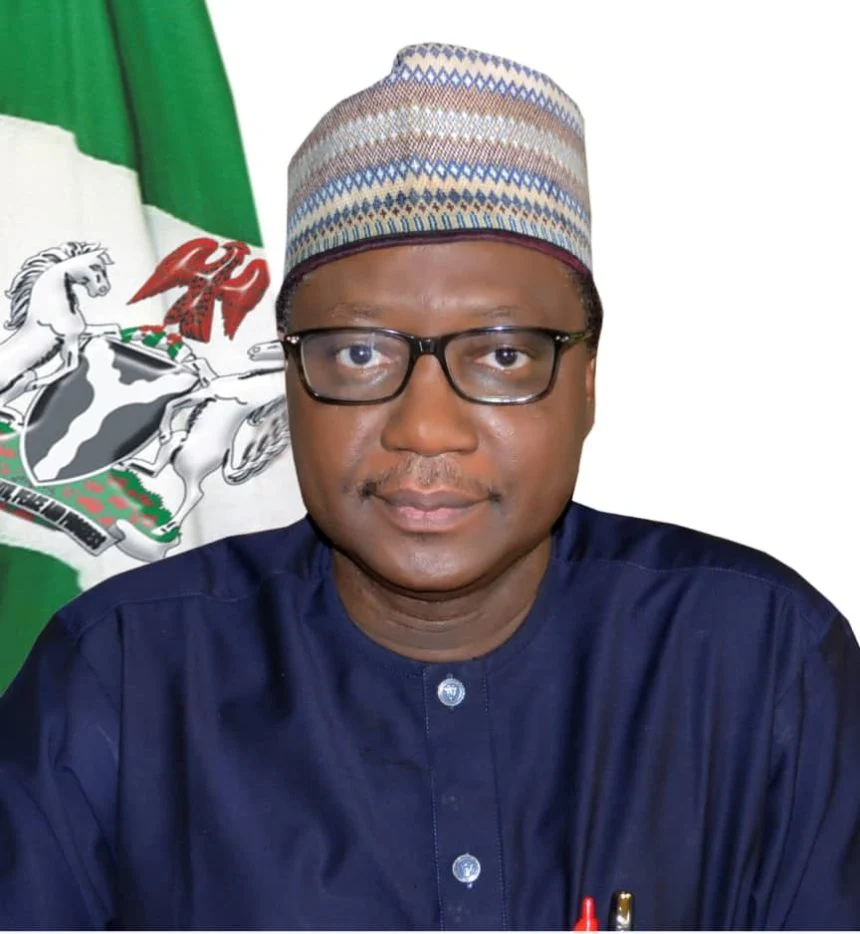
The Federal Government has banned the export of Liquefied Petroleum Gas (LPG), also known as cooking gas, produced in Nigeria, as the price of the commodity continues to soar. The Minister of State for Petroleum Resources (Gas), Rt. Hon. Ekperikpe Ekpo, expressed concern over the rising cost of LPG in a statement issued by his media aide. Despite efforts to stabilize prices, including the formation of a high-level committee in November 2023 led by the Authority Chief Executive of the Nigerian Midstream Downstream Petroleum Regulatory Authority (NMDPRA), Mr. Farouk Ahmed, prices have spiked from an average of N1,100-N1,250 per kg to N1,525 per kg. The statement highlighted that Ekpo convened a meeting with key stakeholders in the LPG value chain to address the escalating prices and the hardship they impose on Nigerians. As part of the government’s efforts to curb the situation, the Minister announced the following directives: Short-Term Solution: Effective from November 1, 2024, the Nigerian National Petroleum Company Limited (NNPCL) and LPG producers are to halt the export of LPG produced in the country. If they continue exporting, they must import an equivalent volume at cost-reflective prices. Pricing Framework: The NMDPRA will engage stakeholders within 90 days to create a domestic LPG pricing framework. The new framework will be indexed to the cost of in-country production, replacing the current system of using external market prices from regions like the Americas and Far East Asia. Long-Term Solution: Over the next 12 months, the government plans to develop infrastructure for blending, storing, and distributing LPG, with the aim of halting exports until domestic supply is sufficient and prices stabilize. The Minister emphasized that these measures are aimed at improving availability, ensuring affordability, and protecting Nigerians from the economic strain caused by rising LPG prices. ReplyForwardAdd reaction
Blaming the World Bank will not save our economy. Only us can

I stumbled on an article by one Mr. Ahmed Sule ( FCA). It is so disappointing to read. It is nothing but a regurgitation of the same well-worn World Bank blame game. There was not one single alternative policy prescription other than the usual finger pointing and externalization of our problem. Expectedly, Mr. Sule latched on the article in which the World Bank gave its analysis of the Tinubu reform, as the bogey-man. He did not even make an attempt to provide his own counter-point to the World Bank. He failed to provide his position on the Tinubu economic agenda other than a listing of the pains it has inflicted on the populace. The president in his inaugural address stated clearly that his proposed economic reform agenda was going to be excruciatingly painful. He stated unequivocally that he was going to remove fuel subsidy and that he was going to float the currency. He did not trick the electorate. He also told the citizens to render their judgement on the performance of his reform policy with their votes in 2027. Mr. Sule in his social media post pretended as if our economic nightmare began with or was precipitated by the Tinubu regime. He had nothing to say about our profligate and obscene economic mismanagement dating back to the mid 1970s-early 80s during which we frittered away our oil windfall like drunken sailors on a pirate ship. World Bank bashing has been our default excuse for our collective failure since the 1986 IMF SAP debacle. We focused on SAP rather than its predicate. We never asked ourselves the hard question about what we did wrong with all the stupendous oil windfall that accrued to our country, and why we ended ended up prostrate in 1986 crawling on our belly to the World Bank and IMF for a bail out. “Have we forgotten the commonwealth fund that was proposed by Sister Ngozi Okonjo Eweala during the President Jonathan regime to put away our excess oil revenue for the rainy day but rejected by the governors, or the hubris of young General Gowon who in the 70s declared that our country’s problem was not lack of money but how to spend it? Now we all have to endure the lean years we didn’t make provision for, in order for us to survive and be here when hopefully the years of abundance come back again.“ The World Bank does not force itself on any country. Countries choose membership of the World Bank out of their free will. They usually approach the World Bank for low interest loan when they are totally out of luck and option, unable to access finance through the open financial market because they have mismanaged their credit worthiness. That was the position Nigeria found itself in 1986. Even after General Obasanjo was able to get a big chunk of our debt written off by the World Bank and other multilateral financial institutions we were indebted to, did we take advantage of that? No, we didn’t. Our politicians continued unabatedly to plunder our commonwealth and they still do. The Bible says the debtor is a slave to his creditor. So, when countries like Nigeria have run out of options and are forced by their desolate and desperate circumstances to crawl on their bellies for financial life wire, of course like the slave described in the Bible to their creditors, they are forced to go on a forced diet (conditionalities) in order to access the low interest loan and sometimes outright grants that the World Bank offers due to the “generosity” of the donor members. We need to know that donors do not donate their fund to the poor out of philanthropy and benevolence. Foreign aids are a tool of promoting national hegemonic advantage. There are no free lunches in international relations. U. S and Europe are not funding the Ukraine war necessarily because of their love for the Ukrainians. They are dropping billions of ammunition and weapons of death into Ukraine to fight Russia because it advances their geopolitical agenda against Russia. It also creates opportunity for the military industrial complex to dispose their unused weapons, to test new one and create jobs in their local economies. We will be wise to understand that our economic success lies with us doing the hard work of national building and advancing our economic interest in an amoral, survival of the fittest, rigged global economic system. We should never again put our country in the position in which external financial institutions dictate or have a veto on our economic policies. China can tell the World Bank to go to hell with its economic prescriptions. In fact China has created its own alternative to the World Bank. As we romance China, we would be wise to learn that China like the West before it is not a benevolent Father Christmas doling out free money for its Silk Road project. “The capital asset of the “World Bank” is minuscule compared to those of global behemoths like the JP Morgan Chase, the China Bank of Industry, or the Bank of America. The world number one bank, China Industrial and Commercial Bank has total assets of $6.3 trillion. By comparison, the World Bank had just about $200 billion of assets under management. The World Bank would not rank among the top 50 banks in the world. In fact, there is a debate whether the term bank can truly be applied to the World Bank.“ The phrase “ World Bank” is in fact a gross abuse, misuse and exaggeration of the financial muscle of the “ World Bank”. When the phrase World Bank was used at its founding it represented an extreme case of hubris. The capital asset of the “World Bank” is minuscule compared to those of global behemoths like the JP Morgan Chase, the China Bank of Industry, or the Bank of America. The world number one bank, China Industrial and Commercial Bank has total assets
Senate confirms appointment of 21 RMAFC commissioners

In further update of a burgeoning governance superstructure, the Senate today confirms the appointment of 21 federal commissioners for the Revenue Mobilization Allocation and Fiscal Commission. The Commission is an agency of the federal government presiding over the sharing of oil proceeds and other revenue of the government. It has the responsibility of also deciding the remuneration of the president and other political office holders. The new commissioners whose appointments were ratified by the senate are: Linda Oti (Abia) Akpan Effiong (Akwa Ibom) Enefe Ekene (Anambra) Prof. Steve Ugba (Benue) Chief Eyonsa (Cross-River) Aruviere Egharhevwe (Delta) Nduka Awuregu (Ebonyi) Victor Eboigbe (Edo) Wumi Ogunlola (Ekiti) Ozo Obodougo (Enugu) Kabir Mashi (Katsina). Adamu Fanda (Kano) Dr. Kunle Wright (Lagos) Aliyu Abdulkadir (Nasarawa) Bako Shetima (Niger) Samuel Durojaye (Ogun) Nathaniel Adejutelegan (Ondo) Saad Ibrahim (Plateau) Modu-Aji Juluri (Yobe) Bello Garba (Zamfara) Mohammed Usman (Gombe).