Labour Calls for Nationwide Protest Over Telecom and Electricity Tariff Hikes

The Nigeria Labour Congress (NLC) has warned the Federal Government of a nationwide protest if it moves forward with the proposed telecommunications and electricity tariff increases that go against previous agreements. The NLC has instructed all its branches to prepare for action if the government proceeds with the telecom tariff hike, which was initially set at 50%. Despite reports suggesting that a compromise was reached, reducing the hike to 35%, telecommunications companies say they have not received any official communication about the reduction. They claimed that without a formal notification from the Nigerian Communications Commission (NCC), they cannot act on the agreement. In addition to the telecom issue, the NLC has voiced strong opposition to the Nigerian Electricity Regulatory Commission’s (NERC) plans to reclassify electricity consumers. The NLC accused NERC of unfairly shifting consumers from lower to higher tariff bands, which would lead to higher bills. The union has declared that any further increase in electricity tariffs would lead to massive protests. The NLC also criticized the Minister of Power, Adebayo Adelabu, for overstepping his role and taking actions that should be handled by NERC. The union has made it clear that they will not stand by while the government continues policies they consider harmful to the Nigerian public. The NLC’s recent decisions were made during a meeting in Yola, Adamawa State, where they also launched a new mass transit bus initiative for the North East Zone.
FCCPC summons MultiChoice over planned price hike

The Federal Competition and Consumer Protection Commission (FCCPC) has summoned MultiChoice Nigeria to explain its decision to raise subscription prices, a move set to take effect on March 1, 2025. In a statement released on Monday, the FCCPC directed MultiChoice Nigeria’s Chief Executive Officer to appear before an investigative hearing at its headquarters on February 27, 2025. The Commission cited Sections 32 and 33 of the Federal Competition and Consumer Protection Act (FCCPA) as the basis for the summons. The action follows MultiChoice’s formal announcement of the price adjustment, raising concerns over frequent price hikes, possible abuse of market power, and anti-competitive practices in Nigeria’s pay-TV industry. The FCCPC noted that Nigerian subscribers face repeated increases, while reports suggest MultiChoice applies different pricing models in other countries. The regulatory body warned that if the company fails to provide a satisfactory explanation or is found to have violated fair market rules, it could face penalties, sanctions, or other corrective actions. To address these concerns, the FCCPC is working with the industry regulator and other relevant agencies to ensure fair pricing and protect consumers in the pay-TV market.
30 Dead In Abuja, Anambra Palliative Stampede

Two separate stampedes in Anambra and Abuja on Saturday left a combined total of 30 dead and several others injured. In Ihiala Local Government Area of Anambra, 20 people lost their lives during the annual Christmas rice distribution by the Obi jackson Foundation. The event, known to attract large crowds, turned deadly as people surged forward when distribution began. Victims, mostly women and youths, had gathered from early morning. SEE ALSO: NSIPA CEO Felicitates With Nigerians At Christmas Many were rushed to a local hospital, where chaotic scenes were captured in a viral video. In Abuja, a food distribution at Holy Trinity Catholic Church in Maitama claimed 10 lives, including children. Over 3,000 residents, primarily from Mpape and nearby settlements, gathered to receive palliatives. The stampede occurred early in the morning as the crowd pressed forward. Security forces were later deployed to restore order, and the church suspended further distributions. Authorities have urged organizers of such events to prioritize safety and notify security agencies in advance to prevent future incidents. The latest incidents in Abuja and Anambra brings to 65, the number of persons that have been killed at stampedes arising from the rush to collect foodstuff in one week. Earlier, 35 children were reported killed in a stampede at Ibadan, Oyo State, South West Nigeria as funseekers rushed to collect foodsuff at a funfair, Wednesday, this week.
The real persons living ‘fake good life’

WE will do the unusual in our discourse today. We will copiously quote Nigeria’s president, Alhaji Bola Ahmed Tinubu, in his address to a university convocation about two weeks ago. But first the summary of what he said. He claimed in his usual unconscionable, insensitive, provocative and uncaring manner that the ‘good life’ Nigerians had enjoyed before he happened to the presidency was fake, unreal, undeserved, and contrived. He said that that life was bogus, founded on falsehood, and erected on nothing really. He said we lived the life of, to use a local parlance, 419ers. Four one nine (419) is a clause in Nigeria’s criminal code that deals with obtaining by false pretext. In other words, in the president’s full contemplation, Nigerians were all 419ners or were made to appear so until he came and removed the so-called petrol subsidy on May 29, 2023. What a man. What callousness. What a president of a people going through severe privations visited on them by himself. Tinubu said, as widely reported in the media during the 34th and 35th combined convocation ceremonies of the Federal University of Technology, Akure (FUTA) in Ondo state: “As you are all aware, we took the baton of authority at a time our economy was nose-diving as a result of heavy debts from fuel and Dollar subsidies. The subsidies were meant to support the poor and make life better for all Nigerians. We are all aware of the fact that the poor and average Nigerians were the sufferers of what was supposed to give them succour and improved standard of living. Unfortunately, the good life we (other Nigerians really) thought we (they) were living was a fake one that was capable of leading to a total collapse unless drastic efforts were urgently taken. The need to salvage the future of our children, and bring the country back from the brink of collapse necessitated the strategic (thoughtless) decisions to remove the fuel subsidy and also unify the exchange rate”. ‘Unify the exchange rate’ was an euphemism for what has turned out to be the current and sustained devaluation of the Naira. But as we write the Naira is gaining in value due largely to the recently issued Euro bond (yet another debt) which was made attractive by high coupon rates offered to ‘hot money’ and volatile foreign portfolio investors (FPIs); the new mechanism introduced by the central bank for FX traders (usually banks); and, the influx of dollars from diaspora Nigerians who are home for the Christmas and New Year celebrations. READ ALSO: Farotimi Brought to Court in Handcuffs, Granted Bail For a start here’s the immediate fallout of the regime’s claim about securing the future of Nigerian children. Recently there was a report that a consultant in one of Nigeria’s foremost teaching hospitals had raised an alarm that many children in our country were presenting with kwashiorkor. In 2024? Damn it! This is not only a national embarrassment but a grave national disaster. There has been no time since the Nigeria -Biafra civil war that kwashiorkor had posed a clear and present danger to the country than today. And this is all down to Tinubu’s economic ‘rescue mission’ and Renewed Hope mantra. For our casual information kwashiorkor is a disease that affects children who don’t have access to enough protein in their meals. Its early symptoms include but are not limited to fatigue, irritability, lethargy, growth retardation, loss of muscle mass, swelling and severely eroded immunity which makes room for other opportunistic diseases to strike. I saw this image live as a child in the defunct Republic of Biafra in the late 1960s. The legs of a kwashiorkor victim look like tiny sticks and s/he presents a protruded stomach which is filled with rotten gas. There are exceptions but generally kwashiorkor leads to poor brain development and low IQ, that’s, if the child survives. The frightening dimension is that the findings claim that the outbreak of kwashiorkor is across all the zones of the country. It has to be said, no matter how offensive our current rulers may consider it, that the prevailing outbreak of kwashiorkor in this country is a direct result of the pervasive hunger situation which now borders on starvation. And this is down to the grossly misguided economic policies of the All Progressives Congress (APC), and Tinubu. If Nigerians lose their children to death through kwashiorkor or stunted growth in body and IQ, then the claim by the extant regime that it is fighting to secure the future of the country becomes questionable. Whose future? And for whom? It has to be stated that kwashiorkor is not an infectious disease, and so it can be arrested and reversed within weeks with diets that are rich in protein and sundry wholesome foods. Even before the kwashiorkor story broke UNICEF had revealed that “around 11 million children in Nigeria, or one in every three children under five years of age”, were “experiencing severe child food poverty, making them up to 50% more likely to experience wasting, a life – threatening form of malnutrition”. (Apparently UNICEF restrained itself from using the word kwashiorkor). But how can the prevailing food insecurity situation and the attendant kwashiorkor be reversed with a majority of Nigerian families struggling for access to basic foods. Just before Nigeria’s affliction, Maj Gen. Muhammadu Buhari, left the presidency in 2023, the National Bureau of Statistics (NBS) had reported that about 133 million Nigerians were suffering from multidimensional poverty. By the level of today’s suffering where two-thirds of families in Nigeria can hardly afford one decent meal a day, the Buhari era could as well be classified as being among the good old days. Certainly, the figure of the dimensionally poor in Nigeria could be in excess of 150 million people today. PLEASE READ: Nigerian Airforce Strike in Katsina Community Causes Collateral Damage In Tinubu’s reckoning the ‘fake good life’ that many Nigerians lived before he happened on the country and yanked off
Nigeria, Brazil sign pact to Further Collaboration in Agricultural Transformation

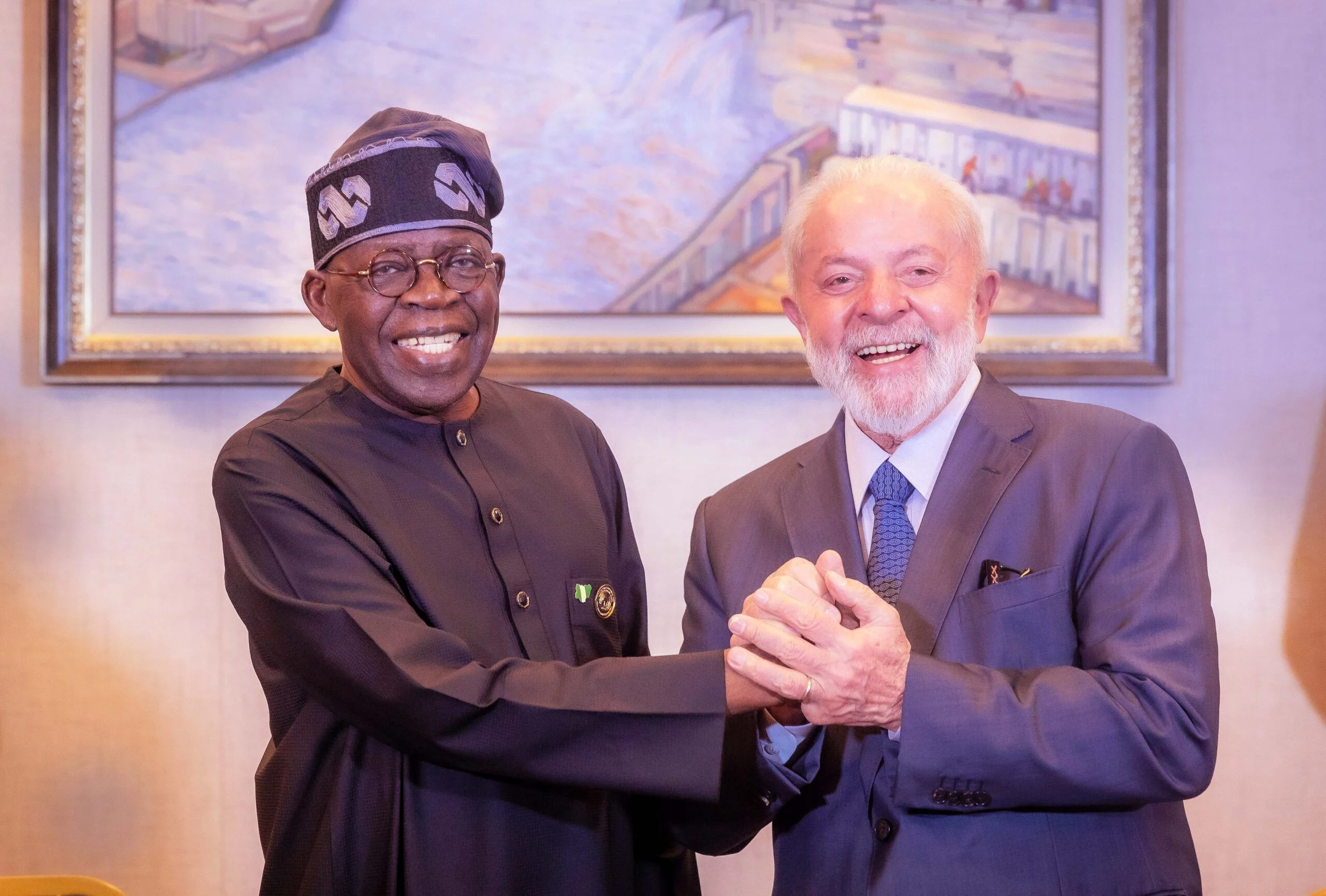
Nigeria deepens its economic ties with Brazil as she signs an MoU with the South American nation’s Fundação Getulio Vargas (FGV). The new pact is aimed at stimulating private sector growth within Nigeria’s agricultural industry. The agreement, covers several key areas including fertilizer production, hybrid seed development, and agricultural finance. The agreement was signed in Rio de Janeiro, Brazil, on the sidelines of the G20 Leaders’ Summit. READ ALSO: MINIMUM WAGE: NO GOING BACK ON DEADLINES, SAYS NLC The MOU was signed by Mr. Temitope Fashedemi, Permanent Secretary of the Nigerian Ministry of Agriculture and Food Security (FMAFS), and Professor Carlos Ivan Simonsen Leal, President of FGV. This partnership marks a new phase in the ongoing collaboration between Nigeria and Brazil, which has already been in motion through the Green Imperative Project (GIP). This project, valued at $1.2 billion, is aimed at modernizing Nigerian agriculture with the help of Brazilian expertise in tropical farming. The Green Imperative Project, which was first initiated in 2018, represents a significant international cooperation effort. Over the course of the project’s ten-year duration, it will focus on transferring advanced agricultural technologies and best practices from Brazil to Nigeria. The aim is to make Nigerian agriculture more efficient, sustainable, and capable of supporting the country’s growing population. The project is designed to support agribusinesses across Nigeria’s 774 local government areas, providing them with both the financial and technical resources needed to thrive. With an eye on sustainable economic growth, the initiative will focus on fostering businesses that can contribute to Nigeria’s food security and economic development. Moreover, the MOU aims to attract private-sector investments totaling $4.3 billion, directed toward vital sectors like fertilizer manufacturing, seed innovation, and agricultural finance. By attracting such investment, the project hopes to create lasting improvements in Nigeria’s agricultural landscape. The signing ceremony, attended by Nigerian government officials and FGV leaders, signals the beginning of a strong partnership that is expected to bring meaningful change to Nigeria’s agricultural economy.
Kano Governor Returns Minors Arrested For Protesting to Parents

Kano State Governor, Abba Yusuf, has returned 76 minors detained during the August #EndBadGovernance protests to their families. The handover took place on Thursday at the Muhammadu Buhari Specialist Hospital, where the children had been cared for after being arrested for their involvement in the protests, which called attention to governance issues in Kano and Nigeria at large. Governor Yusuf, represented by his Chief of Staff Shehu Sagagi, acknowledged President Bola Tinubu’s role in securing the minors’ release. In his address, he urged parents to collaborate with the state government in providing quality education for their children, which he believes is key to the state’s growth. He also cautioned parents against using any associations to solicit funds, as such behavior would not be tolerated. Kano’s Education Commissioner, Haruna Doguwa, shared that steps had been taken to support the minors’ educational journeys, including providing school uniforms for 50 of them. Additionally, a final-year student protester would be assisted in completing their studies, and another with a National Certificate in Education would be given a job. Health Commissioner Dr. Abubakar Yusuf confirmed that the minors had all received medical treatment during their stay at the hospital before being reunited with their families. The event also saw former Sokoto State Governor, Attahiru Bafarawa, donate N50,000 to each child for their education.
How not to revamp the national economy

ALHAJI Bola Ahmed Tinubu violently shook and severely unsettled the national economy in the first few hours after he assumed office eighteen months ago. That of its own could not have been a problem. What manifested down the line was the real issue – Tinubu had no discernable plan to methodically work on an economy that, it must be acknowledged, had been dealt a severe blow by a serial bungler, one Maj.-Gen Muhammadu Buhari, the affliction who passed through here masquerading as a president. If this country were to be a human being what Buhari inflicted on it between 2015-2023 would have had more severe and deadlier outcome than the COVID-19 pandemic that swept through the globe in 2020/2021, leaving millions dead in its wake, destroying economies, and permanently impairing the health of many people worldwide, especially those with pre-existing health challenges. And Nigeria when Tinubu took the helm had pre-existing political and economic conditions. But instead of stemming the hemorrhaging, he made it worse. Tinubu clearly mistook naivety bordering on ignorance for courage when he declared on May 29 last year that subsidy was gone. The spirit that he said led him to act in such a manner was the evil spirit. That same spirit drove him to act in such a manner in the foreign exchange market. The combined effects of those impulsive actions are responsible for our severely depressed and damaged economy and the littering of the landscape with human skeletons. Everything that followed had added to compound the dire straits this country has been consigned to in less than two years. The greater tragedy is that the regime is still digging, assuring only itself that it was on the journey of great economic reforms. Though it has no benchmarks and timelines for its promised dividends of democracy, it keeps assuring of light at the end of the tunnel. It’s now obvious that this regime believes that the vigorous and mindless application of a narrow monetary policy instrument alone will cure the many ills afflicting Nigeria’s economy. Through the central bank of Nigeria (CBN), it has misguidedly pursued taming the rampaging inflation which, by the way, it caused by its own impulsive decisions early in the life of the administration through the so-called petrol subsidy removal, and the attempt at market-determined value of the Naira. Both policies have spectacularly failed in spite of the concerted efforts by the regime to put a spin to them. Let’s explain why we argue that the twin policies have already failed. When Tinubu announced the scrapping of the so-called petrol subsidy in May 2023, Nigeria had no petroleum resources minister and no cabinet. And 18 months down the line, the country still does not have an oil minister. Information adviser to the president, Bayo Onanuga, said this much recently in a national television interview. Crude oil generates about 80% of our national revenue, and until recently the country imports 100% of the petroleum products for domestic consumption, and has had no dedicated minister for almost two years. It only has a junior minister or what we call minister of state. Furthermore, there has been no physical manifestation of the gains from the removal of subsidy. If anything, we have suffered from the illusion of money, that is, a situation where the federal and state governments get more money from the federation account which has had no tangible impacts in the lives of the people. The national minimum wage has been increased from N30000 to N70000, but in real terms the value of the minimum wage is less than what it was about 40 years ago. Indeed, the Nigerian Labour Congress (NLC) and other workers’ unions are gearing for a further upward review of the minimum wage barely two months after it was passed into law. More than 70% of the country’s 36 states and the federal capital territory have not even started implementing the new wage. Every increment in salaries and wages impacts inflationary trends. In Nigeria it has been a constant case of the monetary and fiscal policies in misalignment. It’s obvious that salaries and wages are the least of the problems at the root of galloping inflation. The government is implicated with its voracious appetite to borrow in our name, and steal or spend on consumption. At a time the CBN pretends to be fighting inflation by mopping up money in circulation, bank credits to the government are experiencing a phenomenal rise. Data from the central bank showed that credit to the government rose by 89.9% year-on-year to hit N42.01 trillion in September, up from N22.13 trillion in the corresponding month last year. The clear implication is that the Tinubu regime relies almost exclusively on offshore loan facilities and domestic borrowings to run. According to the report, “When government credit levels rise, it indicates that it is increasingly borrowing from the financial sector, particularly from domestic banks and other lenders. This rise in borrowing generally reflects an increase in government debt, as funds are sought for financing various operations, social programmes, and budget deficit coverage”. The surge in banks’ credit to the government is in conflict with the stated drive of this administration. In August 2023, President Tinubu had vowed that his government will break the reliance on borrowing for public spending. One year on the evidence points to the contrary. Domestic and foreign borrowings have surpassed every projection, and there’s no end in sight. When a government sucks up credit from banks other potential investors are crowded out and production is negatively impacted. So where’s the basis and expectations for economic revival? When Tinubu spoke last year of curbing government’s appetite for credit from domestic banks it was at the inauguration of the presidential committee on public policy and tax reforms. Coincidentally, the report of that committee chaired by Taiwo Oyedele, one of the tax czars of Tinubu, which has taken the form of a bill now with the national assembly, is facing a vigorous pushback from
IPMAN Partners with Dangote Refinery for Direct Product Supply

The Independent Petroleum Marketers Association of Nigeria (IPMAN) has reached an agreement with Dangote Refinery to procure petroleum products directly for distribution. Abubakar Garima, IPMAN’s National President, made the announcement in Abuja after a meeting with the Association’s National Working Committee. The partnership aims to guarantee a consistent and affordable supply of petrol, kerosene, and diesel across the country. Garima shared that following discussions with Aliko Dangote and his team in Lagos, Dangote Refinery will provide IPMAN with products directly for its depots and retail outlets. Garima encouraged members of IPMAN to support Dangote Refinery, highlighting the benefits of using local refineries, which will create jobs and boost the nation’s foreign exchange. He also expressed confidence that the partnership would lead to competitive pricing. Regarding the shift to Compressed Natural Gas (CNG), Garima mentioned that IPMAN is preparing for the establishment of CNG refueling stations across Nigeria. He emphasized the potential economic benefits of CNG and reaffirmed IPMAN’s commitment to working with the Federal Government to ensure the success of the transition. This partnership between IPMAN and Dangote Refinery is set to improve the efficiency and affordability of Nigeria’s petroleum sector while fostering economic growth.
High Cost of Governance as an Impediment to Development

By Dr. Sam Amadi As Nigeria’s first lawyer, Sapara Williams stated, the lawyer lives for the wellbeing and direction of his society. The obligation to promote the wellbeing of the society is not just for the lawyer. It is for all professionals. There is a special obligation on the professional to work for the good of the society. Because Just Friend Club is a club of professional men and women, I think I should say something about professionalism, the professional and the future of Nigeria. The Professions, Professionals and the Public Good We have many professionals in public and private leadership in the country. With such array of well educated and nurtured people you would expect a high degree of ethics and competence in corporate and public leadership in Nigeria. But that is not the case as shown by Nigeria’s poor rating in corruption perception index and other indicators of public probity. Nigeria is also very poor in the rating of state effectiveness. The Transparency International rated Nigeria 14th out of 180 countries in the world in the 2023 Corruption Perception Index. This comes to 25% where 0 is highly corrupt and 100% is very clean. Nigeria is also doing badly on the Mo Ibrahim Index of African Governance (IIAG) and the World Intellectual Property (WIPO) ranking on Global Innovation Index. In the former, Nigeria ranked 33 out of 54 African countries, with 45.7% out of 100%. On state effectiveness index, Nigeria does very badly. In 2022, Nigeria’s score was -1.04, which was a decline from -1.03. The world average score was -1.05. State effectiveness is a measure of the capacity of the state’s public sector to formulate and implement policies in a manner that achieves good governance and development. An ineffective state means that the bureaucracy is not strong enough to implement transformative policies. Nigeria faces an acute crisis of values which reflects in the gross lack of productivity in both its private and public sectors. Nigeria is abundantly blessed in natural resources. As a world leading producer of oil, we ought to be richer than we are. But we know that the wealth of nations does not come mostly from natural resources. Countries like Singapore and South Korea are not so much naturally endowed. In fact, they are geographically constrained in many ways. But Nigeria won the geographical lottery in many ways. Yet are in many ways victim of Dutch Disease. Natural resources have not translated into wealth. They have mostly turned into a curse. Natural resources in themselves are not a curse. They are a blessing. But a blessing that call for more work to turn them into lasting benefit to the people. Some of the Scandinavian countries are endowed with oil like Nigeria. They turned theirs into a blessing through smart policies and management. For them, oil resources have lubricated national innovation system that has made them high income economies. Examples are Norway and Finland. Nigeria’s travail is partly the lack of good leadership that can mobilize citizens towards a virtuous path of productivity. Such leadership is often described as transformative or redefining. In his book on public leadership titled ‘The Myth of the Strong Leader, Achie Brown, Oxford University emeritus professor of politics, argues that redefining leaders are those who lead their country away from the unpleasant past and toward a better future. Such a journey requires adaptivity, which could be very difficult. It is the genius of redefining leadership that the people get to learn the hard lesson and embrace new values and practices that will ensure economic development and social transformation. At the heart of leadership, whether transformative or redefining, are values and value-based practices. These values and value-based practices are usually sourced from the practice of the professions. The professions are human endeavours that highlight the highest levels of expertise, responsibility and corporateness. These are the three elements of a profession. We expect that a professional is a person of high expertise in a specialized area of human activity. A professional is also a person with overriding sense of responsibility, first to his or her craft, and second to the society which the profession serves. A professional is also guided by a deep sense of corporateness. That is, he or she is trained to subordinate his or her personal interests for collective good. These three elements of professionalism influence the direction of national politics and the economy. Where professionals manifest high levels of technical and ethical expertise and show a high degree of responsibility to the ethics of their profession and able to subordinate the pursuit of personal interest to the good of their profession and society, we see an uplift in the productivity and probity. We see the society rate high in state effectiveness and low on corruption perception index. Arising from the above, is the proposition that the problem of high cost of governance in Nigeria relates to the problem of the crisis of value, which is partly a problem of the crisis of professionalism. Anyone who reviews the economic and social indicators of development for Nigeria in the First Republic and early in the Second Republic will see a marked difference with contemporary indicators. There is a great decline in any of these vital indicators of human and social development. These declines are somewhat parallel to the decline in professionalism in the same period. If we measure the quality of professionalism by the ratings of Nigeria’s tertiary institutions and the level of knowledge production and ethical conducts of Nigerian professionals, we can conclude that loss of professionalism leads to stagnation in development. It is Bureaucracy, Stupid: There are three importance elements of public governance. The first is institution. The second is policy. The third is bureaucracy. Institution is now an important buss word in political economy discourse. Two economists and a political scientist were awarded the 2024 Nobel Prize in economics for their work that illuminate the importance of institutions to economic development. Daren Acemoglu, James Robinson and
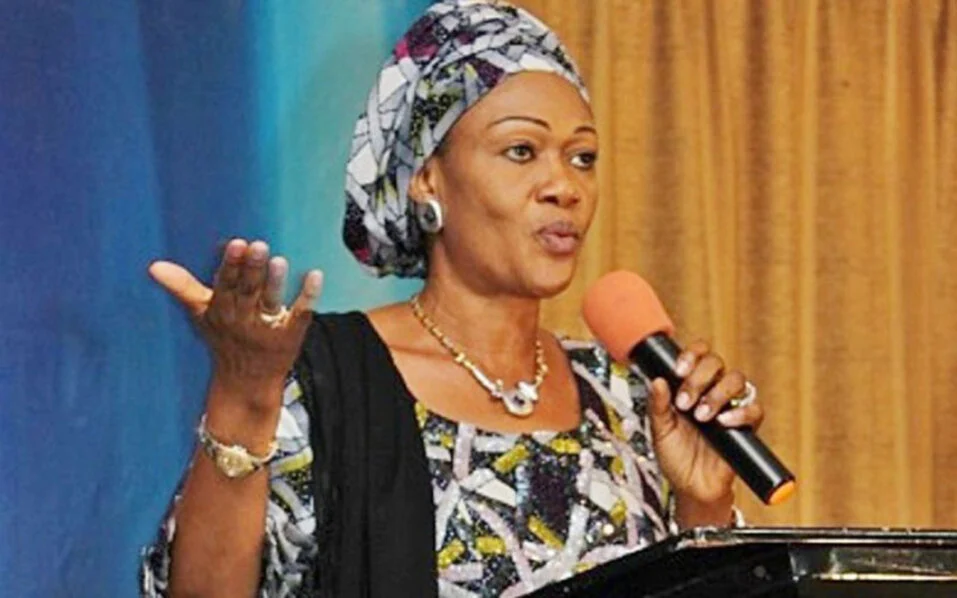
First Lady Remi Tinubu Denies Organizing National Prayer Event

The Office of the First Lady of Nigeria has dismissed circulating reports suggesting that Senator Oluremi Tinubu is organizing a national prayer event. Speculations had emerged, alleging that the First Lady, alongside National Security Adviser Nuhu Ribadu, planned to lead the prayer session. This purported event sparked widespread debate, with some Nigerians questioning its necessity amid ongoing economic challenges. In response, the First Lady’s media team clarified that no such event is being planned. They described the reports as baseless and urged the public to disregard them. Citizens were advised to rely on official channels for accurate information about activities involving the First Lady. This clarification serves to address public concerns and prevent the spread of misinformation.