Emefiele’s trial: Buhari’s approval for Naira redesign tendered as exhibit

Exclusive: ABP Failure: FG, RIFAN Initiate Nationwide Loan Recovery Drive

The approval of former President Muhammadu Buhari for the re-design of Nigeria’s currency, the Naira, was on Tuesday tendered and admitted as exhibit before the High Court of the Federal Capital Territory (FCT) in Abuja. The approval dated October 6, 2022 from the State House and personally signed by the former President was conveyed to the Central Bank of Nigeria (CBN) under Godwin Emefiele as governor to proceed with the project of redesigning and printing of the currency. The Chief of Staff to President Buhari was said to have transmitted the written Presidential approval to the CBN. Also tendered and admitted as exhibits are samples of the re-design currency as approved by Buhari. The documents were tendered by the Economic and Financial Crimes Commission (EFCC) through its witness and former Director of Currency Operations at the Central Bank of Nigeria (CBN), Mr Ahmed Bello Umar. The witness was led in evidence by EFCC’S lead counsel, Mr Rotimi Oyedepo, a Senior Advocate of Nigeria, SAN. Umar who claimed to have authored some memos in relation to the project, however revealed that Emefiele partly departed from the approval of the former President. Among others, the witness said that while the portraits in the samples endorsed by Buhari were on the right side, those printed have the portraits on the left side. The former Director of Currency Operations at the CBN also claimed that the numbering styles for the currency adopted by Emefiele were different from the modes adopted by CBN under Emefiele. Similarly, the witness said that while the approved samples have QR code, those printed did not have the features. Under cross examination by Mahmoud Magaji, SAN, counsel to Emefiele, the witness admitted that Buhari actually approved the Naira redesign project. He also admitted that Buhari on December 29, 2023 publicly launched the re-designed Naira currency for the use of Nigerians as legal tender. The witness also admitted that the re-designed currency has his own signature as Director of Currency Operations adding that no currency becomes legal tender without his own signature. The EFCC had on May 15, 2024 arraigned Emefiele on a four count charge before Justice Maryanne Anenih of the FCT High Court sitting in Maitama, Abuja. Emefiele however denied the charge and was admitted to bail in the sum of N300 million. In the four count charge, the anti-graft agency claimed that Emefiele embarked on the Naira redesign without the approval of the Board of the CBN as well as then President, Muhammadu Buhari. Specifically, the EFCC accused Emefiele of approving the printing of various quantities of the new Naira notes “without the recommendation of the Board of Central Bank and the strict approval of the President, Federal Republic of Nigeria which conduct of yours caused injury to the public and you thereby committed an offence”. While in count one he was accused of approving the printing of 375,520,000 notes at the cost of N11 billion, in count two he was accused of approving the printing of 172 million coloured swapped N500 notes at the cost of N4.4 billion. Also in count three, the former CBN boss was alleged to have approved for printing 137,070, pieces of coloured N200 notes at the cost of N3.4 billion. He was, in count four, alleged to have withdrawn the sum of N124, 860, 227, from the Consolidated Revenue Fund of the Federation in a manner not prescribed by the National Assembly.

Tinubu Govt To Probe Activities Of National Petroleum Company Under Buhari As Audit Reveals NNPCL Inflated Subsidy Claims By ₦3.3Trillion

A renowned global accounting firm, KPMG, has conducted a forensic audit revealing a notable inconsistency in the fuel subsidy claims filed by the Nigerian National Petroleum Company Limited (NNPCL). According to a report from iWitnessLive, the audit uncovered that NNPCL had inflated its fuel subsidy claims by a staggering ₦3.3 trillion. At first, NNPCL reported spending ₦6 trillion on fuel subsidy, with the former President Muhammadu Buhari’s government covering a significant portion of the expenses. NNPCL’s Group CEO, Mele Kyari, claimed that the federal government still owed the company ₦2.8 trillion for petrol subsidy payments, a statement made shortly after President Bola Tinubu’s declaration of the subsidy’s removal As per the May 2024 report, the government has not yet reimbursed NNPCL for this amount. “Since the provision of the ₦6tn in 2022, and ₦3.7tn in 2023, we have not received any payment whatsoever from the Federation. “That means they (the Federal Government) are unable to pay and we’ve continued to support this subsidy from the cash flow of the NNPC. We are waiting for them to settle up to ₦2.8tn of NNPC’s cash flow from the subsidy regime and we can’t continue to build this,” he said. In light of KPMG’s reconciliation, which reduced the claims to ₦2.7 trillion, the Nigerian Government intends to undertake a fresh audit of NNPC Limited’s ₦2.8 trillion fuel subsidy claim. The audit, spanning from 2015 to 2021, seeks to authenticate NNPC’s claims. The Office of the Auditor-General for the Federation (OAuGF) will spearhead the audit, with the possibility of enlisting an external firm for supplementary assistance. The resolution was reached at a Federal Account Allocation Committee (FAAC) session in March 2024, where participants deliberated on the necessity of an impartial audit to mitigate conflicts of interest. Minister of Finance and Coordinating Minister of the Economy, Wale Edun, reiterated President Tinubu’s commitment to the forensic audit. KPMG’s initial audit prompted the need for further investigation.

Finance Minister, Wale Edun, Speaks After Meeting Tinubu over Minimum Wage

The Minister of Finance and Coordinating Minister of the Economy, Wale Edun, has said that “there is no cause for alarm” following a meeting with President Bola Tinubu at the Presidential Villa in Abuja. Edun was accompanied by the Minister of Budget and Economic Planning, Atiku Bagudu. The development comes two days after Tinubu directed the finance minister to present a proposed new minimum wage figure and analysis of associated costs to him within 48 hours. Although the agenda of Thursday’s meeting was not disclosed, it is believed to be connected to the President’s directive on Tuesday. It can be recalled that the Tripartite Committee on new minimum wage met on Wednesday. The meeting was inconclusive due to the federal government team’s failure to present a new figure, despite proposing N60,000 as the new minimum wage, which was rejected by the organized labour. It is understood that the government team is expected to present a fresh figure at today’s meeting scheduled for 2 pm.

Kaduna Assembly Okays El-Rufai’s Probe Over Abuse Of Office, Money Laundering

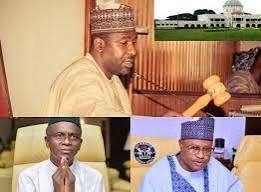
The Kaduna State House of Assembly’s ad hoc committee has submitted a damning report, exposing financial irregularities and corruption during the tenure of former Governor Nasir El-Rufai. The report was presented during plenary on Wednesday, by the chairman of the ad hoc committee, Henry Zacharia. The committee, tasked with investigating loans, grants, and project implementation from 2015 to 2023, revealed that most loans obtained during El-Rufai’s administration were not used for their intended purposes. Furthermore, due process was not followed in securing some of these loans, according to the Committee. The committee’s report accused former governor El-Rufai and his cabinet members of abuse of office, awarding contracts without due process, diverting public funds, and money laundering. The report also criticized the excessive borrowing during El-Rufai’s tenure, which has plunged Kaduna State into heavy debt. The committee recommended the investigation and prosecution of El-Rufai and other indicted officials by security and anti-corruption agencies. Additionally, the report called for the immediate suspension of the Kaduna State Commissioner of Finance, Shizer Badda, and the chairman of the state universal basic education board. The committee also urged thorough investigations into key appointees from the last administration.

Breaking: NDIC commences payment to Heritage Bank’s depositors

Depositors of Heritage Bank (in liquidation) will be paid their insured deposits as from this week. The Managing Director (MD) of the Nigeria Deposit Insurance Corporation (NDIC), Mr. Bello Hassan, disclosed this at an on-going press conference, in Abuja. Accord to him, over 99 percent of the 2.3 million depositors have N5 million and less in their accounts and will therefore be paid in full. He explained that only about 4000 depositors have above N5 million in their accounts. For such customers, they will receive an initial N5 million along with others and later be paid more as the NDIC recovers assets of the bank and loans from debtors. Details later…

Heritage Bank: CBN Denies Plan To Revoke Licenses Of Three Other Banks

In an apparent move to boost public confidence, the Central Bank of Nigeria (CBN) has denied a media report which claimed it is set to revoke the licenses of Unity Bank, Keystone Bank and Polaris Bank. The apex bank, in a post via its official X account on Tuesday, urged members of the public to dismiss the report as fake news. Sharing a screenshot of the publication, CBN wrote: “This content is fake and not from the Central Bank of Nigeria.” The dismissal of the report comes on the heels of the decision by the CBN to revoke the operating license of Heritage Bank. Meanwhile, the Nigeria Deposit Insurance Corporation (NDIC), has assured customers of banks in the country of the safety of their deposits and investments. The NDIC assured the banking public that banks whose licenses have not been revoked remain safe and sound. It also urged depositors and other stakeholders to continue their banking businesses without fear.

CBN Revokes Heritage Bank License 

The Central Bank of Nigeria (CBN) has announced the revocation of Heritage Bank’s operating licence.  This decision was revealed in a statement by the Acting Director of Corporate Communications, CBN, Hakama Sidi Ali.  Ali stated: “The Central Bank of Nigeria, in accordance with its mandate to promote a sound financial system in Nigeria and exercising its powers under Section 12 of the Banks and Other Financial Institutions Act (BOFIA) 2020, hereby revokes the licence of Heritage Bank Plc with immediate effect.” She explained that the revocation was necessary due to the bank’s violation of Section 12 (1) of BOFIA, 2020. The bank’s management had failed to improve its financial performance, posing a threat to financial stability. “This follows a period during which the CBN engaged with the bank and prescribed various supervisory steps intended to stem the decline. Regrettably, the bank has continued to suffer and has no reasonable prospects of recovery, thereby making the revocation of the licence the next necessary step.” Ali assured the public that this action is aimed at maintaining confidence in the banking system and ensuring the overall soundness of Nigeria’s financial sector. The Nigeria Deposit Insurance Corporation (NDIC) has been appointed as the liquidator of the bank in line with Section 12 (2) of BOFIA, 2020. “We wish to assure the public that the Nigerian financial system remains on a solid footing. The action we are taking today reflects our continued commitment to take all necessary steps to ensure the safety and soundness of our financial system,” Ali concluded.

Nationwide Strike: kneejerk Reaction to a Serious Governance Challenge

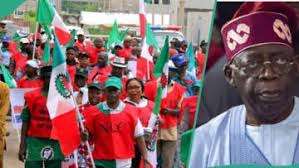
As you read this Nigeria is now under total lockdown, whereby major economic activities in the organized public and private sectors have been completely crippled. Labour has made good its threat to commence an indefinite nationwide strike to protest government insensitivity to its plight and clamour for wage review. This moment has been long coming, taking into account recent federal government economic policies which impacts have been skewed againts the suffering mass of Nigerians. From the withdrawal of fuel subsidy, liberalization of the foreign exchange to the recent hike in electricity tariff and and aborted cybersecurity levy. Most of these reforms are mass focused and have had acute impact on the social and economic wellbeing of poor Nigerians. This has pitched labour unions against the government as organized labour agitate for wage increases and better welfare for their members. But I am one of a few who do not think that the labour is going about its agitations correctly. The protests and strikes so far have been kneejerk reactions that have been largely ineffectual. Put simply, I DO NOT AGREE WITH THIS CALL FOR NATIONWIDE INDEFINITE STRIKE. My reasons are simple. 1. As already stated, this strike and others before it are largely kneejerk reactions to a fundamental error of policy choice, planning and implementation by government. 2. The strikes are one too many and have a tendency of seeming like one repeating a process and expecting a different outcome. 3. Some are of the opinion that most of the recent strike actions have been about bread and butter issues and nothing about the very important subject of better governance of the society. Here are a few alternatives that labour may want to contemplate if they are desirous of thinking outside the box. 1. Formulate proper critical engagement with the government on sincere cost cutting measures that affect the highest echelons of the public service and governmental agencies. 2. Collaborate with the executive to instigate a downward review of the cost of governance. 3. Encourage the president to prune the size of the cabinet or you partner with the mass public to achieve the same purpose. 4. Let you labour strike not be always about your interests but the wellbeing of the Nigerian masses. These strategies shall assist to endear the labour movement to the Nigerian public and win their confidence and trust. Labour can leverage on such goodwill to escalate activities to achieve desired changes in the political arena.

Lawyer drags First Bank before CBN over alleged N550m fraud

A civil society organisation, Centre For Social and Economic Justice, has dragged First Bank of Nigeria before the Central Bank of Nigeria, CBN, over allegation of funds diversion to the tune of N550million. The centre called on the CBN to revoke the license of First Bank of Nigeria for unsafe practices, and adding customer’s funds are supposed to be safe with the bank. According to a letter dated May 29, 2024, the director of the centre, Barrister U. I. Mohammed said a customer of the Bank, Dr. Agbai Eke Agbai, who has been a dedicated and resourceful customer of the First Bank of Nigeria Ltd “First Bank” with Fixed Deposit Account numbers – 6924010002639 and 5021000788976 whose funds amount to the tune of ₦ 550,000,000.00 was illegally diverted, misappropriated and fraudulently taken by the bank. A copy of the letter received at the Security Services Department of the CBN, which was also sent to First Bank, said a staff of the bank, Mrs. Shamlar Abosi, who is supposed to be the account officer of Dr Agbai, illegally tampered with her client’s account. Parts of the petition titled, “PETITION AGAINST FIRST BANK OF NIGERIA FOR FRAUD, DIVERSION AND MISAPROPRIATION OF FUNDS BELONGING TO DR. AGBAI EKE AGBAI” read, “In 2014, Mrs. Shamlar Abosi, a staff of First Bank, approached DR. AGBAI EKE AGBAI to deposit funds in First Bank for a Return on Investment, DR. AGBAI EKE AGBAI after listening to the advice of Mrs. Shamlar Abosi accepted to deposit funds in the bank for an agreed interest rate. “Fixed Deposit Accounts were subsequently opened for DR. AGBAI EKE AGBAI with the above-mentioned account numbers. The sum of ₦ 300,000,000.00 (Three Hundred Million Naira) only was deposited in Account number-6924010002639 which took effect on the 21st day of February, 2018 with interest rate of 14.5% with 364 days tenor, and the sum of ₦250,000,000.00 (Two Hundred and Fifty Million Naira) only was deposited in Account Number -5021000788976 which took effect on the 19th day of October, 2018 with interest rate of 14.5% with 364days tenor. “After the maturity date of the investment, which is on the 20th of February, 2019, and 18th of October, 2019, respectively, in September 2023, DR. AGBAI EKE AGBAI informed First Bank of his intention not to renew the investment and requested his money to be transferred to his saving account domiciled with the bank with Account number-3079342444 immediately. “Unfortunately, the money requested by DR. AGBAI EKE AGBAI to be transferred to his savings account has not been credited till date after numerous efforts to remind the bank of its failure to carry out the request. “It is also noteworthy and remarkable that Mrs. Shamlar Abosi, who persuaded DR. AGBAI EKE AGBAI into investing in the Bank, who is also the account officer and business manager of the investment, has failed to provide an explanation regarding the money of DR. AGBAI EKE AGBAI.” Barrister Mohammed said it is without doubt that the funds deposited in the Fixed Deposit Account numbers – 6924010002639 and 5021000788976 by Dr Agbai Eke Agbai has been criminally and fraudulently diverted by First Bank without his consent or notice. He said after sending their agent and officer, Mrs. Shamlar Abosi persuaded him to invest in the bank, the Bank has failed to refund the money illegally taken from him despite the numerous pleas, warnings, and notices. “We urge the Central Bank of Nigeria to investigate the fraudulent activities enumerated above, refund the money stolen and illegal diverted by First Bank, and to invoke its powers bestowed on it under Section 12 of the Banks and other Financial Institutions Act, 2020 by revoking the license of First Bank of Nigeria for unsafe practices and other fraudulent dealings”, the centre said.

NLC Strike: FG insists on N60K Minimum Wage Offer 

That the organized labour has given Monday, June 3rd as commencement date for an indefinite strike to protest the failure of government to approve a new national minimum wage agreeable to them is no longer news. What is trending is that the FG has adduced 14 reasons why it can not approve the figure proposed by labour. Here are 14 reasons the FG gave for a N60,000 minimum wage: N35,000 wage award for all treasury-paid federal workers. N100 billion for the procurement of CNG-fuelled buses and CNG conversion kits. N125 billion conditional grant and financial inclusion to MSMEs. N25,000 each to be shared to 15 million households for 3 months. N185 billion palliatives (loans to States) to cushion the effects of fuel subsidy removal. N200 billion to support the cultivation of hectares of land to boost food production. N75 billion to strengthen the manufacturing sector. N1 trillion for student loans for higher education. Release of 42,000 metric tons of grains from strategic reserves. Purchase and onward distribution of 60,000 metric tons of Rice from the rice millers association. Recent salary increase of 25-35 per cent on all consolidated salary structures for federal workers. 90% subsidy on health costs for Federal Civil Servants registered on NHIS. Light rail commissioned in Abuja to relieve transportation cost until the end of the year. Lagos State had already commenced the same initiative with their blue and red lines. In addition to the freedom of civil servants to engage in agriculture, the federal government has approved the inclusion of ICT services as an alternate source of income. The government added N3, 000 to its initial offer of N57, 000 proposed last week, taking the total figure to N60, 000 while labour lowered its demand by removing N3, 000 from the N497, 000 it proposed last week. The tripartite committee has been locked in talks over a new minimum wage since the committee was inaugurated in January this year. To fast track the negotiation process, the NLC and TUC on May Day gave the committee until the end of the month to wrap up talks on a new national minimum wage. That ultimatum expired on Friday night without an agreement. During the meeting, the government defended their offer of N60,000.00 per month.