Presidential Nominee Rejects Appointment

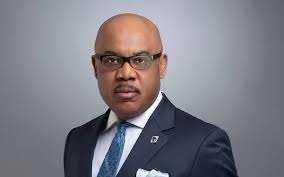
A nominee for membership of the Central Bank of Nigeria Board of Directors, Urum Kalu Eke has declined the offer stating that he was currently engaged in the World Bank. This came to the fore during the Thursday plenary when the Senate began the process for the confirmation of the nominees. President Bola Tinubu had on February 13 forwarded the names of Urum and four others for confirmation as members of the board for the CBN. But during the confirmation, former Governor of Abia State, Senator Orji Kalu,( APC, Abia North ) told the Senate that the person who is his constituent had called him on the phone to reject the offer, noting that it would conflict with his present job as a consultant with the World Bank. He said, “The nominee told me this role would conflict with his job as a consultant to the World Bank, Federal Government agencies and other private companies.” Meanwhile, the Senate has confirmed the appointment of four other members of the Board of Directors of the CBN forwarded to it by the President. Those confirmed by the Senate on Thursday as Directors are Robert Agbede; Ado Yakubu Wanka; Professor Murtala Sabo Sagagi and Mrs. Muslimat Olanike Aliyu.
Cost of Governance: FG Lists Agencies to be scrapped

The federal government announces the list of Ministries, Departments, and Agencies (MDAs), either to be eliminated, merged or prunned as part of the implementation of the Oronsaye report that has been pending for more than a decade. This decision, announced after Monday’s Federal Executive Council meeting, stems from a report initiated by former President Goodluck Jonathan in 2011. Led by Steve Oronsaye, the committee identified overlapping agencies causing competition and wasteful expenditure, recommending the reduction of 263 statutory agencies to 161, abolishing 38, and merging 52. Additionally, 14 agencies are proposed to revert to departments within ministries, aiming for a more streamlined government structure. Below are government agencies set to be merged or scrapped. – 38 Federal Agencies to be abolished – Public Complaints Commission, National Poverty Eradication Programme, Utilities Charges Commission, National Agency for the Control of HIV/AIDS, National Intelligence Committee, etc. – 14 agencies to be fused into ministries where they were created e.g Debt Management Office to the Federal Ministry of Finance – Public Health Department back to the Federal Ministry of Health – National Information Technology Development Agency to be fused into the Ministry of Communication Technology – Reduction of statutory agencies from 263 to 161 – 52 institutions to be merged: NTA, FRCN & VON into the Federal Broadcasting Corporation of Nigeria (FBCN) – NCC & NBC into Communication Regulatory Authority of Nigeria (CRAN); – CCB, EFCC & ICPC to be merged into the Anti-Corruption Commission. – Another key recommendation of the committee was to discontinue government funding of professional bodies and councils. Consequently, there is a need to amend the Professional Bodies (Special Provisions) Act, of 1972 which mandates the government to provide financial support of various kinds to such bodies. – They include the Teachers Registration Council of Nigeria (TRCN); Computer Professionals Council of Nigeria (CPRCN); Advertising Practitioners Council of Nigeria (APCON); Nigeria Press Council; Architects Registration Council; Council for Registered Engineers of Nigeria (COREN); Estate Surveyors’ Registration Board (ESRB); Town Planners Council (TPC); Nigerian Builders Council (NBC; Quantity Surveyors’ Registration Board of Nigeria (QSRB); Nigerian Builders Council (NBC); and Council of Nigerian Mining Engineers and Geoscientists (COMEG). Institute for Peace and Conflict Resolution to be scrapped and its functions to be transferred to the Department of Strategic Studies in the Nigerian Institute for International Affairs (NIIA). The committee recommended that the Petroleum Products Pricing Regulatory Authority (PPPRA) and Petroleum Equalisation Fund be merged with Petroleum Equalisation Fund (PEF). Based on the White Paper, the Fiscal Responsibility Commission (FRC) would be abolished and its enabling law repealed as its functions are being performed by the Revenue Mobilisation Allocation and Fiscal Commission. A similar fate awaits the Salaries and Wages Income Commission. – The trio of the Nigerian Airspace Management Agency (NAMA), Nigerian Civil Aviation Authority (NCAA) and the Nigerian Metrological Agency (NIMET) were recommended to be merged into a new body to be known as the Federal Civil Aviation Authority (FCAA) and their respective enabling laws amended accordingly to reflect the merger. – Nigerian Investment Promotion Council (NIPC), the Committee recommended that it be merged with the Nigerian Export Promotion Council (NEPC) to synergize for management and utilization of resources. – The Committee recommended that the enabling law of the National Commission for Nomadic Education be repealed and the Commission’s activities taken over by the Universal Basic Education Commission. – National Oil Spill Detection and Response Agency (NOSDRA) and National Environmental Standards and Regulations Enforcement Agency (NESREA).
CBN Unveils Stricter Guidelines for Bureau De Change Operations

In response to the ongoing economic challenges, the Central Bank of Nigeria (CBN) has unveiled comprehensive reforms affecting Bureau de Change (BDC) operations across the country. The new guidelines, outlined in a statement by the Financial Policy and Regulation Department, aim to address the economic crisis and enhance regulatory measures. 1. Capital Requirements Restructured Under the revised guidelines, BDCs are now divided into two tiers, each with distinct capital requirements. Tier 1 BDCs must maintain a minimum capital of N2 billion, while Tier 2 BDCs face a capital threshold of N500 million. This represents a significant increase from the previous uniform capital requirement of N35 million. 2. Ownership Restrictions for Financial Institutions The CBN circular explicitly prohibits banks, NGOs, government agencies, and other financial institutions from holding ownership stakes in BDCs, either directly or indirectly. This includes commercial banks, merchant banks, non-interest banks, payment service banks, as well as holding companies and payment service providers. 3. Limited Activities for BDCs While BDCs are authorized for specific activities like buying and selling foreign currencies, issuing prepaid cards, and serving as cash points for money transfer operators, they are now restricted from accepting deposits, extending loans, trading in gold, or engaging in capital market activities. 4. Forex Sourcing and Sale Guidelines BDCs are permitted to source forex from authorized channels, including dealers, travelers, hotels, and embassies. The sale of foreign currencies is regulated, with specified limits per customer annually for purposes such as travel, medical bills, and school fees. Additionally, BDCs are barred from engaging in offshore business and financing political activities. 5. Emphasis on Electronic Transactions The CBN emphasizes a shift towards electronic transactions, mandating that at least 75 percent of sales be conducted through electronic transfers. For beneficiaries of Basic Travel Allowance (BTA) or Personal Travel Allowance (PTA), 25 percent of the foreign currency can be received in cash, with the remaining 75 percent electronically transferred to the customer’s Nigerian domiciliary account or prepaid card. 6. Disclosure Requirements for High-Value Transactions Customers selling $10,000 or more to BDCs must disclose the source of the foreign exchange, complying with Anti-Money Laundering and Counter Financing of Terrorism regulations. Payments for cash purchases of forex below $500 may be made in cash, while transactions exceeding this limit are subject to electronic transfers.
Tinubu Not Responsible For Nigeria’s Economic Hardship

Yoruba Nation agitator, Sunday Adeyemo, popularly known as Igboho, has exonerated President Bola Tinubu from being responsible for hardship in the country. According to Igboho, former President Muhammadu Buhari, should be held responsible for destroying the Nigerian economy, saying Buhari handed over a bad economy to President Bola Tinubu. Speaking on Friday while ddressing his followers in Oyo State, the freedom fighter insisted that Tinubu has not destroyed the Nigerian government. “Tinubu didn’t destroy the government; my pain with Yorubas is that while Buhari was in power, I was shouting that we should unite and free ourselves from this suffering. Buhari has nothing to offer us. “I said we should divide from Fulani because one Nigeria can’t work but they refused to listen to me. Buhari now handed over a government he had destroyed to Tinubu. Igboho, urged Yorubas to unite and liberate the Southwest from armed Fulani herders terrorising the South West region of the country. “Now some Yorubas are crying that they are hungry, have you seen Igbos crying? They have sent all Fulanis out of their lands and they are farming, doing what they want with their lands. “Why can’t Yorubas unite and liberate the Southwest from Fulanis so that our fathers and mothers can return to their farmlands?”
Botched 2023 Census: Court asks NPC to release detail spending

Justice Inyang Ekwo of the Federal High Court, Abuja, has ordered the National Population Commission (NPC) to release details of spendings on the aborted 2023 Population Census to an Abuja based lawyer, Opatola Victor within seven days. The judge declared that the refusal by the NPC to release the information or records of spendings on the aborted census as requested by the lawyer on March 30, 2023, was illegal and unconstitutional. On the strength of Section 4 of the Freedom of Information Act, (FOI) the court held that the refusal of the commission to provide the plaintiff with information on the companies that provided due diligence report on the technology to be deployed for the ill-fated census was a gross violation of the right of the plaintiff. The court, however, refused to grant N500,000 in favour of the plaintiff as he requested in the suit. In the judgment, the judge granted an order of mandamus compelling the NPC, its servants, agents privies and officials to furnish the lawyer with comprehensive and detailed information concerning the Quality Test Assurance Report on the devices and technology to be deployed for the postponed 2023 population census. Justice Ekwo rejected the claim by the defendant that bureaucracy and the absence of its executive chairman at the time was responsible for the refusal to make the requested records available to the plaintiff adding that the claim was untenable. The judge also dismissed the claim by the NPC that some of the requested information was classified which prompted the refusal to make the records available to the plaintiff, adding that from the definition of classified information, there was nothing secret on the issue of population census. Justice Ekwo also said that the position of the commission that the record sought by the plaintiff was already in the public domain was not tenable because the request of the plaintiff was on record at the disposal of the NPC and not the one in the public domain. The Abuja lawyer had in the suit marked FHC/ABJ/CS/ 503/2023 prayed the court for an order that the refusal of the population commission to make the record of spendings on the aborted population census among others, available to him was a breech of his rights under Section 4 of the FOI Act 2012. He has prayed the court for an order of mandamus compelling the population commission to make the requested records of the aborted 2023 population census available to him in line with the provisions of the FOI Act. Although the plaintiff requested for a compensation of N500,000 for the breach of his rights by NPC under FOI, Justice Ekwo turned down the request on the grounds that the commission was not convicted for any offense.
Presidential Aide Onanuga Pushes For Cryptocurrency Ban

Bayo Onanuga, the Special Adviser to President Bola Tinubu on Information and Strategy, has called for the ban of cryptocurrency and foreign exchange (Forex) platforms operating in Nigeria. Onanuga specifically targeted platforms like Binance, Kucoin, AbokiFX, and OctaFx, claiming that they are manipulating the national currency. Expressing concern over Binance’s influence, Onanuga pointed out the platform’s regulatory challenges in the United Kingdom, Japan, Canada, and Singapore. He urged the Economic and Financial Crimes Commission (EFCC) and the Central Bank of Nigeria (CBN) to take action against these platforms, emphasizing the need to prevent further devaluation of the Naira. He wrote: “According to Data Wallet, Binance is prohibited in the United Kingdom by the Financial Conduct Authority from conducting any regulated activities. In Japan, the Financial Services Agency (FSA) banned Binance for operating without the necessary regulatory approval,” the presidential aide said. “Ontario, Canada, has also suspended Binance services following its inability to meet the province’s securities regulation criteria. The Monetary Authority of Singapore also banned Singaporean investors from accessing Binance’s services. “Binance, facing regulatory showdown in many countries, and causing disruptions in the currency market, should not be allowed to dictate the value of the Naira, not on its crypto exchange platform. “Other crypto platforms such as Kucoin, Bybit should be banned from operating in our cyberspace. FX platform Aboki should be re-banned.” This call for a ban aligns with the CBN’s previous directive on February 5, 2021, instructing financial institutions to close accounts involved in crypto transactions due to concerns about money laundering, terrorism financing, cybercrime, and the volatile nature of cryptocurrencies.
President Tinubu Appoints Kemi Nanna As Comptroller-general Of Nigeria Immigration Service

President Bola Tinubu has approved the appointment of DCG Kemi Nanna Nandap to serve as the Comptroller-General of the Nigeria Immigration Service (NIS), effective from March 1, 2024. DCG Nandap takes over from Mrs. Caroline Wura-Ola Adepoju, whose term in office expires on February 29, 2024. Before her appointment as Comptroller-General, Nandap was the Deputy Comptroller-General in charge of the Migration Directorate of the Service. The President anticipates that the new Comptroller-General will deepen the ongoing reforms in the service and create a robust mechanism for efficient and dedicated service delivery to Nigerians, as well as strengthen the nation’s security through proactive and effective border security and migration management.
Former CBN Governor Godwin Emefiele Demands N25 Billion in Damages from Senate President Akpabio

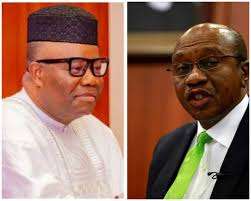
Godwin Emefiele, the immediate-past governor of the Central Bank of Nigeria (CBN), has taken legal action against Senate President Godswill Akpabio. Emefiele is seeking N25 billion in damages over an alleged defamatory remark made by Akpabio. Akpabio, on Sunday, claimed that there are numerous allegations against Emefiele, making it challenging for the federal government to specify charges against him. Additionally, Akpabio attributed the economic hardship in the country to the policies implemented during Emefiele’s tenure as the CBN governor. The demand for damages and an apology is outlined in a letter dated February 19, sent by Matthew Burkaa, counsel to Emefiele. The letter warned that failure to comply with these demands will result in the former CBN governor seeking “appropriate redress” through legal means.
Tinubu Makes New Appointment

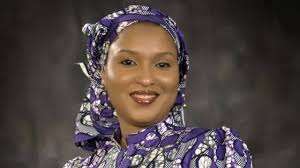
President Bola Tinubu has approved the appointment of Ms. Hafsat Abubakar Bakari to serve as the Director/Chief Executive Officer of the Nigerian Financial Intelligence Unit (NFIU). Her appointment is pending confirmation by the Senate. Ms. Bakari is a lawyer and financial intelligence expert with years of experience in anti-money laundering, counter-terrorism financing, and counter-proliferation financing (AML/CFT/CPF). Before her appointment as the Chief Executive Officer of the NFIU, she served as Deputy Director at the Nigerian Financial Intelligence Unit, and was at different times the Head of the General Services Unit; Head of the Strategy and Reorientation Unit, and Head of the Board Secretariat of the Economic and Financial Crimes Commission (EFCC). The President anticipates that Ms. Bakare will bring her wealth of experience and expertise to full discharge in this critical role, especially in view of his administration’s war against illicit financial flows and other sharp practices currently prevalent in segments of the nation’s foreign exchange markets.
Nigerian Red Cross Raises Alarm Over Escalating Hunger Crisis

The Nigerian Red Cross Society (NRCS) has issued a dire warning regarding the deepening hunger crisis in Nigeria, urging immediate action to address the escalating situation. Dr. Abubakar Ahmed Kende, Secretary General of the NRCS, delivered the stark message during a press briefing held in Abuja yesterday. Dr. Kende expressed grave concern over the worsening food insecurity gripping the nation, attributing it to factors such as hyperinflation fueled by surging fuel prices. He revealed that an estimated 26.5 million Nigerians, including vulnerable groups such as women and children, are currently grappling with acute hunger and require urgent assistance to avert further suffering and loss of life. The announcement comes amidst mounting protests against food shortages and soaring living costs, with demonstrations spreading to cities like Ibadan, where protesters defied police warnings to demand action from the government. At the launch of a partnership between the Red Cross and Ecobank aimed at mobilizing local resources for the hunger crisis appeal, Dr. Kende underscored the precarious situation faced by vulnerable populations, including children, pregnant women, and lactating mothers. He disclosed alarming statistics, revealing that nearly 4.41 million children and 585,000 mothers are confronting acute malnutrition, with approximately 1,000 Nigerian children succumbing to malnutrition-related causes daily. Dr. Kende emphasized the multifaceted nature of the crisis, citing factors such as changing weather patterns, heightened internal conflicts, and the enduring impacts of the COVID-19 pandemic. Urging swift action, he stated, “The time to act is now.” The partnership with Ecobank aims to mobilize funds locally to support the hunger crisis appeal and deliver essential relief to affected communities. Dr. Kende outlined various initiatives, including the provision of multipurpose cash grants for emergency relief and recovery, nutritional support for pregnant and lactating mothers, and Water, Sanitation, and Hygiene (WASH) interventions to mitigate disease prevalence. In conclusion, Dr. Kende called upon individuals, businesses, and organizations to unite in supporting government efforts to address the crisis. He underscored the pivotal role that corporate entities like Ecobank Nigeria can play in contributing to the nation’s welfare. The Nigerian Red Cross, in collaboration with partners and volunteers across all 36 states and the Federal Capital Territory, stands poised to respond to the urgent humanitarian needs of communities hardest hit by acute hunger.