Federal Government Seeks fresh World Bank loan

The federal government of Nigeria is seeking to obtain a fresh $1 billion loan from the world bank. According to reports, the loan will be used address the challenges facing Internally Displaced Persons and their host communities, as well as bolster rural access and agricultural marketing in the country. This was contained in a recent World Bank document titled, ‘Solutions for the Internally Displaced and Host Communities Project’ and ‘Rural Access and Agricultural Marketing Project – Scale Up.’ According to the loan breakdown, while the IDPs’ loan is put at $500m, the rural access and agricultural marketing project loan is estimated at $550m. The fund is expected to provide help to communities in Nigeria badly affected by insecurity. “The proposed project will utilise a three-pronged approach to develop sustainable solutions for IDPs and host communities in Northern Nigeria. “First, the proposed project aims to provide tailored solutions for each of the targeted states and communities, recognizing that each internal displacement situation is specific and localised, with conflict, violence and/or climate challenges presenting a different level and set of vulnerabilities for host communities. “Gender, age, and special needs of individuals also play a role, as well as the length of displacement, number of times displaced and other factors. “Thus, responses will be adapted to address the specific needs of vulnerable populations within displacement-affected states and communities. Second, the proposed project will follow a ‘People-in-Place’ approach, integrating the needs of the people and the impacts on the place where they settle,” the document stated. According to a review by a World Bank team, Northern Nigeria, especially Borno, Adamawa and Yobe, has experienced the highest numbers of internally displaced persons. This is primarily due to the ongoing conflict involving Boko Haram, as well as other factors such as banditry and conflicts between farmers and herders, leading to the displacement of over 3.5 million people. Since 2009, Boko Haram has continued to carry out heinous crimes on Nigerians, This is primarily due to the ongoing conflict involving Boko Haram, as well as other factors such as banditry and conflicts between farmers and herders, leading to the displacement of over 3.5 million people. Since 2009, Boko Haram has continued to carry out heinous crimes on Nigerians, while banditry has been described as a variant of Boko Haram.
Customs Intercepts Arms and Military Uniforms at Lagos Port

The Tin-Can Island Command of the Nigeria Customs Service has intercepted a cache of arms and ammunition allegedly being smuggled into the country by a criminal gang. Among the items intercepted are military camouflage and illicit drugs such as Colorado. The recovered arms include automatic single-barrel rifles and pump-action guns. Though details of the interception are still sketchy, sources report that the arms were discovered during an inspection of imported consignments. It remains unclear if any arrests have been made at this time. This interception follows previous seizures, including 31 arms of various types at Tin-Can and Multi-Purpose Terminals (PTML) ports in Lagos eight months ago. During that seizure, the Comptroller-General of Customs, Mr. Adewale Adeniyi, disclosed that two suspects were arrested. But not much has been made public regarding the prosecution of those arrested.
Popular Abuja Market On Fire

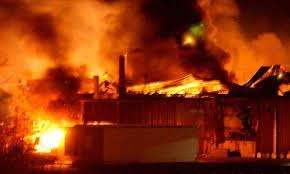
A fire has erupted at Wuse Market Abuja’s bustling commercial hub, on Tuesday evening. The fire prompted immediate evacuations and a swift response from emergency services. The cause of the inferno has remained unknown, but the rapid mobilization of firefighters and security personnel to the site shows the gravity of the situation. The market, known for its extensive array of goods and services, experienced an abrupt halt in activities as traders and shoppers alike were seen fleeing the vicinity. This incident follows a tragic event on February 29, 2024, where a fire claimed three lives in a residential building within EFAB estate, Karsana District, near Gwarinpa. The fire reportedly originated from an explosion linked to a diesel drum, leading to a fierce battle against the flames by both residents and the Federal Fire Service (FFS). The current fire at Wuse Market has caused significant concern among the populace, given the market’s prominence and the recent memory of the EFAB estate tragedy.
Senate Forms Ad-Hoc Committee to Probe Financial Controversies

Amidst mounting controversies surrounding the financial operations of the Buhari administration, senate president, Sen. Godswill Akpabio has inaugurated the Senate Ad-Hoc Committee on Ways and Means on Monday. The committee’s primary mandate, driven by concerns over fund management, includes a thorough investigation into the utilization of resources, notably focusing on the Anchor Borrowers’ Programme and other financial avenues. In his address to stakeholders, the Senate President emphasized the critical need for transparency, accountability, and good governance, especially in light of recent financial controversies. He highlighted the significance of the committee’s mandate and urged members to execute their duties diligently and professionally, prioritizing the interests of the Nigerian people. The establishment of the committee followed consultations with the Federal Government’s Economic Management Team and a subsequent report by the Joint Committees on Banking, Insurance and other Financial Institutions; Finance; National Planning; Agriculture; and Appropriations. The report identified concerns and irregularities in fund utilization, prompting decisive action from the Senate. Furthermore, the Senate President reiterated the importance of the committee’s task amidst ongoing financial debates in Nigeria. He expressed confidence in the committee’s ability to conduct thorough investigations and called for a commitment to justice, fairness, and the public good. Senator Isah Jibrin (Echocho), appointed as the committee’s chairman, emphasized the significance of the Ways and Means controversy and assured Nigerians of a thorough and impartial investigation. He urged stakeholders to cooperate and provide necessary documents for scrutiny. The committee, composed of distinguished senators, is poised to embark on its mission to investigate and address concerns regarding fund management in Nigeria, guided by principles of transparency, integrity, and accountability. Members of the committee include: 1. Senator Isah Jibrin (Chairman) 2. Senator Sahabi Ya’u (Vice Chairman) 3. Senator Adamu Aleiro 4. Senator Adetokunbo Abiru 5. Senator Asuquo Ekpeyong 6. Senator Mohammed Tahir Monguno 7. Senator Victor Umeh 8. Senator Solomon Olamilakan 9. Senator Sani Musa 10. Senator Abdul Ningi 11. Senator Aliyu Wadada 12. Senator Ipalibo Banigho 13. Senator Jimoh Ibrahim 14. Senator Ibrahim Mohammed 15. Senator Joel Thomas Onowakpa 16. Senator Dafinone Ede 17. Senator Aminu Iya Abbas 18.
How Emefiele stole billions from Nigeria’s foreign reserve without approval – Presidency

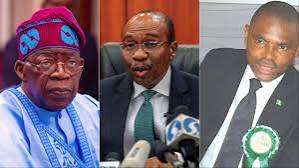
The Presidency has accused the immediate past Central Bank of Nigeria, (CBN) governor, Godwin Emefiele, of stealing billions from the country’s foreign reserve without seeking the approval of former President, Muhammadu Buhari. Presidential spokesperson, Ajuri Ngelale, disclosed this in an interview with TVC, saying Emefiele was unchecked because he was in charge of most of CBN’s operations. According to him, Emefiele succeeded in depleting Nigeria’s foreign reserve because he was the then CBN governor and the chairman of the apex bank’s board of trustees. Ngelale said: “What was done concerning the expenditure of billions of dollars from the foreign reserves was done largely without the approval or knowledge of President Muhammad Buhari and President Bola Tinubu. “Yes, that might seem hard for some people to believe, but I want to explain how that could have happened. “We have one of the few Central Banks in the world where the day-to-day CEO was the governor of the Central Bank and was also the chairman of the board of directors. He was essentially overseeing himself.”
Presidency Reacts To Reports Of Tinubu Advising Buhari To Print More Money

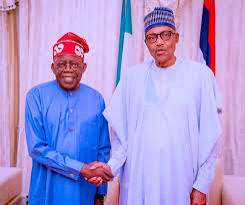
The Presidency has refuted claims suggesting that President Bola Tinubu advised the Muhammadu Buhari administration to print N22.7 trillion. This denial comes in response to statements made by the Minister of Finance and Coordinating Minister of Economy, Wale Edun, during a session with the Senate Committee on Finance. Edun attributed Nigeria’s current inflationary pressures to massive currency printing during Buhari’s tenure, emphasizing the need for transparency and accountability in economic management. He disclosed plans for a comprehensive audit of the reported N22.7 trillion printed without productivity. In reaction, Paul Ibe, spokesman for former Vice President Atiku Abubakar, criticized Edun’s remarks, alleging Tinubu’s encouragement of such actions in 2020. However, presidential spokesman Bayo Onanuga rebutted these claims, asserting that Tinubu never advised the government to print money. Onanuga clarified that Tinubu’s statement in 2020 did not advocate for Naira printing, as erroneously reported, and provided a clarification in Thisday a day after the false report emerged.
Finance Minister Blames Buhari Administration’s Reckless Money Printing for Inflation Surge

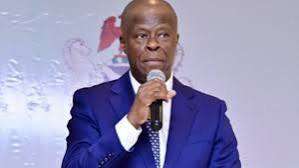
In a startling revelation, the Minister of Finance, Mr. Wale Edun has pointed fingers at the Buhari administration for Nigeria’s current inflation crisis, attributing it to the irresponsible printing of money. During a session with the Senate Committee on Finance, Edun disclosed that between 2015 and 2023, the Central Bank of Nigeria printed a staggering N22.7 trillion for the Federal Government through Ways and Means overdrafts. Edun emphasized that this massive money printing spree was not accompanied by corresponding increases in productivity, leading to the inflationary pressures the country is grappling with today. He cited a lack of restraint in spending the N30 trillion amassed through Ways and Means under the previous administration as a significant factor contributing to Nigeria’s food and security challenges. Acknowledging the Senate’s resolve to investigate the utilization of these funds, Edun assured the committee of the government’s commitment to addressing the underlying causes of inflation and fiscal imbalance. He outlined measures aimed at bolstering revenue generation without resorting to unsustainable practices, such as excessive money printing or undue borrowing. Edun commended the Senate for its support in tackling fiscal challenges and pledged to address loopholes in import duty waivers to enhance the country’s fiscal resilience. Despite the current economic hurdles, he expressed optimism about the government’s ability to implement effective policies that would stabilize inflation rates and foster sustainable economic growth.
Binance Ceases Operations in Nigeria

Binance, a global cryptocurrency exchange, has decided to exit the Nigerian market. Effective March 8, 8:00 a.m. UTC, Binance will automatically convert naira balances to USDT (Tether), a stablecoin pegged to the US dollar. The decision follows the cessation of support for naira deposits after 14:00 UTC today, with withdrawals set to terminate after March 8, 6:00 a.m. UTC. The conversion rate stands at 1 USDT per 1,515.13 naira. Binance will delist all spot trading pairs involving the naira on March 7 at 3:00 a.m. UTC, automatically closing open spot orders for these pairs. Additionally, services like Binance Convert, Binance P2P, Auto Invest, and Binance Pay will no longer support naira transactions. This move by Binance coincides with regulatory conflicts in Nigeria, as two executives were recently detained by the National Security Adviser’s office. The company faces accusations of contributing to the depreciation of the naira, prompting its decision to withdraw from the Nigerian market.
Binance Boss Summoned Over Alleged Terrorism Financing

CEO of Binance Holding Limited, Richard Teng has been summoned by the House of Representatives Committee on Financial Crimes over the allegations of money laundering and financing of terrorism. The Chairman of the Committee, Ginger Onwusibe, issued a seven-day ultimatum to Binance Holdings bossto appear before the committee by March 4, 2024. Recall that the federal government banned the major online crypto platforms to avert the continuous manipulation of the forex market and illicit movement of funds, while Binance, an online cryptocurrency exchange, was accused of money laundering by the Central Bank of Nigeria. Onwusibe warned that the committee will take appropriate measures if the Binance head fails to heed the summon. He criticized Teng for his persistent refusal to attend despite several invitations, highlighting the company’s apparent disregard for the country’s established laws regarding business and financial operations. The committee, under the chairmanship of Onwusibe, sent a letter dated December 12, 2023, summoning the Managing Director of Binance for a hearing scheduled on December 18, 2023. Onwusibe emphasized the committee’s determination to combat financial crimes, citing the authority granted by the Nigerian Constitution to safeguard citizens from such offences, particularly those perpetrated by foreign entities. He highlighted the urgency of protecting the nation’s finances, especially amidst economic challenges like recession, and underscored the seriousness of allegations against Binance, including terrorism financing, money laundering, and tax evasion. Onwusibe stressed the need to preserve tax revenues and prevent channels for funding terrorism while prioritizing the protection of Nigerian investors from exploitative practices by firms like Binance. He insisted on accountability for tax payments and the establishment of physical offices for addressing consumer grievances, signalling an end to exploitation and a commitment to holding perpetrators accountable. Onwusibe said, “The constitution of the Federal Republic of Nigeria has empowered us to protect Nigerians from financial crimes, especially by foreign companies. “We also have to protect and defend the country’s finances, especially now that the country is nose-diving into recession. The allegations of terrorism financing, money laundering and tax evasion, amongst others, levelled against Binance, are damning enough. “At this material time, we need all the tax dollars and to block the leaks and channels to financing terror. “It is also our duty to do everything in our power to protect Nigerian investors from predatory firms, and no distraction and manipulation can stop us. “You cannot run a company with over 10 million Nigerians on your platform without paying tax and having a physical office where Nigerians can lodge their complaints when they experience any challenge with your service. The era of exploitation is over, and all culprits must be held accountable.“
Binance Reacts To $10 Billion Fine by Federal Govt

Cryptocurrency exchange Binance Holdings Ltd has denied allegations made by the Nigerian government claiming it has been fined $10 billion for illegal operations contributing to the devaluation of the naira. The Nigerian government’s Special Adviser on Information and Strategy, Bayo Onanuga, said that the hefty fine was imposed on Binance as part of efforts to salvage the value of the national currency. In an interview with the BBC, Onanuga disclosed that the government’s actions were aimed at addressing the impact of Binance’s activities on the country’s economic stability. However, in response to these claims, a Binance official speaking to Peoples Gazette emphasized that while discussions were held with the Nigerian government to address concerns, no demand for a $10 billion fine was made. “We recently discussed ways to resolve issues with Nigeria, but we did not hear any demand for $10 billion,” stated the official. Furthermore, the official clarified that Binance is not currently engaged in negotiations with the Nigerian government to reinstate its services or release detained executives. Despite the ongoing dispute, the company said it remains committed to fostering positive relations with the Nigerian government and its citizens. However, it reiterates its firm stance against paying fines for personnel or services. “Our aim is to chart a good relationship with the government and the people of Nigeria. We want to see our services restored in Nigeria very soon, but we have no intention of paying fines for personnel or services,” the Binance official said.