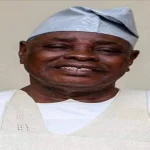



When a people are denied leadership for nearly five decades, anger stops being noise — it becomes history knocking for fairness.
By Dahiru Ali
“Obla didn’t curse Benue — he challenged it to grow up.”
When Chief Godwin Obla, SAN, sat before the camera and poured out his heart, it wasn’t the rant of a bitter man.
It was the lament of someone who has carried the weight of silence for too long.
His viral video — where he decried the systematic exclusion of the Idoma people from leadership in Benue State — was less a provocation and more a cry for justice.
But, in a familiar twist, that cry was met with accusation.
Majagara Bem Ugoh, convener of the Takuluku Anyam Azenga Advocacy Organization (TAAOR), released an open letter titled “An Advisory to Chief Godwin Obla, SAN, on His Hate Speech and Venomous Diatribe Against the Tiv People.”
In it, Ugoh accused Obla of divisive rhetoric and claimed that Tiv political dominance was simply “democratic reality” — a function of population and voter choice.
It was a tidy rebuttal. But tidy arguments don’t erase truth.
Democracy Without Fairness Is Just Numbers
Ugoh’s defence leans heavily on demographics. Yes, the Tiv are the majority.
But democracy is not only about numbers; it is also about justice.
When one group wins power every time for nearly half a century, something is fundamentally wrong with the system — not with the minority that dares to question it.
Since 1976, Benue has had six governors. Every one of them Tiv.
Not a single Idoma or Igede person has held the state’s top office.
That’s not coincidence. That’s a pattern.
And so, when Obla says the Idoma are marginalised, he’s not stirring trouble — he’s stating a fact.
The Cry Behind the Accusation
Let’s be honest: Obla’s words were passionate, even fiery. But anyone listening beyond the tone would hear a wounded truth — the frustration of a people who have contributed, cooperated, and compromised for decades, yet remain perpetually sidelined.
Those quick to brand him a tribalist forget that political inequality, when left unaddressed, breeds the very division they fear.
The Idoma are not asking to replace the Tiv. They are asking to be recognised as full citizens of Benue — not guests in their own home.
“Obla’s emotion was not hatred. It was heartbreak.”
Ugoh’s Letter and the Comfort of Power
In his open letter, Ugoh pointed to Idoma figures who have held positions such as Chief Judge, SSG, and Commissioner.
Fair enough. But inclusion isn’t about a few appointments — it’s about access to the centre of decision-making.
Tokenism cannot replace equality.
Giving someone a seat at the table does not mean they are allowed to speak.
Ugoh’s appeal to “peace” and “mutual respect” sounds noble, but peace without fairness is merely quiet oppression.
Asking the Idoma to be calm while every meaningful position remains out of reach is not unity — it’s control disguised as harmony.
Benue’s Peace Is Built on Idoma Patience
Benue loves to describe itself as peaceful and united.
But that so-called peace is fragile because it relies on the patience of the excluded.
Every time an Idoma leader speaks up, they’re told to tone it down — to protect “unity.”
But unity without justice is simply a truce.
What Obla did, uncomfortable as it was, is to call the bluff.
He reminded Benue that a state cannot move forward when one group is perpetually leading and the other perpetually waiting.
“Ugoh’s camp calls for calm; Obla calls for correction.”
The first preserves comfort; the second invites change.
The Truth in the Mirror
Chief Obla did not attack the Tiv — he attacked inequality.
And for that, he deserves engagement, not condemnation.
His message was not “we against them.” It was “we deserve better.”
Benue needs to hear that message without fear.
The state’s progress depends on honesty — the kind that forces us to confront the imbalance we’ve normalised for decades.
Ugoh’s eloquent letter may have satisfied political correctness, but it didn’t answer the core question:
When will Benue be led by all its people, not just some of them?
Obla’s Cry Is Not a Curse
Chief Obla’s words may have been raw, but they were real.
He spoke the truth that polite politics has long buried under courtesy and compromise.
His message wasn’t about division; it was about dignity.
Benue’s future will not be decided by who shouts the loudest, but by who listens longest.
And if those in power truly believe in unity, they must start by sharing it.
Obla didn’t curse Benue — he challenged it to grow up.
#BenuePolitics #GodwinObla #MajagaraUgoh #IdomaInclusion #TivIdomaRelations #NigeriaOpinion #DemocracyAndJustice