WHO Calls on Trump to Reverse Withdrawal Decision

The World Health Organization (WHO) has urged U.S. President Donald Trump to reconsider his recent decision to withdraw the United States from the global health body.  This move follows Trump’s executive order, signed shortly after his inauguration, formally starting the process of ending the country’s membership.   Trump justified his decision by citing concerns about the WHO’s handling of the COVID-19 pandemic and the organization’s alleged failure to implement necessary reforms.  SEE ALSO: Joseph Aoun elected Lebanon’s new president He also criticized what he described as the unequal financial contributions, claiming the United States pays significantly more compared to China.   In a statement, the WHO expressed regret over the decision, noting the United States has been a key member since its founding in 1948.  The organization highlighted the decades-long partnership between the U.S. and WHO in tackling global health challenges, including the eradication of smallpox and efforts to eliminate polio.   WHO emphasized its role in protecting global health through disease prevention, health system strengthening, and crisis response in vulnerable areas.  READ ALSO: Oxfam challenges governments to bridge extreme wealth gap It also pointed to ongoing reforms aimed at improving accountability and effectiveness.   The organization expressed hope for renewed dialogue with the U.S. to maintain their partnership, which it described as vital for global health security and the well-being of millions around the world.

Cervical Cancer, 4th most common cancer in women – WHO

The World Health Organisation (WHO) states also, that there were some reported cases of H5 avian influenza between last year and 2025. Dr Tedros Ghebreyesus, Director-General World Health Organisation (WHO), addressed global health issues on Thursday, revealing that cervical cancer is the fourth-most common cancer in women worldwide. He highlighted that the disease caused an estimated 660,000 cases and 350,000 deaths annually. Ghebreyesus stressed that cervical cancer was one of the few cancers that could be prevented and treated if detected early, but most cases and deaths occurred in low and middle-income countries that lacked access to vaccines, screening, and treatment. READ ALSO: Insecurity: Nigerians paid N2.3trn in one year – NBS Report He further mentioned that many countries were currently raising awareness about cervical cancer this January. He also highlighted WHO’s global initiative launched in November 2020 aimed at eliminating cervical cancer. ”Since then, numerous countries have introduced vaccines to prevent the disease, and many are rolling out advanced diagnostics.” Ghebreyesus emphasised that eliminating cervical cancer was achievable if all girls and women have access to vaccines, tests, and treatments. He added that cervical cancer prevention was part of WHO’s broader efforts to promote and protect maternal health, the theme for World Health Day this year. READ ALSO: Cervical Cancer: causes, symptoms, diagnosis & treatment Regarding H5 avian influenza, he reported that 66 cases were recorded globally in 2024, the highest since 2015, and two cases, including one death, have already been reported in 2025. He stressed the importance of controlling the virus’s spread among animals to prevent human transmission and urged countries to strengthen biosecurity measures and share viral samples with WHO’s global surveillance system.

Detection of New Covid-19 Variant: FG Urges Precaution

The Federal Ministry of Health and Social Welfare has raised an alert concerning a newly detected COVID-19 variant known as XEC.  In a letter dated December 5, 2024, addressed to the Committee of Chief Medical Directors and Medical Directors, the Ministry disclosed that the variant, first reported in Australia, has spread to 29 countries globally. The XEC variant reportedly exhibits a growth advantage over previously circulating strains, sparking concerns about its potential public health impact.  Dr. O. N. Anuma, the Head of the Teaching Hospital Division, emphasized the importance of heightened vigilance in healthcare facilities, urging hospitals to activate alert systems for early detection of COVID-like symptoms. PLEASE READ: FCT: I’m Blind, Deaf – Wike Declares The Ministry called for robust collaboration among stakeholders to enhance monitoring protocols and facilitate timely data sharing. Effective coordination is considered vital for managing the risks posed by the new strain. In light of the situation, the Ministry advised the public to resume the use of nose masks in crowded places while awaiting further confirmation of the variant’s full implications.  This proactive measure aims to curb potential transmission and protect public health.

Nigeria Becomes first country to unveil new meningitis vaccine

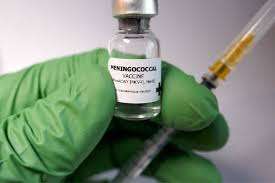
World Health Organisation (WHO) has said Nigeria is the first country in the world to roll out a new meningitis vaccine (called Men5CV). The new vaccine, uses the same technology as the meningitis A conjugate vaccine (MenAfriVac®), which wiped out meningococcal A epidemics in Nigeria. The vaccine and emergency vaccination activities are funded by Gavi, the Vaccine Alliance, which funds the global meningitis vaccine stockpile and supports lower-income countries with routine vaccination against meningitis. WHO stated that the revolutionary new vaccine offers a powerful shield against the five major strains of the meningococcal bacteria (A, C, W, Y, and X) in a single shot. All five strains cause meningitis and blood poisoning. This, it noted, provides broader protection than the current vaccine used in much of Africa, which is only effective against the A strain. The new vaccine is said to have the potential to significantly reduce meningitis cases and advance progress in defeating meningitis. “Meningitis is an old and deadly foe, but this new vaccine holds the potential to change the trajectory of the disease, preventing future outbreaks and saving many lives,” said Dr Tedros Adhanom Ghebreyesus, WHO Director-General. “Nigeria’s rollout brings us one step closer to our goal to eliminate meningitis by 2030.” “Northern Nigeria, particularly the states of Jigawa, Bauchi, and Yobe were badly hit by the deadly outbreak of meningitis, and this vaccine provides health workers with a new tool to both stop this outbreak but also put the country on a path to elimination,” Prof. Muhammad Ali Pate of the Nigerian Ministry of Health and Social Welfare was quoted as saying by Channels Tv.

WHO Releases $16m To Tackle Cholera, Says Director-General

WHO Releases $16m To Tackle Cholera, Says Director-General

The World Health Organisation (WHO) has released 16 million dollars from the WHO Contingency Fund for Emergencies to tackle cholera. Dr Tedros Ghebreyesus, WHO Director-General said this during an online news conference. Ghebreyesus said that the organisation was providing essential supplies, coordinating the on the ground response with partners, supporting countries to detect, prevent and treat cholera, and informing people how to protect themselves. “To support this work, we have appealed for 160 million dollars, and we have released more than 16 million dollars from the WHO Contingency Fund for Emergencies. “But the real solution to cholera lies in ensuring everyone has access to safe water and sanitation, which is an internationally recognized human right,” he said. According to him, in the previous week, WHO published new data showing that cases reported in 2022 were more than double those in 2021. He said that the preliminary data for 2023 suggested was likely to be even worse. “So far, 28 countries have reported cases in 2023 compared with 16 during the same period in 2022. “The countries with the most concerning outbreaks right now are Ethiopia, Haiti, Iraq and Sudan. “Significant progress has been made in countries in Southern Africa, including Malawi, Mozambique and Zimbabwe, but these countries remain at risk as the rainy season approaches,” Ghebreyesus said. According to him, the worst affected countries and communities are poor, without access to safe drinking water or toilets. He said that they also face shortages of oral cholera vaccine and other supplies, as well as overstretched health workers, who are dealing with multiple disease outbreaks and other health emergencies. On COVID-19, Ghebreyesus said that as the northern hemisphere winter approaches, the organisation continued to see concerning trends. He said that among the relatively few countries that report them, both hospitalisations and ICU admissions have increased in the past 28 days, particularly in the Americas and Europe. WHO boss said that meanwhile, vaccination levels among the most at-risk groups remained worryingly low. “Two-thirds of the world’s population has received a complete primary series, but only one-third has received an additional, or “booster” dose. “COVID-19 may no longer be the acute crisis it was two years ago, but that does not mean we can ignore it,” he said. According to him, countries invested so much in building their systems to respond to COVID-19. He urged countries to sustain those systems, to ensure people can be protected, tested and treated for COVID-19 and other infectious threats. “That means sustaining systems for collaborative surveillance, community protection, safe and scalable care, access to countermeasures and coordination,” he said.

UN seeks $2.6bn for humanitarian needs in Sudan

SUDAN FAMINE

The United Nations humanitarian response plan is seeking nearly $2.56 billion to help people affected by the crisis in Sudan, a senior U.N. official said on Wednesday. Meanwhile, the U.N. refugee agency is also seeking more funding to assist those forced to flee. “Today, 25 million people, more than half the population of Sudan, need humanitarian aid and protection. This is the highest number we have ever seen in the country,” said Ramesh Rajasingham, head of the U.N. Office for the Coordination of Humanitarian Affairs in Geneva and director of the Coordination Division “The funding requirements of nearly 2.6 billion dollars are also the highest for any humanitarian appeal for Sudan.’’ The plan, a revised version of the annual humanitarian plan for 2023, is designed to target 18 million people in need. The conflict between the Sudanese army and the paramilitary Rapid Support Forces (RSF) has caused a humanitarian crisis that threatens to destabilise the region, displacing more than 700,000 people inside Sudan and forcing about 200,000 to flee into neighbouring countries. The United Nations High Commissioner for Refugees (UNHCR),is making a joint appeal with the aid agency on Wednesday, said it was seeking 472 million dollars to assist more than 1 million people over the next six months. “Sadly, we once again need to call on countries and individuals with the means to step up for innocent people who have lost everything through no fault of their own,’’ said Raouf Mazou, Assistant High Commissioner for Operations at UNHCR.