World Bank Commends Tinubu’s Reform Drive, Calls Nigeria Global Reference Point

The World Bank has commended President Bola Tinubu’s reform drive, describing Nigeria as a frequent global reference point for reform implementation and results, with new budget support and investment partnerships underway.
Tinubu Seeks NASS Approval for N1.77tn External Loan

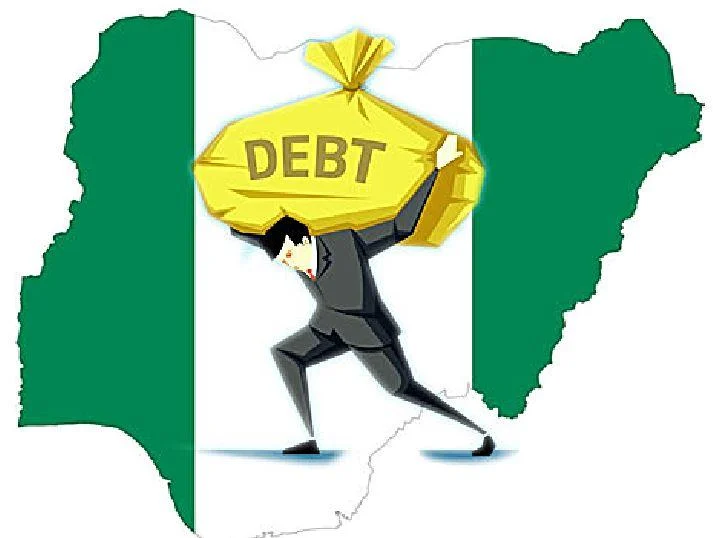
Nigeria sinks deeper into the debt trap as President Bola Tinubu submits a request to the National Assembly to approve additional N1.77trillion external borrowing. A communication from the Presidency states the loan shall be used to cover and portion of the N9.7 trillion deficit plan for 2024. During Tuesday’s plenary, the Speaker read the president’s request, which also included the MTEF/FSP 2025-2027 and a bill to amend the National Social Investment Programme. The proposed amendment aims to centralize the social register as the primary tool for welfare program implementation. Meanwhile, the Central Bank of Nigeria reported that Nigeria’s foreign debt servicing costs climbed by nearly 40% in the first nine months of 2024, amounting to $3.58 billion, up from $2.56 billion in 2023. The country’s rising debt obligations are becoming more expensive, driven partly by fluctuating exchange rates, with January 2024 witnessing a dramatic surge in payments. In related developments, the debt of Nigeria’s 36 states and the Federal Capital Territory reached N11.47 trillion by June 2024, a 14.57% increase from December 2023. The devaluation of the naira significantly contributed to the growth of the external debt, which rose to $4.89 billion, up from $4.61 billion. Domestic debt, however, saw a decline. The rising debt figures across the country reflect the growing fiscal pressures faced by both the federal and state governments, highlighting the need for sustainable economic management strategies.
Blaming the World Bank will not save our economy. Only us can

I stumbled on an article by one Mr. Ahmed Sule ( FCA). It is so disappointing to read. It is nothing but a regurgitation of the same well-worn World Bank blame game. There was not one single alternative policy prescription other than the usual finger pointing and externalization of our problem. Expectedly, Mr. Sule latched on the article in which the World Bank gave its analysis of the Tinubu reform, as the bogey-man. He did not even make an attempt to provide his own counter-point to the World Bank. He failed to provide his position on the Tinubu economic agenda other than a listing of the pains it has inflicted on the populace. The president in his inaugural address stated clearly that his proposed economic reform agenda was going to be excruciatingly painful. He stated unequivocally that he was going to remove fuel subsidy and that he was going to float the currency. He did not trick the electorate. He also told the citizens to render their judgement on the performance of his reform policy with their votes in 2027. Mr. Sule in his social media post pretended as if our economic nightmare began with or was precipitated by the Tinubu regime. He had nothing to say about our profligate and obscene economic mismanagement dating back to the mid 1970s-early 80s during which we frittered away our oil windfall like drunken sailors on a pirate ship. World Bank bashing has been our default excuse for our collective failure since the 1986 IMF SAP debacle. We focused on SAP rather than its predicate. We never asked ourselves the hard question about what we did wrong with all the stupendous oil windfall that accrued to our country, and why we ended ended up prostrate in 1986 crawling on our belly to the World Bank and IMF for a bail out. “Have we forgotten the commonwealth fund that was proposed by Sister Ngozi Okonjo Eweala during the President Jonathan regime to put away our excess oil revenue for the rainy day but rejected by the governors, or the hubris of young General Gowon who in the 70s declared that our country’s problem was not lack of money but how to spend it? Now we all have to endure the lean years we didn’t make provision for, in order for us to survive and be here when hopefully the years of abundance come back again.“ The World Bank does not force itself on any country. Countries choose membership of the World Bank out of their free will. They usually approach the World Bank for low interest loan when they are totally out of luck and option, unable to access finance through the open financial market because they have mismanaged their credit worthiness. That was the position Nigeria found itself in 1986. Even after General Obasanjo was able to get a big chunk of our debt written off by the World Bank and other multilateral financial institutions we were indebted to, did we take advantage of that? No, we didn’t. Our politicians continued unabatedly to plunder our commonwealth and they still do. The Bible says the debtor is a slave to his creditor. So, when countries like Nigeria have run out of options and are forced by their desolate and desperate circumstances to crawl on their bellies for financial life wire, of course like the slave described in the Bible to their creditors, they are forced to go on a forced diet (conditionalities) in order to access the low interest loan and sometimes outright grants that the World Bank offers due to the “generosity” of the donor members. We need to know that donors do not donate their fund to the poor out of philanthropy and benevolence. Foreign aids are a tool of promoting national hegemonic advantage. There are no free lunches in international relations. U. S and Europe are not funding the Ukraine war necessarily because of their love for the Ukrainians. They are dropping billions of ammunition and weapons of death into Ukraine to fight Russia because it advances their geopolitical agenda against Russia. It also creates opportunity for the military industrial complex to dispose their unused weapons, to test new one and create jobs in their local economies. We will be wise to understand that our economic success lies with us doing the hard work of national building and advancing our economic interest in an amoral, survival of the fittest, rigged global economic system. We should never again put our country in the position in which external financial institutions dictate or have a veto on our economic policies. China can tell the World Bank to go to hell with its economic prescriptions. In fact China has created its own alternative to the World Bank. As we romance China, we would be wise to learn that China like the West before it is not a benevolent Father Christmas doling out free money for its Silk Road project. “The capital asset of the “World Bank” is minuscule compared to those of global behemoths like the JP Morgan Chase, the China Bank of Industry, or the Bank of America. The world number one bank, China Industrial and Commercial Bank has total assets of $6.3 trillion. By comparison, the World Bank had just about $200 billion of assets under management. The World Bank would not rank among the top 50 banks in the world. In fact, there is a debate whether the term bank can truly be applied to the World Bank.“ The phrase “ World Bank” is in fact a gross abuse, misuse and exaggeration of the financial muscle of the “ World Bank”. When the phrase World Bank was used at its founding it represented an extreme case of hubris. The capital asset of the “World Bank” is minuscule compared to those of global behemoths like the JP Morgan Chase, the China Bank of Industry, or the Bank of America. The world number one bank, China Industrial and Commercial Bank has total assets
Shettima launches Nasarawa State Human Capital Development Plan

It is D-day in Nasarawa State today as the Vice President, His Excellency Senator Kashim Shettima launches the Nasarawa State Human Capital Development Strategy Document in Lafia, the state capital. A release from the focal Nasarawa State Human Capital Development Agency (HCDA) indicates the overarching focus of the strategy as “accelerating growth and development.” The occasion shall also feature the launch of the Nasarawa state Gender Transformative Human Capital Development policy framework. Human Capital Development was adopted as a development strategy by the National Economic Council in 2018. The aim was to address poverty and ensure sustainable economic growth. ” Nigeria’s Human Capital Development program (HCD 1.0) set clear targets and commitments for investment priorities, accelerating investments in human capital, and expanding stakeholder support to drive outcomes in Health, Education, and Labour Force participation in line with the UN Sustainable Development Goals 2030.” With a population of about 215million, expected to double to 400million by 2050, the human capital, apart from a huge reserve of oil and gas, which is a finite resource, is Nigeria’s most sustainable development resource. A huge population alone is however, not enough. Age and educational attainment are two critical attributes required to make the population amenable to development needs. READ ALSO: Human Capital Development and Economic Growth in Nigeria Consequently, the World Bank Human Capital Project defines human capital “as a combination of the knowledge, skills, and health people accumulate throughout their lives that enables them to realise their potential as productive members of society.” It is therefore the position of the NEC that, “For Nigeria to unlock its ‘demographic dividend’ and tap into the economic potential of its working age citizens, the country will need to first enhance its investment in its people – particularly women and children.” It argues that, “Over the past decade, many of the key metrics relating to Human CapitalDevelopment (HCD) in Nigeria have been going in the wrong direction. Nigeria’s performance across all major global HCD indices, including the United Nations Human Capital Index, the Institute of Health Metrics and Evaluation (IHME) ExpectedHuman Capital Index, and the World Bank Human Capital Index, is below the global average, as well as below the average for developing economies in sub-Saharan Africa (SSA),” the NEC, Nigeria’s apex economic policy body posited. According to a statement by Habiba Balarabe Suleiman, the Director General, Nasarawa State HCDA, successful implementation of the state HCD Strategic Plan 2024-2030 “is pivotal to the socioeconomic growth and sustainable development of Nasarawa state.” The launch of the HCD Strategy Document and Nasarawa state Gender Transformative Human Capital Development policy framework by the Vice President opens a new vista in the development aspiration of the state and a benchmark for peer review by other sub-nationals.
ECOWAS Departure: Burkina Faso launches biometric passport

In a move that indicates further severance of relations with the regional body, Burkina Faso unveil a new generation biometric passport.
N570billion was World Bank COVID-19 palliative not FG largess

Gov Makinde disclaims President Tinubu’s assertion, contained in recent national broadcast, of N570billion palliative to states.
Hunger Protest: D-DAY in Nigeria?

President Bola Ahmad Tinubu shall today play host to some not-too-August visitors, as Nigerians from all works of life pour onto the streets, if it all go as planned, to demand better treatment from the leadership of their country.
Federal Government Seeks fresh World Bank loan

The federal government of Nigeria is seeking to obtain a fresh $1 billion loan from the world bank. According to reports, the loan will be used address the challenges facing Internally Displaced Persons and their host communities, as well as bolster rural access and agricultural marketing in the country. This was contained in a recent World Bank document titled, ‘Solutions for the Internally Displaced and Host Communities Project’ and ‘Rural Access and Agricultural Marketing Project – Scale Up.’ According to the loan breakdown, while the IDPs’ loan is put at $500m, the rural access and agricultural marketing project loan is estimated at $550m. The fund is expected to provide help to communities in Nigeria badly affected by insecurity. “The proposed project will utilise a three-pronged approach to develop sustainable solutions for IDPs and host communities in Northern Nigeria. “First, the proposed project aims to provide tailored solutions for each of the targeted states and communities, recognizing that each internal displacement situation is specific and localised, with conflict, violence and/or climate challenges presenting a different level and set of vulnerabilities for host communities. “Gender, age, and special needs of individuals also play a role, as well as the length of displacement, number of times displaced and other factors. “Thus, responses will be adapted to address the specific needs of vulnerable populations within displacement-affected states and communities. Second, the proposed project will follow a ‘People-in-Place’ approach, integrating the needs of the people and the impacts on the place where they settle,” the document stated. According to a review by a World Bank team, Northern Nigeria, especially Borno, Adamawa and Yobe, has experienced the highest numbers of internally displaced persons. This is primarily due to the ongoing conflict involving Boko Haram, as well as other factors such as banditry and conflicts between farmers and herders, leading to the displacement of over 3.5 million people. Since 2009, Boko Haram has continued to carry out heinous crimes on Nigerians, This is primarily due to the ongoing conflict involving Boko Haram, as well as other factors such as banditry and conflicts between farmers and herders, leading to the displacement of over 3.5 million people. Since 2009, Boko Haram has continued to carry out heinous crimes on Nigerians, while banditry has been described as a variant of Boko Haram.
Nigeria’s Diaspora Remittances Predicted to Surpass $20 Billion in 2023, World Bank Reports

The World Bank’s recent Migration and Development Brief forecasts a significant upsurge in diaspora remittances flowing into Nigeria to surpass a staggering $20 billion by year-end, 2023. This surge reflects a broader trend of a 1.9% increase in total remittances within the Sub-Saharan Africa region. The report, unveiled this month, outlines projections indicating that remittances to Sub-Saharan Africa will rise from $53 billion in 2022 to $54 billion in 2023. Furthermore, it anticipates a continued upward trajectory, reaching $55 billion by 2024. The tempered growth in 2023 is attributed to the sluggish pace of expansion in high-income economies, where a significant number of Sub-Saharan African migrants earn their livelihoods. Nigeria, serving as the recipient of 38% of remittance flows to the region, experienced a marginal uptick of approximately two percent. Similarly, other key beneficiaries such as Ghana and Kenya registered estimated gains of 5.6% and 3.8%, respectively. The report also highlights the influence of fixed exchange rates and capital controls, diverting remittances away from official channels towards unofficial ones. Looking ahead to 2024, the projections indicate a 2.5% increase in remittance flows to the region. Notably, remittances from the United States have exhibited stability, while the euro area’s recovery remains hampered, with output lingering 2.2% below pre-pandemic projections. The World Bank’s findings underscore the resilience and substantial contribution of Diaspora remittances to the economic landscape of Nigeria and the wider Sub-Saharan African region, albeit in the face of ongoing challenges in global economic recovery.
$750m NG-CARES Programme Doing Well- World Bank

The World Bank has aid that the Nigeria COVID-19 Action Recovery and Economic Stimulus (NG-CARES) programme is doing well in addressing poverty in the country. Prof. Foluso Okunmadewa, World Bank Task Team Leader for NG-CARES, stated this in an interview with newsmen on the sidelines of Mid-Term Review Mission meeting held on Wednesday in Abuja. Okunmadewa said that the bank had so far disbursed over 300 million dollars, assuring that all the remaining resources would be released within the next eight months. “We are quite happy about what has happened to the programme. It is still very active in all the 36 states of the Federation and the Federal Capital Territory (FCT). “And they are all very eager to get even into the next phase of the programme because caring for the poor and vulnerable in Nigeria is still the thing that government is concern about “Each state of the federation have been encourage to put together a set of interventions into one programme that totally cares for the poor and vulnerable.” The don recalled that the programme became preeminent immediately after the COVID-19 crisis, where both the livelihood and the lives of people were threatened. “And so government was responsive enough at the federal and state levels to put this programme together and the world bank gladly agreed to support it. “Now two and half years after it was being put in place we have felt is good to take a look at how fair is the programme going. “And particularly how well is the world bank assistance, whether it is relevant or not and whether it is achieving the desire results. “Of course, I will like to say that it is doing well now but after a very difficult start. It had a challenging start, had a slow start but now it has pick up and it is even almost exceeding the expectations “To the extent that there is clearly a desire to continue the programme at the government level and also the world bank to also support the next face of it.” Earlier, the National Coordinators of NG-CARES, Dr Abdulkarim Obaje, said that the programme had so far impacted into the lives of over three million Nigerians. Obaje said the 36 states and the FCT have contributed between N88 billion to N90 billion since the inception of the programme. He explained that the instrument of operation and strategy put into the designed of the programme emphasised on community participation. He also said that the emphasised of the programme had moved from COVID-19 to deploying the resources of the community to address their peculiar needs. “The programme is doing very well now and there is increase phase of disbursement and the programme is also becoming more popular among the poor and vulnerable the nation. “And then top government functionaries at the federal are also beginning to ask questions to become interested in what the NG-CARES is doing. “This is a positive development, it is a programme that relatively young as a programme but it has inherited other programme that have been existing for quite sometime.” Also, Mr Sonny Ekedayen, the Commissioner of Ministry of Economic Planning, Delta state, said NG-CARES is one programme whose relevance we are just discovering that is even more today than it was when it started. “I am very proud to say that my state delta is very active in the programme and one of those forerunners who signed on to this programme newly when it came in. “And we have domesticated it in our state for which we have not only gotten commendation from the world bank but also from the National Coordinating body. “Even our citizens too are now looking at it as a veritable means of state intervention.”