Entrepreneurship: DBN, OEAHD, Empower 200 Vulnerable Women In North East

Entrepreneurship: DBN, OEAHD, Empower 200 Vulnerable Women In North East

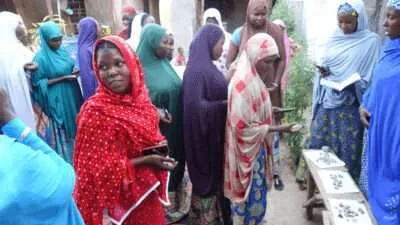
As part of its Corporate Social Responsibility (CSR) initiatives, the Development Bank of Nigeria Plc (DBN) has empowered over 200 vulnerable women with entrepreneurial development skills in Gombe and Yobe States. The programme which is a partnership with the Organisation for Environmental, Agricultural and Health Development (OEAHD) is aimed at providing soft skill acquisition for selected women, including physically challenged women in the North-Eastern part of the country. Addressing participants at the Entrepreneurial Skills Acquisition Training and Capacity Building event, the National Coordinator, OEAHD, Hon. Tabitha Iliya Sallah re-emphasized the significant roles women play in the socio-economic development of the nation. According to her, “The importance of women’s participation in entrepreneurship cannot be overstated. It is not just about fostering gender equality, but also about tapping into the full potential of our nation’s human resources. As entrepreneurs, women have the power to innovate, create jobs, and drive economic growth, because when women are economically empowered, their communities and the nation at large benefit.” “The fact that this program has been made possible through the collaboration of OEAHD and DBN is a testament to our collaborative commitment and dedication to women’s economic empowerment across regions; especially displaced women.” She stated. Commending DBN for sustaining its long-term vision of alleviating financing constraints faced by MSMEs and Small Corporations in Nigeria, Hon. Sallah noted that by providing training, mentorship, and access to finance, the bank is creating a nurturing environment for women to thrive in the business world, hereby bridging the gender gap and promoting sustainable economic development. “DBN as we all know has been at the forefront of empowering women in business with unlimited access to finance and knowledge to prosper and build viable enterprises that will enable them to improve their livelihoods and contribute to the socio-economic development of their immediate families and communities” She posited. The Organization for Agriculture and Health Development (OEAHD) is an NGO that is passionate about assisting the less privileged and vulnerable, particularly women and children and internally displaced persons etc regardless of race, colour, gender, social status, political affiliations in Nigeria. While the OEAHD have carried out several humanitarian services in the Northeastern part of the country, their operation is Nationwide with regional offices in Abuja and Gombe. The organization’s major service areas cover – Agriculture, Health and, Education. The Managing Director of DBN, Dr Tony Okpanachi, affirmed that the training was in line with the bank’s unwavering commitment to strengthening the capacity of MSMEs in the country so that they could continue to contribute more to the National Gross Domestic Product (GDP). “We believe that this partnership with OEAHD and by extension the entrepreneurial and capacity development initiative will have a significant impact on the lives of the targeted women in Gombe and Yobe State respectively, fostering their empowerment and contributing to sustainable development in the region”. “Up to date, about 62 percent of our lending has gone to women-owned businesses. Most of them are Micro and Small Businesses. Our goal is to continue to nurture and empower women across regions, the ultimate objective being to grow and upscalethem from micro to large businesses.” He stressed. He further stated that the women have received comprehensive vocational skills training that will enable them to start their businesses or enhance existing ones, thereby improving their economic wellbeing.

Majority Rural Women Can’t Access Financial Services – Centre

Majority Rural Women Can’t Access Financial Services – Centre

The Executive Director of the Policy Innovation Centre, Dr Osasuyi Dirisu has said that 80 per cent of poor rural women have difficulty accessing financial services. In a pre-conference press briefing, Monday in Abuja, Dr. Osasuyi also said the situation has further made it difficult for them to drive trade and inclusiveness. The Gender and Inclusion Summit, with the theme “Building Bridges: Advancing Gender and Inclusion through the Intersection of Trade and Health”, will hold on November 28 and 29, in Abuja, Nigeria. Analysts say the event would be a catalyst for positive change, uniting voices, inspiring commitments, and mobilizing stakeholders to advance gender equality. She said, “About 80 per cent of the 133 million people who are multi-dimensionally poor live in rural settings, who are talking about access to financial services to drive trade and inclusion. Who is talking about the gaps in infrastructure to drive productivity? The PIC Executive Director noted that it is becoming increasingly difficult for women and vulnerable groups to access healthcare making Nigeria one of the countries with the worst indices for maternal mortality, new-born to child birth. “There needs to be real conversation around gender inclusion centred around trade for that is the powerhouse that drives productivity and drives conversation around GDP that we are able to address issues around inflationary pressures and ensure that we have a productive society. “The summit is special because we are not just talking about health, we are talking about trade. We are talking about an intersection where vulnerability is likely to occur,” Dr. Osasuyi said.   Speaking about the upcoming event, the Chief Executive Officer Designate of the Nigerian Economic Summit Group, Dr Tayo Aduloju stated that ‘’To facilitate the advancement of a gender-inclusive society, it is necessary to consider how trade, investment, and health policies/interventions affect women, men, and vulnerable populations differently. Despite their significant contributions to informal trade, women continue to have limited access to resources and markets. There are also significant gaps in access to health services and Nigeria’s maternal mortality remains among the highest in the world.” He further stated that “Considering these realities, the high-level forum on the SDGs has partnered with the Policy Innovation Centre (PIC) to ensure seamless delivery of the Gender and Inclusion Summit 2023”. PIC, an initiative of the Nigeria Economic Summit Group (NESG), is the first national institutionalized behavioural initiative in Africa supporting governments and stakeholders to make behaviourally informed decisions and generate contextually relevant evidence for high-impact interventions in critical thematic areas.