Tinubu’s Tax Reset and the Rising Cost of Living: Who Really Pays in 2026?

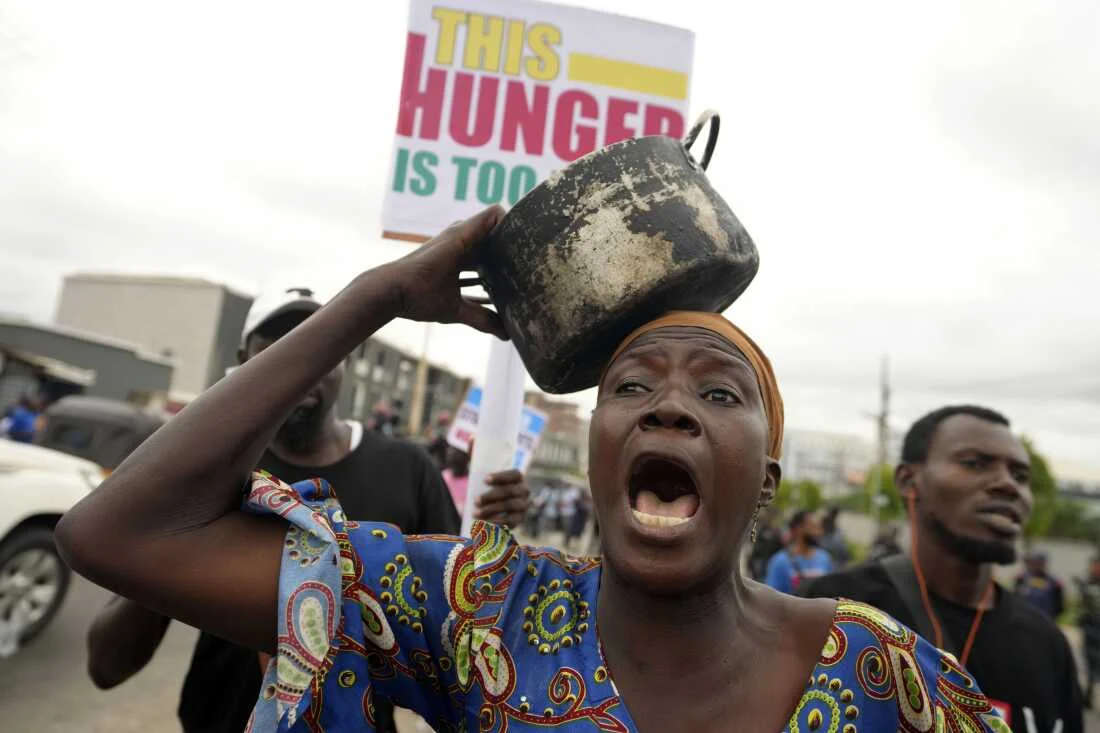
By the start of 2026, the Nigerian economy had crossed a critical psychological threshold. For millions of households, survival, not prosperity, had become the central economic concern. Food prices climbed relentlessly, transportation costs ballooned, electricity tariffs rose, and the naira’s weakness continued to hollow out purchasing power. Wages, meanwhile, remained stubbornly stagnant. In one word: Nigeria’s cost-of-living crisis swirl. This is the economic terrain into which President Bola Tinubu’s administration has launched Nigeria’s most aggressive fiscal overhaul in decades. Framed as reform, sold as necessity, and defended as inevitability, the new tax regime arrives not as a technocratic adjustment but as an additional burden on a population already stretched to its limits. The question confronting Nigerians in 2026 is no longer whether reform is needed, but who bears the cost, and who decides how much pain is acceptable. Reform in the Middle of Hardship The removal of fuel subsidies unleashed a cascade of price increases that reverberated through every sector of the economy. Transport fares surged, food inflation accelerated, and informal businesses, already operating on thin margins, struggled to survive. Electricity tariff hikes followed, further eroding household incomes and raising production costs. Currency policy adjustments compounded the crisis, making imports more expensive and local substitutes scarcer. Rather than pause to stabilize living conditions, the government pressed ahead with sweeping tax reforms. For many Nigerians, the timing alone felt punitive: a state demanding more at the precise moment its citizens had less to give. A New Tax Regime, Old Trust Deficit The overhaul rests on four major laws that replace Nigeria’s chaotic tax framework with a centralized, digitally monitored system. On paper, the logic is compelling: fewer taxes, better enforcement, broader compliance. In reality, centralization without trust risks becoming coercion by another name. Progressive tax bands and exemptions for low-income earners are cited as evidence of fairness. Yet the lived experience tells a different story. Middle-income Nigerians comprising, civil servants, professionals, and small traders, are watching their take-home pay shrink as inflation bites and long-standing reliefs disappear. What remains is a widening gap between what the state demands and what it delivers. “Widening the Net” or Tightening the Noose? Officials insist the reforms are about widening the tax net rather than increasing the burden. But a net cast over a struggling economy does not magically become lighter because it is broader. When energy costs soar, food prices spike, and wages lag inflation, taxation, no matter how elegantly designed, feels punitive. The promise that higher revenue will eventually translate into better schools, hospitals, and infrastructure rings hollow in a country where decades of oil wealth failed to produce durable public value. Nigerians have heard this argument before. Each time, they were asked to be patient. Each time, patience yielded diminishing returns. VAT and Regional Fault Lines: Old Battles, New Weapons No element of Tinubu’s tax reset better exposes Nigeria’s unresolved national question than the proposed restructuring of the Value Added Tax (VAT) sharing formula. Presented by the government as a neutral, efficiency-driven move toward derivation, the reform has instead resurrected the ghosts of Nigeria’s most bitter fiscal conflicts, conflicts never resolved, only postponed. By tilting VAT allocation more decisively toward where consumption and economic activity are recorded, the reform overwhelmingly favours Lagos and a handful of commercially dominant states in the South-West. Lagos’s outsized contribution to VAT revenue is frequently cited to justify this shift. The logic is straightforward: where revenue is generated, revenue should remain. But Nigeria’s history warns that straightforward logic often produces dangerous outcomes. In the First Republic, a strong derivation principle allowed regions to retain up to 50 percent of revenues from cocoa, groundnuts, and palm produce. That system collapsed not because derivation was inefficient, but because widening regional disparities turned it into a political weapon. The fiscal tensions it generated contributed to the instability that ended civilian rule. After the civil war, military governments centralized revenue sharing not out of ideological preference, but because national survival required redistribution. Oil revenues were pooled to hold a fractured country together, not to reward efficiency. The VAT debate now retraces that path, without the trauma that once forced compromise. Many Northern states, heavily dependent on VAT allocations to fund basic services, see the reform not as fiscal federalism but as fiscal punishment. Their argument is blunt: productivity cannot be rewarded fairly in a country where productivity itself has been shaped by decades of uneven federal investment, insecurity, and policy bias. When ports, rail lines, industrial clusters, and financial infrastructure are concentrated in one region, derivation ceases to be neutral, it becomes structural exclusion. The echoes of the Niger Delta struggle are unmistakable. For decades, oil-producing communities watched wealth flow to Abuja while bearing the environmental and social costs of extraction. Today, roles appear reversed: commercially dominant states demand to keep what they generate, while poorer regions warn that redistribution, the glue of the federation, is being quietly dismantled. The federal government’s response, that states should simply “grow their economies,” rings hollow in regions battling insurgency, banditry, collapsing education systems, and mass poverty. Growth is not summoned by rhetoric; it is enabled by security, infrastructure, and human capital, public goods that require funding in the first place. History is unambiguous: Nigeria’s most destabilizing crises often begin as revenue disputes disguised as technical reforms. When groups feel fiscally cornered, resistance follows, political, legal, and sometimes worse. Wether anyone agrees or not, a VAT regime that sharpens inequality without robust equalization mechanisms is not reform, it is deferred instability. The question therefore becomes, wether Nigeria is prepared for another combustive civil disorder? The Lagos Model Goes National The reforms unmistakably bear the imprint of the Lagos model that is notorious for its centralized authority, digital surveillance, and uncompromising enforcement. In Lagos, this model thrived on a dense commercial base and a large formal sector. Nationally, it risks flattening Nigeria’s economic diversity into a one-size-fits-all template. Equally corrosive is the perception, fair or not, that fiscal power is increasingly concentrated within a narrow
VAT remains 7.5%, not increased – Wale Edun

Wale Edun, Finance and coordinating Minister of the Economy affirms that VAT stays at 7.5%, not 10% as speculated.
Q1 2023: FG rakes in N709.59bn VAT

Nigeria’s aggregate Value Added Tax (VAT) for Q1 2023 has been reported at N709.59 billion, the National Bureau of Statistics (NBS), has said. According to the NBS Value Added Tax report for Q1, 2023, a growth rate of 1.75 percent on a quarter-on-quarter basis from N697.38 billion in Q4 2022. Local payments recorded were N436.10 billion, Foreign VAT payments were N151.13 billion, while import VAT contributed N122.37 billion in Q1 2023. On a quarter-on-quarter basis, the activities of households as employers, undifferentiated goods- and services producing activities of households for own use recorded the highest growth rate with 349.86%, followed by construction with 95.64%. On the other hand, the report noted that activities of extraterritorial organizations and bodies had the lowest growth rate with–53.54%, followed by real estate activities with– 47.01%. In terms of sectoral contributions, the top three largest shares in Q1 2023 were manufacturing with 29.65%; information and communication with 19.29%; and mining & quarrying with 12.24%. The report said: “Conversely, activities of extraterritorial organizations and bodies recorded the least share with 0.02%, followed by activities of households as employers, undifferentiated goods- and services-producing activities of households for own use with 0.03%; and water supply, sewerage, waste management, and remediation activities with 0.04%.” However, on a year-on-year basis, VAT collections in Q1 2023 increased by 20.56% from Q1 2022. Similarly, aggregate Company Income Tax (CIT) for the first quarter of 2023 was reported at N469.01 billion, indicating a growth rate of -37.79% on a quarter-on-quarter basis from N753.88 billion in Q4 2022. According to the NBS, local payments received were N300.78 billion, while Foreign CIT payment contributed N168.23 billion in Q1 2023. On a quarter-on-quarter basis, the financial and insurance activities recorded the highest growth rate with 50.42 per cent, followed by construction with 42.32 per cent. “On the other hand, water supply, sewerage, waste management, and activities had the lowest growth rate with – 69.38%, followed by other service activities with -60.13%. In terms of sectoral contributions, the top three largest shares in Q1 2023 were financial & insurance activities with 22.94%; manufacturing with 20.91%; and information and communication with 11.89%. “Conversely, the activities of households as employers, undifferentiated goods-and services-producing activities of households for own use recorded the least share with 0.01%, followed by water supply, sewerage, waste management, and remediation activities with 0.04%; and activities of extraterritorial organizations and bodies with 0.12%. “However, on a year-on-year basis, CIT collections in Q1 2023 decreased by 14.96% from Q1 2022,” the NBS stated.