Tinubu Tax Reform Bills: Buba Galadima Opens a Can of Warms

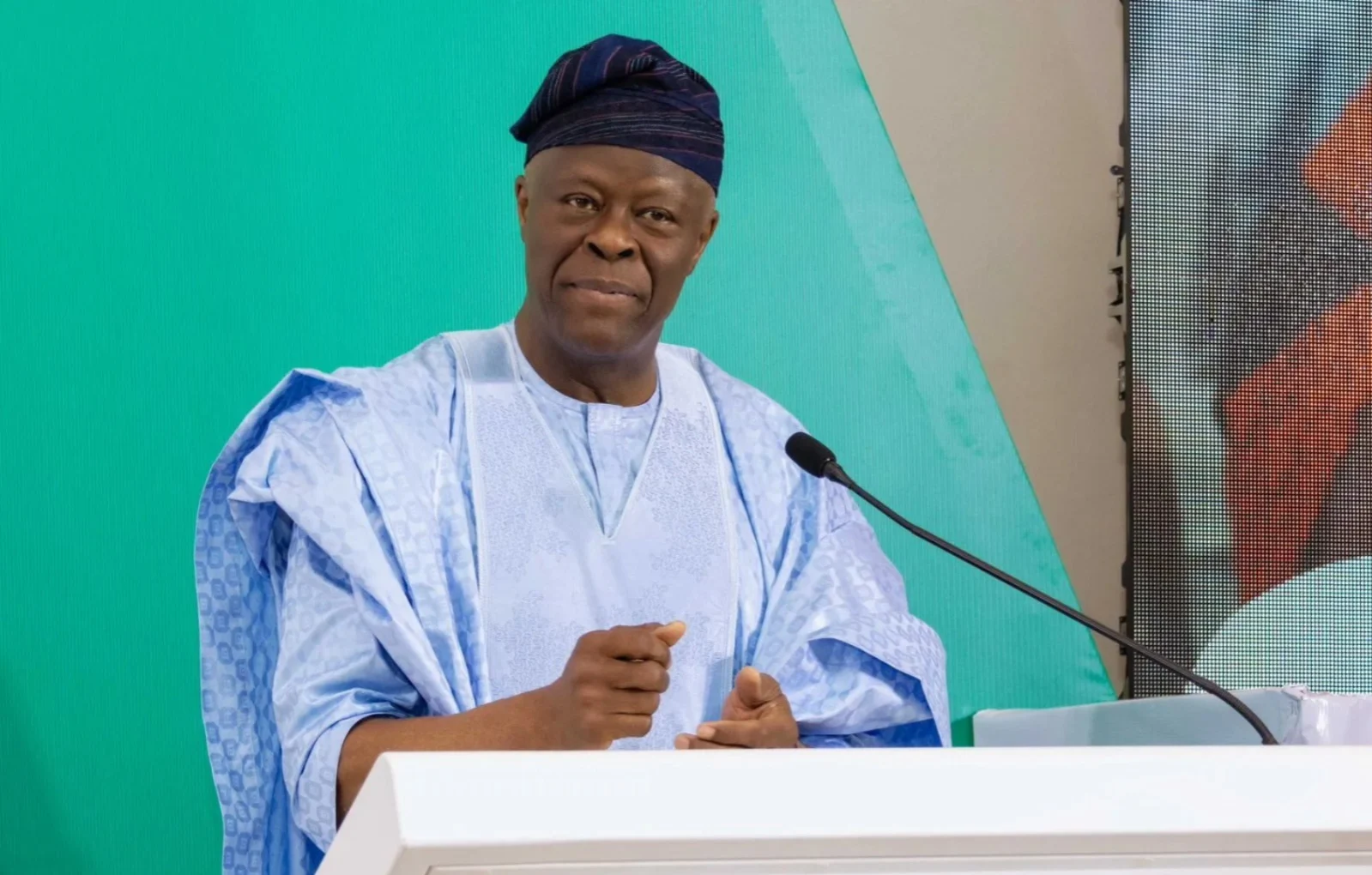
Engr. Galadima, an Elder statesman and stalwart of the NNPP says the Bills, in their present format have to be rejected because the process leading to its formulation lacks transparency. He said the bill is a contraption of Mr. Taiwo Oyedele, the Chairman of the tax reform committee and Mr. Babajide Sanwo-Olu, the Lagos State Governor, contending, the two of them practically wrote the bills before handing them over to President Tinubu. Engr. Galadima said that in fact, all members of the committee from other parts of the country have already disowned the bills because they discovered that the final bill did not reflect the contributions submitted by the various sub-committees. READ ALSO: TCN Announces 14 Days’ Power Outage in Parts of FCT, Nasarawa State Engr. Galadima who spoke as a guest of This Day Live, a programme on Arise TV. chided Dr. Reuben Abati whom he accused of deploying divisive narratives that had the tendency to pit regions of the country against each other. Galadima also stressed that the bills will never be allowed to scale through in their present format because of the approach of President Tinubu and his recent statement of ‘no going back.” He also accused the committee and President Tinubu of over reaching themselves by veering into the subject of derivation or revenue sharing, which is a constitutional issue. Contributing to the subject, Professor David Aworawo of the University of Lagos disagreed with the committee on several aspects of the Bill. READ ALSO: Trump to be Sentenced Before Inauguration He referred to a provision in the Bill which stated that by 2030 funding to the Tertiary Education Trust Fund (TETFUND) shall cease and be diverted to the National Education Loan Fund (NELFUND), saying that provision alone goes to show that the committee lacked adequate knowledge of contemporary Nigeria. Contending, Prof Aworawo explained that most modern physical structures in tertiary institutions in Nigeria are funded by TETFUND, asking, “If you phase out TETFUND and utilise the money as loans to students, where will they stay to receive the lectures?” Reacting to the position of Mr. Galadima, Taiwo Oyedele confirmed that members of the committee only met with the Governor of Lagos, who ended being the only governor that made input to the bills. He said even though the committee met with Mr. Uba Sani, the Governor of Kaduna state, they did not succeed in discussing the subject matter of the tax reform bills. He said that the committee did not succeed in having any engagement with the remaining 35 state governors. Mr. Oyedele said that at inception, the committee had planned to meet with a governor from each of the six geo-political zones of the country but succeeded in meeting with the Lagos state governor alone.
VAT, vassal states and restructuring (2)

“Almost two years since his hare-brained twin policies, market forces are yet to fully determine the prices of petroleum products and the price of the Naira… The irony right now is that there are claims that the country is turning the corner, and that good days are on the horizon. Tinubu says so.” THERE are too many things wrong with the regime of Nigeria’s president, Alhaji Bola Ahmed Tinubu. For 18 months since the advent of the administration, it has been a case of stumbling from one problem to the other. The tragedy is that almost all the challenges that this regime has been grappling with were self-inflicted. It started off with an ill-conceived petrol subsidy removal, and it followed that almost immediately with allowing the national currency, the Naira, to be floated. Both policies turned out to be disastrous because the so-called petrol subsidy payment persisted in an opaque manner, and subsidizing the Naira did abate. Recently, the state oil corporation, the Nigerian National Petroleum Company Limited (NNPCL) insisted that it will continue to import petroleum products in spite of the existence of a domestic producer, Dangote Refinery and Petrochemical Company, Lagos, which said that it has the capacity to satisfy domestic consumption for petroleum products. Dangote’s 650,000 barrels of crude oil per day production should on full stream produce 50 million litres of petrol and 15 million litres of diesel per day. READ ALSO: THREE TRAGICALLY KILLED AFTER GOOGLE MAPS DIRECT CAR ONTO UNFINNISHED BRIDGE Experts estimate that petrol consumption in Nigeria should not exceed 35 million litres per day. But corruption puts it much higher, sometimes for as high as 70 million litres per day. This outrageous figure is not strange because Nigeria is widely acknowledged as a crime scene – a country hurting in the hands of its supposed care-givers. Private importers who work at the behest of collaborators inside the government have been known to ‘import’ shiploads of petroleum products without the ships being sited anywhere near the country’s territorial waters, not to talk of discharging any products. But such ‘importers’ file claims with excellent shipping documents, and collect hundreds of millions of dollars from the public treasury. NNPCL does the same. Then a cartel hijacks the little litres of petrol that were in truth brought in, ferrying such to neighbouring countries in 33000-litre trucks and in broad daylight where they make a kill. Nigeria has clearly delineated borders with its neighbours. We have all manner of tax-payer paid government officials at those borders. But the trade booms. Currently, an investigative reporter has been reporting on the daily massive smuggling of 50kg bags of rice into the country with the active involvement of immigration top shots. He has been doing so with video evidence. Last week the journalist reported that the leader of the smugglers was accorded a red carpet reception at the Abuja headquarters of the Nigeria Immigration Service. His reports have not been disputed and nothing has happened to the economic saboteurs. Back to the issue at hand. Alhaji Tinubu takes responsibility for his misadventures on petrol and Naira. Almost two years since his hare-brained twin policies, market forces are yet to fully determine the prices of petroleum products and the price of the Naira. Whilst the NNPCL moderates the prices of petroleum products especially petrol by importing and fixing different pump head prices for different parts of the country, the Central Bank defends the Naira through regular sales of the United States dollars to the bureaux de change, and through the aggressive mopping up of Naira in circulation. The policies are obviously not working. The price of petrol at over N1000/litre is not sustainable. It has ruined the economy and will inflict more damage with the regime’s insistence that it will stay the course. Nigerian families are worse off. Bloomberg, an American news organization reported last week that about two -third of Nigerian households can barely manage to feed once a day. And the quality of the meal is suspect. Their report was drawn from the latest statistics from the Nigeria’s National Bureau of Statistics (NBS). PLEASE READ: NIGERIA, THREE OTHER COUNTRIES GO LIVE ON ECOWAS E-Certificate The irony right now is that there are claims that the country is turning the corner, and that good days are on the horizon. Tinubu says so. The central bank governor says the same. Finance minister who is also the coordinating minister for the economy sees the same signs of economic recovery. Even the national security adviser, yes the NSA, who should have his hands full with widespread insecurity pervading the land, parrots the same message of visible economic turn around. But they are the only people who see economic recovery on the horizon. And they all share one thing in common – they all binge on the public treasury. I wager that none of them had been to a gas station to buy either petrol for the government SUVs (armour- plated and bomb-resistant brands) that they are driven in or to purchase diesel to fire government – owned electricity generators in their residences which also are built and tastefully furnished with taxpayers money. It is not strange, therefore, that they are separated from reality and the daily grind of the majority of Nigerians. The case of the NSA is particularly painful and pathetic. Daily, he joins the security agencies including the secret police otherwise called the Directorate of State Services (DSS), the regular Police, the Civil Defence Corps, the Armed Forces, among others, to run political commentaries on the state of the country. In place of combating insecurity, what the NSA does is to warn non-state agents terrorizing Nigeria to know that Tinubu is not known to lose any battle. Is he for real? The man cannot be, and should not be, a national security adviser even in a banana republic. What our rulers are doing is beyond talking up the economy, they are deliberately deceiving Nigerians. Any sign of economic recovery must
VAT, vassal states and restructuring [1]

“Buhari was an intentional man but because he was inept at whatever he did, he failed to accomplish his parochial vision of restructuring Nigeria. He failed himself. He failed his people. But he left a template for his successor.“ “Soso onye nzuzu bu onye na-amagh mgbe ekechara nku ukwa”. Only a fool would not know when the bazaar is over. I used to have a friend. He is now late. His name was Jimanze Alowes. He said he was Igbo from Amaigbo in Imo state. But his name did not sound Igbo. However, he spoke impeccable Igbo, if there was any such thing. He also spoke impeccable English, if there was any such thing also. He was brilliant, and articulate. He was certainly street wise. In hindsight, he probably knew that longevity of life was not a gift to him from his creator. He understood this country, and he wanted things done, and done fast to his personal upliftment. On occasions when we sat down to discuss and bemoan the challenges that the country threw on the path of youngsters, he would sit in disturbing and disconcerting silence. He left you with the impression that he was not paying attention. But when you expressed frustration that he was not listening he would quietly but intently look you in the eyes, and then say something to the effect that bells were being rung every morning and those with trained ears knew where to go to grab their share of the looting that was going on in the country. Here, I am referencing conversations that took place almost 30 years ago. In another vein, Nigeria is like the Biblical story of the 10 Virgins as recorded in the Gospel of St. Matthew chapter 25 from verse 1 and following. “Then shall the kingdom of heaven be likened unto ten virgins, which took their lamps, and went forth to meet the bridegroom. And five of them were wise, and five were foolish”. You will wonder about the relevance of this illustration to the topic above and the broad theme of the subject under discussion. The five virgins who had oil in their lamps represented real Nigerians, while the five foolish virgins who profess to be Nigerians are only outwardly so, doing so just with their lips. In reality they are outsiders who have been left, or who allowed themselves to be left, with the short end of the stick. The Igbo in Nigeria may just be the five foolish virgins. This is not an effort at self deprecation. We know it as a fact that some Nigerians have been mouthing the urgent imperatives of restructuring the country. But some elements in the Igbo nation are campaigning for an excision from this country, and the creation of a new country to be called Biafra. This new country was actually first created on May 30, 1967 and became defunct in January 1970. So, Biafra was a country that lived for about three years. The point to note is that while some Nigerians are still clamouring for restructuring, the smart ones are at work doing the deed of reshaping the country. This started with the advent of the All Progressives Congress (APC) political party with Maj.-General (rtd) Muhammadu Buhari in government in 2015. Buhari (2015-2023) was a bad ruler. And he was inept in his attempt to restructure Nigeria to benefit Muslims and the northern parts of the country. Nonetheless, he tried his best. He populated his regime with people who worshiped like him. He moved every movable government institution to areas which he considered to be part of the the greater north. He borrowed offshore funds in the name of all Nigerians but concentrated on the citing of public facilities and infrastructure in the north. Buhari’s regime went into overdrive to explore for crude oil in parts of the north. He spared no expense to make this a reality. Where the money for the Buhari venture was not borrowed, it came from the resources from other parts of the country. He commenced building pipelines from the Niger Delta region to the north, and further afield to neighbouring Niger Republic, his alleged ancestral home, to pipe natural gas to yet to be built power stations, and for storage. Buhari was no fool. He had a clear picture of Nigeria’s tomorrow. He knew that what we were doing, and are still doing, in this country was not sustainable. He worked very hard to ensure that the north or part of the north was ready for the inevitable. It was this reasoning that informed his borrowing billions of dollars from the Chinese to construct standard gauge rail tracks from the north to the heart of Niger Republic, his other home country. Nigeria will repay the debt but will only get crumbs from the designated projects. The eastern axis of the country will get a narrow rail gauge. Buhari was an intentional man but because he was inept at whatever he did, he failed to accomplish his parochial vision of restructuring Nigeria. He failed himself. He failed his people. But he left a template for his successor. And the new man is adept at devious schemes. The new ruler, Alhaji Bola Ahmed Tinubu, is focused and determined to restructure Nigeria to benefit his south west people. And he is not shy about it. He has already said that those expecting restructuring along the lines he had been campaigning for in the past three decades will have to wait in vain. He said that restructuring of the country has been moving apace since he was made president about 18 months ago. And Tinubu’s new definition of political and economic restructuring of Nigeria included stuffing the institutions of the federal government with people who speak and dress like him. He has captured the commanding heights of the security sector and gifted the same to his acolytes who mostly are members of his ethnic group. The same goes for revenue generating
FG confirms plans to raise VAT to 15%, limits increase to luxury goods

The Minister of Finance and Coordinating Minister of the Economy, Mr. Wale Edun, has confirmed that the federal government plans to raise Value Added Tax (VAT) to 15%, but clarified that the increase would primarily affect luxury goods. Speaking at an investor meeting during the ongoing IMF/World Bank Annual Meetings in Washington DC, Mr. Edun explained that a bill currently before the National Assembly aims to gradually raise VAT on luxury goods, while essential items consumed by poorer and vulnerable Nigerians would remain exempt from VAT or attract a zero rate. “In terms of VAT, President Bola Tinubu’s commitment is that while implementing difficult and wide-ranging but necessary reforms, the poorest and most vulnerable will be protected,” Edun said. “So, the Bills going through the National Assembly in terms of VAT will raise VAT for the wealthy on luxury goods, while at the same time exempting or applying a zero rate to essentials that the poor and average citizens purchase.” He added that the list of essential goods exempted from VAT will be made available to the public in due course. Mr. Edun also expressed optimism regarding Nigeria’s oil sector, noting that improved security in oil-producing regions and new investments, particularly by Total and ExxonMobil, would result in increased oil production and boost foreign exchange inflows. Addressing the issue of fuel subsidy removal, Edun disclosed that while subsidy reform was announced earlier, the full implementation only took effect last month. He emphasized that the savings from the removal would start to have a more significant impact on the economy going forward. In response to a question about the possibility of Nigeria entering an IMF program, Mr. Edun revealed that the Tinubu administration went ahead with the issuance of Domestic Dollar Bonds despite advice from the IMF against such a move. ReplyForwardAdd reaction
FG Set to jack up Value Added Tax

The federal government has put forward a proposal to raise the Value Added Tax (VAT) from 7.5% to 10%. This proposal is encapsulated in an executive bill currently under consideration by the National Assembly. Reports indicate that the government plans to implement further increments, targeting a VAT of 12.5% by 2026, increasing to 15% starting in 2030. The legislative document outlines a gradual increase in VAT rates across several assessment years. Earlier discussions around VAT included insights from Taiwo Oyedele, chairman of the presidential committee on fiscal policy and tax reforms, who previously stated the necessity for a VAT increase. In contrast, Finance Minister Wale Edun had clarified that the VAT rate had not yet been modified. In addition to the VAT hike, the bill also suggests a reduction in the Corporate Income Tax (CIT) from 30% to 27.5% by 2025, with a further decrease to 25% in 2026. Small businesses with annual turnovers below ₦20 million will not be subject to this tax. The document further stipulates that companies falling under certain categories with an effective tax rate below 15% must pay an additional tax to meet that minimum threshold. This measure aims to bolster compliance among larger corporations. Furthermore, the federal government recently published new withholding tax regulations, set to take effect on January 1, 2025, as part of its ongoing tax reform agenda. These proposed changes reflect the government’s intention to adapt the taxation framework to stimulate economic activity while managing fiscal responsibilities.
Q1 2023: FG rakes in N709.59bn VAT

Nigeria’s aggregate Value Added Tax (VAT) for Q1 2023 has been reported at N709.59 billion, the National Bureau of Statistics (NBS), has said. According to the NBS Value Added Tax report for Q1, 2023, a growth rate of 1.75 percent on a quarter-on-quarter basis from N697.38 billion in Q4 2022. Local payments recorded were N436.10 billion, Foreign VAT payments were N151.13 billion, while import VAT contributed N122.37 billion in Q1 2023. On a quarter-on-quarter basis, the activities of households as employers, undifferentiated goods- and services producing activities of households for own use recorded the highest growth rate with 349.86%, followed by construction with 95.64%. On the other hand, the report noted that activities of extraterritorial organizations and bodies had the lowest growth rate with–53.54%, followed by real estate activities with– 47.01%. In terms of sectoral contributions, the top three largest shares in Q1 2023 were manufacturing with 29.65%; information and communication with 19.29%; and mining & quarrying with 12.24%. The report said: “Conversely, activities of extraterritorial organizations and bodies recorded the least share with 0.02%, followed by activities of households as employers, undifferentiated goods- and services-producing activities of households for own use with 0.03%; and water supply, sewerage, waste management, and remediation activities with 0.04%.” However, on a year-on-year basis, VAT collections in Q1 2023 increased by 20.56% from Q1 2022. Similarly, aggregate Company Income Tax (CIT) for the first quarter of 2023 was reported at N469.01 billion, indicating a growth rate of -37.79% on a quarter-on-quarter basis from N753.88 billion in Q4 2022. According to the NBS, local payments received were N300.78 billion, while Foreign CIT payment contributed N168.23 billion in Q1 2023. On a quarter-on-quarter basis, the financial and insurance activities recorded the highest growth rate with 50.42 per cent, followed by construction with 42.32 per cent. “On the other hand, water supply, sewerage, waste management, and activities had the lowest growth rate with – 69.38%, followed by other service activities with -60.13%. In terms of sectoral contributions, the top three largest shares in Q1 2023 were financial & insurance activities with 22.94%; manufacturing with 20.91%; and information and communication with 11.89%. “Conversely, the activities of households as employers, undifferentiated goods-and services-producing activities of households for own use recorded the least share with 0.01%, followed by water supply, sewerage, waste management, and remediation activities with 0.04%; and activities of extraterritorial organizations and bodies with 0.12%. “However, on a year-on-year basis, CIT collections in Q1 2023 decreased by 14.96% from Q1 2022,” the NBS stated.