TUC Pushes for Petrol Price Cut, Urges FG to Act

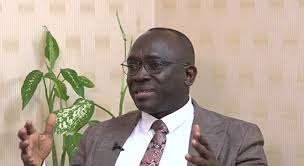
The Trade Union Congress (TUC) has called on the Federal Government to reduce petrol prices to the rates seen in June 2023. This demand comes amidst rising fuel costs that have affected Nigerians since May when the rate surged from ₦184 to the current price of ₦998 per litre in Lagos. The Congress goes on to make a raft of suggestions which it reckons, when adopted by the Federal Government, would ameliorate the current hardship greeting the sudden increase in fuel pump price. avert the impending mallei The TUC proposed that foreign exchange be allocated to Dangote Refinery at a lower rate to make fuel more affordable. It also suggested sourcing refined petrol from other regions if current production cannot meet local demand. In addition, the TUC advocated for all marketers to be given licenses to lift petrol from the Dangote Refinery, ensuring availability and access to fuel across the country. “We want the price of the product to go below what it was before; not just reverse to what it was before but to go below,” said TUC President, Festus Osifo, at a press briefing in Abuja on Thursday. “We want the Federal Government to, through Nigerian Midstream and Downstream Petroleum Regulatory Authority (NMDPRA), give all marketers licenses to lift petrol from the Dangote Refinery. “The solution we are proposing if implemented will take us to the price we had as of June last year. “There is no government in the world that doesn’t intervene in its critical sector” and that the Federal Government “shouldn’t leave it (the oil sector) to the vagaries and gyration of our naira. “If it is not available, it is a problem. If, for example, the production from Dangote Refinery is less than 15 million litres per day, it is not sufficient. “So, while efforts are being made to ramp up production from Dangote Refinery, what we are demanding is that we should look for every other means as we are ramping up production, we should source for that difference and bring it in for a while until Dangote can get to that level where the production is sufficient to get to all nooks and crannies of Nigeria. For us, that is key because it will address the issue of availability,” the TUC boss stated.
Minimum Wage: Tinubu To Meet With Organised Labour

President Bola Tinubu will meet with the Organised Labour in Abuja on Thursday to further discussions on a new minimum wage for workers in Nigeria. A top labour source told Channels Television that the President invited the leadership of the Nigeria Labour Congress (NLC) and Trade Union Congress (TUC) to the meeting expected to be held at the Aso Villa in the nation’s capital city. The President is expected to make a decision on the ₦62,000 proposal of the government and private sector side; as well as the ₦250,000 demand of the Organised Labour. The Thursday meeting is coming about a month after the President said in his Democracy Day speech on June 12, 2024, that an executive bill on the new national minimum wage for workers would soon be sent to the National Assembly for passage. On June 25, the Federal Executive Council (FEC) chaired by the President stepped down from consideration and deliberation on the memo on the new minimum wage to allow for more engagement with stakeholders. Two days after, Tinubu and Vice President Kassim Shettima, at the 141st meeting of the National Economic Council (NEC), met with governors of the 36 states of the Federation and ministers to deliberate on a new minimum wage for workers. Long Walk To New Wage Talks for a new minimum wage for Nigerian workers have been on for a while. The Minimum Wage Act of 2019, which made ₦30,000 the minimum wage, expired in April 2024. The Act should be reviewed every five years to meet with contemporary economic demands of workers. President Bola Tinubu in January set up a Tripartite Committee to negotiate a new minimum wage for workers. The committee comprises the Organised Labour, representatives of federal and state governments as well as the Organised Private Sector. However, the committee members failed to reach an agreement on a new realistic minimum wage for workers, forcing labour to declare an indefinite industrial action on Monday, June 3, 2024. Businesses were paralysed as labour shut down airports, hospitals, the national grid, banks, National Assembly, and state assemblies’ complexes. The labour unions said the current minimum wage of ₦30,000 can no longer cater to the well-being of an average Nigerian worker, saying the government should offer workers something economically realistic in tandem with current inflationary pressures, attendant effects of the twin policies of petrol subsidy removal and unification of the forex windows of the current administration. Labour “relaxed” its strike on June 4, 2024 following assurances from the President that he was committed to a wage above ₦60,000. Both the Trade Union Congress (TUC) and Nigeria Labour Congress (NLC) leadership subsequently resumed talks with the representatives of the Federal Government, states, and the Organised Private Sector. On Friday, June 7, 2024, the two sides (labour and the government) still failed to reach an agreement. While labour dropped again its demand from ₦494,000 to ₦250,000, the government added ₦2,000 to its initial ₦60,000 and offered workers ₦62,000. Both sides submitted their reports to the President who is expected to make a decision and send an executive bill to the National Assembly to pass a new minimum wage bill to be signed into law by the President.
Raising Minimum Wage Above N62,000 Will Lead to Job Losses, NECA Warns

The Nigeria Employers Consultative Association (NECA) has warned that approving a minimum wage above N62,000 could result in significant job losses. NECA’s Director-General, Adewale-Smatt Oyerinde, voiced this concern during a press briefing on Tuesday in Abuja. His comments came during the third edition of the Nigeria Employers Summit, which focused on “Economic Renaissance: Harnessing Government Reforms and Private Sector Agility.” Oyerinde emphasized that the organized private sector cannot afford a minimum wage higher than N62,000, a figure agreed upon during tripartite committee negotiation meetings. He cautioned that exceeding this amount could lead to non-compliance and subsequent legal battles. “Setting a national minimum wage that businesses cannot sustain will inevitably result in litigation and crises,” Oyerinde stated. In response to allegations of delays in the wage review process, Oyerinde clarified that there have been no unnecessary delays and that the process is actively progressing. “There is no waiting game, and I think we must put all this into context. It is misinformation,” he said. He explained that after the tripartite committee submits its recommendations to the president, a bill will be forwarded to the National Assembly for legislation. He also mentioned that labor groups can advocate for an expedited process.
Nationwide Strike: kneejerk Reaction to a Serious Governance Challenge

As you read this Nigeria is now under total lockdown, whereby major economic activities in the organized public and private sectors have been completely crippled. Labour has made good its threat to commence an indefinite nationwide strike to protest government insensitivity to its plight and clamour for wage review. This moment has been long coming, taking into account recent federal government economic policies which impacts have been skewed againts the suffering mass of Nigerians. From the withdrawal of fuel subsidy, liberalization of the foreign exchange to the recent hike in electricity tariff and and aborted cybersecurity levy. Most of these reforms are mass focused and have had acute impact on the social and economic wellbeing of poor Nigerians. This has pitched labour unions against the government as organized labour agitate for wage increases and better welfare for their members. But I am one of a few who do not think that the labour is going about its agitations correctly. The protests and strikes so far have been kneejerk reactions that have been largely ineffectual. Put simply, I DO NOT AGREE WITH THIS CALL FOR NATIONWIDE INDEFINITE STRIKE. My reasons are simple. 1. As already stated, this strike and others before it are largely kneejerk reactions to a fundamental error of policy choice, planning and implementation by government. 2. The strikes are one too many and have a tendency of seeming like one repeating a process and expecting a different outcome. 3. Some are of the opinion that most of the recent strike actions have been about bread and butter issues and nothing about the very important subject of better governance of the society. Here are a few alternatives that labour may want to contemplate if they are desirous of thinking outside the box. 1. Formulate proper critical engagement with the government on sincere cost cutting measures that affect the highest echelons of the public service and governmental agencies. 2. Collaborate with the executive to instigate a downward review of the cost of governance. 3. Encourage the president to prune the size of the cabinet or you partner with the mass public to achieve the same purpose. 4. Let you labour strike not be always about your interests but the wellbeing of the Nigerian masses. These strategies shall assist to endear the labour movement to the Nigerian public and win their confidence and trust. Labour can leverage on such goodwill to escalate activities to achieve desired changes in the political arena.
Nationwide Strike Imminent as Labour Unions Decry Government Inaction

The Nigeria Labour Congress (NLC) and the Trade Union Congress (TUC) have threatened to embark on nationwide strike by Monday in response to the Federal Government’s failure to finalize a new National Minimum Wage Act and reverse the recent surge in electricity tariff to N65/kwh. During a press conference held on Friday, May 31st, 2024, the unions expressed deep concern over what they perceive as the government’s disregard for the welfare of Nigerian workers. The unions were particularly irked by the absence of governors and key ministers, except for the Minister of State for Labour and Employment, during the negotiations as a mark of the government’s lack of commitment to addressing the concerns of workers. Recalling the ultimatums issued during the May Day celebrations on May 1st, 2024, demanding the conclusion of the minimum wage negotiations by the end of the month, the unions emphasized the lack of substantial progress or commitment from the government. In addition to demanding the reversal of the recent electricity tariff hike, which saw rates skyrocket to N225/kwh, the unions reiterated their call for a return to the previous rate of N65/kwh and an end to the categorization of consumers into Bands. Despite widespread protests and public outcry, the unions criticized the government’s response as characterized by “persistent inaction” and the dissemination of propaganda rather than engaging in meaningful dialogue. Consequently, the NLC and TUC announced the initiation of an indefinite nationwide strike, set to commence on Monday, June 3rd, 2024. The unions called upon their affiliates, civil society organizations, market traders, and the general public to lend their support to the industrial action. While acknowledging the potential inconveniences that may arise from the strike, the unions affirmed their unwavering resolve to pursue their objectives until the demands regarding the minimum wage and electricity tariff hike are satisfactorily addressed by the government.
FG, Labour To Resume Talks Friday On Minimum Wage

President Bola Tinubu-led government, on Wednesday, reached out to the Organised Labour consisting the Nigeria Labour Congress (NLC) and Trade Union Congress (TUC) for the continuation of minimum wage negotiations. According to Punch, a source familiar with the matter disclosed the development in Abuja. The source noted that Labour would honour the invitation. The source said, “A letter has been addressed to Labour by the committee chairman and signed by the NSIWC chairman. The meeting is scheduled for Friday. “Of course, Labour will attend. If they present a better offer on Friday we will accept it.” Recall that the minimum wage committee, on Tuesday, adjourned indefinitely after talks between the Federal Government and Organised Labour broke down. During the meeting labour rejected the Federal Government’s ₦60,000 fresh proposal, up from the earlier ₦57,000 offer. At the meeting, labour also lowered its demand by removing ₦3,000 from the ₦497,000 it proposed last week, pegging the new proposal at ₦494,000. To fast-track the negotiation process, NLC and TUC on May Day gave the committee till the end of the month to wrap up talks on a new national minimum wage. The ultimatum will expire on Friday night.
Shelve Planned Strike, Tinubu, Sultan Beg NLC, TUC

President Bola Tinubu has appealed to the labour unions to give government more time to address the issues bedeviling the country. The Nigeria Labour Congress (NLC) and the Trade Union Congress (TUC) have fixed October 3rd to embark on an indefinite strike following the removal of fuel subsidy by the Federal Government and the attendant hardship it has brought on Nigerians. Tinubu, who was represented by the Deputy Senate President, Sen. Barau Jibrin, at a public lecture to mark Nigeria’s 63rd Independence Anniversary on Friday in Abuja, announced that the Federal Government is determined to address the socio-economic challenges facing Nigerians. Whilst urging them to sheathe their swords “in the interest of the masses”, Tinubu said his government was doing everything within its power to bring succour to Nigerians. “I want to emphasise as well that this government is new and the government is doing all within its powers to make sure it brings succour to the entire people of this country. “Government has already gone ahead to provide N500 billion to states to cushion the effects of subsidy removal. The President enjoined members of the unions to consider dialogue as the best way to resolve the issues. “The Sultan also talked about the issue of strike by the NLC. Please, on behalf of the President and the entire government, this is not the time for strike. It is too early. “Please let’s dialogue, let’s get together, let’s understand ourselves and let us look at the prevailing situation in the country,” he said. Earlier in his remark, Alhaji Sa’ad Abubakar, the Sultan of Sokoto and President-General, Supreme Council for Islamic Affairs (NSCIA), had appealed to labour unions to shelve the nationwide strike slated to commence on Tuesday. Abubakar urged Labour not to embark on the industrial action but continue to dialouge with the Federal Government. He emphasised the need for dialogue to find solutions to the issues “instead of embarking on a strike”. “I am an advocate of dialogue because strikes don’t solve problems; they make them worse. Our leaders must tighten their belt, the common man is suffering. “I don’t think this government will just decide to make life bad for the people; as leaders and elders, we will always call on stakeholders not to embark on journeys that will make life worse for the common man. “I don’t think government can take it upon itself to make life unbearable for the common man, let’s give them chance and see what they can do,” he said. According to him, strike will add more problems to the existing economic situation. “If people are on strike, there wouldn’t be electricity, water, hospital and transportation system. “Please, let’s reach out to our brothers and sisters who are clamouring to go on strike. They should have a rethink,” Sultan appealed.