You must meet Nigerians’ expectations, Tinubu tasks new ministers

President Bola Tinubu has tasked the new 45 ministers to meet the expectations of Nigerians for a renewed socio-economic development. The president stated this after the inauguration of the ministers at the State House Banquet Hall on Monday in Abuja. He said that the administration came at a time that the country needed a renewal and reforms in all ramifications. “Nigerians expect you to hit the ground running just as we had promised them during our campaigns. With your inauguration today, you have become ministers of the Federal Republic not ministers of a particular state or region. “Nigerians expects a lot and they deservedly want to see changes in their lives. You are now in the same boat with me and they expect that their lives would take a new and better turn,” he said. Tinubu said that the new ministers reflected the different diversities of the country and were chosen for their tract record of success and achievements in their various fields of endeavours. “The challenges we face today are daunting but we have the opportunity to implement long due reforms that would bring about peace, safety and prosperity of our people as contained in our renewed hope agenda. “We are about to accelerate our governing efforts, move forward and realise our aspirations for Nigerians. Tremendous responsibilities follow this appointment and all of you are expected to contribute your quota to deliver accountable, efficiently and effective service to Nigerians. “Your assignment begins immediately and you must work to make yourself worthy of God and the people to make Nigerians believe that the right hands are chosen. I believe in you and government can be a progressive way to gain public confidence and trust,” he said. Those sworn in are former Rivers governor Nyesom Wike as Minister of Federal Capital Territory (FCT), Wale Edun (Finance and Coordinating Minister of the Economy), Adegboyega Oyetola (Marine and Blue Economy), David Umahi (Works), Festus Keyamo (Aviation and Aerospace Development), and Betta Edu (Humanitarian Affairs and Poverty Alleviation). Also among those sworn in are Bosun Tijani (Communications, Innovation and Digital Economy), Ishak Salaco (State, Environment and Ecological Management), Wale Edun (Finance and Coordinating Minister of the Economy), Adegboyega Oyetola (Marine and Blue Economy), Adedayo Adelabu (Minister of Power), Tunisia Alausa (State, Health and Social Welfare), Dele Alake (Solid Minerals Development), Lola Ade-John (Minister of Tourism), Sa’idu Alkali (Transportation), and Bunmi Tunji-Ojo (Interior).Aug. 8, 2023 Some others are Doris Anite (Industry, Trade and Investment), Uche Nnaji (Innovation Science and Technology), Nkiruka Onyejeocha (State, Labour and Employment), Uju Kennedy (Women Affairs), David Umahi (Works), Abubakar Momoh (Niger Delta Development), Betta Edu (Humanitarian Affairs and Poverty Alleviation), Ekperikpe Ekpo (State, Petroleum Resources — Gas), and Heineken Lokpobiri (State, Petroleum Resources — Oil). The new ministers also include John Enoh (Sports Development), Hannatu Musawa (Art, Culture and the Creative Economy), Mohammed Badaru (Defence), Bello Matawalle (State Defence), Yusuf T. Sunumu (State Education), Ahmed M. Dangiwa (Housing and Urban Development), Abdullah T. Gwarzo (State, Housing and Urban Development), and Atiku Bagudu (Budget and Economic Planning). Also sworn in are Mairiga Mahmud (State, Federal Capital Territory), Bello M. Goronyo (State, Water Resources and Sanitation), Abubakar Kyar (Agriculture and Food Security), Tahir Maman (Education), Yusuf M. Tuggar (Foreign Affairs), Ali Pate (Coordinating Minister of Health and Social Welfare), Ibrahim Geidam (Police Affairs), U. Maigari Ahmadu (State, Steel Development), and Shuaibu A. Audu (Steel Development). Others are Muhammed Idris (Information and National Orientation), Lateef Fagbemi (Attorney General of the Federation and Minister of Justice), Simon B. Lalong (Labour and Employment), Imaan Sulaiman-Ibrahim (State, Police Affairs), Zephaniah Jisalo (Special Duties and Inter-Govermental Affairs), Joseph Utsev (Water Resources and Sanitation), and Aliyu Sabi Abdullahi (State, Agriculture and Food Security).
Tinubu rejigs ministerial portfolios, renames Ecological Ministry

President Bola Ahmad Tinubu has initiated a comprehensive restructuring of the forthcoming Federal Cabinet, aimed at optimizing ministerial portfolios and enhancing government efficiency. This significant move was announced by Ajuri Ngelale, the Special Assistant to the President on Media and Publicity, through a formal press release. One of the notable changes involves the redeployment of Engr. Abubakar Momoh, who was initially assigned to the Federal Ministry of Youth and Sports Development. He will now assume responsibilities within the Federal Ministry of Niger Delta Development. This strategic reallocation of personnel aims to leverage Momoh’s expertise in a way that aligns with the nation’s development priorities. Meanwhile, the Federal Ministry of Youth and Sports Development is set to undergo a transition as it awaits the assignment of a new Minister-Designate. This decision underscores the administration’s commitment to ensuring that every ministry is led by capable and qualified individuals. Furthermore, the Ministers-Designate earmarked for the Federal Ministries of Transportation, Interior, and Marine & Blue Economy have experienced a noteworthy reshuffling of their designations: (A) H.E. Adegboyega Oyetola, who was initially positioned for another role, will now bring his leadership and expertise to the forefront as the Honourable Minister of Marine & Blue Economy. This adjustment reflects the President’s focus on sustainable maritime and economic development. (B) Hon. Bunmi Tunji-Ojo has been reassigned to the role of Honourable Minister of Interior. This shift recognizes his potential to contribute significantly to the governance and security aspects of the ministry. (C) Hon. Sa’idu Alkali, who was previously designated for another ministry, will now take the reins as the Honourable Minister of Transportation. This reassignment aligns with his experience and capabilities in infrastructure and transportation management. Moreover, in a move to streamline coordination and expertise, both Ministers of State within the Oil & Gas sector have been incorporated into the Federal Ministry of Petroleum Resources. Their new roles are as follows: (i) Sen. Heineken Lokpobiri has assumed the mantle of Hon. Minister of State (Oil), Petroleum Resources, leveraging his knowledge of the oil sector to contribute to its growth and stability. (ii) Hon. Ekperipe Ekpo now holds the position of Hon. Minister of State (Gas), Petroleum Resources, bringing his insights to the development of the gas sector. The President’s endorsement has also led to the renaming of the Federal Ministry of Environment and Ecological Management. It will now be known as the Federal Ministry of Environment, reflecting the ministry’s central role in safeguarding Nigeria’s environmental sustainability. These transformative adjustments, implemented through the directives of the President, are set to take immediate effect.
Allow us fix moribund refineries, female engineers beg Tinubu

The Association of Professional Women Engineers of Nigeria (APWEN), at the weekend appealed to President Bola Tinubu to give female engineers an opportunity to fix the nation’s moribund refineries. Newly-elected APWEN Lagos Chapter Chairman, Mrs Atinuke Owolabi, made the call during the association’s public lecture and Annual General Meeting in Ikeja. Owolabi assured that female engineers spread across the various arms of the profession could fix the refineries within a year. “All women engineers are ready to come together and see how we can proffer solutions, making sure that we revamp these refineries. “So, we call on our president to challenge female engineers to revamp and rehabilitate these refineries, and I want to assure you that, within a year, just challenge us, we will make sure that the refineries would be put to operation by the grace of God,” she said. She said any nation aspiring for development must empower its indigenous engineers and manpower. “It is imperative that our homegrown engineers are empowered and granted the right opportunity to showcase our competence,” she said. She said women had inbuilt natural qualities of being good managers and being excellent, adding that their talents should also be explored in building roads and other critical infrastructure. Owolabi said Nigeria should reduce reliance on foreign experts and give opportunity to local engineers who are equally or more competent than their imported counterparts. “I want to also implore our leaders, especially our president and governors, to empower indigenous engineers because we are very good. “A country without engineers cannot develop,” she said. Owolabi, a Fellow of the Nigerian Institution of Electrical and Electronic Engineers, promised that her administration would focus on mentorship and skill development for young engineers. She also pledged collaboration with other NGOs while reeling out planned development programmes for three Lagos communities. “Together, we shall shatter barriers and triumph over challenges in reaffirmation of the fact that gender should never constrain one’s potential in any domain,” she said. The guest speaker, Mrs Olayinka Abdul, speaking on the theme, “The Role of Female Engineers in Building Sustainable Infrastructure”, said rising fuel prices required urgent measures for green alternatives. Abdul, a former APWEN President, said green buildings reduce wastes, conserve energy and ensure huge energy savings and enormous long-term benefits. She said Lagos was investing heavily in renewable energy while listing completed and ongoing interventions in various sectors, including health, education, housing and transportation. Abdul said the various options available were wasting because some Nigerians have a class mentality not allowing them embrace local researches. She cited examples of viable technologies, developed by “our forefathers”, being ignored because people want to move with trending foreign technologies. Abdul advised APWEN to adopt communities and train them on how to generate power from their wastes. She also enumerated measures female engineers could adopt against work place discrimination and how to receive mentorship from male counterparts without bruising their ego. Panelists at the event proffered solutions to the multifaceted problem of inadequate water supply in Lagos State. They enumerated ways mentorship and advocacy could grow capacity of female engineers.
Tinubu happy with $3bn NNPCL/Afreximbank’s naira rescue deal

President Bola Tinubu has expressed happiness with the $3 billion in crude-for-cash funding secured from the African Export-Import Bank (Afreximbank) by the Nigerian National Petroleum Corporation (NNPC) Limited, saying it will give a breather to the foreign exchange market. The NNPC Limited and Afreximbank recently signed a commitment letter and Term sheet for the facility which is expected to support the federal government in its ongoing fiscal and monetary policy reforms to stabilise the forex market. Sources at the villa said the President was happy that the deal has been able to crash the dollar and allow the Naira to gain some value. The nation has battled foreign exchange liquidity leading to the steep fall of the Naira since the unification of the foreign exchange windows by the Central Bank of Nigeria in June. The crash in the value affected the economy, triggering price hikes in the country and impacting access to imported raw materials by real industry operators. The effect is exemplified in the July inflation which peaked at 24.08 per cent. The source said the President and his team of economic advisers are hopeful that the deal will help the government breathe fresh air into the sluggard economy, make inflation recede and crash the dollar which has risen to an unprecedented N950 to the $ in the parallel market. The $3 billion loan according to the oil giant is expected to support immediate disbursement that will enable the NNPC Ltd to support the Federal Government in its ongoing fiscal and monetary policy reforms aimed at stabilising the exchange rate market. The Presidency source added that the “quick and proactive steps taken by the NNPC Limited show that this government has the capacity to turn around Nigeria’s economy positively in a short time. What the government needs right now is for forthright thinking appointees of the president to come up with novel ideas like this to better the economy”. “Nigerians, he said, are impatient with government and as such Tinubu’s government doesn’t need laybacks or people with nothing to offer in the saddles of key leadership positions in government. People are impatient for the government to perform, and as such there are no rooms for trial-and-error ministers and heads of agencies” the source further stated. The deal comes about 17 months after the NNPCL secured a $5bn funding commitment from the African Export-Import Bank (Afreximbank) to finance major investments in Nigeria’s upstream sector. The loan secured by the NNPCL is the fourth transaction involving the oil company and AFREXIM Bank over the last three years. It goes further to consolidate the mutual relationship between the two entities. Both Nigeria and NNPCL are shareholders in Afreximbank, with the sole purpose of enhancing investments and growing prosperity in Africa. The agreement for the loan which was sealed on Wednesday in Cairo, saw the Group Chief Executive Officer of NNPC Ltd, Mele Kyari signing for the National Oil Company while George Elimbi, Executive Vice President Afreximbank signed for the bank.
Niger Coup: ECOWAS leaders gather as Tinubu declares Summit open

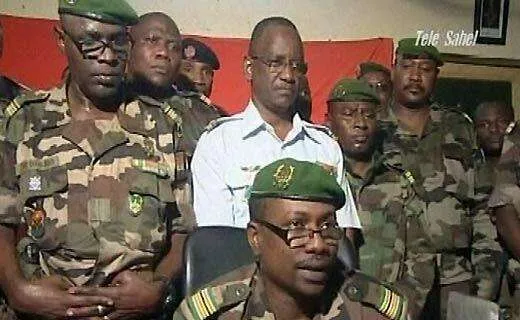
High-level representatives hailing from the West African region have convened in Abuja for an emergency summit aimed at addressing the recent coup in Niger, subsequent to the military junta’s defiance of an ultimatum urging the restoration of elected President Bazoum. The pivotal meeting took place in Abuja, Nigeria’s political capital, and was attended by several West African leaders, including President Bola Tinubu, who holds the role of Chairman within the Economic Community of West African States (ECOWAS). Notable figures from the United Nations and African Union were also present at the event. In his capacity as the convener, President Tinubu officially initiated the extraordinary gathering and emphasized the profound ramifications of the coup in Niger on the stability of democratically established governments within the sub-region. He articulated the imperative of prioritizing diplomatic negotiations and open dialogue with the military junta in Niger to ameliorate the crisis. President Tinubu expressed, “Reaffirming our unwavering commitment to democracy, human rights, and the welfare of the Nigerien people, it is of utmost importance that we place diplomatic negotiations and dialogue at the forefront of our strategy. “We must engage all stakeholders, including the leaders of the coup, in sincere discussions aimed at persuading them to relinquish authority and reinstate President Bazoum. Our responsibility is to exhaust all possible avenues of engagement in order to ensure a swift return to constitutional governance in Niger.” The President further expounded, “In a more specific context, as leaders representing our respective nations, we must acknowledge that the political turmoil in Niger not only jeopardizes the nation’s stability but also casts extensive reverberations across the entire West African region. “Through unwavering adherence to the principles of democracy, effective governance, and the rule of law, we can reestablish tranquility, stability, and prosperity within the Republic of Niger, thereby cultivating an environment conducive to comprehensive growth and development for all.” “More so, in reaffirming our relentless commitment to democracy, human rights, and the well-being of the people of Niger, it is crucial that we prioritize diplomatic negotiations and dialogue as the bedrock of our approach. “We must engage all parties involved, including the coup leaders, in earnest discussions to convince them to relinquish power and reinstate President Bazoum. It is our duty to exhaust all avenues of engagement to ensure a swift return to constitutional governance in Niger. “More specifically, as leaders of our respective nations, we must recognize that the political crisis in Niger not only poses a threat to the stability of the nation but also has far-reaching implications for the entire West African region. “By remaining steadfast in our adherence to the principles of democracy, good governance, and the rule of law, we can restore peace, stability, and prosperity in the Republic of Niger, thereby fostering an environment conducive to growth and development for all.” Following President Tinubu’s address, the summit transitioned into a confidential deliberation phase. The meeting, convened two weeks subsequent to the coup that ousted Mohamed Bazoum, who ascended to power in 2021, signifies ECOWAS’s proactive pursuit of a diplomatic resolution while keeping the prospect of employing force as a last resort. Critical determinations are anticipated from the gathering held in Abuja, as ECOWAS endeavors to curtail the succession of coups among its member states that has been unfolding since 2020. The coalition granted the military forces, which assumed control on July 26, a grace period until the prior Sunday to reinstate President Bazoum, aged 63, under the threat of potential military intervention. In response to the crisis, Nigeria, among other measures including border closures, has suspended electricity supply to Niger as part of a series of economic sanctions. Nonetheless, the leaders of the coup remained steadfast in their stance, and the deadline elapsed without any observed action. Tinubu’s Full Speech at the Summit Your Excellency, the President of the ECOWAS Commission; Your Excellency, President of the African Union Commission; Your Excellency, President of the UEMOA Commission; The Special Representative of the Secretary General of the United Nations in West Africa and the Sahel; and Distinguished Ladies and Gentlemen. 1. Let me commence by welcoming you all to the Second (2nd) Extraordinary Summit on the Socio-Political Situation in the Republic of Niger, within the space of ten days. Your presence here, despite the short notice, demonstrates the unwavering dedication of our esteemed community to finding a lasting solution to the political situation in the Republic of Niger. 2. Today, we gather with a profound sense of urgency and firm determination, building upon the commitments made during our first Extraordinary Summit, on the grave political crisis befalling our sister nation. During that initial meeting, we voiced our solidarity with the people of Niger and their democratically elected President, H.E Mohamed Bazoum, by condemning the military take over and the unjust detention of their democratically elected President. Your Excellencies, Distinguished Ladies and Gentlemen, 3. As you may recall, we called on the junta to rescind its decision of toppling a legitimate government. We proceeded to impose sanctions with the hope that this resolute measure would serve as a catalyst for the restoration of the constitutional order in Niger. Regrettably, the seven-day ultimatum we issued during the first Summit has not yielded the desired outcome. We have also made diligent efforts through the deployment of various ECOWAS mediation teams, to engage the military junta for a peaceful resolution of the political situation. One of the facilitators, former Head of State of Nigeria, General Abdulsalami Abubakar, would update us on the outcome of his mission to Niamey. 4. Similarly, as part of a coherent diplomatic initiatives, Special Envoys were dispatched to non-ECOWAS nations, particularly Libya and Algeria. During these engagements, the Envoy designated for Libya had the privilege of an audience with the President of Libya. This discourse resulted in an unequivocal expression of support for the resolutions adopted by ECOWAS aimed at restoring constitutional governance in Niger. In Algeria, the Envoy was received by the Minister of Foreign Affairs on behalf of the President of the country.
Top US diplomat meets leaders of Niger military junta

A Senior U.S. diplomat Victoria Nuland has met with senior leaders of the military junta in Niger, the U.S. State Department has said. Nuland, the acting deputy secretary of state, travelled to Niamey to meet with the armed forces’ new chief of staff, General Moussa Salaou Barmou, and three other members of the military junta. She expressed Washington’s “grave concern regarding developments in Niger and our resolute commitment to supporting democracy and constitutional order,” U.S. State Department spokesman Matthew Miller said in a statement. During the meeting Nuland outlined what was at stake if Niger did not “respect its own constitutional order,” Miller said. “This includes the potential loss of hundreds of millions of dollars in economic and security support for the people of Niger,” she highlighted. She described the more-than-two-hour conversation as “extremely frank and at times quite difficult” in a call with reporters. Nuland’s request to meet with ousted and detained President Mohamed Bazoum was denied, she said. “The United States continues to call for the immediate release of President Mohamed Bazoum, his family, and all those detained as part of the extra-constitutional attempt to seize power,” Miller said. Nuland was also not able to see new self-declared ruler Gen. Abdourahmane Tchiani. Bazoum was ousted in a military coup on July 26. Tchiani, the commander of Niger’s presidential guard, then claimed power as the country’s new ruler. He and his group of officers suspended the constitution and dissolved all constitutional institutions.
Niger Coup: Tinubu didn’t ask Senate for permission to go to war- Akpabio

*Urges Tinubu, ECOWAS to exhaust all diplomatic options Senate President, Godswill Akpabio has said that President Bola Tinubu did not approach the Senate for permission to go to war in Niger over the recent coup d’etat as is been peddled in some quarters, but rather, on how best to resolve the current political impasse. Akpabio, who announced the resolutions on Saturday after a closed-door meeting which lasted for about two hours with the President Tinubu, urged him, as Chairman of ECOWAS, to encourage other ECOWAS leaders to further explore political and diplomatic options and other means towards resolving the political impasse in Niger Republic. The upper chamber also called on the ECOWAS Parliament to rise to the occasion by equally condemning the coup and also proffer solutions to resolve the impasse quickly. Niger President Mohamed Bazoum was on July 26, overthrown by his presidential guards. Akpabio said: “We discussed with President Bola Tinubu, who also doubles as the Chairman of ECOWAS and requested for support in the implementation of the resolutions of ECOWAS on the political situation in Nigeria and resolve as follows: “The leadership of the Senate is mandated to further engage with the President and Commander-in-Chief on behalf of the Senate and National Assembly on how best to resolve the issues. “This is in view of the hitherto existing cordial relationship between Nigeriens and Nigerians. “The Senate commends President Bola Tinubu and other Heads of State and Government of ECOWAS for their prompt response and the positions taken on the unfortunate development in Niger Republic. “The Senate recognises the fact that President Tinubu, by virtue of his correspondence had not asked for the approval of the parliament or approval of this Senate to go to war as is been erroneously suggested in some quarters. “Rather, Mr President and Commander-in-Chief had expressed and I quote: “I wish to respectfully solicit the support of the National Assembly in the successful implementation of the ECOWAS resolutions as outlined in the said communications.” The Senate President also said that the Senate condemned in totality the military coup that took place recently in Niger. Tinubu had in a letter to the Senate on Friday, conveyed the decisions of the ECOWAS on recent military intervention in Niger. The ECOWAS decision is contained in a letter addressed to the President of Senate and read at plenary on Friday. ”I do have the honour to inform you, that following the unfortunate political situation in Niger Republic culminating in the overthrow of the administration of His Excellency President Mohammed Bazoum on 26 July 2023. “The Economic Community of West Africa States (ECOWAS), under my leadership condemns the coup in its entirety and resolved alongside other members of the international community to seek the return of a democratically elected government in Niger,” the letter stated.
Tinubu, subsidy, NLC and Nigeria’s economic turbulence

On May 29, 2023, during his inaugural speech, President Ahmed Bola Tinubu made a momentous decision to scrap Nigeria’s fuel subsidies, citing pressing budgetary concerns. However, this move triggered a staggering surge in fuel prices, widespread panic-buying of fuel, and a sharp increase in the cost of various essential commodities. The ramifications of the fuel subsidy removal have struck fear in the hearts of millions of Nigerians, particularly low-income earners who worry about their ability to afford transportation, education, food, and healthcare and other social amenities. In response to the government’s decision, the Nigerian Labour Congress (NLC), entrusted with the responsibility to protect and defend workers’ rights and well-being, vehemently opposed the move. Joe Ajaero, the NLC President, criticized Tinubu’s decision, asserting that it lacked careful consideration and predicted it would cause the country’s economy to regress by more than 50 percent within the coming weeks. In light of their objections, the Congress issued a seven-day ultimatum to the Federal Government, demanding the reversal of all “anti-poor” policies, including the petrol price hike. The NLC accused the government of showing disdain and contempt for the Nigerian people and declared a war of attrition on workers and the masses. Citing the strength of Section 40 of the 1999 Constitution as amended, the NLC announced on June 7 their intention to launch a nationwide protest on August 2, 2023, against the fuel subsidy removal. In response, the Federal Government took legal action, seeking to stop the union from proceeding with the proposed strike. The government argued that such industrial action could severely impact society and the nation’s overall well-being. In a ruling on an ex parte application, Justice O.Y Anuwe ordered the unions not to embark on any industrial action or strike pending the hearing and determination of the motion on notice, dated June 5, 2023. The court highlighted the potential disruptions to economic activities and essential sectors. Unfazed by the court’s injunctions, lengthy negotiation meetings, and warnings from the Federal Ministry of Justice regarding contempt of court, the NLC stood firm on their threat and flooded the streets with protesters on August 2. The demonstrations aimed to voice opposition against the recent fuel price hike, tuition fees increase in public schools, and the withholding of salaries for university lecturers and workers. Meanwhile, the government, through the Solicitor General of the Ministry of Justice, accused the NLC leaders of treating the order of the National Industrial Court (NIC) with contempt. Justice Beatrice Jedy-Agba asserted twice that the organized labour’s industrial action was illegal, as there was a subsisting interim order restraining the NLC from engaging in any industrial action. The government prayed the court to hold NLC President Joe Ajaero, Deputy Presidents Audu Aruba, Prince Adeyanju Adewale, and Kabiru Sani, General Secretary Emmanuel Ugboaja, TUC President Engr Festus Usifo, and Scribe/Chief Executive Nuhu Toro in contempt of court and commit them to prison. In response, the NLC condemned the industrial court and the Justice Ministry as “anti-democracy” agents, and they demanded the withdrawal of the lawsuit or face mass strike. Following discussions at the NLC’s NEC meeting in Abuja, the union issued a stern ultimatum, warning that failure to comply with their demand could result in a nationwide strike on August 14, 2023. This ongoing saga showcases the deep-seated tensions and concerns about the impact of the fuel subsidy removal on the lives of Nigerian citizens and the overall health of the nation’s economy. As both sides engage in a legal battle and the NLC continues its protests, the future remains uncertain, and the fate of Nigeria’s fuel subsidy hangs in the balance, even as ordinary Nigerians continue to bear the brunt.
Niger: Tinubu writes Senate, highlights 7 resolutions to restoring democracy

In a bid pursuant to restore democracy in the neighboring Niger Republic, President Tinubu has written to the Nigerian Senate, seeking their support in implementing seven crucial resolutions aimed at pressuring the military junta to relinquish power and reinstate civilian rule. These resolutions reflect the collective will of the Economic Community of West African States (ECOWAS) and underscore Nigeria’s commitment to regional stability and democratic values. The first resolution calls for a military buildup and deployment of personnel to Niger’s borders, with the intention of enforcing compliance with the military junta. The President emphasized that this measure is not an act of aggression but rather a deterrent to ensure the junta understands the seriousness of the international community’s stance on democratic governance. In another resolution, the President seeks the suspension of electricity supply to Niger Republic as a means of applying economic pressure. According to the President, this move sends a strong message to the military junta that their actions have consequences beyond their borders and aims to foster public discontent over the lack of essential services. President Tinubu also highlighted the importance of rallying international support for the implementation of ECOWAS provisions. Diplomatic efforts will be intensified to garner cooperation from other African nations and the global community, demonstrating a united front in the fight for democracy. To further isolate the military junta and disrupt their operations, the fourth resolution seeks from Tinubu seeks to prevent the operation of commercial and special flights to and from Niger Republic. This measure will curtail the junta’s mobility and impede their ability to sustain their rule. In a move to exert economic pressure, the President proposed a blockade of goods in transit to Niger, particularly from Lagos and eastern seaports. This tactic aims to disrupt the flow of goods and impact the junta’s access to essential supplies, further fueling discontent within the country, Recognizing the power of social media in shaping public opinion, the President urged the Senate to embark on a sensitization campaign, utilizing various platforms as this campaign will inform Nigerians and the international community about the necessity and importance of these actions, garnering support for the cause. The seventh resolution calls for the immediate closure and monitoring of all land borders with Niger Republic. Additionally, the border drilling exercise will be reactivated to tighten security and prevent any illicit activities that may undermine the resolution’s objectives. President Tinubu emphasized that these actions are not taken lightly and are in full accordance with ECOWAS’ commitment to upholding democratic principles in the region. The objective is to restore civilian rule, safeguard human rights, and pave the way for free and fair elections in Niger Republic. President Tinubu’s call for the implementation of these seven resolutions against Niger Republic marks a critical step in the restoration of democracy and the rule of law in the region.
Nigerian Breweries hints of ‘moderate’ hike in beer price

The Nigerian Breweries (NB) has said that it is set to carry out a moderate adjustment to its current price regime. According to the company, the proposed exercise is due to the continued rise in the cost of production. NB has 19 high-quality brands (Heineken, Desperados, Maltina, Life, Amstel Malta, Gulder, Fayrouz, and Legend) produced by nine breweries and distributed nationwide. The removal of fuel subsidy by President Bola Ahmed Tinubu has led to an increase in transportation costs. A statement by the management of the company read in part: “We are aware of the memo in circulation issued by our Sales Director, Ayo Lawal on Tuesday, August 1, 2023, to all our direct customers notifying them of the upcoming review of prices of some of our SKUs, effective Thursday, August 10, 2023. “This notification to our esteemed trade partners is in keeping with our standard business practices, and commitment to business continuity for our customers. “We would like to use this opportunity, to clarify, that this is a moderate price adjustment planned on some of the SKUs of our brands, due to the continued rise in input cost.” The company assured all stakeholders of its unwavering commitment to excellent customer service delivery and consumer satisfaction.