INEC Partners Foreign Bodies to Launch Guidelines for Digital and Social Media Use in African Elections

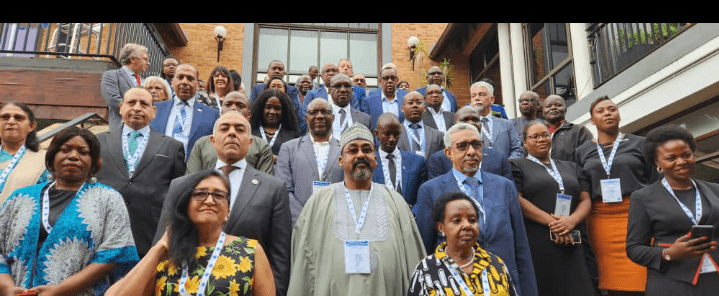
In a concerted effort to enhance electoral processes across Africa, the Independent National Electoral Commission (INEC) of Nigeria has partnered with the Association of African Election Authorities (AAEA) and the Independent Electoral Commission (IEC) of South Africa to introduce comprehensive guidelines for the effective utilization of digital and social media during elections. The unveiling of the Principles and Guidelines for the Use of Digital and Social Media in Elections in Africa occurred over a three-day period, from Tuesday, 27th February to Thursday, 29th February, 2024, in Johannesburg, South Africa. Dr. Sa’ad Umar Idris, the Director-General of INEC’s Electoral Institute, represented the Nigerian electoral body at the event, which brought together stakeholders to deliberate on strategies for leveraging social media while mitigating potential risks associated with evolving digital technologies. The genesis of these guidelines can be traced back to the inaugural Continental Conference for Election Management Bodies held in Cape Town, South Africa, in March 2020. Themed “Safeguarding Electoral Integrity in the Digital Age: Strategies for Combatting Digital Disinformation,” the conference, jointly organized by the Electoral Commission of South Africa, the African Union Commission (AUC), and the United Nations Development Programme (UNDP), laid the groundwork for extensive consultations with EMBs and electoral stakeholders across Africa to formulate a robust framework. The newly introduced principles emphasize the pivotal role of social media in bolstering the credibility of Election Management Bodies (EMBs) and fostering public trust during electoral processes. Additionally, they underscore the importance of responsible journalism and accountability among social media platform owners and users to counteract the risks of misinformation and manipulation. The collaborative endeavor between INEC, AAEA, and IEC signifies a proactive approach towards addressing the evolving challenges of electoral integrity in the digital era. By advocating for responsible digital engagement, African EMBs aim to uphold democratic principles and promote transparent electoral practices across the continent.
TEI Gears Up for February Bye-Elections with Intensive Training Workshop

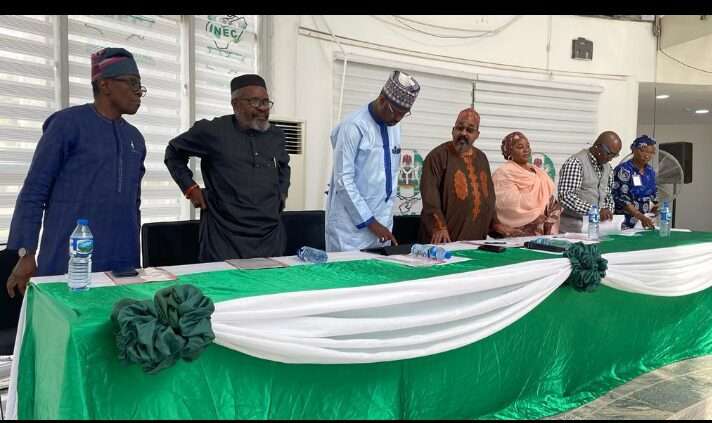
In preparation for the upcoming Bye Elections and Court-Ordered Fresh/Re-run Elections scheduled for February 3rd, 2024, The Electoral Institute (TEI) orchestrated a one-day Training-of-Trainers Workshop. Attended by TEI Trainers, collaborating department staff, and State Training Officers (STOs) participating remotely through ZOOM, the workshop aimed at arming participants with the latest insights into electoral process advancements. The primary focus of the workshop was to empower Coordinating Trainers with the skills necessary to conduct detailed and effective training sessions across all states affected by the impending elections. Special emphasis was placed on training Supervisory Presiding Officers, Presiding Officers, and Assistant Presiding Officers in billing and counting procedures. Participants were also familiarized with the operation of the Biometric Voter Authentication System (BVAS) and guided through the process of uploading election results onto the INEC Result portal using the INEC Results Viewing Device (IREV). Dr. Sa’ad Umar Idris, Director-General of TEI, stressed the importance of embracing innovations and new initiatives, underlining the crucial role of participants in passing on this knowledge to election personnel. He highlighted TEI’s significant contributions to the electoral process, including the use of E-learning platforms and the INEC Training bot during the 2023 General Elections. Prof. Abdullahi Abdu Zuru, National Commissioner, and Chair of the Board of Electoral Institute (BEI), officially inaugurated the training on behalf of the DG Electoral Institute. Prof. Zuru urged participants to serve as exemplary ambassadors of the Commission, emphasizing their critical roles as Trainers, Coordinators, and Monitors throughout the entire electoral process across the Federation.