NYSC debunks reports of change of Corps members uniform

The National Service Corps, NYSC, has reacted to a trending social media video which depicts a change of Corps Members’ uniform to a new one. The NYSC said all the items that Corps members receive on arrival during registration at the Orientation Camps remain the same. The NYSC Director of Information and Public Relations, Eddy Megwa, in a statement said, “Members of the public, especially Prospective Corps members are hereby advised to disregard the misleading and highly embarrassing tiktok video in its entirety, as efforts are ongoing on the distribution of uniforms and other essential variables to all the 37 NYSC Orientation Camps across the country in preparation for the forthcoming 2024 Batch ‘B’ Stream One Orientation Course,” “Recently, the Federal Government approved the improvement in the quality of the material used in sewing Corps Members’ uniforms. “This is already done and Corps Members are already enjoying the improved quality. “Social Media Influencers are strongly warned to desist forthwith, from using NYSC Corporate brand in any online medium that may attract negative publicity to the Scheme, while defaulters would be prosecuted according to legal provisions.’

Tinubu Signs Students Loan Bill Into Law

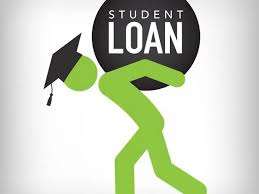
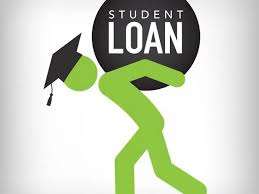
President Bola Tinubu, on Wednesday, signed the Student Loans (Access to Higher Education) Act (Repeal and Re-Enactment) Bill, 2024, into law. This development follows individual reviews by both the Senate and the House of Representatives of the report from the Committee on Tertiary Institutions and TETFund. The Bill sponsored by Senator representing Ekiti Central Senatorial District of Ekiti State, Bamidele Opeyemi aims to improve the execution of the Higher Education Student Loan Scheme in Nigeria by tackling issues related to the management structure of the Nigerian Education Loan Fund, applicant eligibility criteria, loan purposes, funding sources, and procedures for disbursement and repayment. Under this Bill, the Nigerian Education Loan Fund (NELFUND) would be established as a legal entity with the authority to litigate and be litigated in its own name, and it would possess the power to acquire, hold, and dispose of both movable and immovable property to fulfill its functions. In essence, the Bill enables the Fund to offer loans to eligible Nigerians for their tuition, fees, charges, and living expenses while studying in approved tertiary institutions and vocational training centers in Nigeria. In contrast to the previous 2023 Act, which placed the Fund’s administration under a Special Committee chaired by the Governor of the Central Bank of Nigeria, this Bill proposes changes in the management structure. Furthermore, the Bill eliminates the income-based eligibility criterion set by the existing law, which required an annual income of less than N500,000 for applicants or their families. The Bill also broadens the scope of eligibility, allowing students from federally or state-established tertiary institutions and government-approved vocational institutions to apply, with specific criteria to be determined by the Fund. Additionally, unlike the 2023 Act, which limited loan applications solely to tuition fees, the new Bill permits applicants to request loans to cover various institutional charges and maintenance allowances.

Students Loan Repayment: NANS Proposes Five Years plan

Nigeria student’s body, the National Association of Nigerian Students, has urged the federal government to extend the repayment plan for the proposed students loan to five years after post-NYSC instead of the initial two years post-NYSC plan. The body maintained that less than 10 per cent of graduates get absorbed into the labour market within two years post-NYSC, adding that it becomes unrealistic to expect beneficiaries of the loan scheme to begin repayment two years after the completion of the National Youth Service Corps. NANS President Lucky Emonele, made the proposal on Monday at a public hearing on the repeal and re-enactment of 2024 Students Loans Access to Higher Education Bill 2024 in Abuja.  Whioe commending President Bola Tinubu for responding to the request of NANS, by including its leadership as representatives of the students on the loan board, Emonele also commended the decision to repeal the Act to address grey areas that could hinder the success of the student loan scheme. According to him, the proposed repayment period of two years post-NYSC for the loan was not realistic, saying that less than 10 per cent of Nigerian graduates get absorbed into the labour force upon completion of their NYSC. The NANS President, therefore, proposed a minimum of five years repayment duration, given the challenges of unemployment after graduation. While calling for the provision of study grants for Nigerian students in the Act seeking to establish the Nigeria Education Loan Fund, Emonele also appealed that the provision of a loan scheme should not be a further reason for an arbitrary increment of school fees by the management of tertiary institutions. He, therefore, urged the National Assembly to pass a resolution that prohibits public tertiary institutions from increasing school fees in the next 10 years, saying it was the only way to sustain the act when enacted. According to him, there is also a need to make provision for grants for students to enable them to complete or further their studies. This, he said, would encourage more students to enroll in school and alleviate the burden that may be placed on the loans. “If the Federal Government, through the Tertiary Education Trust Fund, could earmark N683bn for public tertiary institutions in 2024, without requesting for payback from beneficiary institutions, Nigerian students should not be treated any differently.” The public hearing was organised by the Senate Committee on Education and TETFUND and the House of Representatives Committee on Student Loan, Scholarship, and Higher Education Financing. In his words, the Minister of Education, Prof. Tahir Mamman, commended President Bola Tinubu for his passion and commitment to the education sector, stating that the President does not want any child of school age to be out of school, given his passion for education. The minister said the public hearing would provide an opportunity to make further input to improve the bill for the good of Nigerian students.