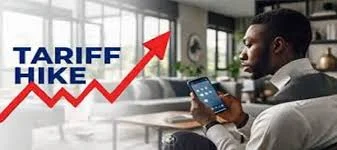
Telecoms tariff hike will hinder learning, research – students lament

A cross section of students in Enugu State, on Wednesday,  appealed for the reversal of the 50 per cent hike in tariff in telecommunication services due to prevailing socioeconomic hardship. They were of the view that telecommunication services, such as internet data service, have enhanced learning and research work; making its usage indispensable to all students. They made their feelings known in separate interviews while reacting to the telecom tariff hike with the News Agency of Nigeria (NAN). READ ALSO: Why Nigerians should not pay tax Mr Divine Eze, a student of the Department of Environmental Management in the University of Nigeria Enugu Campus (UNEC), urged the Nigerian Communications Commission (NCC) and telecom companies to consider the financial struggle of students and their parents. Eze said that currently most students could not easily cope with the high cost of textbooks and other educational materials, which cost increased in the past few years. “The only relief we have for now is the telecommunication services that had helped students to manage; thus, reducing need for travels, time doing research and writing same research work and essential social media communication,” he said. Speaking, a student of the Institute of Management and Technology (IMT), Mrs Chiamaka Dike, called on NCC and telecom companies not to put an increase in data service as it impacted negatively on learning and education the more. “Usage of data have made me to manage the N2,000 that my parents usual give to me monthly for GSM services. “Many other students I know go through such strict condition by using only data only when necessay,” Dike, who is of the Department of Banking and Finance, said. Corroborating, Mr Chidiebere Chimdobe, a student of the Enugu State University of Science and Technology (ESUT), noted that NCC and telecom companies failed to consult and carry all telecom stakeholders along in pushing for the hike. READ ALSO: Tinubu appoints Opeifa as NRC Managing Director Chimdobe said that the telecommunication services drove millions of soft job or e-jobs which students and fresh graduates engage in within the past 10 years. According to him, NCC and telecom companies are thoroughly insensitive to the hradship, daily struggles and difficult plights of Nigerian youths, which majority are students. “If they go ahead with the hike, it will further compound hardship and will increase social vices as well,” he said. Meanwhile, the Progressive Students Movement (PSM), a pan-African students movement, has given an ultimatum of 72-hour to NCC and telecom companies to reverse recent 50 per cent hike in tariff. The President of PSM, Mr Bestman Okereafor, called for the review and reversal in a statement made available to newsmen in Enugu. Okereafor noted that the 50 per cent increment at this time is “unjustifiable, untimely, and insensitive; hence the total rejection of this anti-masses increment.” According to him, PSM is calling on NCC and telecommunications companies to review its stance as a matter of urgency. He said, “The attention of PSM has been drawn to NCC’s approval of Telecom operators 50 per cent tariff increment. READ ALSO: CBN moves to end trade in Naira notes “It will be recalled that telecom operators had previously demanded to adjust their tariff rate; a request which many Nigerians especially Nigerian students frowned at. “Information at our disposal shows that NCC approved the telecom companies request in response to rising operational costs, at the detriment of Nigerians and the obvious economic realities facing the country. “However, this development, which allows for a maximum of 50 per cent adjustment to current tariffs, was announced in a statement signed by Reuben Muoka, the NCC’s Director of Public Affairs, on Monday, Jan. 20.” The PSM President warned that the entire students’ bodies would be protesting this abnormal and inconsiderate 50 per cent increment in tariff if not reviewed in the next 72 hours.

Banks, telcos settle USSD billing rift after N120bn debt

Telcos Mull Legal Action Against Banks Over N130bn USSD Debt

Telecommunications companies and Deposit Money Banks (DMBs) have resolved their disagreement over the debt rising from the billing of the Unstructured Supplementary Service Data (USSD). The banks were owing the network providers N120 billion from the use of the USSD platform, which is charged on a corporate billing rather than end-user billing as preferred by the DMBs. On Thursday, the Executive Vice Chairman of the Nigerian Communications Commission (NCC) Umar Danbatta, stated that the intervention of the Governor of the Central Bank of Nigeria (CBN), Fola Shonubi, led to the settlement. Speaking at the Telecom Executives and Regulators Forum (TERF) held in Lagos, Danbatta said Shonubi assisted in resolving the confrontation because he knows that without the telcos, the CBN’s financial inclusion programme would not have achieved about 70 per cent. According to the NCC chief, disagreement over the billing system led to the increase in the debt, “The USSD service is being provided to the banks, who in turn provide the service to their customers. The question was who should be paying for the service. “They wanted end-user billing, but we said the service is being provided to the banks, not to their customers. “The banks charge their customers for the service, and they are to pay the telcos in the form of corporate billing, which is neat. “Then along the way, there was a misunderstanding and the debt kept piling until it reached a humongous amount of over N100 billion. “Even at that, the service was still being provided to customers by the banks using the telecom infrastructure and the telcos were being paid nothing. This was despite the intervention of the immediate past Minister,” he noted. Revealing the reason the CBN and the banks came to an agreement with the telcos, Danbatta stated: “Digital financial inclusion index or penetration is currently about 70% because it is telco driven. “And as such, there shouldn’t be any problem paying for the service. No service is free. Pay the telcos, that’s all we ask. Okay, and as we’re saying, Now, pay them for the debt, the accumulated debt, and then pay them for the service they are rendering as we speak. “At a meeting between the acting CBN governor, the NCC, the telcos and the banks, it was acknowledged that the debt exists, that going forward, the service has to be paid for by the banks through corporate billing. “It is an important development for the telecoms industry that we have found an amicable resolution to the problem because we’re all serving the same government. We do not want to disrupt financial services in the country. “We want to see the financial inclusion penetration to even go higher. We want it to be ubiquitous, but we cannot do this without settling the legacy debt, as well as paying for the service that is being provided.”