Global Energy Supply: IEA Forecasts 73% Drop In Fossil Fuels’ Share

Global Energy Supply: IEA Forecasts 73% Drop In Fossil Fuels’ Share

The International Energy Agency (IEA) has projected that fossil fuels’ share in global energy supply would drop to 73% by 2030 and carbon dioxide emissions peaking by 2025. This is despite the fact that global oil demand would peak this decade at about 102 million barrels per day (mbd) for two more decades. The agency, in its latest ‘World Energy Outlook (WOE) 2023’ report stated that the drop in fossil fuel share in the global energy market had remained at around 80% for decades. According to the IEA’s Stated Policies Scenario (STEPS) data, from 2030, oil consumption will begin a slow decline by decreasing by more than four million barrels per day to 97.4mbd in 2050, the IEA said.  The report further predicted that in 2030, clean technologies would play a “greater role than today” as electric cars on the road worldwide will increase by 10 times, and renewables’ share of the global electricity mix will be near 50%, up by 30% while heat pumps and other electric heating systems will outsell fossil fuel boilers globally, and investment into new offshore wind projects will be three times more than new coal and gas-fired power plants. Commenting on the report’s findings, Global Net-Zero Transformation Advisory Operations Manager, EcoAct, Lindsay Ventress, said: “The World Energy Outlook 2023 underscores the increasingly narrow path toward preserving the goal of 1.5°C warming, yet provides hope that this remains attainable if we promptly embark on transformative climate actions. “The report’s call for an annual twofold increase in energy efficiency improvements underscores its critical role in a sustainable future, but also the current failure of legislators to get to grips with this vital requirement. In light of this, businesses cannot afford to merely wait for government commitments; they must become catalysts for progress,” she added. Even so, the IEA maintained that demand for fossil fuels was set to remain “far too high” to limit the global rise in temperatures to 1.5°C, as per the Paris Agreement. The agency further warned that despite the impressive growth in clean energy, if the policies are not changed, global emissions would remain high to push the temperature limit by around 2.4°C this century. The STEPS also estimates a peak in energy-related carbon dioxide emissions in the mid-2020s. Speaking on the report’s findings, the IEA Executive Director, Fatih Birol, explained: “Taking into account the ongoing strains and volatility in traditional energy markets today, claims that oil and gas represent safe or secure choices for the world’s energy and climate future look weaker than ever.” According to the report, the tense situation in the Middle East “is a reminder of hazards in oil markets a year after Russia cut gas supplies to Europe”. In the STEPS, the share of seaborne crude oil trade from the Middle East to Asia rises from around 40 per cent to 50 per cent by 2050. The WOE highlights the fears in the natural gas markets due to instability and price hikes after Russia cut supplies to Europe while also foreseeing a surge in new liquefied natural gas (LNG) projects from 2025, with the prospect of adding more than 250 billion cubic metres per year new capacity by 2030, representing 45% of the current global LNG supply. While some of the immediate pressures of the global energy crisis have eased due to the current geopolitical situation and the global economic developments, the IEA drew attention to the “unsettled” global energy market, noting that “this underscores, once again, the frailties of the fossil fuel age and the benefits for energy security as well as for emissions of shifting to a more sustainable energy system.” It stated that developing economies had been experiencing the largest increase in demand for energy services as the extreme volatility in energy markets have pushed for an “affordable, reliable, and resilient supply”.

World Food Day: HOMEF Calls For Ban On Nigeria’s GMOs

World Food Day: HOMEF Calls For Ban On Nigeria’s GMOs

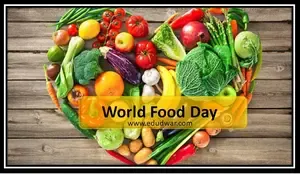
As Nigeria joins the rest of the World to mark the 2023 World Food Day, the Executive Director Health of Mother Earth Foundation, Nnimmo Bassey, has called on the Federal Government to remove all Genetically Modified Foods from the country’s shelves. World Food Day is an essential international observance held every year to raise awareness about food security and hunger while promoting action to ensure everyone has access to safe, nutritious, and affordable food. Bassey in a statement on Sunday, said one big challenge the country is faced with protecting its food, including water, from the new wave of colonialism that is systematically taking hold of food systems across the globe. According to him, the transnational corporations leverage the current food crises to advance an atrocious agenda to gain control over the world’s food systems. “GMOs are being pushed into our food system without stringent government regulations. People do not know the implications of growing or eating GM foods because the population is not given information on the risks related to the technology. “In Nigeria, approvals for importing GMOs are granted without adequate public notice and proper and independent health and environmental impact assessments. It is improper for our farmers to be given seeds to grow without telling them what they are planting or what eventually will end up on the consumer’s plate.” HOMEF states that marking World Food Day should encourage people, organizations, and governments to unravel the root of hunger and malnutrition, address food injustice, and abuse of farmers’ rights. The day is a reminder of the avoidable fate of millions worldwide who suffer from hunger despite abundant natural and human resources. Bassey, noted that modern agricultural biotechnology directly undermines our pursuit of food sovereignty, posing a threat to our dignity and our fundamental right to refuse foods laden with uncertain health consequences and an agriculture system that stresses our ecosystems.  He further charged Nigerians to be intentional about what is on their plates. “We must not fail as individuals to ensure that what goes into our stomachs is safe. We must demand accountability from regulatory agencies to ensure that food products approved for import are wholesome, meet the dietary requirements of the people, and support the local economy.” HOMEF’s Director of Programme, Joyce Brown, echoed that agroecology can feed the world, cool the planet, and help local farmers adapt to climate change impacts. “Governments worldwide who want to address food insecurity and take meaningful climate action must invest in agroecology – the foundation for a positive transformation of food systems. Agroecology ensures optimum water and other resources use, revives soils and the ability to hold in carbon, uses renewable energy, and promotes shorter food supply chains while making healthy and nutritionally diverse food available to all”. Mariann Bassey-Orovwuje, the Deputy Director of Environmental Rights Action/ Friends of the Earth Nigeria, noted, “Food is a central and integral part of any society, and it creates a connection between our beliefs, ethnicity, and cultural heritage. Food is not just a part of culture; it defines culture.  What we eat and how we eat provides much information about specific cultures. Food, water, and soil are all interconnected and are not commodities. They are a sacred, life-affirming, and central composite of every existing society”. Orovwuje stressed that food and producers must be treated with respect and dignity. She called for policies that celebrate the smallholder farmers who produce over 70% of the food consumed globally. “We need deep-rooted changes in how agriculture is practiced and how the food system is organised and regulated. We need to wean our food system from corporate control and concentration and keep seeds in the hands of small-scale farmers.”

NLNG sustaining gas exports, local supplies amid Force Majeure challenges -Odeh

NLNG sustaining gas exports, local supplies amid Force Majeure challenges -Odeh

Amidst reports of Force Majeure, the Nigeria Liquified Natural Gas (NLNG) has emphatically confirmed the uninterrupted flow of sustainable gas exports and local supplies from its Rivers State facility. This confirmation directly refutes recent news articles that suggested otherwise. Andy Odeh, the General Manager of External Relations and Sustainable Development at NLNG, labeled the aforementioned reports as both false and misleading. Odeh clarified that the NLNG’s operational activities on Bonny Island remain active, despite the prevailing Force Majeure. He added that the NLNG’s cargo loading operation also continues without interruption. “The latest cargo from the Bonny plant sailed on 17th August 2023 to the St. Croix, U.S. Virgin Islands, carrying 140,000 M3 of LNG,” Odeh said. He said the NLNG remains committed to collaborating with key stakeholders to minimise the impact of the consequent gas supply shortage. The declaration of Force Majeure came as a result of the disruption in the availability of major liquids evacuation pipelines caused by acts of sabotage and vandalism by unidentified parties. In spite of this setback, the NLNG facility steadfastly continues the production of both Liquified Natural Gas (LNG) and Liquified Petroleum Gas (LPG). These outputs are proportionate to the volume of feed gas received from their upstream gas suppliers. This concerted effort caters to the demands of the domestic market. In the face of the ongoing gas supply shortage brought about by the disruptions in upstream gas supply chains, Odeh reiterated the NLNG’s unwavering commitment to collaborating closely with key stakeholders. This collaborative approach aims to mitigate the adverse impacts stemming from the gas supply shortage. Ultimately, NLNG’s confirmation of the continuous gas export and local supply operations serves as a reassurance to stakeholders and the general public alike. Despite challenges, the NLNG remains steadfast in its commitment to maintaining a stable supply of gas and fostering effective collaboration to navigate these complex circumstances.

Ban single-use plastics, experts urge FG  

Ban single-use plastics, experts urge FG  

Environment stakeholders have called on the Federal Government to ban the production of single-use plastics in the country. According to them, a total ban on the production will help mitigate the effect of climate change. Single-use Plastic Products (SUPs) are used once, or for a short period of time, before being thrown away. Analysts have said that they are more likely to end up in the ocean than reusable options. In a webinar organized by Environmental Rights Action/Friends of the Earth Nigeria (ERA/FoEN) on Wednesday in Abuja, the Director, Global Climate Programme Global Alliance for Incinerator Alternatives (GAIA), Ms Mariel Vilella, said plastic production and pollution resulted in greenhouse gas emissions at each stage of its lifecycle. Vilella said there is a need for effective waste management policies in Africa, which would promote zero and reduced plastic waste, saying that it contributed 20 per cent of anthropogenic methane. This, she said, made it an extremely dangerous greenhouse gas and a super pollutant. “Seventy per cent of global greenhouse gas emissions come from product life cycles – the stuff we extract, transport, and use and how we waste it,” she said. In his opening remark, Dr Chima Williams, Director of the ERA/FoEN said a lot of policies that would outlaw single use plastics were needed in the global south. The call for ban, he said, was necessary due to the problems associated with the use of the product such as flooding that always lead to perennial loss of lives and properties in the developing countries. Also speaking, the Executive Director, Sustainable Research and Action for Environmental Development (SRADev) Nigeria, Mr Leslie Adogame advocated policies that would fill the gap between waste management vis-a-vis plastic waste management in the country. He suggested cross-fertilisation of ideas across Africa on how to leverage on zero waste to address the climate crisis.