NGF, HiiL Seal Partnership to Advance People-Centred Justice in Nigeria

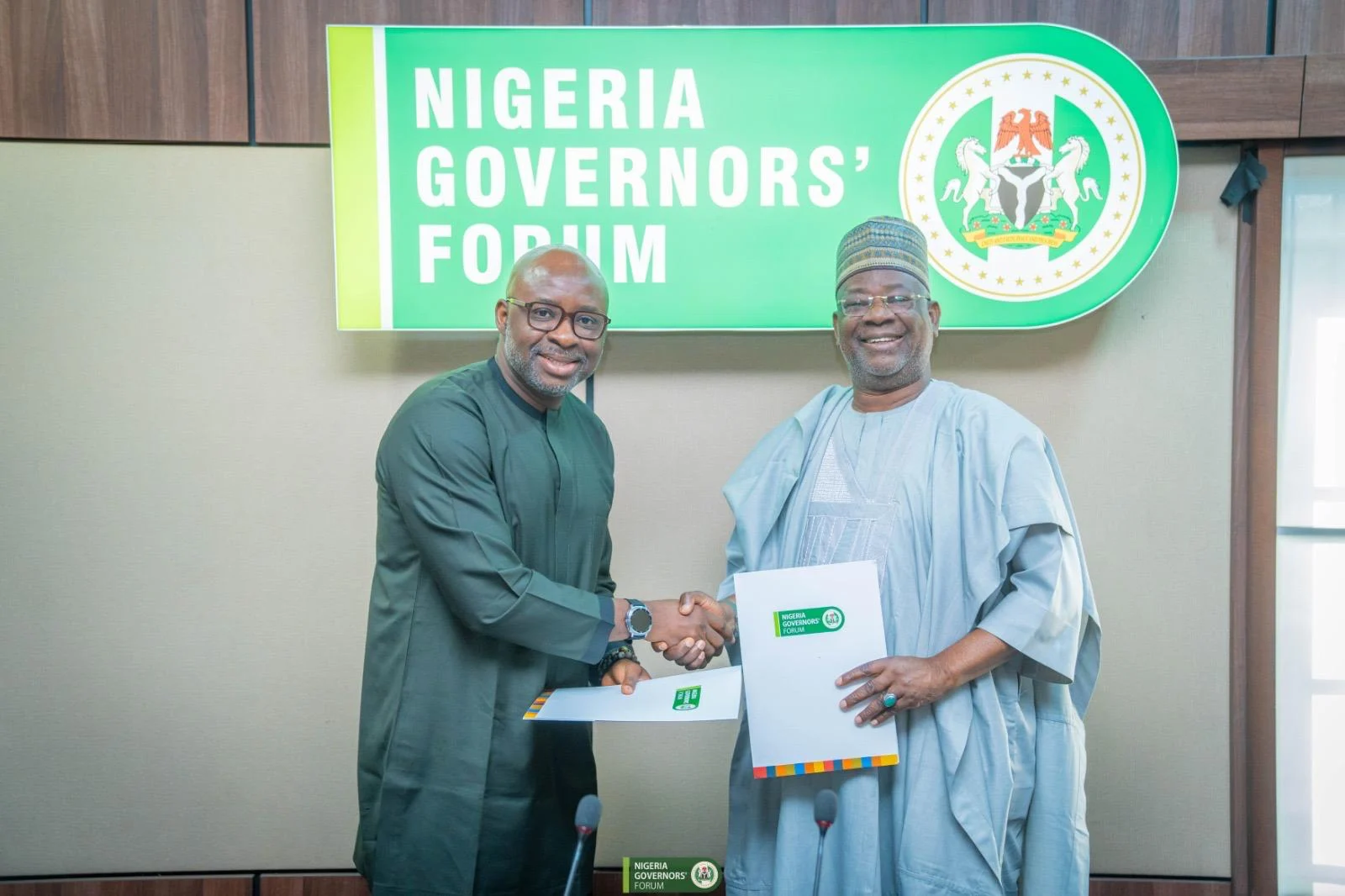
The Nigeria Governors’ Forum (NGF) has entered into a formal partnership with the Hague Institute for Innovation of Law (HiiL) to deepen justice sector reforms and promote people-centred justice across Nigeria’s 36 states. The partnership was sealed through the signing of a Memorandum of Understanding (MoU) at the NGF Secretariat in Abuja, marking a shift from years of engagement between both institutions to a more structured and long-term collaboration focused on measurable outcomes for citizens. Speaking at the event, the Director-General of the NGF, Dr. Abdulateef Shittu, said the agreement builds on an existing relationship shaped by sustained, evidence-based dialogue on justice reform. He described the collaboration as timely, given ongoing challenges around access to justice, affordability, and public trust in justice institutions. According to Shittu, a key milestone in the NGF–HiiL relationship was the launch of the Justice Needs and Satisfaction in Nigeria 2023 Report, which he said has provided policymakers and justice sector stakeholders with credible data on how Nigerians experience justice and where critical gaps remain. He noted that the report has helped move reform conversations beyond assumptions, enabling governments and practitioners to design interventions that respond more directly to citizens’ needs. Under the MoU, both organisations will work together to promote justice systems that are accessible, fair, affordable, and responsive, with a particular focus on the subnational level where most justice challenges occur. Shittu explained that the agreement is not intended to be symbolic, but rather a platform for coordinated action, innovation, and learning. “This is a commitment to action and measurable impact across Nigeria’s justice landscape,” he said. The NGF’s role places state governments at the centre of the reform effort. As the coordinating body for Nigeria’s 36 governors, the Forum is expected to use the partnership to position states as testing grounds for people-centred justice models that reflect local realities. The collaboration is also expected to support reforms that strengthen justice institutions while ensuring that legal systems respond to how people experience everyday disputes, including land, family, commercial, and service-related issues. Shittu acknowledged HiiL’s technical expertise and global experience in justice innovation, expressing optimism that research insights generated through the partnership would translate into practical solutions that improve efficiency, inclusion, and trust in justice delivery. A press statement by NGF Director of Media and Strategic Communications, Mr. Yunusa Tanko Abdullahi explains that HiiL has operated in Nigeria for several years and reputed for its people-centred justice approach, which focuses on outcomes rather than procedures and integrates formal and informal justice pathways. It States further that the partnership with the NGF is expected to help scale such approaches across states through stronger institutional alignment. Both parties committed to working in good faith to expand access to justice through data-driven reforms, innovation, and collaboration, with specific initiatives to be developed under the MoU framework. As Nigeria continues to confront long-standing challenges related to justice delivery, observers say the NGF–HiiL partnership signals a renewed effort to place citizens at the centre of justice reform.

Minimum Wage Dilemma: States May Go Bankrupt, FEC Delays Decision

The Federal Executive Council (FEC) recently postponed a decision on the new minimum wage report from the tripartite committee, opting for further consultations amid concerns that many states could go bankrupt if the proposed wage increases are implemented. The FEC’s hesitance comes as President Bola Tinubu prepares to present the minimum wage bill to the National Assembly, an announcement that has stoked tensions across various states. Last week’s discussions at both the National Economic Council, chaired by Vice President, Kashim Shettima, and the Southern Governors’ Forum failed to yield a consensus on the wage structure, with the governors suggesting that wage negotiations should be state-specific. The labour unions have criticized the Nigeria Governors’ Forum for their significant sway in the wage negotiations, arguing that the proposed wages could push states towards financial insolvency. A report from the Nigeria Governors’ Forum Secretariat highlighted that increased recurrent expenditures have already strained budgets, leaving states like Abia, Ekiti, and Kogi in deficits as of 2022. The proposed ₦62,000 minimum wage, more than double the current ₦30,000, could destabilize state finances further, potentially leading only ten states, including Lagos and Rivers, to remain financially stable. According to the documents, sighted by Punch, Abia, with an employment size of about 58,631 workers, pays ₦5,837,899,980.40 as wage monthly. Anambra has a 20,541 employment size and pays ₦1,824,851,308.96 monthly as wages, apart from ₦894,480,399.62 as pension obligation and ₦579,694,680.33 for debt servicing. Bayelsa boasts of 48,213 workforce, paying ₦5,802,435,178.58 monthly, with ₦1,194,528,784.40 as pension obligation and ₦3,535,787,992.48 as debt servicing, totalling ₦10,532,751,955.46 as total recurrent expenditure monthly. Benue has about 13,366 workers in its workforce and pays ₦2,040,184,471.85 as monthly wage, ₦76,838,634.62 for pension, and ₦64,685,126,826.08 for debt servicing, totalling ₦66,802,149,932.56 monthly. Delta has about 50,871 workers, offering ₦8,973,081,853.50 as wages ₦1,499,886,303.39 as pension, and ₦72,417,433,139.00 as debt servicing, accumulating to ₦82,890,401,295.89 in a month. Jigawa has about 44,831 workers in its employ and pays ₦2,795,662,113.02 as wages, and ₦345,987,843.12 as a pension, totalling ₦3,141,649,956.14 monthly on recurrent expenditure. Katsina, Kwara and Niger have 19,062, 36,048 and 22,225 workers, with accumulated ₦139,294,944,565.27, ₦4,457,268,675.54 and ₦2,653,614,213.35 monthly recurrent expenditure respectively. According to the document, Abia has a total recurrent expenditure of ₦111,983,979,958.62, against a total revenue of ₦147,637,730,867.73. For Adamawa, the recurrent expenditure stands at ₦70,369,399,885.57, against a total revenue of ₦109,722,949,684.65, while Akwa Ibom boasts of a high revenue of ₦444,288,683,000, with recurrent expenditure of ₦235,144,539,000. Of the states, Lagos has the highest total revenue, amassing ₦1,243,778,878,170 in 2022, with a recurrent expenditure of ₦621,043,036,000, followed by Delta, with ₦702,020,717,460.08 and a recurrent expenditure of ₦377,905,100,451.83. Rivers amassed ₦525,588,159,714.88 in 2022, with recurrent expenditure of ₦186,974,715,774.87; Kaduna had a total revenue of ₦222,349,875,000 and expenditure of ₦95,987,999,472.10; Ogun, ₦297,249,009,626.83, recurrent expenditure of ₦178,519,010,628.42 and Oyo, with total revenue of ₦247,156,776,739.70 and recurrent expenditure of ₦152,077,804,384.65. Kebbi State had the lowest total revenue in 2022, raking in ₦92,132,444,588.16 and spent ₦57,601,464,374.96 on recurrent expenditure, followed by Taraba, with a total revenue of ₦101,177,283,069.87 and recurrent expenditure of ₦75,055,201,412.62. Aside from FAAC allocation, some states recorded poor IGR in the 2022 data compiled by the NGF S

IPMAN opposes state governments’ bid for downstream regulatory control

Eteo oil Spill destroyed communities’ source of water – Rights group Health of Mother Health Foundation (HOMEF), has again decried the recent oil spills that ravaged Aleto and Eteo communities in Eleme Local Government of Rivers State, saying it has crippled farming and fishing activities in the area. HOMEF said the spills also destroyed the communities’ only source of potable water. HOMEF and members of Oilwatch Nigeria that paid a visits to the two scenes recently for an on-the-spot assessment to ascertain the level of response and possible cleanup of the affected environment said it met the environment still in a sorry situation as nothing is being done to salvage or clean the pollutions caused by the spills. A statement by HOMEF on Saturday by the Media and Communication Lead, Kome Odhomor, Executive Director, Nnimmo Bassey, expressed displeasure that the oil companies are neither decommissioning their aged infrastructure nor ensuring that their facilities are in good working condition. He regretted that rather than remediating the harm caused by their activities, more investments are being made by the oil companies to expand the areas of threat. Bassey further lamented that two months after the spill occurred, the companies have yet to respond and interface with the communities in any meaningful way. “It was heartbreaking to listen to the lamentation of the community women who now have no source of potable water and cannot process their cassava, a major staple due to the pollution of their stream. The insensitivity of the polluters and regulatory agencies is appalling. These atrocious incidents are also compounding the work of HYPREP. While the agency is working to clean some areas, these polluting incidents are threatening to erase their efforts.” During the site visits, coordinator, Peoples Advancement Centre (PAC), and member Oilwatch Nigeria Celestine Akpobari, called on NOSDRA and other relevant agencies of government to do the needful and send relief materials to the starving people immediately. “It is sad and very embarrassing that a spill of this magnitude at Eteo would happen in very close proximity to human habitation and the NPDC and the government of Nigeria carry on as if nothing has happened to the people. It is worse that the spill has affected the community's only source of drinking water. It is not enough to just sneak in at night to clamp the pipe, the right thing must be done.” While receiving the team of CSOs who visited his palace, His Royal Highness Emere Emmanuel T. Akobe the Paramount ruler of Eteo community expressed shock over the attitude of the NPDC saying, “Our beautiful stream is dead, My people don’t deserve this type of treatment and after we have brought the notice of the National Assembly, there is still no response from them, and my people continue to suffer the impact of the spill.” HOMEF reiterates that Aleto and Eteo communities and the entire Niger Delta must not be treated like disposable or sacrifice zones for profit-seeking endeavors. NOSDRA should be more proactive in meeting the challenging situations of oil spills in the region, while the polluting companies should urgently halt their polluting activities, clean up their spills, and pay compensation to affected individuals and communities. The CSOs also demanded that oil companies decommission all aged pipelines and facilities in the region in line with UNEP recommendations in the assessment of the Ogoni environment.

The Independent Petroleum Marketers Association of Nigeria (IPMAN) has expressed strong disapproval towards the recent endeavours of various State governments to assume the role of regulators in the Southeast’s downstream petroleum operations. Mr. Chinedu Anyaso, the Chairman of IPMAN’s Enugu Depot, which oversees Anambra, Ebonyi, and Enugu States, conveyed these concerns during an interview in Awka on Sunday. Anyaso underscored that State governments lack the necessary standardized and approved equipment essential for accurately measuring dispensing machines. Moreover, he asserted that these governments do not possess the authority to oversee the intricate operations within the downstream petroleum sector. IPMAN has vehemently criticized the actions of state governments, which have involved entering marketers’ establishments under the pretense of price enforcement and dispensing machine monitoring. Anyaso highlighted that the Nigerian Midstream and Downstream Petroleum Regulatory Authority (NMDPRA) remains the sole constitutionally-empowered entity responsible for regulating downstream sector activities. He emphasized that if states intend to collaborate in this sphere, they should work in conjunction with NMDPRA. In his explanation, Anyaso reinforced that state governments lack the requisite authority to perform regulatory functions concerning downstream operators. Their lack of expertise is evident, and even the instruments they employ—termed “seraphim bottles”—have not been certified as properly calibrated for accurate measurements. “NMDPRA is the only body empowered by the Petroleum Industry Act (PIA), Sec 48 (1), to carry out all the regulatory activities in the sector. “IPMAN Enugu depot condemns the invasion of our filling stations; Anambra government did it and we protested but most recently, the Enugu State government is doing the same thing with deliberate effort to blackmail some of our members. “This is sheer overzealousness on the part of some aides of governors. We call on our governors to call these people to order, to avoid putting IPMAN on a collision course with state governments,” he warned. Anyaso said IPMAN was not absolving its members of sharp practices but insisted that state governments should collaborate with NMDPRA, established by the Federal Government to supervise the sector if the need arises. “IPMAN is not by any means saying that all our members are free from malpractice. We are not holding brief for them either; all we are saying is that things should be done properly by the appropriate authority. “NMDPRA has offices in almost all the states, so state governments should work with them. On our part, IPMAN has a taskforce as an internal mechanism to check infractions by our members,” he said.

NJC denies alleged letter relinquishing powers to State Govs

CJN Ariwoola Inaugurates 58 New SANs November 27

The National Judicial Council (NJC) has formally distanced itself from a forged letter that falsely conveys the surrender of its legal authorities and responsibilities concerning the appointment and promotion of judges to State Governors. The legal body’s spokesperson stated that the missive, ostensibly directed to the Chief Judge of Kebbi State and purportedly signed by the Chief Justice of Nigeria (CJN), Justice Olukayode Ariwoola, did not originate from the NJC or the CJN, who also serves as the NJC’s Chairman. In an official statement released on Sunday, Mr. Soji Oye, the NJC’s Director of Information, unequivocally declared that there is absolutely no basis in reality for the fabricated letter. The NJC’s statement elucidated, “The National Judicial Council has been made aware of a falsified letter dated July 14, 2023, fraudulently attributed to the Council and bearing the signature of the Chief Justice of Nigeria and Chairperson of the National Judicial Council, Honorable Justice Olukayode Ariwoola, GCON.” The fraudulent communication, titled “Judicial Seniority Order of Kebbi State High Court Judges and the Endorsement of Justice Umar Abubakar as the Substantive Chief Judge of Kebbi State,” contends that, “In accordance with Section 10 of the prevailing 1996 Kebbi State law, the Governor possesses the authority to establish the seniority of judges, and the National Judicial Council lacks any capacity to counteract or reverse the Governor’s decision.” The letter further alleges, “The position of the Court’s Lead or Chief Judge is essentially a political appointment, subject to determination by the respective state’s Governor. “To eliminate any misconceptions and uncertainties, the NJC explicitly denies any association with the counterfeit letter and underscores that no such communication originated from the office of the Chief Justice of Nigeria or the NJC. “The general public is hereby advised to disregard the forged letter and its contents,” the NJC said. Simultaneously, the NJC said it has reported this unfortunate occurrence to relevant law enforcement agencies, aiming to investigate and apprehend the individual(s) responsible for this reprehensible act.