Conditional Cash Transfer Program: Reps Summon Humanitarian Affairs Minister

Conditional Cash Transfer Program: Reps Summon Humanitarian Affairs Minister

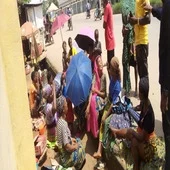
On Tuesday, the House of Representatives issued a summon for the Minister of Humanitarian Affairs and Poverty Alleviation, Betta Edu.  The House is seeking clarification on the status of the conditional cash transfer program initiated by President Bola Tinubu’s administration, which aims to benefit 15 million households. This development came in response to a motion of urgent public importance presented in the green chamber. Members of the House expressed concerns regarding the handling of the programme and the perceived lack of transparency. The Minister is expected to provide detailed information on the data collection process and the distribution of funds to beneficiaries.  President Tinubu officially launched the Renewed Hope Conditional Cash Transfer for 15 million households back in October. According to the Minister, these 15 million households encompass approximately 62 million Nigerians, and they are expected to receive a monthly transfer of N25,000 for three months, totaling N75,000 for each beneficiary.

FEC Approves Creation Of $5bn Humanitarian, Poverty Alleviation Trust Fund

Canada Pledges $18m For Poverty, Humanitarian Responses In Nigeria

The Federal Executive Council (FEC) has approved the establishment of the Humanitarian and Poverty Alleviation Trust Fund to raise 5 billion dollars annually. The Minister of Humanitarian Affairs and Poverty Alleviation, Dr Betta Edu, disclosed this while briefing State House Correspondents on the outcome of the FEC meeting, held on Monday, at the Presidential Villa, Abuja. Edu said: “Every year we hope to be able to raise at least 5 billion dollars within this fund and this is from the various fund and sources. “We are hopeful that with the creation of this funding, we can sit down with all the key stakeholders including other ministries and actually work out the full modalities of implementation in Nigeria”. The minister expressed gratitude to President Bola Tinubu for the approval for the creation of the Humanitarian and Poverty Alleviation Trust Fund. “The council approved for the establishment of the Humanitarian and Poverty Alleviation Trust fund to actually be put together under a governing board. “And then of course, the implementation of that humanitarian and poverty trust fund, would be carefully worked out by members of the committee. “Of course, it will involve the Minister of Finance and other ministers that are relevant to the process. This is a flexible form of financing that is supposed to help Nigeria adequately respond to humanitarian crisis. “This will also respond to challenges as well as adequately address the issue of poverty in Nigeria and bring victory for the poor and indeed, bring help and succor which the Renewed Hope Agenda stands for,” she said. Edu further said that the fund was a flexible form of financing that could help the government get contributions from different sectors. She added that the fund would get contributions from the government, private sector, development partners, philanthropic individuals and other innovative form of funding. “This is to allow for emergency response to humanitarian crisis in Nigeria. Every other day we hear about crisis, the flood and the rest of it. So, we need to be able to respond adequately as a country. “Beyond this, the issue of poverty reduction is one of the agenda of the President Bola Tinubu in his eight-point agenda and we have to tackle it headlong,” she said The minister also revealed that the FEC has ratified the protocol on the protection of the rights of older persons in the country. “The Federal Executive Council, where the chairman of Council and members of council took decisions to ratify the protocol on the protection of the rights of older persons in Nigeria. “We have signed up to the African Charter and this has made us one of the countries within Africa that has approved that older people be protected and should not be discriminated against at any level. “And this gives them a lot of protection and the government of President Bola Tinubu is interested in their welfare and protecting their rights,” the minister said.

FG Commences National Social Register Verification

Conditional Cash Transfer Program: Reps Summon Humanitarian Affairs Minister

The Federal Government has commenced the verification of the National Social Register to identify genuine beneficiaries of the palliatives. Minister of Humanitarian Affairs and Poverty Alleviation, Betta Edu who made this known at the commencement of the Federal Government’s National Social Register verification in Makoko, at the weekend in Lagos, added that the exercise aims to guarantee the accuracy of the federal government’s social register which includes individuals who are genuine beneficiaries. The Minister said the exercise would be carried out across the country to ensure that the National Social Register has integrity. She said, “We are here today in the Makoko area of Lagos state because President Bola Tinubu has asked us to come here and verify the National Social Register” “The President desires to ensure that the social register is accurate and indeed captures the people that deserve to be on that register. “The Federal Government of Nigeria is trying to put money in the hands of Nigerians to assist them in terms of their businesses, livelihood, job creation, of course, to help them afford basic things like sending their children to school and ensuring that they can access to quality health services.’’ “For us to do this, we need to verify the National Social Register.” She further stated that the president is unwavering in his commitment to ensuring that individuals listed in the national social register are genuinely impoverished and subsist on less than one dollar per day. The verification exercise will include extensive outreach to validate the national social register and ensure it accurately captures impoverished Nigerians living on less than one dollar a day, and residing in remote and genuinely disadvantaged areas in need of assistance. “Those who should not be on the register should be removed. Those who need to be on the register should be included. “And so, we are taking this as one of the samples. We are doing both community targeting and geographical targeting. “This is our first sample and we have gone round and we have seen that certain aspects of the Makoko were covered under the national register. “However, the last area that we came for was not reflected on the national social register and so, we will be coming back to do a targeted capturing of the people in this area,” Edu said. “We will work with the governors, we will work with the states, we will work with the local governments and we will work with the community heads. “And we can be sure that those who are being captured and those we will be making the conditional cash transfers to are those who truly need it devoid of political interference, devoid of social interference and devoid of personal interest,” she said.

N5bn Palliative: Physically challenged persons demand 5% approved for states, LGs

N5bn Palliative: Physically challenged persons demand 5% approved for states, LGs

The National Association of Persons with Physical Disabilities (NAPWPD) has demanded a five per cent share of the N5 billion palliative approved by the Federal Government for states and local government councils.  The Federal Government has approved the disbursement of N5 billion to states, local government councils and the Federal Capital Territory as palliative. In a reaction, the National President of NAPWPD, Mr Rilwan Mohammed, in a statement in Kaduna at the weekend, appealed that five per cent of the fund should be allocated to Persons with Disabilities (PWDs) across the states. Mohammed explained that the demand was in tandem with the provisions of the Discrimination Against Persons with Disabilities (PWDs) Prohibition Act. He added that Section 25 of the Disability Law also provided that in situations of risk or humanitarian emergencies, PWDs should be accorded preference and protection. He also expressed displeasure that the PWDs were not carried along in the decision to support the states and the local government councils with the funds.    “The disability law provides for a sharing formula to accommodate PWDs, who are usually excluded when they are lumped with other people during allocation of relief support. “It is to address this problem that we are asking for five per cent to be allocated to PWDs in line with the provision of the law,” he said. The president stressed the need for a clear template or clarity on how marginalised groups like the PWDs would be accommodated in the utilization of the N5 billion palliative. He noted that the association has been extremely disturbed and sorely worried over the suffering of its members due to the fuel subsidy removal by President Bola Tinubu-led administration. “The impact of the removal has continued to have a debilitating impact on PWDs who are largely poor and vulnerable. “The inability of PWDs to afford decent food, healthcare and necessities of life have been compounded and made worse with the recent situation in the country. “Our members now find it difficult to access public transport as the transport system is largely inaccessible and unaffordable to members of the disability community,” he said. He lamented the rapid multiplier effect of the subsidy removal on the price of goods and services, adding that the development was making life unbearable for the poor, particularly PWDs. Mohammed implored the federal, state, and local governments to tackle the challenges of public transportation and consider the peculiarities of PWDs. He said that for the public transport system to be accessible to PWDs, buses and other means of transportation should be fitted with adjustable ramps and handrails for wheelchair users. “The vehicles should also be fitted with signage and electronic display for directions with audio announcements for the benefit of the deaf and the blind. “All these are provided for in the disability law. “Our demands, therefore, are not based on charity requests but consistent with legal provisions,” he said. Governor Babagana Zulum of Borno announced the approval of the funds at the end of the National Economic Council meeting on Aug. 17 in Abuja. Zulum had explained that the measure was to cushion the effects of the subsidy removal on petrol. He, however, explained that the fund was on the basis of 52 per cent grants and 48 per cent as loans to be repaid to the Central Bank of Nigeria (CBN) within 20 months by the states and local councils. 

FG’s N5bn Palliative: HEDA wants transparent implementation, monitoring

FG's N5bn Palliative: HEDA wants transparent implementation, monitoring

In response to the recent announcement by the Federal Government to provide N5 billion as financial support to the 36 states, aimed at mitigating the impact of the removal of petrol subsidy, HEDA Resource Centre, has stressed the importance of transparent implementation frameworks and robust strategies to ensure accountability and effective utilization of these funds. The decision to remove petrol subsidy has brought attention to the need for comprehensive and well-defined plans to channel resources for the betterment of the citizenry. HEDA firmly believes that a clear road-map outlining how these funds will be disbursed and monitored is essential to prevent any misuse or mismanagement, diversion or corruption as experienced with previous similar measures like SURE-P amongst others. In light of this, HEDA’s Chairman, Olanrewaju Suraju urged all State governments to put forth detailed implementation strategies that demonstrate their commitment to the responsible allocation of resources. Furthermore, the NGO challenged President Bola Tinubu to take a proactive step towards ensuring the effectiveness and transparency of the financial support initiative from the administrators of the fund. “Transparent budgeting and regular updates on the utilization of the funds will foster public trust but also provide a mechanism for citizens to actively participate in overseeing the progress of projects aimed at easing the impact of the subsidy removal.” “We propose the involvement of institutions like the Economic and Financial Crimes Commission (EFCC), the Nigerian Financial Intelligence Unit (NFIU), and the Independent Corrupt Practices and Other Related Offences Commission (ICPC) to serve as a monitoring and evaluation team for the execution of these projects.” And further charge all stakeholders, community associations, professional groups, religious institutions and artisan/labour unions to actively engage the process and demand transparent and accountable administration of the funds. “This approach will undoubtedly enhance accountability, curb corruption, and enhance the overall impact of the support initiative. We call upon all stakeholders, including government agencies, civil society organizations, and the general public, to collectively ensure that the allocated funds are utilized judiciously and in alignment with the intended goals.