Date President Tinubu is Expected to Sign Minimum Wage Bill into Law Revealed

By Doris Isreal Ijeoma President Bola Tinubu is expected to sign the Minimum Wage Bill into law next week, following its passage by the National Assembly. The bill was finalized on Wednesday and transmitted to the President on Thursday, after its swift passage by both chambers during Tuesday’s plenary. According to multiple sources within the National Assembly, the President is expected to give expeditious assent to the bill. The Senior Special Assistant on National Assembly Matters, Senator Abdullahi Gumel, confirmed the development, stating, “The bill will be transmitted today (Thursday).” The National Minimum Wage Act 2019 (Amendment Bill) was approved separately by the Senate and the House of Representatives on Tuesday, following a unanimous vote after a clause-by-clause consideration. The bill aims to increase the minimum wage from N30,000 to N70,000, replacing the expired minimum wage that was effective until April 18, 2024. The President had transmitted an executive bill to the National Assembly, requesting prompt consideration to reflect the new minimum wage and reduce the periodic review period from five years to three years. This followed an agreement reached with labour leaders on the new minimum wage benchmark. The Tripartite Committee on the New National Minimum Wage had submitted separate figures, with the government team and organised private sector proposing N62,000, while Organised Labour demanded N250,000. The President held meetings with stakeholders to harmonise the figures before transmitting the executive bill to the National Assembly.
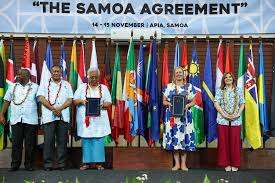
76 Countries Including Nigeria Sign Controversial Samoa Agreement (Full List)

The Samoa agreement focuses on economic development, security, environment, migration, mobility, and climate change other areas include investment opportunities, sustainable development, and mutually beneficial cooperation, among others. The Samoa agreement has been signed by 79 countries across the world to address various aspects of the economy. The objective of the Samoa agreement is to serve as the legal framework for EU relations with these 79 countries. These include 48 African, 16 Caribbean, and 15 Pacific countries. The agreement covers 2 billion people and aims to strengthen the capacity of the EU and the ACP (African, Caribbean, and Pacific countries) to address global challenges together. Here are the full list of countries to benefit from the Samoa Agreement: African Countries: 1. Algeria 2. Angola 3. Benin 4. Botswana 5. Burkina Faso 6. Burundi 7. Cameroon 8. Cape Verde 9. Central African Republic 10. Chad 11. Comoros 12. Congo 13. Côte d’Ivoire 14.Democratic Republic of the Congo 15. Djibouti 16. Egypt 17. Equatorial Guinea 18. Eritrea 19. Eswatini 20. Ethiopia 21. Gabon 22. Gambia 23. Ghana 24. Guinea 25. Guinea-Bissau 26. Kenya 27. Lesotho 28. Liberia 29. Libya 30. Madagascar 31. Malawi 32. Mali 33. Mauritania 34. Mauritius 35. Morocco 36. Mozambique 37. Namibia 38. Niger 39. Nigeria 40. Republic of the Congo 41. Rwanda 42.São Tomé and Principe 43. Senegal 44. Seychelles 45. Sierra Leone 46. Somalia 47. South Africa 48. South Sudan 49. Sudan 50. Tanzania 51.Togo 52. Tunisia 53. Uganda 54. Zambia 55. Zimbabwe Caribbean Countries: 1. Antigua and Barbuda 2. The Bahamas 3. Barbados 4. Belize 5. Dominica 6. Dominican Republic 7. Grenada 8. Guyana 9. Haiti 10. Jamaica 11. Saint Kitts and Nevis 12. Saint Lucia 13. Saint Vincent and the Grenadines 14. Suriname 15. Trinidad and Tobago Pacific Countries: 1. Cook Islands 2. Fiji 3. Kiribati 4. Marshall Islands 5. Micronesia 6. Nauru 7. Niue 8. Palau 9. Papua New Guinea 10. Samoa 11. Solomon Islands 12. Tonga 13. Tuvalu 14. Vanuatu