Energy Transition: NSIA Unveils $500m Renewable Investment Platform

The Nigeria Sovereign Investment Authority (NSIA) has launched a $500m Renewables Investment Platform for Limitless Energy (RIPLE). This initiative is dedicated to the development, investment, and operation of renewable energy projects across the entire value chain. NSIA is an independent investment institution, set up by an Act of parliament to manage funds in excess of budgeted hydrocarbon revenues. While RIPLE is another milestone initiative by NSIA in the climate sustainability asset class, having previously launched Carbon Vista with Vitol and the Construction Finance Warehouse Facility. With RIPLE, NSIA is positioned to expand energy access, enhance energy efficiency and ensure energy security. The launch of RIPLE is accompanied by the execution of a strategic partnership agreement that seeks to further redefine Nigeria’s energy landscape with the International Finance Corporation (IFC). The pilot for this initiative is located within the Tokarawa Industrial Hub in Kano State and it involves setting up a generation and distribution system to meet 70MW of unsuppressed energy demands of industrial activities, commercial enterprises, and residential customers in an areacovering about 9,000 connections. Commenting on the partnership, the Managing Director/CEO of NSIA Mr. Aminu Umar-Sadiq, said, “The collaboration between NSIA and the IFCis a clear demonstration of NSIA’s dedication to sustainable energy transition in Nigeria. As the custodian of economic resources for current and future generations of Nigerians, tackling climate risks is integral to NSIA’s objectives. We recognize the many opportunities it offers for innovation, growth, and economic transformation. “We are excited to partner with the International Finance Corporation to advance the transition to energy efficient solutions in Nigeria, an institution that shares our commitment to sustainable development,our focus is to empower the customers with a resilient and environmentally friendly energy solution that will optimize productivity and reduce carbon footprint ” said Program Manager, RIPLE, Mr. Yusuf Umar, Further speaking Regional Manager Africa, IFC Dan Croft, said, “Reliable electricity is crucial for improving quality of life, productivity, and economic growth in Nigeria. IFC is pleased to collaborate with our longstanding partner, NSIA, to develop and implement the first phase of this innovative energy solution which will reduce greenhouse gas emissions and reliance on fossil fuel. The energy solution will also deliver reliable power supply for commercial, residential as well as industrial use.”
NGO Bemoans Current Scale Of Mini-Grids In Nigeria

The Nigeria Team Leader of International Centre for Energy, Environment and Development (ICEED), Ewah Eleri has expressed concern over the current scale of mini-grids in Nigeria. Speaking at the just concluded high-level policy dialogue titled; Sustainability, Inclusiveness, and Governance of Mini-grids in Africa (SIGMA), Eleri pointed out that Nigeria requires at least one million five hundred new connections annually over the next decade to close the current electricity access gap. According to him, “To meet the scale of the electricity access challenge, Nigeria needs to grow its electricity supply by seven times the current available electricity. “In capacity terms, we need to expand our electricity supply to 42 gigawatts, almost ten times what is available today. A significant amount of this component must be represented by decentralized renewable energy options. “It is important that we scale up the ambition for mini-grids in Nigeria to help in closing the current electricity access gap”, he concluded. While presenting the key findings of the research project, Co-Investigator of the project in Nigeria and lecturer at the Centre for Petroleum, Energy Economics and Law at the University of Ibadan, Temilade Sesan, pointed out that Nigeria must re-evaluate the role of market forces and government in delivering electricity access through mini-grids. According to Sesan, “Today, the technical, financial and environmental sustainability of mini-grid development in Nigeria is questionable adding that it is also uncertain that the benefits from the increasing interest in mini-grids are spread evenly, especially as it affects women.”
Global Energy Supply: IEA Forecasts 73% Drop In Fossil Fuels’ Share

The International Energy Agency (IEA) has projected that fossil fuels’ share in global energy supply would drop to 73% by 2030 and carbon dioxide emissions peaking by 2025. This is despite the fact that global oil demand would peak this decade at about 102 million barrels per day (mbd) for two more decades. The agency, in its latest ‘World Energy Outlook (WOE) 2023’ report stated that the drop in fossil fuel share in the global energy market had remained at around 80% for decades. According to the IEA’s Stated Policies Scenario (STEPS) data, from 2030, oil consumption will begin a slow decline by decreasing by more than four million barrels per day to 97.4mbd in 2050, the IEA said. The report further predicted that in 2030, clean technologies would play a “greater role than today” as electric cars on the road worldwide will increase by 10 times, and renewables’ share of the global electricity mix will be near 50%, up by 30% while heat pumps and other electric heating systems will outsell fossil fuel boilers globally, and investment into new offshore wind projects will be three times more than new coal and gas-fired power plants. Commenting on the report’s findings, Global Net-Zero Transformation Advisory Operations Manager, EcoAct, Lindsay Ventress, said: “The World Energy Outlook 2023 underscores the increasingly narrow path toward preserving the goal of 1.5°C warming, yet provides hope that this remains attainable if we promptly embark on transformative climate actions. “The report’s call for an annual twofold increase in energy efficiency improvements underscores its critical role in a sustainable future, but also the current failure of legislators to get to grips with this vital requirement. In light of this, businesses cannot afford to merely wait for government commitments; they must become catalysts for progress,” she added. Even so, the IEA maintained that demand for fossil fuels was set to remain “far too high” to limit the global rise in temperatures to 1.5°C, as per the Paris Agreement. The agency further warned that despite the impressive growth in clean energy, if the policies are not changed, global emissions would remain high to push the temperature limit by around 2.4°C this century. The STEPS also estimates a peak in energy-related carbon dioxide emissions in the mid-2020s. Speaking on the report’s findings, the IEA Executive Director, Fatih Birol, explained: “Taking into account the ongoing strains and volatility in traditional energy markets today, claims that oil and gas represent safe or secure choices for the world’s energy and climate future look weaker than ever.” According to the report, the tense situation in the Middle East “is a reminder of hazards in oil markets a year after Russia cut gas supplies to Europe”. In the STEPS, the share of seaborne crude oil trade from the Middle East to Asia rises from around 40 per cent to 50 per cent by 2050. The WOE highlights the fears in the natural gas markets due to instability and price hikes after Russia cut supplies to Europe while also foreseeing a surge in new liquefied natural gas (LNG) projects from 2025, with the prospect of adding more than 250 billion cubic metres per year new capacity by 2030, representing 45% of the current global LNG supply. While some of the immediate pressures of the global energy crisis have eased due to the current geopolitical situation and the global economic developments, the IEA drew attention to the “unsettled” global energy market, noting that “this underscores, once again, the frailties of the fossil fuel age and the benefits for energy security as well as for emissions of shifting to a more sustainable energy system.” It stated that developing economies had been experiencing the largest increase in demand for energy services as the extreme volatility in energy markets have pushed for an “affordable, reliable, and resilient supply”.
Fossil fuel subsidies surge to record $7trn

The International Monetary Fund (IMF) has said that subsidies on fossil fuel surged to a record $7 trillion in 2022. The Fund in its chart of the week, which focused on climate change, said the impact of the Russia-Ukraine war as governments globally supported consumers and businesses as energy prices spiked. As the world struggles to restrict global warming to 1.5 degrees Celsius and parts of Asia, Europe and the United States swelter in extreme heat, subsidies for oil, coal and natural gas are costing the equivalent of 7.1 percent of global gross domestic product. The World Meteorological Organization says July was the hottest month on record. Data shows that fossil-fuel subsidies rose by $2 trillion over the past two years as explicit subsidies (undercharging for supply costs) more than doubled to $1.3 trillion. Consuming fossil fuels imposes enormous environmental costs—mostly from local air pollution and damage from global warming. The vast majority of subsidies are implicit, as environmental costs are often not reflected in prices for fossil fuels, especially for coal and diesel. “If governments removed explicit subsidies and imposed corrective taxes, fuel prices would increase. This would lead firms and households to consider environmental costs when making consumption and investment decisions. The result would be cutting global carbon-dioxide emissions significantly, cleaner air, less lung and heart disease, and more fiscal space for governments. “We estimate that scrapping explicit and implicit fossil-fuel subsidies would prevent 1.6 million premature deaths annually, raise government revenues by $4.4 trillion, and put emissions on track toward reaching global warming targets. It would also redistribute income as fuel subsidies benefit rich households more than poor ones. “Yet removing fuel subsidies can be tricky. Governments must design, communicate, and implement reforms clearly and carefully as part of a comprehensive policy package that underscores the benefits. A portion of the increased revenues should be used to compensate vulnerable households for higher energy prices. The remainder could be used to cut taxes on work and investment and fund public goods such as education, healthcare, and clean energy,” the global lender said.
Transcorp’s generating capacity to hit 1200MW by December

Transcorp Group has said it hopes to raise Nigeria’s power capacity by 300MW by the end of 2023. Speaking on AriseTV, Group Chief Executive Officer of Transcorp Group, Owen Omogiafo, said that resounding the gas challenge will enable the company to achieve its milestone. According to the Transcorp GCEO, despite the gas and transmission challenges, the company still witnessed an impressive improvement in its power business in the first six months of this year (2023). “Transcorp has an installed generation capacity of nearly 2000MW, and in the first half of the year, we focused greatly on improving our mechanical available capacity and we took our capacity to about 900MW. “There were still some challenges with gas and transmission, but notwithstanding that, we saw a great improvement in our power business. Going by the strategy we are working with now, by year end, we will have about 1,200MW of available capacity.” On the Abuja Electricity Distribution Company (AEDC) acquisition, Omogiafo explained that Transcorp as part of a consortium that acquired a 60 per cent stake in AEDC was driven by the need to drive Nigeria’s economic recovery as no industry or sector can operate without power. Experts have opined that lack of a stable power supply continues to be a drawback to the country’s development. Manufacturers Association of Nigeria (MAN) has said that its members spent the sum of N144.5 billion on alternative power sources in 2022. She noted that the power sector is critical if the country’s real sector is economic growth.
Our gas transportation projects will bring affordable, cleaner energy- NNPCL

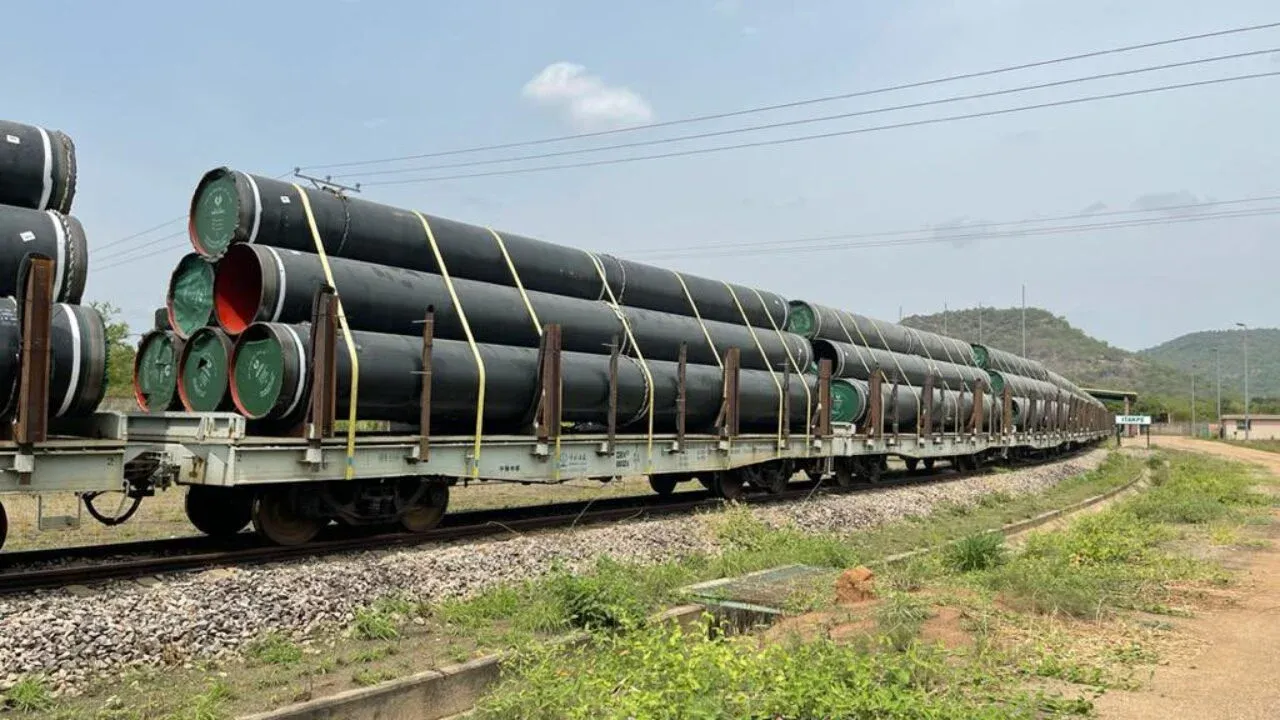
The Group Chief Executive Officer of the Nigerian National Petroleum Company Limited (NNPCL) has emphasized the company’s commitment to vigorously pursue its gas development and gas transportation projects. This declaration was made on Monday during a keynote address at the Society of Petroleum Engineers’ Annual International Conference and Exhibition, which centers around the theme “Balancing Energy Accessibility, Affordability, and Sustainability: Strategic Options for Africa.” Represented by the Executive Vice President, Upstream, NNPCL, Mr. Adokiye Tombomieye, the CEO expressed that the gas projects will significantly enhance energy accessibility, affordability, and sustainability for Nigerians. Nigeria holds vast natural gas reserves, totaling about 209.5 trillion cubic feet, with the potential for up to 600 trillion cubic feet. This abundant resource is expected to drive a cleaner and more affordable energy vision. While acknowledging alternative energy sources like solar and wind, the CEO pointed out their technological limitations, high cost, and inability to meet the robust energy demands of industries, cities, and remote areas. Gas, on the other hand, holds the potential to address these challenges effectively. The CEO appreciated the Society of Petroleum Engineers for consistently leading the way in assembling pivotal industry professionals. However, he highlighted the trilemma situation faced by African countries, striving to balance energy accessibility, affordability, and sustainability while aligning with the United Nations Sustainable Development Goals. He emphasized that achieving this delicate balance requires political will, technological innovation, effective market mechanisms, well-crafted policy interventions, and capacity building. A multi-stakeholder approach, involving government, the private sector, civil society, host communities, and the public, will be pivotal in achieving these goals. The Nigerian energy industry has witnessed strategic transformation in recent years, leading to viable industry legislation with the Petroleum Industry Act (PIA) and a long-term gas-centered energy transition plan. Additionally, the PIA has enabled NNPC Limited to venture into the renewable energy business, while the Nigerian Climate Act has mainstreamed climate change actions for sustainable development. The proactive measures undertaken by the Nigerian energy sector hold the promise of bringing affordable, cleaner energy to the nation while ensuring a greener and sustainable future.