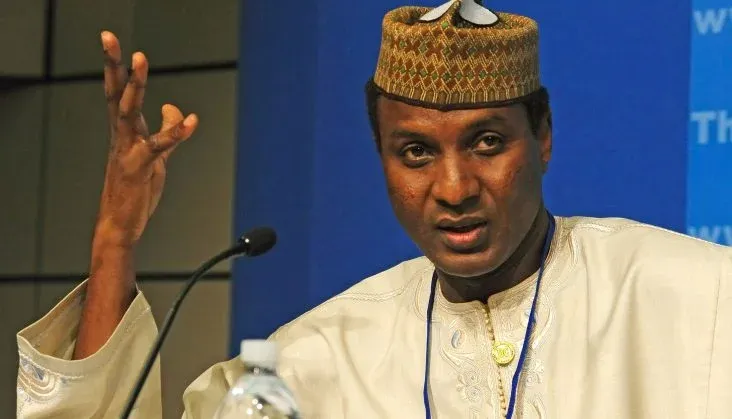
Niger will overcome ECOWAS sanctions, says new PM Zeine

Niger will overcome ECOWAS sanctions, says new PM Zeine

Lamine Zeine, Niger’s newly appointed Prime Minister, has characterized the sanctions imposed on the nation’s military junta as an “unfair challenge,” while expressing optimism that Niger will ultimately overcome them. Despite this obstacle, Zeine reaffirmed Niger’s commitment to fostering economic cooperation with the Economic Community of West African States (ECOWAS). Following the military’s ousting of democratically-elected President Mohamed Bazoum on July 26, which led to the suspension of the constitution and the installation of a transitional government, ECOWAS responded with sanctions against the new military junta. The regional body demanded an immediate return to constitutional order and activated a standby force in preparation for potential military intervention in Niger. Prime Minister Zeine acknowledged the significance of possible negotiations with both ECOWAS and neighbouring Nigeria, which had taken a lead role in addressing the situation in Niger. He emphasized the importance of preserving the historical relationship between Niger and ECOWAS, originally founded as an economic group to promote prosperity in West Africa. Zeine expressed his hopes for maintaining the economic solidarity envisioned by ECOWAS but noted concerns if political and military considerations overshadow this objective. He highlighted Niger’s dedication to working within the framework of regional cooperation while also voicing the nation’s desire to address issues in a balanced manner.

Niger Crisis: ECOWAS Parliament holds extra-ordinary session

Nigeria Crisis: ECOWAS Parliament holds extra-ordinary session

The ECOWAS Parliament will on Saturday, August 12 hold a virtual Extra-Ordinary Session to exhaustively discuss the recent political developments in the Republic of Niger. This is contained in a statement by the Communications Division of the parliament. The parliament said that within the context of giant changes that occurred in the politico-economic spectrum of the world in the late 1980s, several ECOWAS member states were motivated to take decisive steps towards achieving peace and security through the development of democracy and good governance by the early 1990s. “Thus, the ECOWAS Supplementary Protocol on Democracy and Good Governance came into force in 2001, marking an important stage in the sub-region’s political development. “Military regimes and one-party systems caved in for the emergence of multi-Party democracies. “Nevertheless, recent political developments in the region are pointing toward a reversal of the political gains of the past two decades. “There is a resurgence of unconstitutional changes of government through military coup d’etat, as recorded in four Member States of the sub-region, namely: the Republics of Mali, Guinea, Burkina Faso, and most recently, Niger,’’ the parliament observed. It said consequent upon such developments, the day-long session would see the 115-member parliament considering the emerging developments, following the unconstitutional change of government by the military of the Republic of Niger. Niger’s military last month imprisoned President Mohamed Bazoum and assumed power, drawing condemnation from international powers and raising the spectre of further conflict in the impoverished Sahel region of West Africa which is already overrun by a deadly Islamist insurgency. The ECOWAS Parliament has a total of 115 seats and 14 Standing Committees. Each member state is guaranteed a minimum of allotted five seats, with the remaining 40 seats distributed in proportion to the population of each country. Consequently, Nigeria has a total of 35 seats, followed by Ghana with eight seats. Côte d’Ivoire is allotted seven seats, while Burkina Faso, Guinea, Mali, Niger, and Senegal have six seats respectively. The remaining ECOWAS member states, namely Benin, Cabo Verde, The Gambia, Guinea Bissau, Liberia, Sierra Leone, and Togo, have allotted to each of them, five seats.