Skepticism as FG Budgets N6.69bn for Idle Ajaokuta Steel Company

Stakeholders have criticised the Federal Government’s decision to allocate N6.69 billion to the non-functional Ajaokuta Steel Company in the 2026 budget, warning that continued funding without production risks deepening Nigeria’s industrial decline.
Nasarawa Assembly Passes N545.2bn 2026 Appropriation Bill

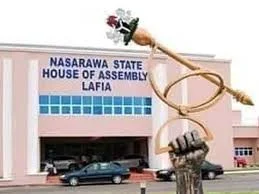
The Nasarawa State House of Assembly has passed the 2026 Appropriation Bill of N545.2 billion into law, following deliberations at plenary in Lafia on Tuesday. The approved budget represents an increase of N27.6 billion over the N517.5 billion proposal earlier presented to the House by Governor Abdullahi Sule. Announcing the passage, Speaker of the House, Danladi Jatau, described the development as a major legislative milestone, noting that the budget would enable the state government to implement people-oriented projects aimed at driving overall development across Nasarawa State. According to Jatau, the approved estimates allocate N316.26 billion for capital expenditure and N228.72 billion for recurrent expenditure. He explained that the increase in the budget size was necessitated by the prevailing inflationary pressure, which has significantly affected the cost of projects and service delivery. He disclosed that security-related votes received an additional N14 billion, while the Ministry of Local Government was allocated an extra N7 billion. The Ministry of Information, Culture and Tourism also got an additional N3.7 billion, alongside funding approval for the 55-kilometre Lafia–Kwandere–Garaku road project. The Speaker commended the House standing committees for what he described as their diligence and thoroughness during the budget defence and review process. He urged the executive arm to ensure full implementation of the budget once it receives the governor’s assent. “A Bill to authorise the issue of N545.18 billion from the Consolidated Revenue Fund of Nasarawa State for the 2026 financial year has scaled third reading and passed,” Jatau said. He subsequently directed the Clerk of the House to prepare a clean copy of the bill for transmission to the governor for assent. Earlier, the Majority Leader, Suleiman Azara, moved the motion for the passage of the bill, which was seconded by the Minority Leader, Luka Zhekaba. The bill was unanimously adopted by members of the House. Governor Sule had presented the initial N517.5 billion budget proposal to the Assembly on November 26, describing it as the “Budget of Strategic Consolidation.” During the presentation, he commended the legislature for its consistent support, particularly in ensuring the timely passage of appropriation bills.
Forgeries, taxations and the reign of Rehoboam

By UGO ONUOHA “A profligate regime should not expect Nigerians to willingly submit to a new tax regime that looks like an exercise in extortion. The administration gets its priorities wrong. At a time that virtually all federal highways have collapsed and become deathtraps, this government prioritises the construction of a N15 trillion coastal highway from Lagos to Calabar.” A little over three months into the presidency of Alhaji Bola Ahmed Tinubu, on September 5, 2023, I wrote an opinion piece titled “100 days of Rehoboam” in this space and elsewhere. Rehoboam was a king of the divided kingdom of ancient Israel. He was the son of King Solomon and the grandson of King David, both of whom were also past rulers of a united Israel. Rehoboam caused Israel to be divided through policies that inflicted pains on his people. He was reckless. He was proud. He was unfeeling. He took counsel from his scatter head fellow young men. He told the Israelites that the privations they suffered under his father should be regarded as a child’s play. And that while his predecessors chastised them with a whip, he would chastise them with a scorpion. And he verily proceeded to do so. Rehoboam and Tinubu share similarities and dissimilarities. Rehoboam was a monarch. Tinubu is not a king in spite of his pretending to be one. Rehoboam was born into royalty. Tinubu was not. Indeed Tinubu’s birth and early years are still subjects of conjectures and controversies. Rehoboam was a young man when he ascended the throne of his fathers, and so could be excused on account of youthful exuberance. Tinubu was an old man when he was installed as president of Nigeria though his true age is only known to himself and himself alone. There’s no verifiable evidence of when he was born and where. Unlike Rehoboam, Tinubu takes no counsel from anyone. He said this much himself when, without consultations and without a Cabinet, he unilaterally removed the so-called petrol subsidy. Tinubu at 100 days in office] has been like that proverbial bird that perched on a tree branch—the branch has remained unsettled and the bird can’t stop dancing to unheard sounds. Since his inauguration on May 29, 2023, exacerbated hopelessness has been the lot of Nigerians. Tinubu himself can only pretend to have peace of mind…” On September 5, 2023, I wrote this about Tinubu and Rehoboam. “[Tinubu at 100 days in office] has been like that proverbial bird that perched on a tree branch – the tree branch has remained unsettled and the bird can’t stop dancing to unheard sounds. Since his inauguration [as president] on May 29 [2023], exacerbated hopelessness has been the lot of Nigerians and Tinubu himself can only pretend to have had peace of mind. If he has had the presence and prescience of mind, he would not have been enmeshed in serial fumbling from one policy somersault to another from the removal of the so-called petrol subsidy, [devaluation of the Naira], student loan and [the] proposed payment of N8,000 per month for six months to a specified number of poor Nigerian families, and planning to lead the Economic Community of West African States [ECOWAS] to war on Niger Republic [when the military in that country seized political power]”… In Igbo Tinubu is a classical case of ‘akwu rere ere n’ikwo puru epu’ which transliteration in English language will roughly read: rotten palm fruits being pounded inside a decayed mortar. The finished product is better left to the imagination…” When Rehoboam became the king, the older advisers in the palace pleaded with him “to heed the cry of the people and lighten the heavy load of labour and taxes that Solomon had laid on them, but the younger elements who had grown up with the new king counselled otherwise. He took the counsel of his mates. The consequences of the actions of the new and rash King Rehoboam are well documented in the chronicles of the kings of Israel in the Holy Bible book of 1Kings. In Tinubu’s rash and irrational decisions [on] the first day and [subsequent] weeks of his reign, he appears to have borrowed a leaf from the wicked and unthinking King Rehoboam”. One of the undoings of Rehoboam was that he insensitively raised taxes on his people and so lost more than half of his kingdom. The northern part of Israel split away, taking its own path separate from the southern kingdom of Judah. But Nigeria is not a monarchy and bears no resemblance to the old kingdom of Israel. Does that mean that Nigeria splitting is unthinkable? With the new tax laws set to come into effect in a matter of days, Tinubu who rules like a monarch may yet be treading the path of King Rehoboam. Rehoboam raised taxes on his people at a time they were already complaining of privations and pains, Tinubu is poised to also raise taxes on Nigerians at a time the people are groaning under the weight of a multiplicity of harsh economic policies of the regime. And he appears not to be bothered. He is irritated by wise counsel that he steps on the brakes and allows Nigerians to breathe. Instead, he empowers the relevant agency of government to execute a secret contract with a so-called tax consultant in France which may lead to handing over Nigeria’s tax data to a foreign company. Tax data is a national security issue that should not be traded as a favour to a friend. Tinubu and the president of France, Emmanuel Macron, are known to be buddies. The frequent ‘working visits’ of our president since he assumed office a little over two years ago had been to Paris, France, unlike his predecessor, Muhammadu Buhari, who made London his tourism and medical destination, and the former archbishop of Canterbury his bosom friend. And a go-to man. A profligate regime should not expect Nigerians to willingly submit to a new tax regime that looks
Gov Otu Presents N250bn 2024 Budget For Cross River

Governor Bassey Otu of Cross River on Thursday presented a budget of N250 billion for 2024 to the state House of Assembly for approval. Presenting the budget titled: “The Peoples First Budget’’, Otu said that the figure was made up of N154billion capital expenditure and N96billion recurrent expenditure. He said that the budget was aligned with the Sustainable Development Goal (SDG) goal 11, which focused on zero hunger, goal 111 which focused on good health and wellbeing and goal 1V which focused on quality education. “The 2023 budget of quantum infinitum which my administration inherited sought to transform as well as empower citizens through wealth creation and employment generation, improvement of educational standard, access to healthcare among others. “So, we intend to consolidate on the gains made by my predecessor as well as deliver quality service to our people. “For the 2024 fiscal year, the government is expecting N133 billion from the Federal Allocation Account (FAAC) while independent revenue is estimated at N35 billion,” he said. Otu said that the budget would priotise agriculture, education, healthcare delivery, environment, infrastructure, youth and sports development, security, tourism and general administration. The governor said as a newly elected governor, he would continue from where the previous administration stopped by continuing with some of priority projects while adding some innovative ones. “The 2023 budget of quantum infinitum which my administration inherited sought to transform as well as empower citizens through wealth creation and employment generation, improvement of educational standard, access to healthcare among others. “So, we intend to consolidate on the gains made by my predecessor as well as deliver quality service to our people. “For the 2024 fiscal year, the government is expecting N133 billion from the Federal Allocation Account (FAAC) while independent revenue is estimated at N35 billion,” he said.