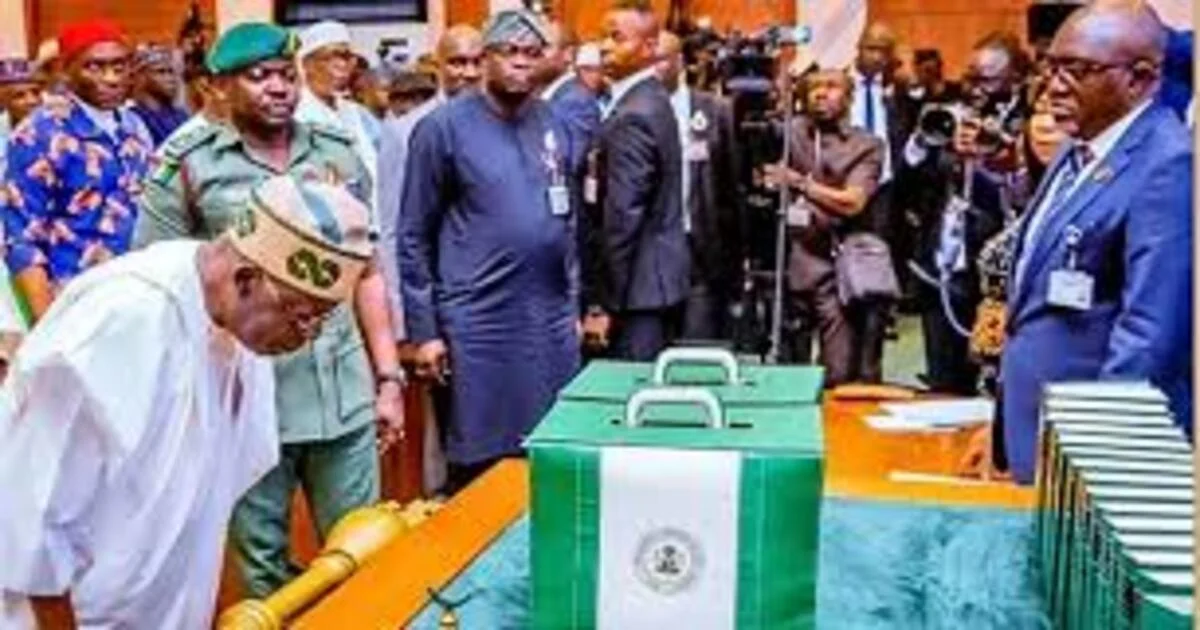
Senate Approves Tinubu’s N54.9 Trillion Budget

The Nigerian Senate has passed the 2025 appropriation bill, thereby approving a budget of N54.9 trillion for the current fiscal year. The approval came on Thursday during a plenary session. The budget includes N3.6 trillion for statutory transfers and N14.3 trillion for debt servicing. Recurrent expenditure is allocated N13.5 trillion, while N23.9 trillion is set aside for capital projects. Chairman of the Appropriation Committee, Senator Olamilekan Solomon Adeola, presented the final document. He noted that the delayed submission of the budget proposal affected its passage. He urged President Bola Tinubu to submit future budget proposals at least three months before the year’s end. This, he explained, would help maintain the January-to-December budget cycle.
Why Nigerians should not pay tax

By Madaki O. Ameh Introduction The evolution of the Nation-State in pre-historic times brought with it some attributes, which was designed by early thinkers to make it easier for the State authorities to carry on its assigned roles in society. As the citizens of the Nation-State subdued their individual rights to that of organised civil society where they agreed to be governed by uniform rules and regulations of human conduct, and also confer on the State some rights to sanction deviant behaviour, the modern day society as we know it today gradually evolved from the “Hobbestian state of nature”, where life was nasty, brutish and short, and might was right. One of the mechanisms through which the State, not being itself engaged in any income generating ventures, was expected to generate resources with which to provide for the common good of all, was to take a little of that income which accrued to individuals, and create a pool of funds from which common amenities like security, roads, utilities, schools, healthcare, etc., could be provided. Thus evolved the concept of taxation, as we know it today. From humble beginnings when taxation was no more than 5% of average income of individuals, the appetite of the State to more funds grew as the needs of society became more complex. Different taxes and levies started being imposed on individuals and corporate organisations, and what initially started as a voluntary contribution to the State gradually assumed a compulsive nature, such that laws were made to punish evasion of taxes by different governments. This essay attempts to examine the various facets of life in Nigeria from the point of view of the respective obligations of the citizens to pay their taxes, and the duty of the State to provide amenities, and comes to the inevitable conclusion that nowhere in the world is there a better justification for evasion of taxes than in Nigeria, as the governments here have done little or nothing to deserve any form of contribution from the citizens by way of taxes. To date, the average direct tax rate the world over is 30% of earned income, with variations from country to country. Tax relief became a tool of manipulation and political campaigns at election times. The governments which promised the most tax relief were more favoured by the citizenry, who often paid taxes under duress, obviously having better things to do with their incomes than handing it over to a bogus apparatus called the State, as they were not always able to tell the direct benefits they obtained from the government for payment of those taxes. The level of resistance to taxation in different places differs in degree and complexity. Whereas citizens of most underdeveloped and developing countries rely on the non availability of population and income data in the hands of the taxing authorities to evade taxes, thereby leaving the burden of taxation to be borne by a few in regular employment, in the more advanced and sophisticated economies, people rely on the services of tax planners and other experts to cleverly avoid tax through lawfully recognised means. One common feature in resistance to taxation is however the perception of the populace towards their governments in the area of effectiveness in meeting their common needs. In areas where the governments are perceived to be up and doing, and people can visibly assess the impact of government on their daily lives, governments have been more able to rely on taxes as a major chunk of their national income than other places where governments are perceived as non-performing. It must however be borne in mind that the basic justification of the state in collection of taxes remains the need to raise funds to provide amenities for the common good. Where those amenities are either lacking completely, or where they exist, are largely provided by the citizens themselves without any input from government, then the moral or legal right of the State to impose such taxes becomes suspect. This essay attempts to examine the various facets of life in Nigeria from the point of view of the respective obligations of the citizens to pay their taxes, and the duty of the State to provide amenities, and comes to the inevitable conclusion that nowhere in the world is there a better justification for evasion of taxes than in Nigeria, as the governments here have done little or nothing to deserve any form of contribution from the citizens by way of taxes. That being so, the paper advocates a well articulated and structured resistance to taxation, especially by workers in the oil and gas industry in the country, who are undoubtedly the most unjustly taxed sector of the Nigerian economy. For the purpose of this essay, the amenities legitimately expected from Government can be classified into Personal Security, Roads, Public Utilities, Schools, Social Security, Medicare, Housing, and a general enabling environment for economic and social activities to thrive, as would be expected of any civilised human setting. These different aspects will be discussed in turn, to establish that in all these areas, successive Nigerian governments have failed woefully in its social contract with the citizenry, and that any form of taxation in Nigeria is unjustified and amounts to blatant stealing by government. Personal Security It is a generally accepted fact that Nigeria is a very insecure place to live in. Crimes are committed against decent and law-abiding citizens on a regular and routine basis, and there are no effective avenues to redress those wrongs. The sense of insecurity pervades the living pattern of the people, and reflects even in the way they build their houses. Unlike most places in the developed world or other saner environments in neighbouring African countries where people just build their houses without needing to erect fences, in Nigeria, when one thinks of building a house, the first thing that comes to mind is putting up a high fence. Apart from helping you to secure the land from encroachment, which
Why We Won’t Withdraw Tax Reform Bills – Akpabio

The Senate President has affirmed the determination of the red chamber to proceed with discussions on the Tax Reform Bills, insisting that the process has not been halted. Senator Godswill Akpabio clarified during Thursday’s plenary session that the legislative body remains focused on fulfilling its duties despite external pressures. Addressing a motion raised by Senate Leader Opeyemi Bamidele, Akpabio countered media reports suggesting a suspension or withdrawal of the bills. He stated that the Senate’s work on the reforms, which aim to address Nigeria’s fiscal challenges, will continue uninterrupted. In a bid to address contentious issues surrounding the bills, a special committee was formed to collaborate with the Attorney General of the Federation, Lateef Fagbemi. The committee will also consult stakeholders, including governors, business leaders, and religious groups, to ensure inclusivity in the process. Public hearings and stakeholder engagements are expected to address concerns, especially resistance from parts of the country. The Senate emphasized that these consultations are critical to achieving a comprehensive and transparent reform. The Tax Reform Bills, forwarded by President Bola Ahmed Tinubu in October, have faced opposition but remain a key focus for the legislature. Lawmakers assured the public of their commitment to addressing concerns while maintaining legislative independence.