Joseph Boakai Officially Declared Liberia’s New President

Joseph Boakai, the former Vice President of Liberia and Unity Party candidate, has been officially declared the winner of the 2023 presidential election. The announcement was made by Davidetta Lansannah, chairperson of Liberia’s National Election Commission (NEC) on Monday evening. After counting 100 percent of the votes from the country’s 5,890 polling places, Mr. Boakai secured 814,481 votes out of the available 1,625,684, surpassing incumbent President George Weah of the ruling Coalition for Democratic Change, who received 793,914 votes. Mr. Boakai’s vote share represented 50.64 percent of the total votes cast, while Mr. Weah received 49.36 percent. The first round of voting on October 10 did not produce a clear winner among the 20 presidential candidates, leading to a runoff between Weah and Boakai, the top two contenders. Unlike the first round, where a winner needed over 50 percent of the votes, a simple majority sufficed in the second round. Weah graciously accepted defeat and congratulated President-elect Boakai, urging his supporters to do the same when about 99 percent of the votes were counted. Foreign leaders, including Nigeria’s President Bola Tinubu, extended congratulations to Mr. Boakai, commending the statesmanship displayed by both candidates. The United States Government also praised Mr. Weah for peacefully accepting the outcome of the closely contested election, emphasizing the need for national unity and healing post-election divisions. The victory of Joseph Boakai as Liberia’s new president signifies a historic moment, fostering hopes for unity and progress in the nation’s governance and development.
Senate Swears In Amos Yohanna To Replace Sacked Abbo

Amos Yohanna, representing the Peoples Democratic Party (PDP), was officially sworn in as the senator for the Adamawa senatorial north district. The oath of office was administered by Jibrin Barau, the deputy president of the senate, during a ceremony held on Wednesday. This development follows the recent court of appeal decision that led to the removal of Elisha Abbo, the former senator representing Adamawa north. Abbo had made accusations against Senate President Godswill Akpabio in connection to his removal, but he later retracted the allegations. Yohanna’s path to the senate was paved with legal action. He filed a petition (marked EPT/AD/SEN/02/2023) challenging the outcome of the senatorial election, contesting that Abbo’s election should be invalidated due to corrupt practices and non-compliance with the provisions of the Electoral Act 2022. Yohanna specifically cited over-voting at various polling units, false entries, alteration, and cancellation of votes at several polling stations. He also pointed out that some of these alterations and cancellations were not properly signed by the presiding officers of the polling units. While the tribunal initially dismissed Yohanna’s appeal, the court of appeal ultimately upheld it, solidifying his position as the senator for Adamawa north district.
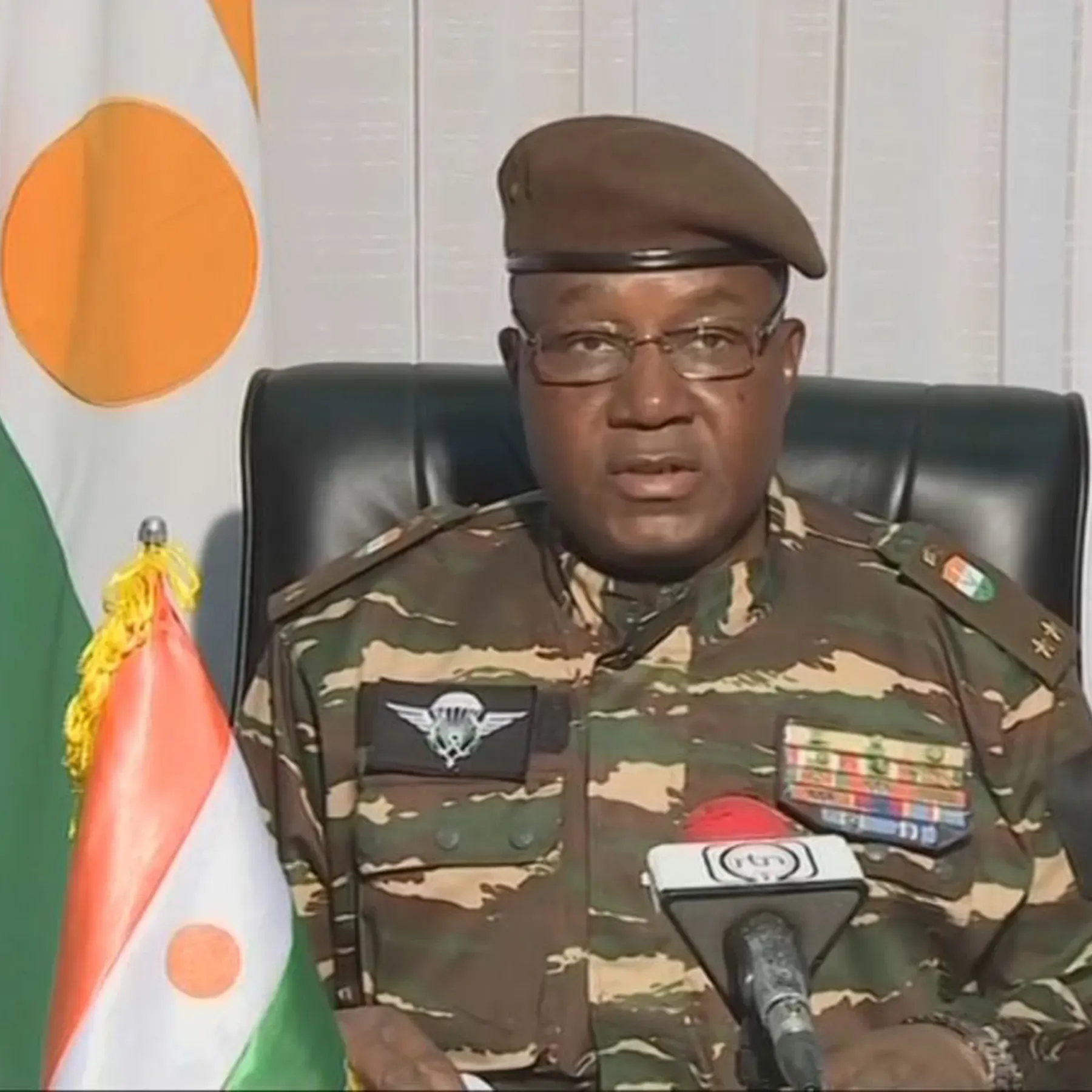
Niger Coup: Tchiani asserts defensive stance against ECOWAS

In the wake of the recent coup in Niger, General Abdourahamane Tchiani, the leader of the mutineers who assumed control, emphasized his nation’s reluctance for conflict but readiness to safeguard itself when necessary. Tchiani conveyed that both the military and the populace of Niger are averse to the prospects of war, yet they remain steadfast in their determination to counter any signs of aggression, as reported by Al Jazeera. The head of the junta underscored the unawareness of member states within the Economic Community of West African States (ECOWAS) regarding Niger’s pivotal role in preventing regional destabilization amidst a surge in terrorist activities. He expressed skepticism towards the imposed sanctions on his country, suggesting that they aimed to exert pressure on the rebels rather than resolve the ongoing crisis. Tchiani further clarified that the insurgents’ objective isn’t to seize power but to facilitate a solution that aligns with the best interests of the populace. The coup leader disclosed that an ECOWAS delegation visited Niger’s capital and held discussions both with the deposed President Mohamed Bazoum, who was removed and detained by his own guard led by Tchiani, and with Tchiani himself. Since the coup’s occurrence on July 26, ECOWAS has responded by suspending financial aid to Niger, freezing rebel-held assets, and imposing travel restrictions on flights to and from the nation. A subsequent summit in Nigeria’s Abuja resulted in ECOWAS leaders agreeing to ready a standby force to potentially compel the Nigerien military to reinstate Bazoum. On a recent note, ECOWAS Commissioner for Political Affairs, Abdel-Fatau Musah, indicated that the general staff chiefs within ECOWAS have set a date for an undisclosed military intervention. This decision comes as tensions and uncertainties persist within Niger’s political landscape. General Abdourahamane Tchiani’s statements echo a stance against war while highlighting the nation’s resolve to defend itself against aggression, as Niger navigates through these challenging times of political transition and unrest.