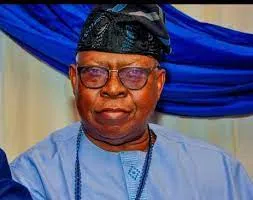
Akeredolu Remains Ondo State Governor, Says Tinubu

In a bid to restore calm and political stability in Ondo State, President Bola Ahmed Tinubu has intervened in the ongoing crisis between Governor Rotimi Akeredolu and Deputy Governor Lucky Aiyedatiwa, announcing Akeredolu’s continuation as Governor. The decision came after a high-level meeting with Ondo State stakeholders at the Presidential Villa at the weekend. A statement released by Tinubu’s Special Adviser on Media and Publicity, Ajuri Ngelale, clarified the President’s stance, dismissing speculations about the invocation of the doctrine of necessity to appoint Aiyedatiwa as the acting governor. The Presidency emphasized that Akeredolu retains his position as the state’s Governor, reaffirming Aiyedatiwa’s role as the Deputy Governor. Following extensive negotiations involving the President, representatives of both factions, federal and state lawmakers, and APC officials in Ondo State, Tinubu urged all parties to prioritize peace, fostering commitments toward reconciliation. As a result of these deliberations, Governor Akeredolu will continue as the Chief Executive of Ondo State, maintaining the current administration’s stability. The announcement also ensures the uninterrupted functions of the State Executive Council, while preserving the leadership of the State’s House of Assembly and the APC Chapter in Ondo State.
Nasarawa Guber: Appeal Court Overturns Tribunal Verdict, Reinstates Abdullahi Sule

The Abuja Division of the Appeal Court on Thursday reversed the sack of the Nasarawa State Governor, Abdullahi Sule by the State Election Petitions Tribunal in its judgment delivered on October 2. Declaring the tribunal verdict a nullity, the court held that the Ezekiel Ajayi-led tribunal acted in grave error in using witness statements on oath and not front-loaded as required by law to arrive at the unjust conclusion of nullifying the election of the governor. The appellate court, in its judgment delivered by Justice Uchechukwu Onyemenam, said that the Tribunal was legally bound to act on witness statements filed along with the petition or front loaded within 21 days stipulated by law. The Court held that no petition can lawfully be amended outside the 21 days allowed by law as wrongly done by the Tribunal. Since the statements used by the Tribunal to sack the Governor were not front loaded in compliance with law, the statements were product of illegality with no probate value tor a law Court to act upon. The Court also dismissed the over voting issues also used to annul the election adding that allegations to that were not established by law. Justice Onyemenam held that the petition by the Governorship candidate of the People’s Democratic Party PDP was a nullity and invalid on the ground that the jurisdictional issues raised by the governor was unlawfully ignored by the Tribunal. According to the Court of Appeal, the Tribunal denied the governor fair hearing by not considering and making findings on the issues of jurisdiction raised at the hearing of the petition. Justice Onyemenam agreed that denial of fair hearing against the governor was fatal and tendered all decisions of the Tribunal invalid. In all, the Court of Appeal reversed all orders made against the governor and the Independent National Electoral Commission INEC and affirmed Sule as the lawfully elected governor of the state. INEC had declared Sule winner of the governorship election on the ground that he polled a total of 347,209 votes to defeat his closest opponent David Emmanuel Ombugadu who secured 283,016 votes. In a split decision on October 2, the tribunal nullified Sule’s election and upheld Ombugadu as the winner.
Bayelsa Guber Poll: Diri Sets For Victory, Wins Southern Ijaw LGA

Governor Douye Diri secured victory in the ongoing collation of Bayelsa governorship election results, specifically winning Southern Ijaw Local Government Area. As the collation centre took a break around 1:00 pm, the state Returning Officer, Prof Faruq Kuta, resumed the process at approximately 2:20 pm in Yenagoa, the capital of Bayelsa. The Peoples Democratic Party (PDP) candidate, Diri, demonstrated a strong performance in Southern Ijaw, garnering 24,685 votes. In contrast, his closest rival, Timipre Sylva of the All Progressives Congress (APC), received 18,174 votes. The Labour Party (LP) secured the third position with 119 votes out of the 50,153 accredited voters in the local government area. These recent results solidify Diri’s lead, as he has now won in six out of the eight local government areas in Bayelsa, while Sylva secured victories in two. Sylva’s wins include Brass Local Government Area, where he polled 18,431 votes compared to Diri’s 12,602. Additionally, the APC triumphed in Nembe LGA, securing 22,248 votes, while Diri received 4,556 votes in that locality. The overall outcome of the election continues to unfold, shaping the political landscape of the oil-rich state. See Bayelsa Governorship Results By LGA: Southern Ijaw LGA APC: 18,174 LP: 119 PDP: 24,685 Brass LGA APC – 18,431 LP – 83 PDP – 12,602 Sagbama LGA APC – 6,608 LP – 217 PDP – 35,504 Kolokuma/Opokuma LGA APC – 5,349 LP – 22 PDP – 18,465 Ogbia LGA APC – 16,319 LP – 57 PDP – 18,435 Yenegoa LGA APC – 14,534 LP – 244 PDP – 37,777 Nembe LGA APC – 22,248 LP – 113 PDP – 4,556 Ekeremor LGA APC – 8,445 LP – 50 PDP – 23,172
Imo Guber: How INEC Declared APC’s Hope Uzodimma Winner

Governor Hope Uzodimma of the All Progressives Congress (APC) emerged victorious in the November 11, 2023, Imo State governorship election, as officially declared by the Independent National Electoral Commission (INEC). The announcement was made by Prof Abayomi Fashina, the state Returning Officer and Vice Chancellor of the Federal University, Oye Ekiti, following over eight hours of meticulous collation of local government results, culminating in a confirmation of Uzodimma’s re-election at around 10 am on a Sunday morning. Uzodimma’s political journey in Imo State began with a significant twist when, in January 2020, the Supreme Court nullified the election of Emeka Ihedioha of the Peoples Democratic Party (PDP), declaring Uzodimma as the governor. However, this turn of events seemingly intensified political tensions, leading to increased opposition against Uzodimma. The state faced challenges, including a security phenomenon characterized by “unknown gunmen,” abductions, and persistent Monday sit-at-home protests organized by pro-secessionist groups. In the recent election, Uzodimma faced formidable opponents, including Samuel Anyanwu of the PDP, Nneji Achonu of the Labour Party (LP)l;l, and Jack Ogunewe of the Action Alliance (AA), alongside 14 other contenders. Despite the competitive field, the APC candidate secured a resounding victory with 540,308 votes. His closest rivals, Anyanwu and Achonu, garnered 71,503 and 64,081 votes, respectively. This electoral outcome solidifies Uzodimma’s position as the re-elected governor and further shapes the political landscape in Imo State.
2m Voters Registered Voters Set For Kogi Guber Election –INEC

The Independent National Electoral Commission (INEC) said two million registered voters are expected to vote in the Saturday off-cycle governorship election in Kogi. The election will hold in 3,508 poling units, spread across the 21 Local Government Areas (LGAs) of the state. The LGAs included Adavi, Ajaokuta, Ankpa, Bassa, Dekina, Ibaji, Idah, Igalamela/Odolu, Ijumu, Kabba-Bunu, Kogi, Lokoja, Mopamuro, Ofu, Ogori-Magongo, Okene, Okehi, Olamaboro, Omala, Yagba-East, and Yagba-West. Speaking on preparations for the election, Dr Gabriel Longpet, the state Independent National Electoral Commission (INEC) Resident Electoral Commissioner (REC), said that the commission was 100 per cent ready. Longpet said that the commission had recruited over 15,000 ad hoc staff to help it in the smooth conduct of the poll. “We have 3,508 polling units and each of these units will be manned by four ad hoc staff aside the security personnel that will be around to ensure peaceful conduct of the election. “We shall deploy more staff and BVAS in densely populated polling units to complement those we are going to use. “To be precise, we are going to use more than 900 back-up BVAS. “This is because some polling units have more than 1,000 to 2,000 registered voters, and we have to split the number by creating more voting points for easy voting. “This becomes imperative as we don’t want to give room for anything that will delay the process. “As soon as there is a report of any BVAS failure or challenge, we shall provide another one and configure it to that polling unit for smooth continuation of voting,” he said. Longpet said that the BVAS had been deployed to the 21 local government areas of the state in readiness for the election. Also speaking, the state Commissioner of Police (CP), Mr Bethrand Onuoha, said over 40,000 policemen would be deployed across the state to ensure peaceful conduct of the election. Onuoha said that the planned deployment of large number of personnel was due the past experiences in the state, where violence was recorded during elections. “As it is, we have marked out some security flash points for more vigilance even though recent happenings signaled to us that the whole Kogi is a flashpoints. “From the number of security personnel we are deploying for this election, it’s an enough testimony to tell you that the state needs more security checks. “With the presence of adequate security personnel in Kogi, we are calling on every body to come out and exercise his or her civic right in the Saturday governorship election. “We are going to swam the state with enough security personnel and by the special grace of God, with our actions and sanctions, we are going to confound our detractors,” he said. Onuoha added: “God is telling me that this election is going to be better than all the elections ever held here in Kogi. “We have directed our personnel to be fair to everybody because we come here to serve the people and not any particular individual.” The CP urged politicians to play according to the rules of the game, saying that election would come and go, while the people would remain. “We expect that they should adopt politics without bitterness. Your brother is your brother, no matter where he belongs politically, ” he said. Onuoha warned trouble makers especially political thugs, not to try any thing funny as regard the election as security operatives are battle ready to deal with them. “In election, you don’t use matches and guns to force people to give you votes. Such people will meet the wrath of the law. “What we want in Kogi is a peaceful and successful election. Therefore, politicians must play according to the rules of the game or be dealt with. “The traditional rulers should help us talk to their subjects to maintain peace throughout the election period because it will come and go and we will all remain as residents,” said the police chief. Eighteen political parties featuring in the election on Wednesday signed a peace accord, ahead of the poll.Some of the parties were the All Progressives Congress (APC), the Peoples Democratic Party (PDP), the Social Democratic Party (SDP), the Labour Party (LP) and the Action Alliance (AA). Others are the New Nigerian Peoples Party (NNPP), the Action Democratic Congress (ADC), the Peoples Redemption Party (PRP), the Zenith Labour Party (ZLP), the National Rescue Movement and the Action Democratic Party (ADP).
Nigeria needs political will to benefit from oil resources – Expert

An international oil and gas expert, Alhaji Sadiq Abubakar Adamu, has urged the federal government to appoint technocrats familiar with the working of the oil and gas industry as minister. In a chat with journalists in Abuja, Adamu said appointing the right caliber of people into strategic positions in the sector would help formulate the right policies and ensure the sector is stirred in the right direction to achieve its full potential. According to him, Nigeria has the capacity and expertise to transform the oil and gas sector. Adamu, who played a leading role in the success recorded by Qatar in the development of its oil industry, stressed that with the right political will, Nigeria can turn the challenge of gas flaring into an advantage. Data from the National Oil Spill Detection and Response Agency (NOSDRA) revealed that between January and November 2022, Nigeria flared an estimated 5.6 billion standard cubic metres of gas valued at $685m. Nigeria’s natural gas is low in Hydrogen Sulphide and Carbon Dioxide impurities, gas flaring is still estimated at nearly $2m/day. According to data, Nigeria generated 22 million tonnes of LNG yearly as of 2020. The oil and gas expert emphasized the need for the authorities to stop wasting its huge gas resources by converting it into a source of energy to address the perennial power supply challenge. He further stated that Nigeria has huge natural gas potential and is in fact often referred to in geological terms as a gas country with few oil deposits. He said, “Even with the horrors of gas flaring and the few LNG and NGL projects so far developed, Nigeria is yet to tap into two percent (2%) of its proven 192 TCF of natural gas. With global demand currently at 120 TCF and growing, Nigeria could deftly play the go-bridge in this huge demand pool with significant benefits for the nation. All that is needed is the political will and expert deployment of management skills to turn this energy of the future to Nigeria’s fattest revenue cash cow and solid foundation for industrialization.” Adamu, who is a member of the Multi-Billion Dollars RasGas and Qatar natural Gas team, who led the Committee that structured and developed the Qatar Condensate Refinery, also said, it is time for the country to harness its huge oil and gas deposits for the benefit of the citizenry. The Taraba State born Harvard -trained oil and gas guru, whose sojourn in the industry spans over two decades, began his blossoming career with Mobil Corporation, Virginia, in the United States of America (USA), after his graduating top of his class from the prestigious Harvard University in 1992 with a Masters Degree in Law, has also worked for the multi-national oil and gas firm in several countries including the United Arab Emirate (UAE). He explained that Nigeria needs to urgently utilize her huge gas deposits by initiating policies and innovations that would monetize its enormous unassociated gas and to, as a matter of national urgency, permanently end gas flaming and convert these rich resources to benefit its generations yet to come. According to him, it is only by driving friendly initiatives and also appointing thorough-breed professionals with the requisite skills, exposure, and commitment that the populace will enjoy the natural resources that nature has endowed the country with. A skillful negotiator, Alhaji Adamu, has successfully brokered multi-billion dollar financing for Exxon Mobil projects in several countries across the globe. The legal luminary cum oil and gas technocrat has provided legal support for procurement from the International financing market of more than 15 Billion Dollars for Exxon Mobil projects in Nigeria. Adamu who is the Chairman Board of Directors of Oil Dyanmix Limited, and a Director of Sidler Dynamic Engineering Limited, an International Oil and Gas firm, among several other businesses, commended President Bola Ahmed Tinubu for his decisive actions, saying that such policies would engender growth and development in the oil and gas sector of the economy. He canvassed support for the Administration and said all well-meaning citizens should support the government to deliver on its lofty campaign promises of; jobs creation, building of infrastructure, and social safety nets for the less privileged. The Taraba State-born oil mogul who is also a philanthropist of repute, has experience in the hydrocarbon development industry, cut across Management, Legal support, Upstream and Midstream, Natural Gas monetization -domestic, International Planning, and Sales.
Niger: Tinubu writes Senate, highlights 7 resolutions to restoring democracy

In a bid pursuant to restore democracy in the neighboring Niger Republic, President Tinubu has written to the Nigerian Senate, seeking their support in implementing seven crucial resolutions aimed at pressuring the military junta to relinquish power and reinstate civilian rule. These resolutions reflect the collective will of the Economic Community of West African States (ECOWAS) and underscore Nigeria’s commitment to regional stability and democratic values. The first resolution calls for a military buildup and deployment of personnel to Niger’s borders, with the intention of enforcing compliance with the military junta. The President emphasized that this measure is not an act of aggression but rather a deterrent to ensure the junta understands the seriousness of the international community’s stance on democratic governance. In another resolution, the President seeks the suspension of electricity supply to Niger Republic as a means of applying economic pressure. According to the President, this move sends a strong message to the military junta that their actions have consequences beyond their borders and aims to foster public discontent over the lack of essential services. President Tinubu also highlighted the importance of rallying international support for the implementation of ECOWAS provisions. Diplomatic efforts will be intensified to garner cooperation from other African nations and the global community, demonstrating a united front in the fight for democracy. To further isolate the military junta and disrupt their operations, the fourth resolution seeks from Tinubu seeks to prevent the operation of commercial and special flights to and from Niger Republic. This measure will curtail the junta’s mobility and impede their ability to sustain their rule. In a move to exert economic pressure, the President proposed a blockade of goods in transit to Niger, particularly from Lagos and eastern seaports. This tactic aims to disrupt the flow of goods and impact the junta’s access to essential supplies, further fueling discontent within the country, Recognizing the power of social media in shaping public opinion, the President urged the Senate to embark on a sensitization campaign, utilizing various platforms as this campaign will inform Nigerians and the international community about the necessity and importance of these actions, garnering support for the cause. The seventh resolution calls for the immediate closure and monitoring of all land borders with Niger Republic. Additionally, the border drilling exercise will be reactivated to tighten security and prevent any illicit activities that may undermine the resolution’s objectives. President Tinubu emphasized that these actions are not taken lightly and are in full accordance with ECOWAS’ commitment to upholding democratic principles in the region. The objective is to restore civilian rule, safeguard human rights, and pave the way for free and fair elections in Niger Republic. President Tinubu’s call for the implementation of these seven resolutions against Niger Republic marks a critical step in the restoration of democracy and the rule of law in the region.
Ministerial Nominees: Tinubu withdraws Shetty, lists Keyamo, Mahmoud

President Bola Tinubu on Friday made an alteration to his list of ministerial nominees by replacing Maryam Shetty with two new candidates, Festus Keyamo (SAN) and Dr. Mariya Mahmoud. The Senate President, Godswill Akpabio, read the President’s letter containing this update during Friday’s plenary session. The announcement came just before the commencement of the fourth round of screening, which saw former Governor Adegboyega Oyetola take the podium at 12:14 pm. Among those waiting to be screened were former Governors Simon Lalong (Plateau), Bello Matawalle (Zamfara), and Atiku Bagudu (Kebbi), as well as Abdullahi Gwarzo, Bosun Tijani, Isiak Salako, Tunji Alausa, Yusuf Sununu, Ibrahim Geidam, Lola John, Shuaibu Audu, Tahir Mamman, Aliyu Abdullahi, Alkali Saidu, Heineken Lokpobori, Maigari Ahmadu, and Zaphaniah Jisalo. However, the name of Maryam Shetty was withdrawn from the supplementary list of ministerial nominees. This development followed three earlier screening sessions, beginning with the examination of 14 nominees from the first batch forwarded by the President the previous Thursday. The initial screening included individuals such as former Governor Nyesom Wike of Rivers State, Abubakar Kyari from Borno State, Nkiruka Onyejeocha (Abia State), Bello Muhammad (Sokoto State), Sani Abubakar Danladi (Taraba State), and Badaru Abubakar (Jigawa State), among others. On Tuesday, the Senate screened nine additional nominees, including former Governors Nasir El-Rufai (Kaduna) and Dave Umahi (Ebonyi), as well as Wale Edun, Uche Nnaji, Stella Okotete, Adebayo Adelabu, Ekperikpe Ekpo, Hannatu Musawa, and Musa Dangiwa. The screening process resumed on Wednesday with Dele Alake, presidential spokesman, Senior Advocate of Nigeria Lateef Fagbemi, Muhammad Idris, Ali Pate, and Doris Uzoka facing scrutiny. Moreover, Femi Gbajabiamila, Chief of Staff to the President, presented Tinubu’s supplementary ministerial list containing 19 additional nominees to the Senate. It is worth noting that Section 147 (3) of the 1999 Constitution mandates the President to appoint at least one minister from each of the 36 states. However, 11 states, including Adamawa, Bayelsa, Gombe, Kano, Kebbi, Kogi, Lagos, Osun, Yobe, Plateau, and Zamfara, are still without ministerial nominees as of now.
We must reset our political values to restructure Nigeria -Prof Odinkalu

The former Chairman of the National Human Rights Commission (NHRC), Prof. Chidi Anslem Odinkalu, has called for a resetting of the country’s value system which, according to him, will culminate in a restructuring of Nigeria. Odinkalu argues that the process of resetting Nigeria must start with addressing the country’s values problem, which requires a new kind of leadership that is national in outlook. Odinkalu, who is a visiting professor at Harvard University, maintained that for effective resetting to be accomplished, the process must begin with paying attention to political values that underpin coexistence in the country. The human rights activist, made these submissions in Abuja while speaking as a guest lecturer at the 10th-anniversary lecture of Just Friends Club of Nigeria. Speaking on the topic “Resetting Nigeria” he posited that if we cannot restructure our values, we cannot restructure a Nigeria that is equitable and just. The Prof emphasized that the theme, “Resetting Nigeria” is pregnant with more questions than illumination. First, it implies that Nigeria was already set without disclosing who did so. Secondly, it suggests also that the initial setting is flawed, imperiled, or spent, without indicating why, when or how this happened. Thirdly, it suggests that this old setting now needs reworking but does not say who will do it, why they are qualified for that task or from whence they derive their mandate to do so. He submitted that as a leader, we got to understand the diversity of this country and chose leaders who understand the diversity. “Many explanations have been proffered for Nigeria’s current unhappy condition: corruption, violence, impunity, among others. I want to suggest that these are symptoms, not the underlying problem. “Two decades ago, Chinua Achebe declared that ‘the trouble with Nigeria is simply and squarely a failure of leadership’, and argued that ‘Nigerians are corrupt because the system under which they live today makes corruption easy and profitable. “As a supplement or complement to this, I propose shortly to suggest that we have a structural crisis in our political economy indexed as it is on allocation rather than production. “This is an important point to make to a gathering of professionals. The defects of this fundamentally flawed political economy are compounded by a long-established ethics of deliberate political innumeracy”. “As a political economy, we specialize in fraudulent counting and accounting, legitimized post-hoc by the instruments and skills of the law. “To preserve our innumeracy of public accounts, we have used everything from coercive instruments to commissions of inquiry whose reports have never been seen. In over half a century as a country, we have never held a credible census. “To legitimize the outcome without addressing the underlying malfeasances, we establish Census Tribunals. In the same period, we have struggled to undertake credible elections. For each flawed election, we establish an Election Petitions Tribunal, procuring judicial legitimacy for returns that have been – in most cases – fundamentally flawed,” he lamented. Odinakalu recalled various past avoided trajectories of the country and the deliberate choice of her leaders not to do the right things and warned of dire consequences. “The only way to avoid those consequences is to come to terms with the reality that the country needs to be re-set. That re-setting, however, must begin with attention to the political values that underpin coexistence in the country. “But addressing this values problem requires a new kind of leadership that is national in outlook. That is where we must begin and in this, associations like the JFCN have a significant role to play,” he stated.
Northern group cautions Tinubu against appointing ex-govs as ministers

The Voice of Northern Youths Patriots (VNYP) has cautioned President Bola Tinubu against appointing some former governors from the North West region as his cabinet members. The Kano State branch of the group gave the advice on Monday in Kano during a news conference. Alhaji Mustapha Mai-Royal, Leader of the group, said appointing the ex-governors as ministers would make the president eat his words. He specifically listed three former governors Abdullahi Ganduje of Kano State, Bello Matawalle of Zamfara, and Atiku Bagudu of Kebbi State. Mai-Royal said the trio are under the EFCC investigation for alleged corruption cases to the tune of billions of Naira. The group therefore called on Tinubu not to go back on the promise to give the country the best leadership it needed by appointing the best hands to manage the nation’s resources for optimal performance. They also cautioned that they would not want a situation where the North would in future disregard whatever the president would tell them by making the wrong appointments. “We are hereby calling on His Excellency, President Bola Ahmad Tinubu, not to appoint some three former governors from the North West region as ministers because of various cases of (alleged) corruption against them. “Mr. President, you have stated that you would run an all-inclusive government for the unification and betterment of the country, we want to see that from the people you are going to appoint from our region. “These former governors from the North West have not displayed such qualities as to deserve being appointed in your government because they are only after their personal aggrandizement,” the youth leader stated. “We have seen the poor performance of some of these governors in the fight against insecurity in their states and the roles they have played. “These weaknesses are enough for Mr. President to consider and not appoint them into his cabinet,” Mai-Royal explained.