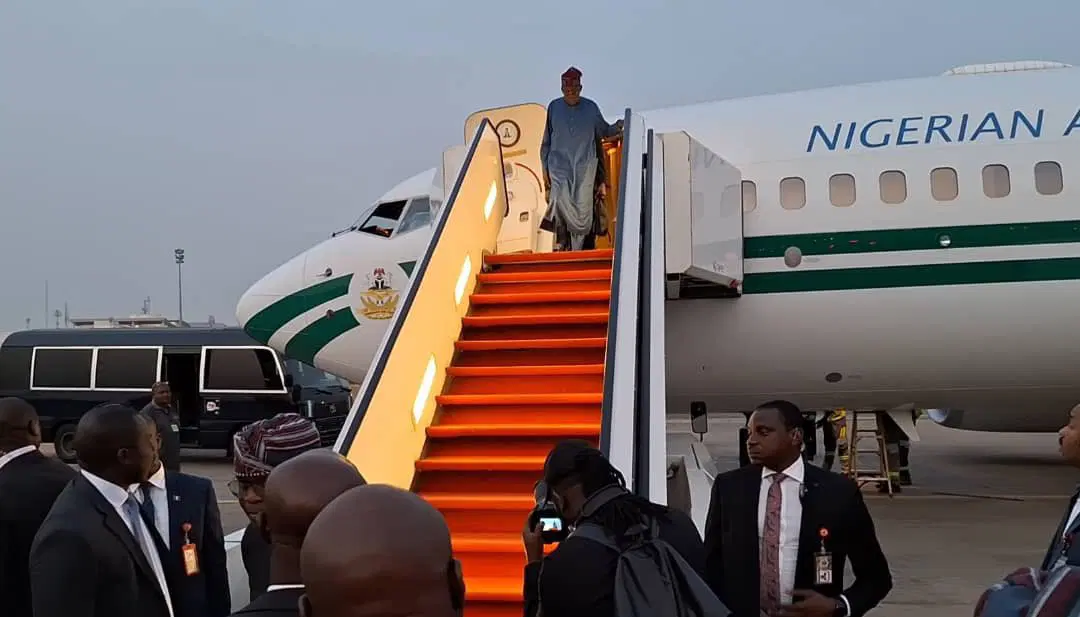
Oil is Indeed the Devil’s excrement: It’s Stench Is Choking Up Nigeria

A new Nigeria needs cooperation of all and sundry -Tinubu

Juan Pablo Pérez Alfonzo, the prominent Venezuelan politician and one of the founders of OPEC, in the early 70s called petroleum “the devil’s excrement” that always brings trouble—waste, corruption, consumption: our public services falling apart and debt. How I wish he could wake up from his grave to see the devastation of his native land, Venezuela my homeland, Nigeria, he would shake his head in shock how apt and in fact understated his prediction was. The stench of oil, specifically, the high price of one of its refined products, petrol, is literally threatening to choke the life out of my ancestral homeland, Nigeria. It has set the country’s social media on fire and threatening to do same to the regime of the newly elected President Tinubu, who removed the corruption-infected oil subsidy scam. The data below which is making the round on social media compares the selling price for PMS (petrol) across different countries apparently to justify the price hike. Assuming that one can even verify the reliability of this data (there are different grades of PMS in the U.S. for instance, and prices vary from state to state and in fact from one station to another on the same street. Due to local regulation and standards, in Carlifonia petrol can cost twice as what obtains in Texas. The data shows that PMS price in the US is about twice what we pay in Nigeria. However while the proposed minimum wage in Nigeria is equivalent to $43.75 a month at the current exchange rate of Naira 1600 to a dollar, the minimum wage in the U.S. which also varies from state to state is $7.25 per hour for federal minimum wage for covered nonexempt employees. In Carlifonia the minimum hourly wage hovers around $16. The bottom line is, comparing PMS prices across nations is a meaningless venture. In many of these countries unlike Nigeria, the public transport infrastructure is so advanced that many people don’t even drive. With our poor public transport network, the ridiculously low wage in our economy, and our over-dependence on fossil fuel dependent road transportation to move commodities across the nation, the price of PMS is unsustainably high. It is a drag on our economy and a major driver of our high inflation. Our challenge is that we can’t work our way out of the high price of PMS with the corruption-ridden oil subsidy scam. We have got to increase our refinery capacity. While Dangote coming on stream is a great first step, we cannot depend on another monopoly for the supply of arguably the most critical factor in our economy, petrol and diesel. By the way as Dangote himself has proclaimed publicly, the refinery wouldn’t have happened without the visionary leadership of Tinubu, himself an oil man having worked in the industry before. We need to give the man Tinubu some credit. Solving our petrol problem would not be easy nor quick, but we must have some faith in and give this 15 months old presidency time to work through it. Although, the uninformed has been howling about NNPC acquisition of a major petrol distribution company two years ago, with NNPC poised to be the main distributor for Dangote petrol, this all is making some sense now. The petrol marketers are a powerful cartel which is adept at price manipulation and price gouging. Have you noticed the almost coordinated rolling sale of PMS by different petrol stations in your neighbourhood? Most of them close shop when PMS is available in NNPC stations. With NNPC acquiring more petrol stations and with its exclusive right to Dangote petrol, there is a distinct possibility to finally break the back of the oil marketer cartel. However, more refineries need to come on-stream to address the supply-demand-price equilibrium conundrum in the Nigeria petrol supply chain. This coupled with massive investment in public transport infrastructure especially rail line and solution to our energy infrastructure, our power generation and distribution infrastructure, the prospect for economic revitalization of our country should improve substantially. However, all of these prospect goes down the tube if we throw the baby out with the bath water out of frustration. If we allow those vested and entrenched interest who have fed fat on our dysfunction andwho wish our country no good to decapitate the Tinubu presidency and our hard earned albeit imperfect and frankly frustrating democracy. Ww cannot allow people to fly the Russian flag again as a form of protest in our country. We must understand that there can be no gain without pain. We didn’t get to this economic Armageddon in one day and it will take time, pain and sacrifice to dig our way out. We the grown-up who enjoyed the bounties of petrol-dollars in the 70s and who contributed in one way or another to our country’s perilous condition, should complain and whine less and make one last sacrifice to bequeath to our children, grand children and future generation, a country they can at least have an opportunity to salvage. We have made a mess of our country. We have put our parochial tribal interest above the mission of building a strong virile nation. We have complained about corruption until it is our countryman who is caught or it is our turn to dip our hands in the treasury and we end up doing worse than the people we once condemned. We can heap the blame for global warming and every other problem that confronts our country on Tinubu’s 15-month regime all we want. It won’t solve our problem. Neither him nor anyone possess the magic wand to solve all the problems that have been built up through decades of misgovernance and corruption. He is not to blame for all the governors mismanaging the huge revenue allocations they are now getting. He is not responsible for the price gouging by the market women and the corruption that has become endemic in the Nigerian moral fabric. Our problems are multidimensional, multigenerational, of both poor

Lokpobri vows to ensure Nigeria meets OPEC’s production quota

Lokpobri vows to ensure Nigeria meets OPEC's production quota

The new Minister of State for Petroleum Resources (Oil), Senator Heineken Lokpobri, has said his mission to the ministry is to ensure Nigeria’s crude oil is ramped up on a sustainable basis.  Lokpobri, who said this when he met chief executives of the ministry on Monday in Abuja after his swearing-in at the Presidential Villa, added that he was not in the ministry to sit in the office but rather to ensure that Nigeria meets its Organisation of Petroleum Exporting Countries (OPEC) production quota.  According to him, everybody has to work together to increase production.  “This is not time for speeches. There is only one agenda that I have come to this ministry to achieve and that is to ramp up crude oil production on a sustainable basis for the benefit of all Nigerians,” Lokpobiri said. Lokpobri, who will be in charge of ensuring the country’s crude oil production meets OPEC’s quota, stressed that he is a creek boy and would ensure through constant visit to the creeks that he provides the leadership that would ramp up crude production.  According to him, with everybody working together, “we will write a new story for the oil industry,” he added.  Earlier, the Minister of State Petroleum Resources (Gas), Ekperikpo Ekpo, said that the full utilization of the Compressed Natural Gas (CNG) by Nigerians would help cushion the adverse effect of petrol subsidy removal by the government.  Ekpo insisted that with its abundance of gas deposits, it was time the country maximises its use in order to provide a better life for the citizenry.  He said he would with collaboration with stakeholders work strategically to translate Nigeria’s enormous gas resources into reality to address the challenge of power.  In his introductory remarks, the Permanent Secretary in the Ministry, Gabriel Aduda said the breakdown of the minister is part of the requirement of the Petroleum Industry Act of 2021.  “This shift has ushered in a new era of transparency and independence,” he said. He noted that with the present challenge of ramping up production, the new leadership the two ministers will bring to the sector will help the country navigate the challenge.

OPEC projects ‘solid’ oil demand in 2024

Nigeria’s Underperforming In Oil, Gas Sector Due To Insecurity – Lokpobiri

Prospects for the global oil market look healthy for the second half of the year, OPEC said on Thursday as the producer group stuck to its forecast for robust oil demand in 2024 and nudged up its expectations for global economic growth. Reuters report that upbeat view from the Organization of the Petroleum Exporting Countries (OPEC) comes as global oil prices have reached their highest since January. Tight supply has given impetus to the rally and OPEC’s monthly report also showed Saudi Arabia delivered on a voluntary output cut in July. The oil cartel said it expects global oil demand to rise by 2.25 million barrels per day (bpd) in 2024, compared with growth of 2.44 million bpd in 2023. Both forecasts were unchanged from last month. “Prospects for healthy oil fundamentals in the second half of the year, along with the pre-emptive, proactive and precautious approach of OPEC and non-OPEC producing countries to assess market conditions and take necessary measures at any time and as needed, will ensure stability of the global oil market,” the body said. In 2024 “solid” economic growth amid continued improvements in China is expected to boost oil consumption, it added. According to the newspaper, OPEC and its allies, known as OPEC+, began limiting supplies in late 2022 to bolster the market and in June extended supply curbs into 2024. Tighter supply has underpinned a rally in oil prices, with Brent crude trading above $88 a barrel on Thursday, its highest since January. The report nudged up OPEC’s forecast for world economic growth this year to 2.7% from 2.6% and raised next year’s figure by the same increment to 2.6%, saying growth in the United States, Brazil and Russia had surpassed initial expectations in the first half of 2023. “Despite the latest positive developments, several uncertainties regarding economic growth in the second half of 2023 and 2024 require cautious monitoring,” OPEC said, adding that these include continued high inflation and the prospect of further increases to interest rates.

Crude Oil: US shores up reserves with additional 3 million barrels

RKQYYAHSBPNLLCCZMVEYDUVOI Scaled

The Energy Department of the United States has said it plans to purchase 3 million more barrels of crude oil for its Strategic Petroleum Reserve. According to a statement from the department, previous solicitation for about 3 MMbbl resulted in contracts awarded to five companies at an average price of about $73 per bbl. The move marks the agency’s attempts to begin replenishing the emergency reserve after it released more than 200 MMbbl last year, in part to curb high energy prices. The DOE further said that it would accept bids for the new solicitation of sour crude oil through June 20 and contracts would be awarded by June 30 for deliveries in September. The previous awards are due for delivery in August.