Production Cut Pushes Oil Prices To $94.74

Production Cut Pushes Oil Prices To $94.74

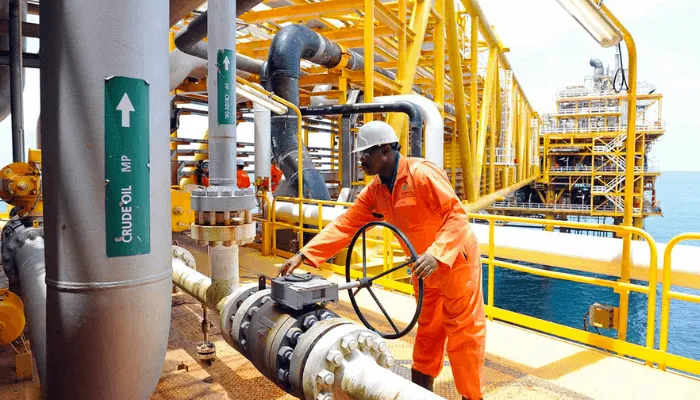
Oil prices continued to climb in early trading on Monday as WTI rose to $91.60 while Brent traded at $94.74. Falling crude inventories and the continuation of the Organisation of Petroleum Exporting Countries (OPEC)+ cuts have sparked an oil price rally that is showing no signs of slowing. Analysts say prices hit the $100 marks. China’s latest stimulus measures have only added to bullish sentiment, with hopes rising that the Asian giant is set to get its economy back on track. Oil prices rose in early Asian trade on Monday, extending last week’s gains amid expectations of an increasingly tighter market and hopes that China’s latest stimulus measures would revitalize the economy.  WTI Crude prices were trading above $91 per barrel in early Asian trade on Monday, at $91.50, up by 0.85%. The international benchmark, Brent Crude, was above the $94 a barrel mark and traded 0.69% higher at $94.57. Falling global inventories amid a tightening market with the OPEC+ and Saudi production cuts have supported oil prices in recent weeks. One of China’s latest policy moves to jumpstart the economy has also made market participants and analysts more bullish on oil. Last week, China cut the reserve ratio for banks for a second time this year in a move to increase liquidity in the system. “China’s stimulus policy, resilient US economic data, and OPEC+’s ongoing output cuts are the bullish factors that support the oil market’s upside movement,” Tina Teng, a market analyst at CMC Markets, wrote in a note. Senior market analyst at OANDA, Ed Moya, said that “After a third week of gains, crude prices are not seeing the typical profit-taking as the short-term crude demand outlook gets a boost from improving US and Chinese economic data. “The oil market is going to stay tight a while longer, but we might need to see a fresh catalyst to send oil to triple digits,” Moya added.

Supply Shortfall To Drive Oil Market Volatility By Q4 –IEA

Supply Shortfall To Drive Oil Market Volatility By Q4 –IEA

The International Energy Agency (IEA) has said oil prices are heading for a surge in volatility amid an expected “significant supply shortfall” on the market in the fourth quarter of 2023. This, the Agency, says is due to the Saudi-led cuts to OPEC+ oil supply. So far this year, higher crude oil production from countries outside the OPEC+ alliance has managed to offset part of the OPEC+ cuts. “But from September onwards, the loss of OPEC+ production, led by Saudi Arabia, will drive a significant supply shortfall through the fourth quarter,” the IEA said in its closely-watched Oil-Market Report for September. Last week, Saudi Arabia and Russia extended their production and export cuts of 1 million barrels per day (bpd) and 300,000 bpd, respectively, until the end of 2023, pushing Brent Crude prices to above $90 per barrel and the highest level in 10 months. Oil prices traded in relative calm during August, with volatility at multi-year lows, the IEA said but however, a calm August was followed by the announcements of extensions of the supply cuts in early September, which sent prices and volatility higher. Volatility could further increase through the end of this year, according to the Agency. If the two OPEC+ leaders unwind the cuts in early 2024, the market would shift to a surplus, the IEA said, but noted that oil stocks would still be at uncomfortably low levels. This increases “the risk of another surge in volatility that would be in the interest of neither producers nor consumers, given the fragile economic environment,” the Paris-based agency added. “The Saudi-Russian alliance is proving a formidable challenge for oil markets,” it said, commenting on the move higher in oil prices and on its previous warnings about an already tightening oil market. In August, observed global inventories plunged by a massive 76.3 million barrels, or by 2.46 million bpd, per the IEA estimates.

Oil price to hit $100, analysts forecast

Nigeria’s Underperforming In Oil, Gas Sector Due To Insecurity – Lokpobiri

As Brent crude oil price continued to rise and trading on Wednesday around $90 a barrel for the second straight day, and now up 25 per cent since June due to the prospect of more production cuts by leading oil exporters, analysts have predicted the price may hit $100 a barrel. The surge is sending ripples through the global stock and bond markets and the prospect of higher prices at the pump and throughout manufacturing may spur diplomatic efforts to increase supply and tamp down any inflationary effects on the global economy. The two countries behind the price hike Saudi Arabia and Russia said on Tuesday that they would extend their oil production cuts equivalent to a combined 1.3 million barrels a day through year-end. The duration of the cuts surprised market watchers, as did Saudi Arabia’s hint that it may make even deeper cuts in the coming months. Nadia Martin Wiggen, a commodities analyst at Pareto Securities, told Bloomberg that Brent could hit $100 a barrel, a level it frequently surpassed in the first months following Russia’s invasion of Ukraine. China’s sputtering economy could sap demand for oil, keeping prices down and Saudi Arabia has little interest in seeing triple digit crude prices crash the global economy, Jorge León, an economist for the research firm Rystad Energy, told DealBook. “Higher oil prices will only increase the likelihood of more fiscal tightening, especially in the U.S., to curtail inflation,” León said. Investors have sold off government bonds, including 10-year Treasury bills, over the past two days on fears that central banks will be forced to stay hawkish on interest rates to blunt the inflationary effect of higher energy prices. Means, Iran’s oil exports have surged since Saudi Arabia began cutting its production this summer, and Bloomberg reported last week that Tehran and Washington have held back-channel talks to keep crude flowing to make up for supply reductions elsewhere. Venezuela, another exporter under sanctions, has reportedly turned to Beijing to help it revive production. In the US the Biden administration, “the only thing they can pretty much do to counteract Saudi cuts is to bring more oil into the market from other countries,” León said. “Iran and Venezuela are the best candidates,” he added, even if it’s politically unpalatable to fully reopen talks with them. The United States may have few other options as domestic producers of oil from shale won’t fill the void in the short term and Washington is unlikely to tap the nation’s strategic petroleum reserve, after doing so last year brought it down to levels last seen in the 1980s, León said.